A Real Patient’s Deep Plane Facelift Journey
How the Artiste Lift™ and Anatomical Precision Restored Brooke’s Natural Structure
Deep plane facelift surgery has become the most anatomically sound and natural-looking approach for facial rejuvenation. But understanding why it works and how it transforms a person requires more than looking at before and after photos.
It requires seeing the technical decisions, the structural anatomy and the emotional journey of a real patient working closely with a double board certified facial plastic surgeon.

Brooke generously allowed us to share her story. Her experience illustrates exactly how Dr. Richard Balikian evaluates aging, designs a personalized plan, and creates results that feel authentic, confident and true to the individual.
This is her journey, paired with a clear and accurate explanation of the techniques behind the transformation.
Dr. Balikian explains to patients that facial aging happens in three ways. The skin changes, volume shifts, and the deeper ligaments loosen and allow the facial structures to descend.
“We age in three different ways. Gravity, volume loss and texture changes.”
— Dr. Balikian
Understanding which of these layers is responsible for someone’s concerns is the key to choosing the right treatment plan.
Fine lines, sun damage, texture changes and loss of elasticity occur at the surface.
Treatments like resurfacing, light therapy and medical grade skincare can improve these issues, but skin tightening alone cannot lift deeper tissue.
The face loses fat selectively with age. Some areas deflate while others stay full or even gain volume.
Hollowing under the eyes, flattening of the cheeks and deepening shadows are classic signs.
Volume can be restored with fat transfer or fillers when appropriate.
This is the true cause of jowls, heaviness, neck sagging and lower facial aging.
As the retaining ligaments relax, the SMAS layer and deeper support structures drop. No surface level or nonsurgical treatment can reverse this. Only deep plane repositioning addresses the root cause.
When Brooke met with Dr. Balikian, it was clear that her aging came primarily from structural descent, not just skin laxity or volume loss. She had fullness and heaviness along the jawline and neck that no amount of filler or energy device could correct.
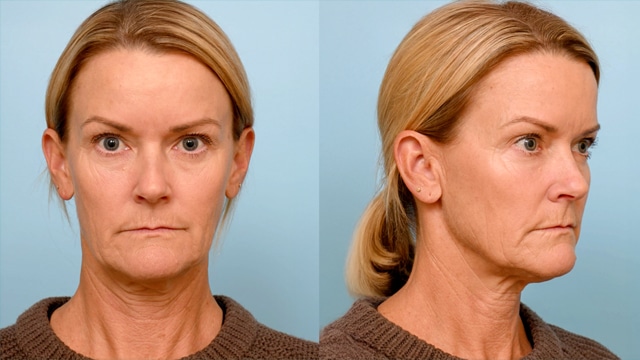
What she truly needed was deep structural repositioning, not surface treatments.
Brooke had spent a lot of time researching surgeons and reviewing before and after photos before she ever booked a consultation. She said that what stood out about Dr. Balikian’s work was how natural his results were.
“His work doesn’t look done. It just looks like a better version of the person.”
— Brooke
During her consultation, she appreciated how clearly he explained which procedures would benefit her and which ones would not. He advised against anything that would look unnatural for her anatomy, something she said she had not heard from other surgeons. That honesty and clarity gave her confidence that she was in the right place.
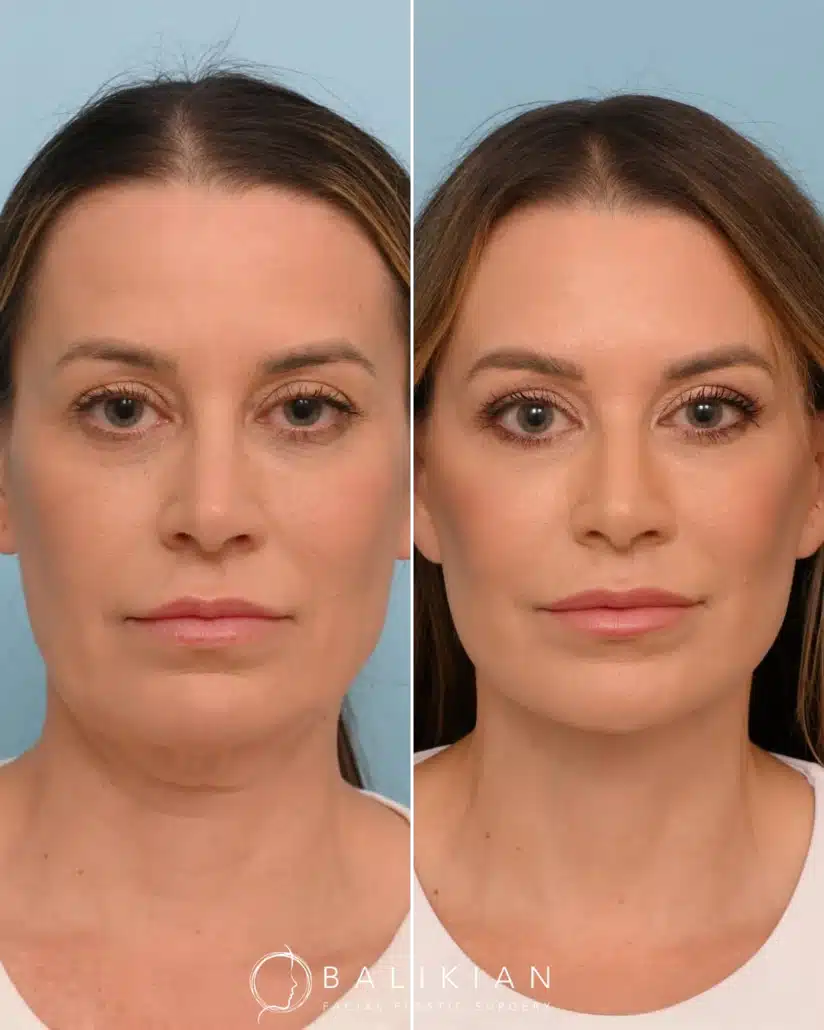
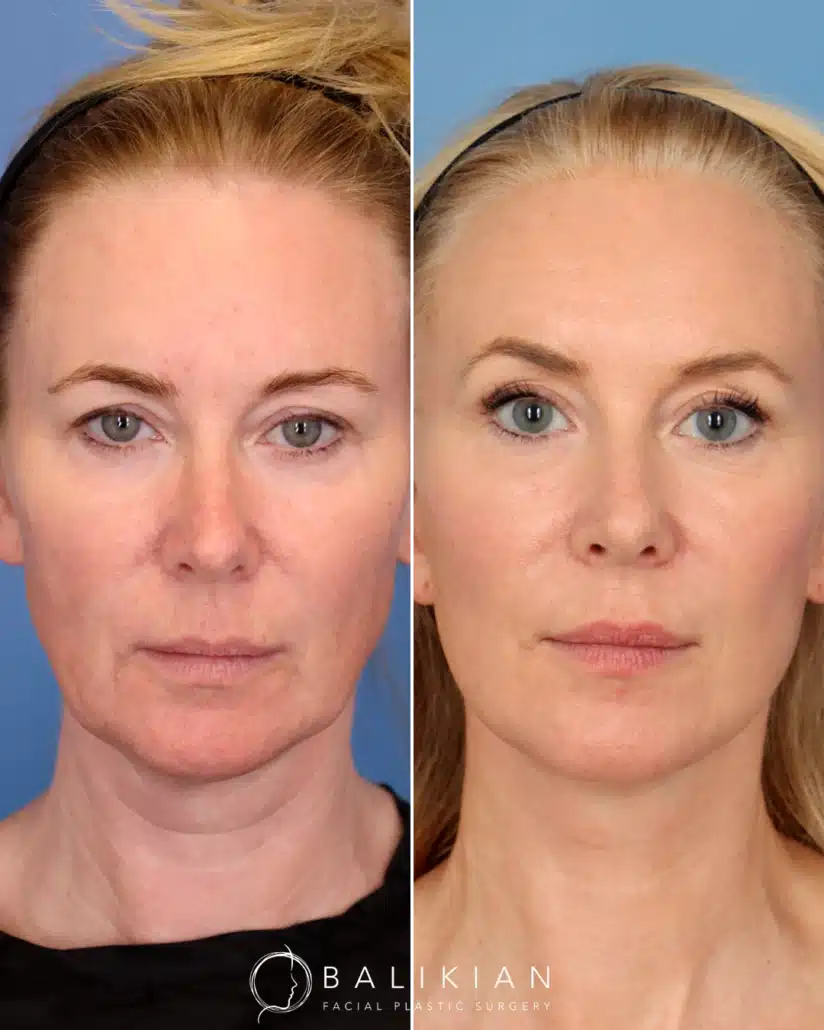
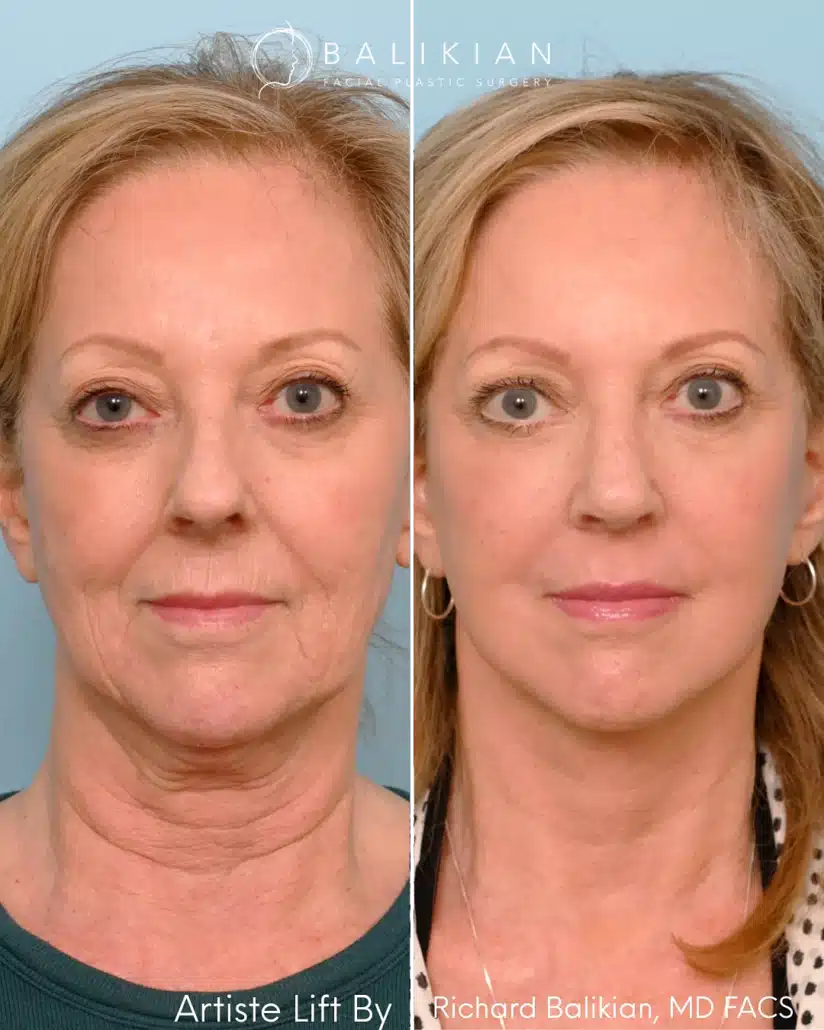
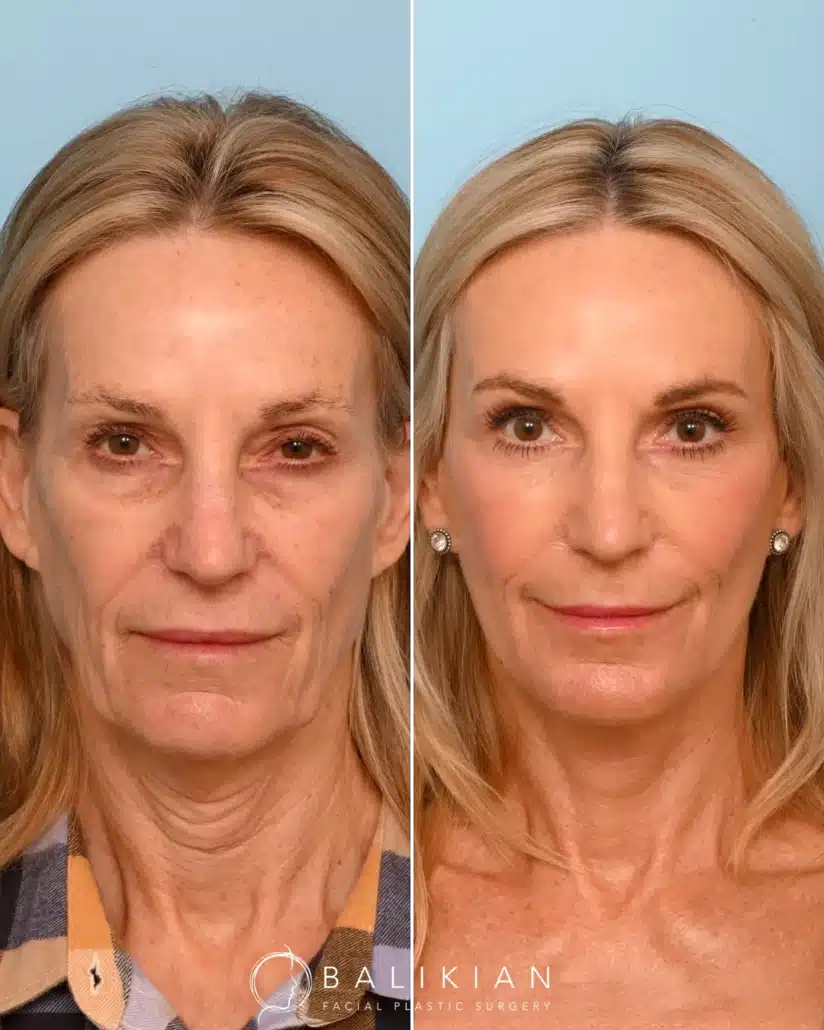
Once she understood the anatomy of aging, Brooke felt confident that the Artiste Lift™ preservation deep plane facelift was the right solution for her. She described looking in the mirror and feeling like her reflection no longer matched her energy or identity. She did not want to look different. She wanted to look like herself again. Restored. Refreshed. Lifted.
During her consultation, Dr. Balikian walked her through how preservation deep plane surgery works. He explained that the technique enters the natural glide plane beneath the SMAS, gently releases the facial ligaments and repositions the deeper structures back to their original, youthful location.
This advanced method allows for:
Brooke shared that this was the first approach that finally made sense to her. Instead of tightening the surface or adding volume, she felt like the Artiste Lift™ restored the deeper foundation of her face and gave her back the structure she had been missing.
To better understand the anatomy behind these decisions, here is Dr. Balikian’s full facelift webinar, where he explains the preservation deep plane technique, how aging affects each layer of the face and why certain patients benefit from deeper structural repositioning.

In the final edited video of Brooke’s journey, she arrives at the surgery center with a calm confidence. She mentions feeling supported, cared for and surrounded by a team that understood exactly why this was important to her.
From a technical standpoint, Dr. Balikian performed:
Brooke described waking up from surgery feeling surprisingly comfortable and cared for. What struck her most was the professionalism and kindness of the team.
Brooke returned for her first follow ups with minimal bruising, controlled swelling and a sense of relief that her decision already looked right. She describes the experience as far easier than she expected, especially considering the amount of structural work that had been done.
“I could not believe how easy the recovery was. For everything that was done, I expected it to be so much harder, but it was far easier than I imagined.”
— Brooke
Dr. Balikian emphasizes that recovery is not linear and that the first weeks are about letting the deeper layers settle into their new position. Because he uses preservation techniques, light therapy and tension free closure, many patients experience:
Brooke said the entire experience exceeded her expectations. Even with swelling, she could see the improvement right away and felt reassured at every stage of the process.
To better understand why healing often looks smoother with this approach, here is a closer look at the light therapy protocol used before and after surgery to support faster recovery and calmer inflammation.

By the time Brooke reached three months post op, she described the experience as “soul work.” Her reflection finally matched her internal vibrancy again. She felt like the best version of herself, not someone different, not someone surgically altered, but someone restored.
She called the surgery a “benchmark” in the third chapter of her life and expressed gratitude for the care, the artistry, and the clarity of the process.
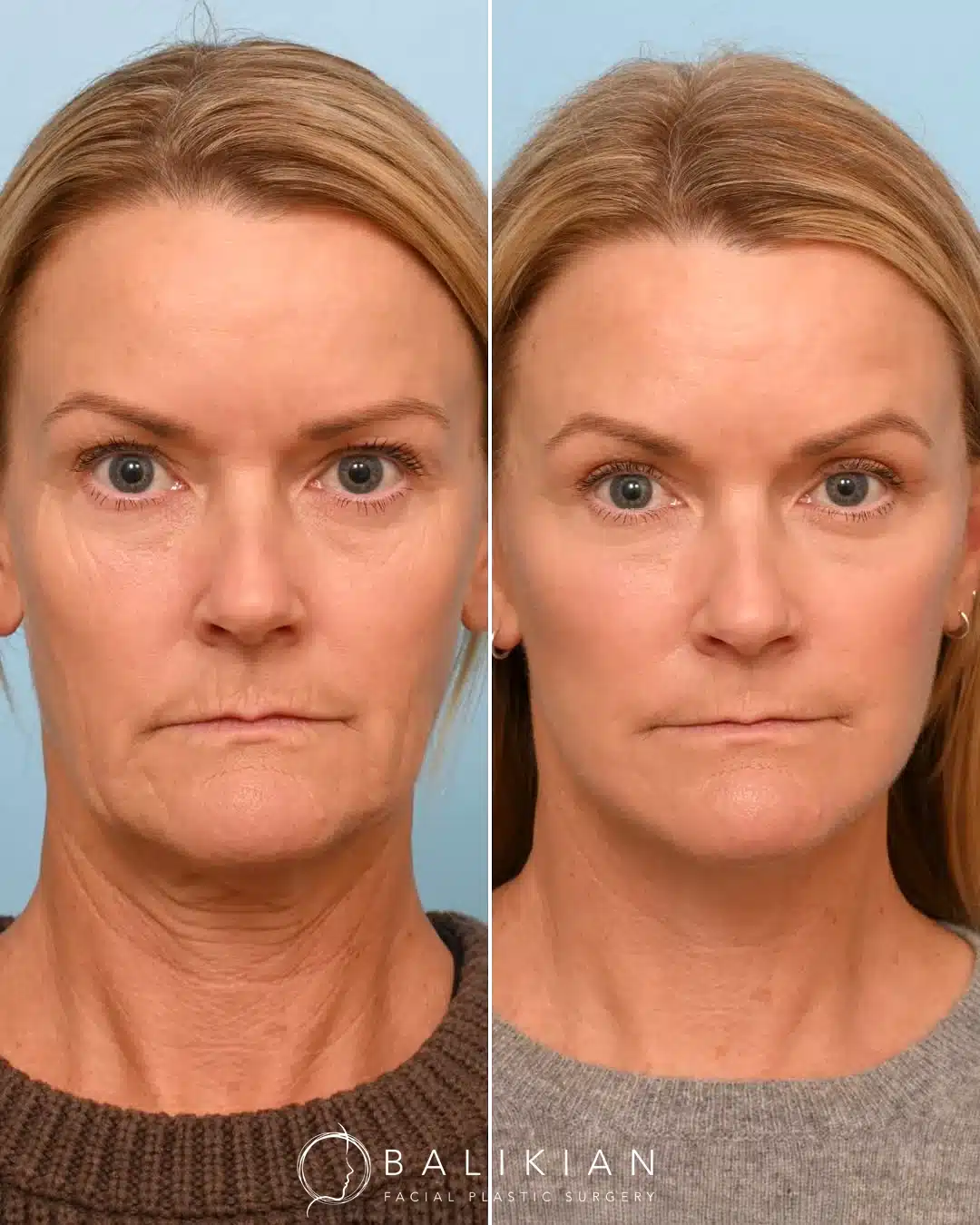
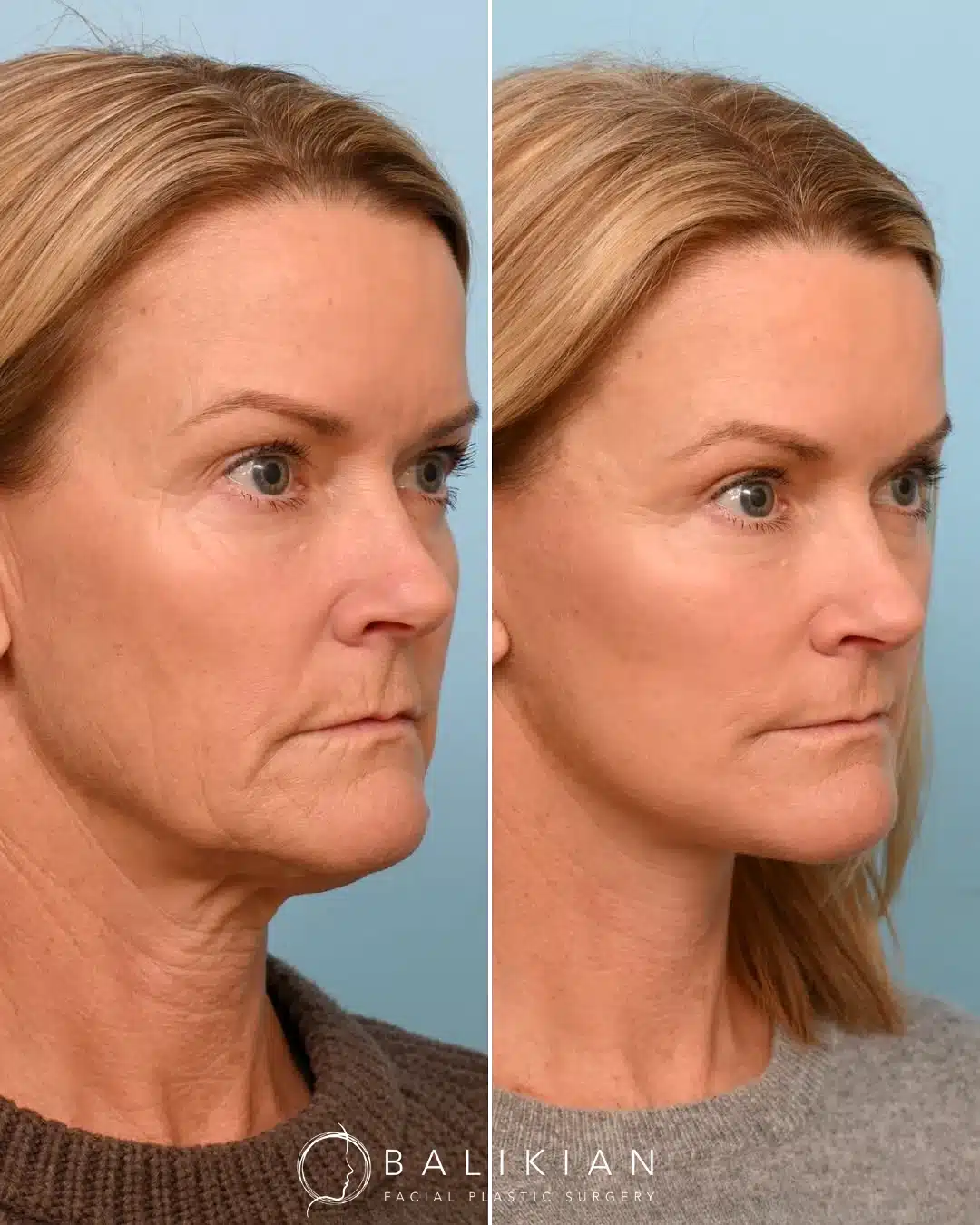
From a technical perspective, this stage is when swelling is significantly reduced and the deep plane layers have fully integrated. The jawline becomes sharper, the midface sits higher and the neck appears cleaner and more sculpted.
Brooke’s results show:
She says she no longer hides behind her hair or avoids certain angles in photos. She feels present, confident and whole again.
Brooke’s story illustrates the balance between anatomy and emotion. It shows why deep plane facelift surgery is not vanity, but a meaningful restoration of identity and confidence. It also highlights the importance of choosing a surgeon who understands both the technical and human aspects of aging.
“You should look younger, not different. No one should know you had surgery. They should just think you look rested.”
— Dr. Balikian
If you are considering facial rejuvenation and want to understand what is possible, Brooke’s story is one example of how anatomy based surgery, preservation technique and personalized planning can create a natural, confident transformation.
Every face is different, and every rejuvenation plan is customized to match your anatomy, your goals and your stage of life.
What makes a deep plane facelift different from a SMAS facelift?
A deep plane facelift releases retaining ligaments and repositions tissue beneath the SMAS, which can improve midface and lower-face structure with a natural look. Technique choice should be individualized to the patient.
Are results from deep plane facelifts longer-lasting?
Evidence and expert reviews note durable rejuvenation of the midface and lower face when the deep plane is properly executed, though definitive superiority over SMAS remains debated.
Will a deep plane facelift fix jowls and soften folds around the mouth?
By releasing facial ligaments and elevating deeper tissues as a unit, deep plane techniques can reduce jowling and soften nasolabial transitions.
Why do some necks still look heavy after basic liposuction or a simple neck lift?
Fullness often comes from deep neck structures such as subplatysmal fat, enlarged submandibular glands and anterior digastric muscles. Managing these structures when indicated yields better contour.
Is it safe to reduce or contour the submandibular glands for aesthetic neck refinement?
Selective submandibular gland reduction has been reported as effective in improving neck definition in properly selected patients, with known but acceptable risks when performed by experienced surgeons.
What outcomes have been reported when surgeons address deep neck structures during rejuvenation?
Large series describe improved cervicomental angles when deep fat, submandibular gland volume and digastric muscles are addressed in selected cases.
Can photobiomodulation light therapy help swelling and discomfort after surgery?
Multiple clinical studies show photobiomodulation reduces postoperative pain and edema in surgical settings. A recent RCT with 830 nm LED reported reduced swelling and pain. While studies are often in oral and maxillofacial surgery, the anti-inflammatory effect is relevant to soft-tissue healing.
Does a facelift replace the need for skin treatments like lasers or peels?
No. Facelifts reposition deeper tissues but do not treat surface texture or pigmentation. Skin quality is improved with resurfacing and skincare, which complement surgical lifting.
How long until results start to look “normal” after a deep plane facelift and neck work?
Most swelling subsides over weeks, with appreciable refinement by 3 months as deeper layers integrate. Final settling continues after that. Timelines vary by the extent of deep work.
Can a deep plane facelift be combined with fat grafting?
Yes. Many series include conservative fat transfer to restore volume balance and improve transitions, used alongside deep plane repositioning.
How does the Artiste Lift™ differ from a standard deep plane facelift?
The Artiste Lift™ adds preservation principles: minimal trauma, ligament-specific release, deep vertical neck contouring and advanced recovery support including light therapy. This produces smoother early healing and natural refinements in the midface and neckline.
Dr. Richard Balikian is a highly respected facial plastic surgeon serving the San Diego area.
With over 20 years of experience and double board certification in Facial Plastic and Reconstructive Surgery as well as Head and Neck Surgery, Dr. Balikian offers a unique combination of technical expertise and artistic vision.
He is part of an elite group of surgeons with extensive training focused exclusively on the face and neck.

Richard V. Balikian, MD, FACS
Double Board-Certified Facial Plastic Surgeon
Balikian Facial Plastic Surgery: Richard V. Balikian, MD, FACS

