Facial Ligament Release | Why It Matters in Deep Plane Facelift Surgery
Why the Face Cannot Be Repositioned Without Releasing Its Points of Fixation
One of the most important concepts in facial aging is that the face is not a loose structure that can simply be lifted or repositioned. It is supported and held in place by a system of deeper attachments that control how the tissue moves. As Dr. Richard Balikian explains, understanding these deeper structural relationships is essential to achieving natural results.
This principle is central to modern techniques like a deep plane facelift and approaches such as the Artiste Lift™, which focus on restoring these underlying layers rather than tightening the surface.

At key points throughout the face, soft tissue is anchored down by strong connective structures known as retaining ligaments. These ligaments act as fixed points that limit movement, even as the surrounding tissue begins to age and descend. Because of this, the face does not shift evenly over time. Instead, it changes in a way that reflects where it is held in place and where it is allowed to move.
This is a foundational concept in understanding why facial aging looks the way it does and why certain areas change more noticeably than others. It also explains why releasing these deeper attachments is necessary to reposition the face in a way that looks natural, rather than tight or pulled.
Facial ligaments are not passive structures. They play an active role in maintaining the shape and support of the face by anchoring soft tissue to deeper layers.
They help define:
In youth, this system creates balance and structure. The ligaments hold the face in a more elevated position, allowing the cheeks to sit higher and the jawline to remain more defined. Transitions between facial areas appear smooth because the underlying support is intact and evenly distributed.
As long as this system remains strong, the face maintains its natural proportions and contour.
As the face ages, the issue is not simply that tissue falls. It is that the face is held in place unevenly due to these points of fixation.
Because ligaments act as stable anchors:
This creates a very specific and recognizable pattern of aging. Instead of a uniform change, the face develops areas of contrast where some regions move and others remain fixed.
This is why patients develop:
The ligaments themselves do not stretch in the same way as soft tissue. They create resistance that shapes how aging appears, rather than simply allowing everything to move downward together.
If the face is still anchored by ligaments, it cannot be repositioned naturally. This is one of the most important limitations of surface-level approaches.
When lifting is attempted without addressing these deeper attachments:
This is where unnatural results can occur. The skin is pulled because the underlying support system has not been released, which can lead to a tight or overdone appearance rather than a natural restoration.
Understanding this distinction helps explain why simply tightening the surface does not fully address structural aging.
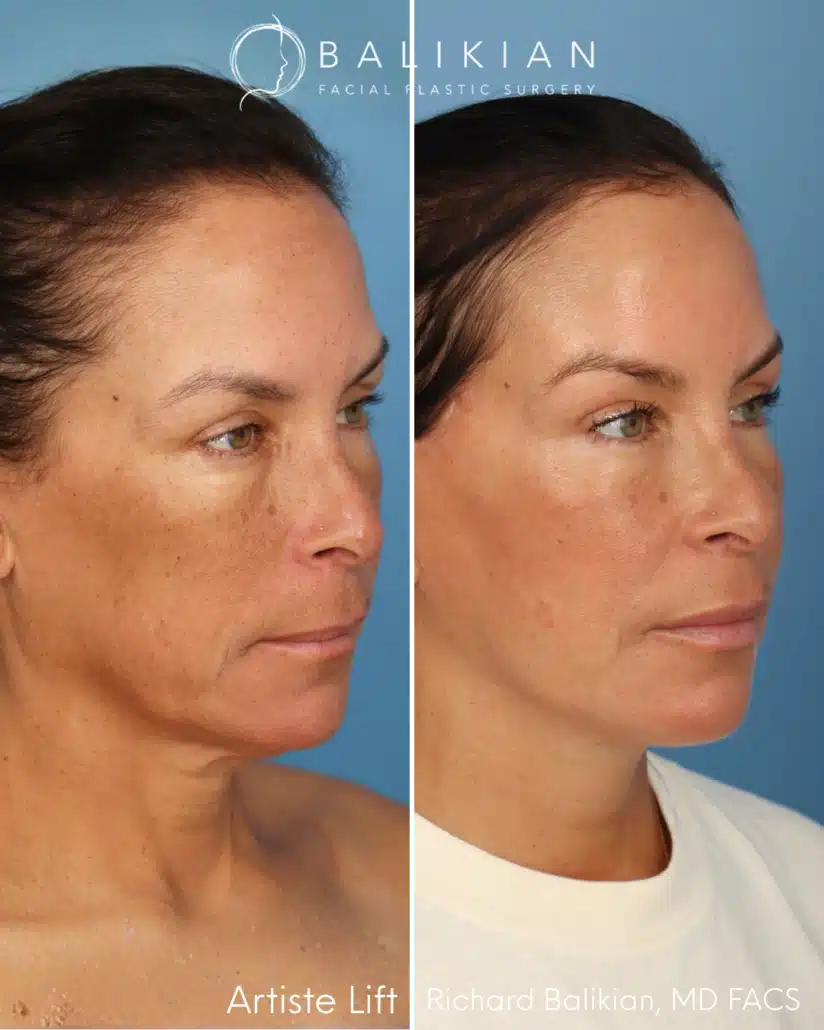
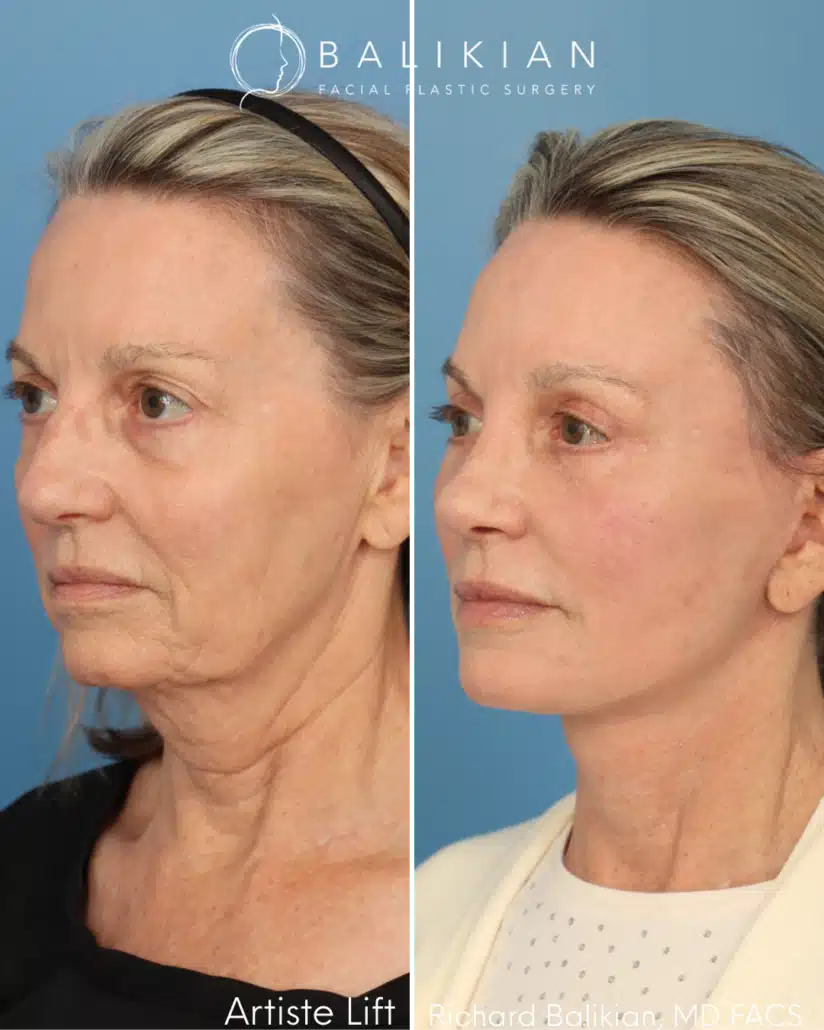
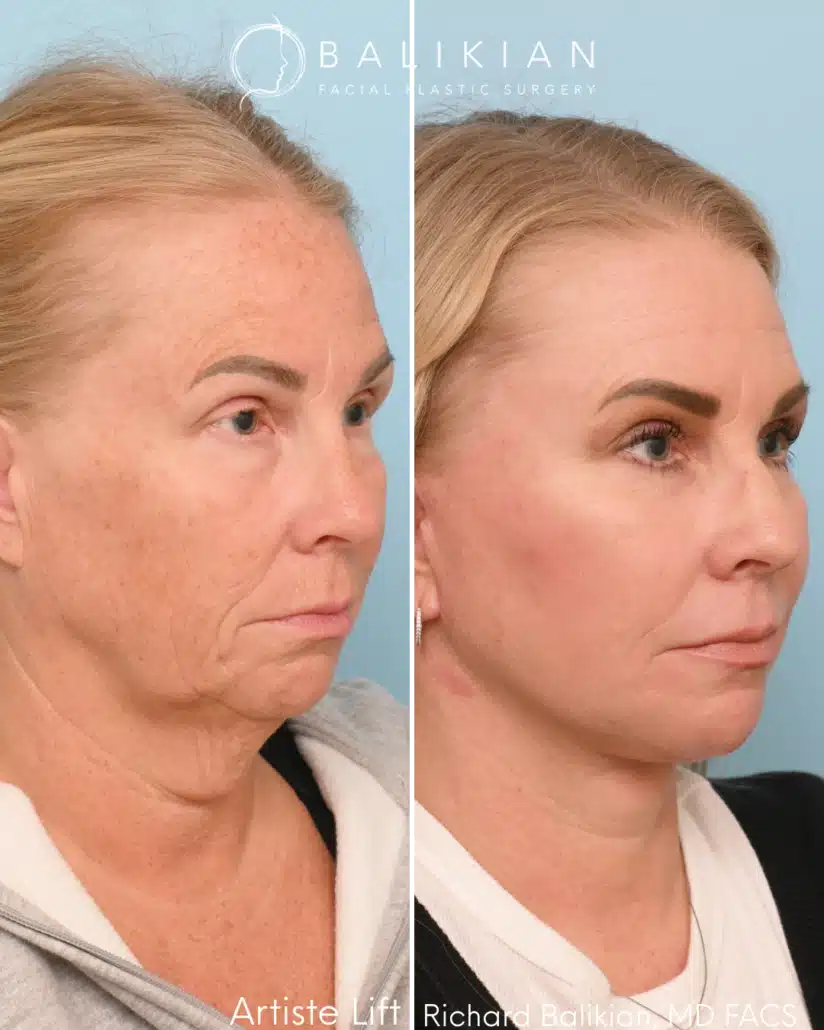
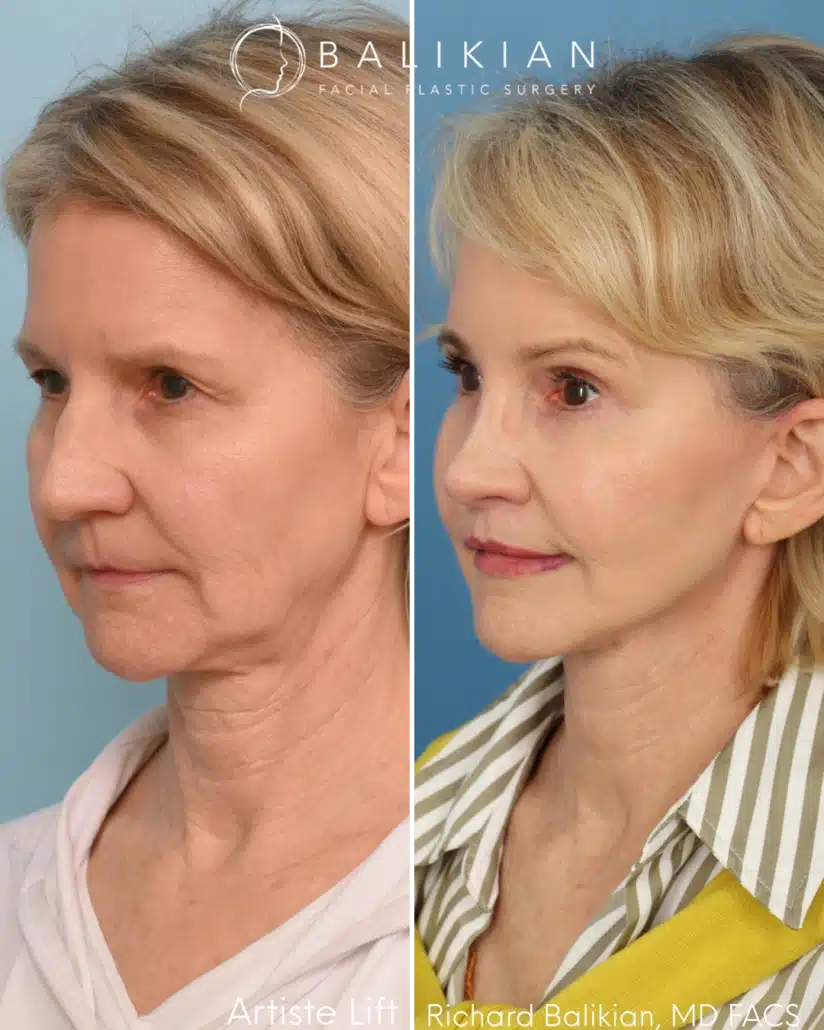
To reposition the face in a natural way, it must first be freed from these points of fixation. Ligament release allows the deeper layers of the face to move more freely, rather than being held in place.
Once these attachments are carefully released:
This is not about aggressive lifting or pulling. It is about restoring mobility to the deeper structures so they can return to a more natural position.
This concept is central to achieving results that look balanced rather than forced.
This is where ligament release becomes essential to modern techniques like the deep plane facelift (https://www.drbalikiansandiego.com/education/what-is-a-deep-plane-facelift-and-is-it-worth-it/
). Rather than working on the surface, the procedure is performed in the layer where these ligaments and deeper structures exist.
This allows for:
Because the work is done at the structural level, the result reflects how the face naturally sits rather than how it is pulled. The lift is more cohesive because the deeper layers are moved together instead of being separated from the skin.
When the face is repositioned at the level of structure, the outcome is fundamentally different from surface-level lifting. The skin is able to redrape over the repositioned framework without tension.
This leads to:
This is what allows patients to look more refreshed without appearing different. The goal is not to change the face, but to restore it to a more natural position based on its underlying structure.

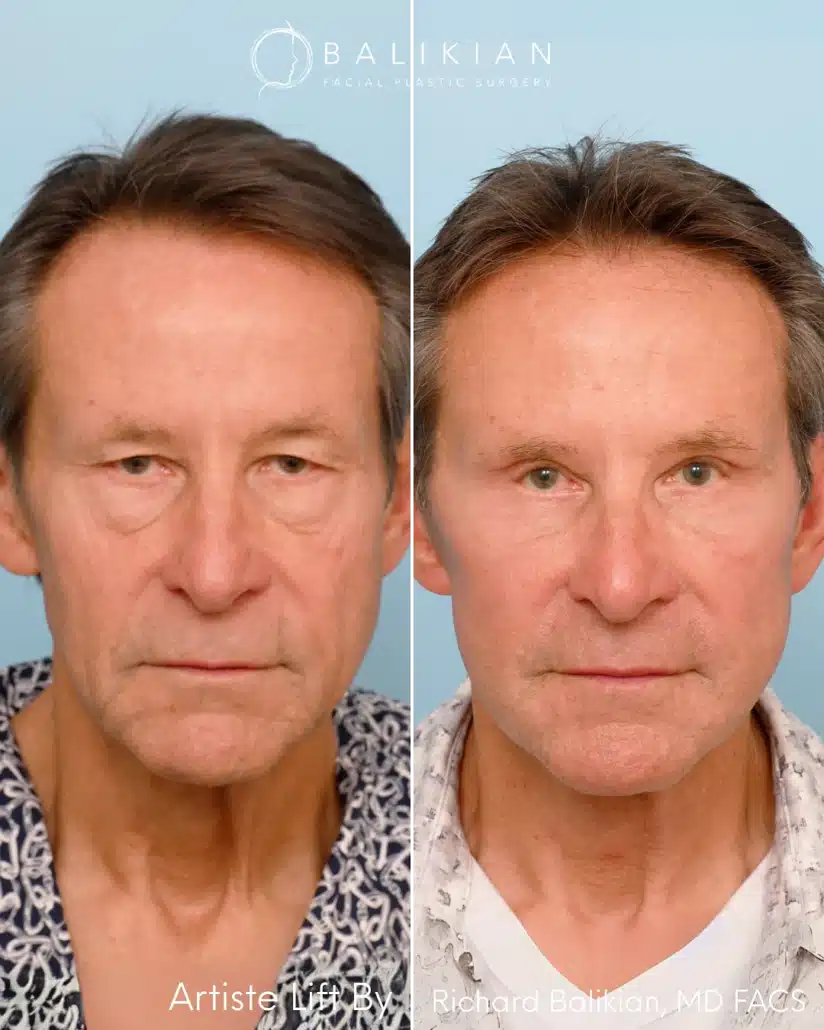


Facial ligaments do not function in isolation. They are part of a larger structural system that includes the SMAS layer, the platysma muscle, and the neck.
As these structures change together:
These changes are interconnected, which is why the face and neck are often treated together rather than as separate areas.
Understanding how these deeper structures interact helps explain why changes in the face are often reflected in the neck. In the videos below, Dr. Balikian walks through how these anatomical relationships influence contour and how they are addressed in modern facial rejuvenation.
To better understand how the neck is involved, read: Platysma Muscle Anatomy
Non-surgical treatments can improve certain surface-level aspects of aging, but they do not address the deeper structural attachments of the face.
They may help with:
However, they do not:
This is why results are often limited when structural changes are more advanced. For a broader overview of how these structural concepts apply to facial rejuvenation, explore facelift surgery.
When you step back, facial aging is often simplified as a problem of loose skin or volume loss. In reality, those are only surface-level changes. What patients are seeing is the result of deeper structural shifts and how those layers interact over time.
The face is supported by a layered system, and changes within that system affect not just how the face looks, but how it moves and holds its shape. As these layers shift, descend, or lose support, the visible changes become more noticeable and more complex.
This involves multiple layers working together:
As these elements change at different rates, the face does not age uniformly. Instead, it develops patterns where some areas descend, others appear heavier, and transitions between regions become more pronounced.
Understanding ligament release helps explain:
This broader structural perspective is what informs modern techniques like a deep plane facelift, where the goal is to restore balance across these layers rather than address a single surface concern.
What are facial retaining ligaments and why do they matter in a facelift?
Facial retaining ligaments are connective structures that anchor the soft tissues of the face in consistent anatomic locations. They matter because they help determine where the face stays fixed and where tissue is able to descend over time. Reviews of facial ligament anatomy note that these ligaments are central to understanding facial aging and are surgically important because their release can help achieve the desired rejuvenation outcome.
Why is ligament release important in a deep plane facelift?
Ligament release is important because it allows greater tissue mobilization and more natural repositioning of deeper facial structures. A recent review states that ligament-releasing techniques such as the deep plane and extended SMAS facelifts allow greater mobilization and improved repositioning of midfacial and cervical tissues.
How does a deep plane facelift use ligament release differently than a surface lift?
A deep plane facelift works beneath the superficial layer and directly addresses key retaining ligaments, which helps move the skin and deeper facial support as a more unified structure. PubMed sources describe the deep plane facelift as permitting direct lysis of key facial retaining ligaments and repositioning of deeper tissues rather than relying on skin tension alone.
Can a facelift still improve aging if the ligaments are not released?
Yes, some improvement is possible, but correction is usually more limited when ligaments are preserved. The recent review on retaining ligaments explains that ligament-preserving techniques can be safer and less invasive, but they generally offer more limited correction in patients with more significant laxity compared with ligament-releasing techniques.
What role do retaining ligaments play in jowls?
Retaining ligaments help explain why jowls form in a very specific location along the jawline. Classic facial anatomy work describes the mandibular ligaments as tethering the overlying skin and delineating the anterior border of the jowl area. More recent anatomical research also examines the relationship between the jowl and the mandibular ligament, reinforcing that jowling is a structural issue rather than just loose skin.
Why can deep plane facelift results look more natural?
Deep plane techniques can look more natural because they reposition deeper tissues after ligament release instead of creating correction primarily through skin tension. PubMed sources describe deep plane and composite approaches as allowing deeper structural rejuvenation by releasing retaining ligaments and elevating the skin and deeper support structures together as a unit.
Are facial ligaments the same as the SMAS?
No. They are related, but they are not the same thing. The SMAS is a continuous fibromuscular layer used in facelift surgery for repositioning facial support, while retaining ligaments are localized anchoring structures that tether tissues in specific places. Reviews of facelift anatomy and ligament anatomy distinguish these roles clearly.
Can non-surgical treatments release facial ligaments?
No. Non-surgical treatments may help with skin quality, mild contour concerns, or volume, but they do not surgically release retaining ligaments or reposition deeper facial tissues the way a deep plane facelift can. The value of retaining ligaments in the literature is tied specifically to their surgical release in facial rejuvenation.
Dr. Richard Balikian is a highly respected facial plastic surgeon serving the San Diego area.
With over 20 years of experience and double board certification in Facial Plastic and Reconstructive Surgery as well as Head and Neck Surgery, Dr. Balikian offers a unique combination of technical expertise and artistic vision.
He is part of an elite group of surgeons with extensive training focused exclusively on the face and neck.