What Surgeons See Beneath the Surface During Facelift Surgery
Learn How the Skin, SMAS Support Layer, and Deeper Facial Structures Influence Modern Facelift Surgery
Facelift surgery is often described in simple terms such as tightening skin or lifting sagging tissue. In reality, modern facial rejuvenation involves a much deeper understanding of the anatomy beneath the surface of the face.

When facial plastic surgeon Dr. Richard Balikian performs a preservation deep plane facelift, he carefully works through multiple layers of facial anatomy. Once the superficial support layer known as the SMAS is elevated, a complex network of muscles, fat compartments, glands and nerves becomes visible.
These deeper structures play an essential role in facial expression, movement and contour. Understanding them allows surgeons to restore natural facial balance while protecting the anatomy that allows the face to function normally.
Once the SMAS layer is gently lifted during facelift surgery, surgeons begin to see the deeper structures that form the foundation of the face.
These include glands responsible for producing saliva, muscles that allow us to chew and express emotion, fat compartments that influence facial shape, and important nerves that control movement.
Each structure must be carefully identified and protected throughout the procedure.
One of the first structures encountered beneath the SMAS is the parotid gland. This gland is one of the primary salivary glands responsible for producing saliva in the mouth.
The parotid gland sits near the jawline and plays an important role in normal oral function. During facelift surgery, surgeons carefully work around this structure while preserving it completely.
The gland itself is not trimmed or altered, allowing normal salivary function to remain intact after surgery.
As surgeons move forward along the face, they encounter the masseter muscle, a powerful muscle located along the side of the jaw.
The masseter muscle is responsible for helping us chew. When we bite down, it contracts and pulls the jaw upward.
Important facial nerves travel near this muscle, which is why surgeons remain positioned above it during facelift dissection to protect these nerves and maintain normal facial movement.
Another structure encountered beneath the SMAS is buccal fat, a deeper fat pad that contributes to the fullness and contour of the cheeks.
The amount of buccal fat varies from person to person. Some individuals naturally have more volume in this area, while others have less.
During facelift surgery, surgeons evaluate this fat compartment and determine whether small adjustments may help refine facial contours. In some cases a small amount of fat may be reduced, while in other cases fat transfer may be used to restore lost volume.
The goal is never to remove all of the fat. Instead, the goal is to achieve balanced facial proportions and avoid excessive fullness or hollowing.
One of the most important muscles encountered during facelift surgery is the zygomaticus major muscle.
This muscle begins along the cheekbone and extends toward the corner of the mouth. It plays a central role in facial expression by helping lift the corners of the mouth when we smile.
“This muscle is like a suspension bridge. When we’re young, it’s tight. It’s got fat underneath it pushing that suspension bridge up. That’s why you have such a bright, happy smile.”
– Dr. Balikian
When we are younger, the structures supporting this muscle are strong and full. Healthy fat beneath the muscle helps maintain its natural elevation, contributing to a bright and youthful smile.
As we age, that support can diminish. Fat beneath the muscle may decrease, allowing the muscle to sag slightly and reducing the natural lift of the midface.
In some cases, carefully placed fat transfer beneath this area can restore support and help elevate the muscle again, improving facial brightness and expression.
Above the cheekbone lies another important structure known as the temporalis muscle.
This muscle also contributes to chewing and jaw movement. During facelift surgery, the temporalis muscle can serve as a strong anchor point where sutures are placed to help support repositioned facial tissues.
Because the muscle is strong and structurally stable, it helps maintain the lift created during surgery.
Around the eye is a circular muscle called the orbicularis oculi muscle.
This muscle functions like a drawstring around the eye, allowing us to blink and close our eyes. It also plays a role in facial expression around the eyes.
When treatments such as Botox are used to soften wrinkles near the outer corners of the eyes, they typically target portions of this muscle while preserving natural movement.
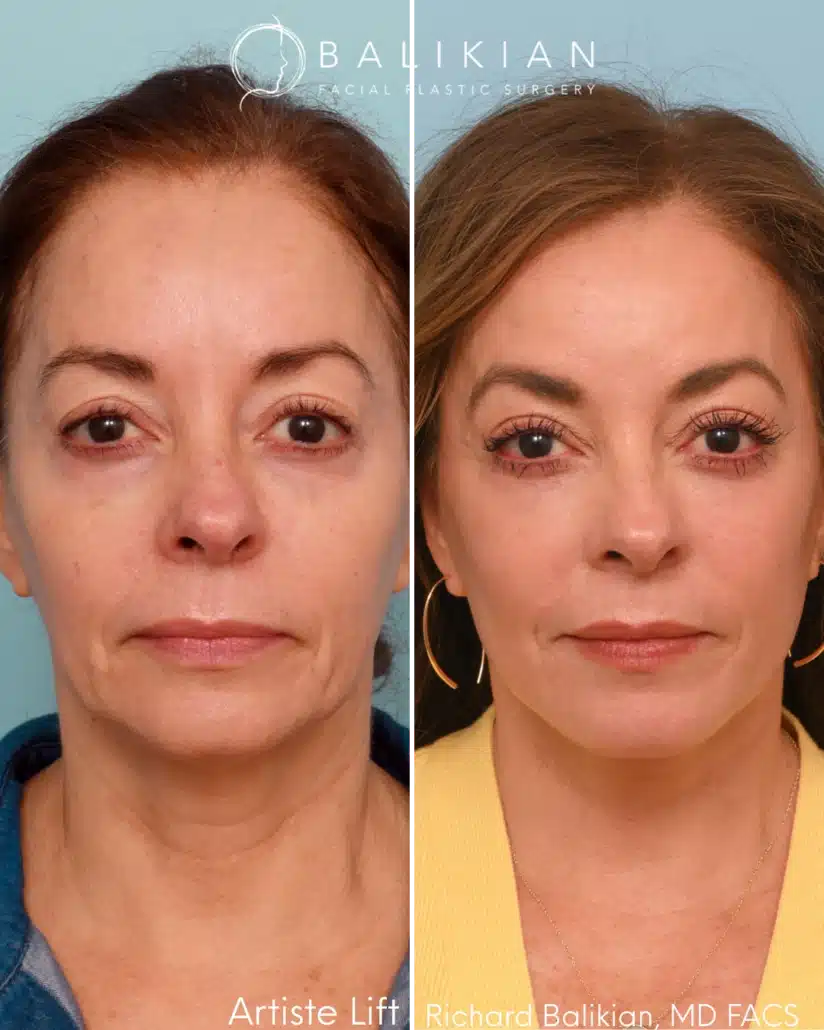
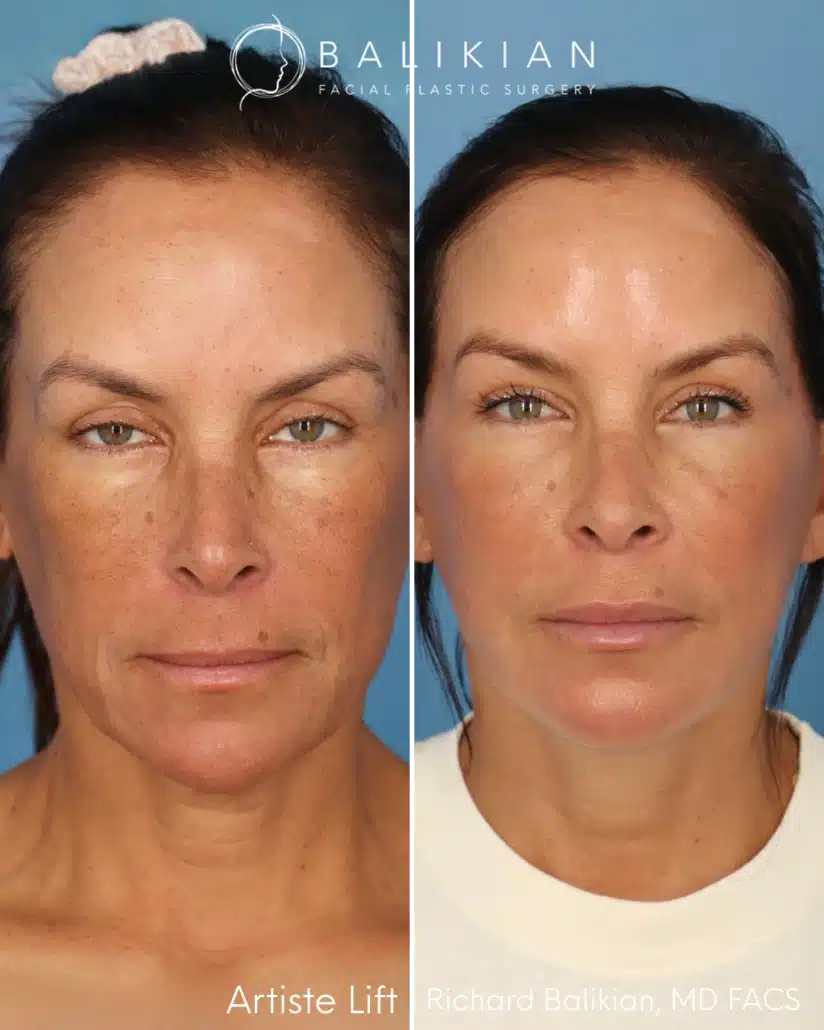
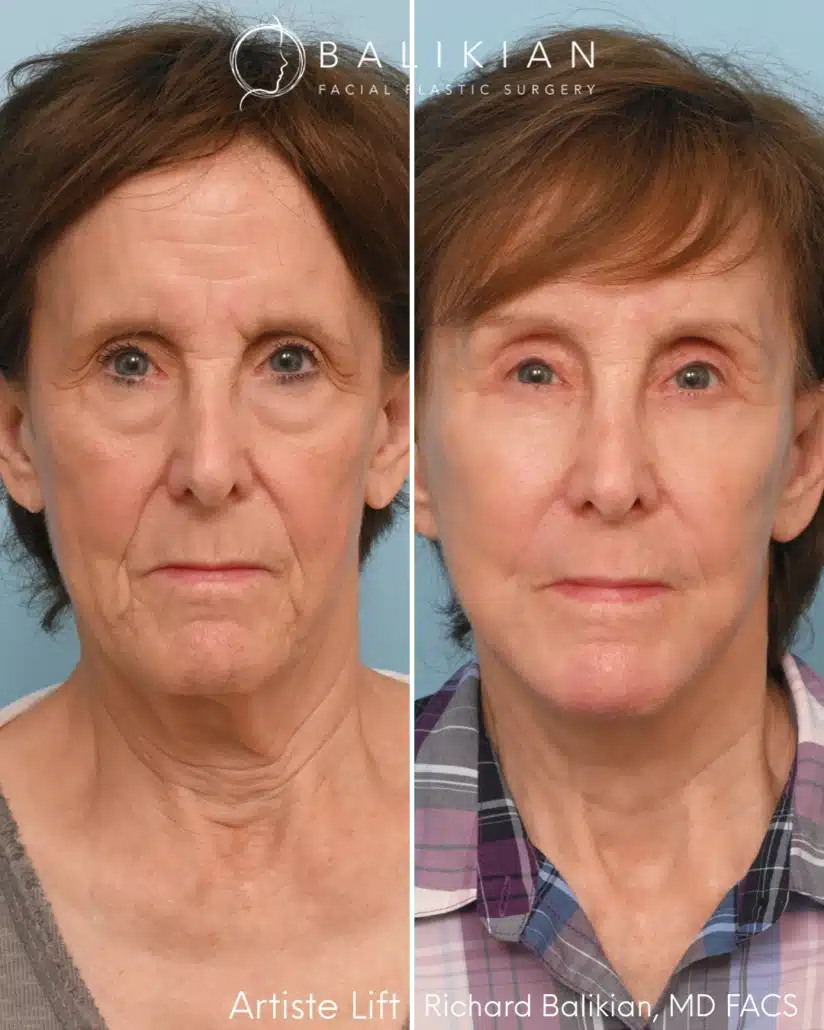
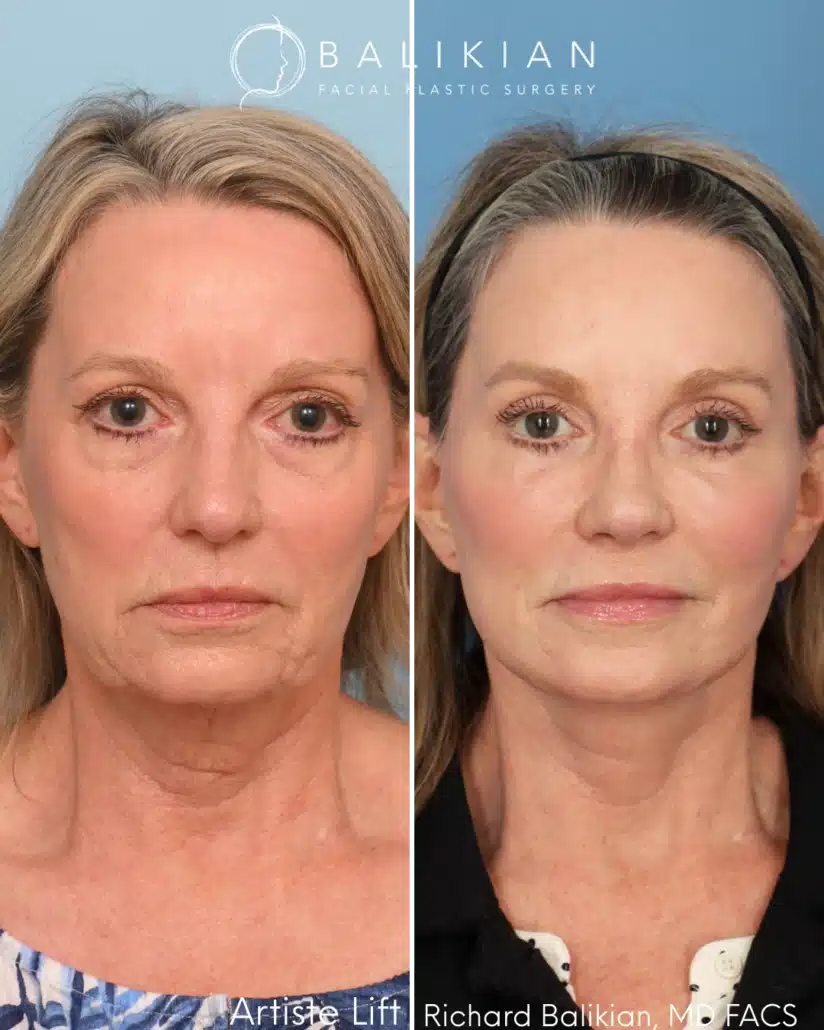
When facelift surgery is combined with procedures such as a deep vertical neck lift, surgeons encounter additional structures beneath the neck muscles that contribute to the contour and definition of the neck.
These deeper anatomical structures play an important role in how the neck ages and how a sharp jawline can be restored during surgery.
Some of the structures surgeons may encounter include:
These deeper structures are part of what surgeons evaluate when performing advanced neck rejuvenation procedures. By carefully working around this anatomy, surgeons can help restore a smoother transition between the jawline and neck.
In some patients, subtle contouring of these deeper structures can help create a more defined neckline and improved neck profile.
Because the anatomy of the neck is complex, Dr. Balikian often explains these concepts visually in his Deep Vertical Neck Lift Anatomy video series, helping patients understand what happens beneath the skin during surgery.
These educational videos explore the deeper anatomy of the neck and show how structures such as the platysma muscle, hyoid bone, and submandibular region influence the appearance of the neck and jawline.
A successful facelift is not about dramatically changing how someone looks.
Instead, the goal is to restore natural facial balance so that patients appear brighter, more rested, and refreshed while still looking like themselves.
By understanding and carefully working around the deeper structures of the face, modern facelift surgery can restore youthful contours while preserving the muscles, glands, and nerves that allow the face to function naturally.
What do surgeons actually see beneath the SMAS during facelift surgery?
When the SMAS layer is elevated during a deep plane facelift, surgeons begin to see deeper structures that shape the face. These include muscles responsible for facial expression, fat compartments that influence facial contour, glands such as the parotid gland, and important nerves that control facial movement.
Understanding this anatomy allows surgeons to reposition facial tissues safely while preserving normal facial function and expression.
What is the SMAS layer and why is it important in facelift surgery?
The SMAS (Superficial Musculoaponeurotic System) is a fibromuscular layer located beneath the skin that connects facial muscles to the overlying soft tissues of the face. This layer plays a key role in facial structure and movement.
Modern facelift techniques often focus on repositioning the SMAS rather than tightening skin alone. By lifting this deeper support layer, surgeons can restore facial contour while reducing tension on the skin and creating more natural-looking results.
What is a deep plane facelift and how does it differ from other facelift techniques?
A deep plane facelift lifts facial tissues beneath the SMAS layer rather than tightening only the superficial tissues. This approach allows surgeons to release facial retaining ligaments and reposition deeper structures of the midface as a single unit.
By lifting deeper tissues together, deep plane techniques can improve midface elevation and produce natural facial rejuvenation while maintaining facial expression.
Why do surgeons need a detailed understanding of facial anatomy during a facelift?
Facelift surgery occurs near important anatomical structures including facial nerves, muscles of expression, fat compartments, and salivary glands. A detailed understanding of this anatomy allows surgeons to safely reposition tissues while protecting these critical structures.
Modern anatomical research continues to emphasize that successful facial rejuvenation procedures require precise knowledge of facial anatomy and surgical planes.
What role does buccal fat play in facial contour and aging?
The buccal fat pad is a deeper fat compartment located within the midface that contributes to the fullness of the cheeks. The size and position of this fat pad varies between individuals.
During facelift surgery, surgeons evaluate this fat compartment to determine whether subtle adjustments in volume may improve facial balance. In some cases this may involve conservative reduction, while in others fat transfer may be used to restore structural support.
How do facial muscles influence facial expression and aging?
Several muscles play an important role in facial expression and appearance. For example, the zygomaticus muscles help lift the corners of the mouth during smiling, while the orbicularis oculi muscle allows us to blink and close our eyes.
As facial support structures change with age, these muscles may lose some of their natural support, contributing to sagging or changes in facial expression. Facelift surgery can help restore support to these structures.
What structures beneath the neck muscles influence jawline and neck contour?
During procedures such as a deep vertical neck lift, surgeons may encounter deeper neck anatomy including the hyoid bone, submandibular gland, and digastric muscles.
These structures influence the shape of the neck and jawline. In some patients, careful contouring of these deeper structures may help create a sharper and more defined neckline.
Do deep plane facelifts and SMAS facelifts both produce good results?
Research comparing facelift techniques shows that both deep plane facelifts and SMAS facelifts can produce strong long-term rejuvenation results and high levels of patient satisfaction.
A recent systematic review found that both approaches can be effective when performed by experienced surgeons, and the choice of technique often depends on the patient’s anatomy and surgical goals.
Why do modern facelifts look more natural than older facelift techniques?
Older facelift techniques often relied primarily on tightening the skin. Modern approaches focus on repositioning deeper facial support structures such as the SMAS and midface tissues.
Because the lift occurs at deeper anatomical layers rather than the skin surface, modern facelifts tend to produce more natural and longer-lasting results.
Dr. Richard Balikian is a highly respected facial plastic surgeon serving the San Diego area.
With over 20 years of experience and double board certification in Facial Plastic and Reconstructive Surgery as well as Head and Neck Surgery, Dr. Balikian offers a unique combination of technical expertise and artistic vision.
He is part of an elite group of surgeons with extensive training focused exclusively on the face and neck.