Inside a Preservation Deep Plane Facelift
A Step-by-Step Look at How Facial Support Is Restored
Most people picture a facelift as an operation that tightens loose skin. That’s understandable because skin is what we see in the mirror.
But when I evaluate a patient during consultation, I’m not thinking about skin first. I’m looking at the deeper structures that support the face. Those are the tissues that gradually descend over time and create many of the changes patients notice as they age.
The cheeks become flatter.
The jawline loses definition.
Jowls begin to develop.
The neck starts to soften.
The skin follows those deeper changes.
That’s why a preservation deep plane facelift isn’t designed to tighten the skin. It’s designed to restore the deeper support structures that have gradually shifted over time.
One of the words patients hear most often during consultation is preservation. Preservation doesn’t mean doing less surgery. It means doing surgery with respect for the anatomy.
Throughout the operation, the goal is to preserve healthy blood supply, facial support structures, and natural tissue planes while releasing only what is necessary to restore facial support. Every step has a purpose. Rather than creating unnecessary dissection, the operation is guided by the patient’s anatomy and the specific changes that have occurred over time.
That philosophy influences everything, from surgical planning and tissue handling to how the face is repositioned and how the incisions are closed.
The operation doesn’t begin with the first incision. It begins with understanding how the face has changed.
Respecting the anatomy during surgery has benefits that extend well beyond the operating room.
By limiting unnecessary tissue disruption and preserving healthy blood supply, the face is able to heal on a stronger biological foundation. Healthy tissue is preserved, circulation is maintained and natural facial movement is respected.
For many patients, that translates into:
Preservation isn’t a shortcut. It’s a surgical philosophy that influences every step of the operation and every stage of recovery.

Join Dr. Richard Balikian as he explains the anatomy of facial aging, the principles of a preservation deep plane facelift and how every surgical plan is tailored to the individual patient.
A preservation deep plane facelift doesn’t begin with the first incision. It begins with a diagnosis.
Before any surgical plan is developed, Dr. Richard Balikian carefully evaluates how that particular face has changed over time. No two patients age in exactly the same way, so no two operations should be exactly alike.
Some patients lose facial support primarily through the cheeks. Others notice changes in the neck first. Some develop significant jowling while maintaining excellent neck definition, while others experience very little tissue descent but substantial volume loss.
Understanding those differences allows every aspect of the operation to be tailored to the patient’s anatomy rather than applying the same procedure to every face.
One of the least understood parts of a preservation deep plane facelift happens before the operation even begins.
Before entering the operating room, every patient is carefully marked. These markings are far more than incision lines. They serve as a personalized surgical roadmap, translating everything discussed during the consultation into a precise operative plan.
Every marking has a purpose.
Although the markings may appear simple, they represent hours of experience, anatomical knowledge and surgical planning. Every line reflects a deliberate decision about how the face will be restored while preserving what makes it unique.
For many patients, this is the moment everything becomes real. The conversations, photographs and planning from the consultation are now mapped directly onto their face. Nervous anticipation often gives way to confidence, knowing the operation has been designed specifically for them.
Only then does the surgery begin.



Join Dr. Richard Balikian as he explains the anatomy of facial aging, the principles of a preservation deep plane facelift and how every surgical plan is tailored to the individual patient.
With the surgical plan complete, the first incision is made. This is where a preservation deep plane facelift begins to differ from procedures that rely primarily on tightening skin.
Rather than working only on the surface, the operation moves into the deeper anatomical layers that support the cheeks, jawline and lower face. The goal is to reach the natural tissue plane where these structures move together.
Instead of separating the skin from the deeper facial tissues and lifting each independently, the tissues remain connected as they are carefully mobilized. This allows the face to be repositioned as a single unit, restoring facial support while minimizing unnecessary tension on the skin.
One of the most important parts of the operation is releasing specific retaining ligaments.
These ligaments are bands of connective tissue that anchor the facial soft tissues to the underlying skeleton. When we’re younger, they help maintain youthful facial shape by supporting the cheeks and surrounding soft tissues. As the face changes with age, those same attachment points begin to contribute to flattening of the cheeks, jowls and deeper folds around the mouth.
Imagine trying to smooth a sheet that’s still pinned to the mattress. No matter how carefully you pull, it won’t move until those attachment points are released. The retaining ligaments function much the same way. Until they’re selectively released, the descended facial tissues cannot be repositioned naturally.
This is one of the defining features of a preservation deep plane facelift. By releasing only the ligaments necessary to restore facial support, the cheeks, jawline and lower face can move together as a single unit while preserving the surrounding anatomy.
Once those retaining ligaments have been released, the deeper facial tissues finally have the freedom to move.
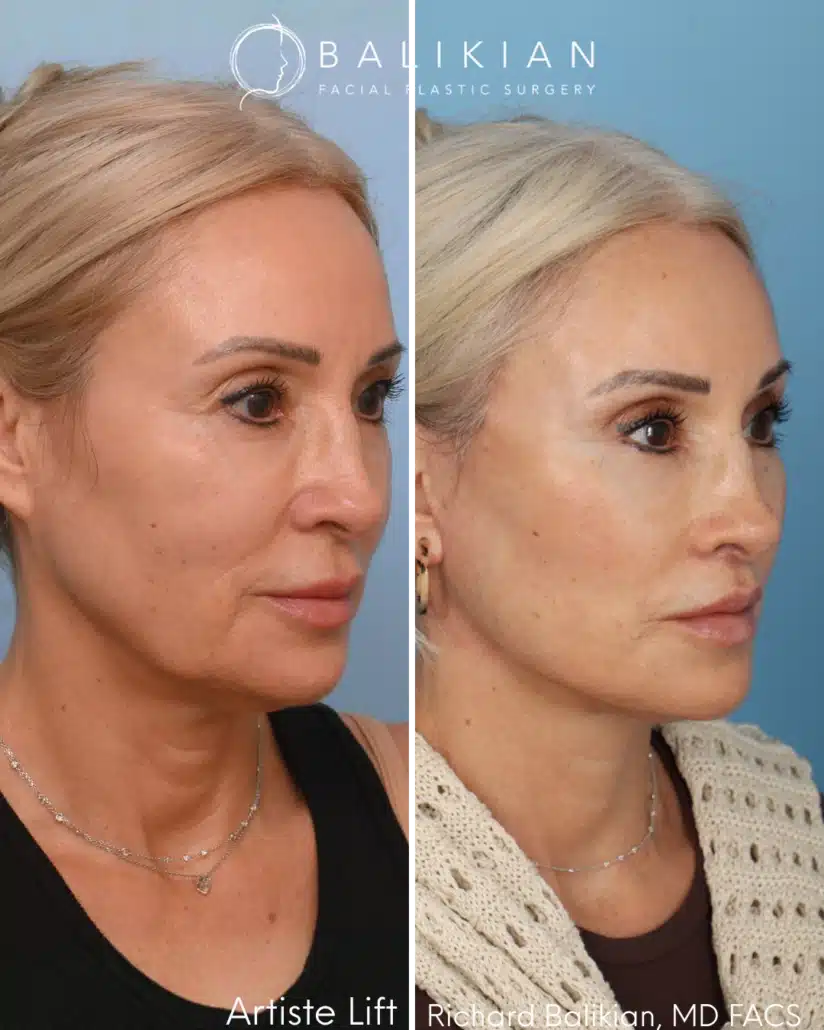
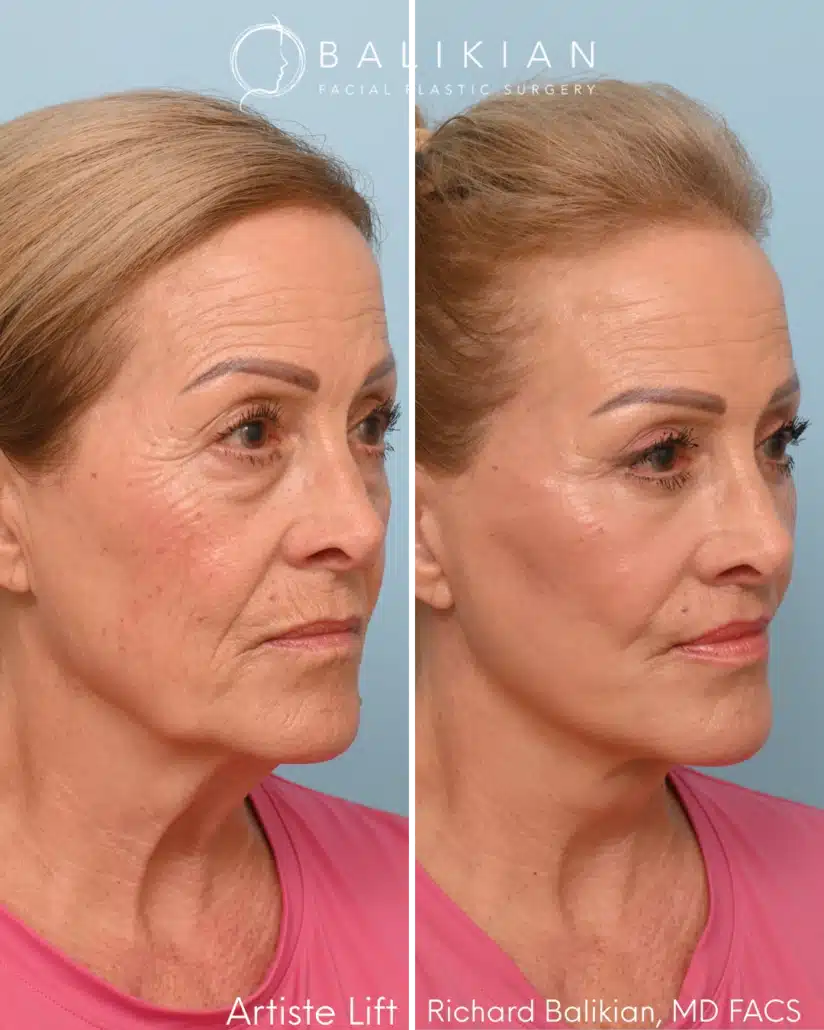
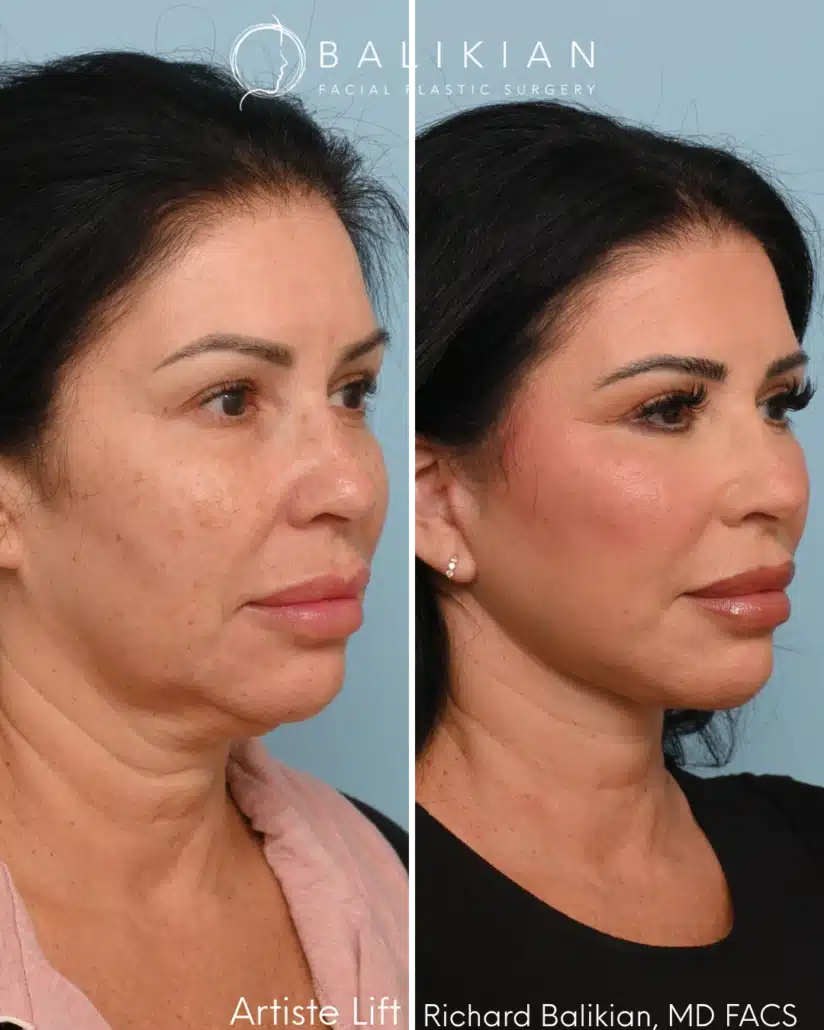
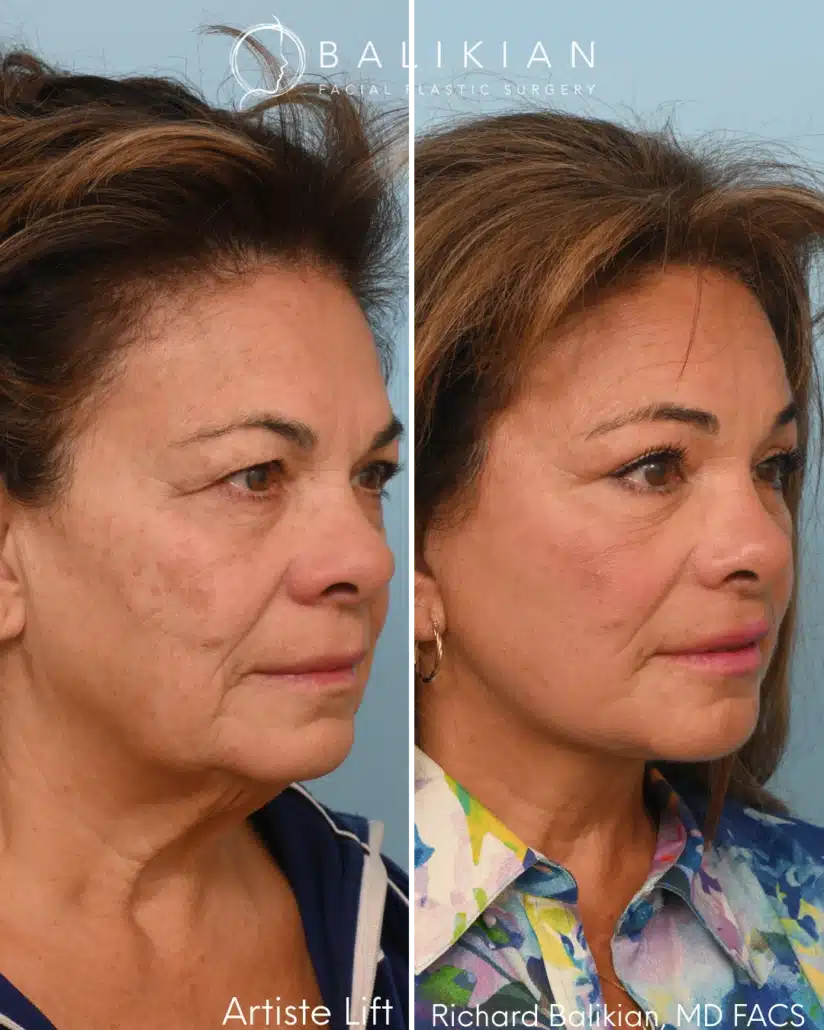
The cheeks regain support.
The jawline becomes more defined.
Jowls soften.
The transition between the face and neck becomes smoother.
Because the deeper foundation has already been restored, the skin no longer has to create the lift. Instead, it simply redrapes over the newly restored contours beneath it.
The result doesn’t come from pulling the skin tighter. It comes from rebuilding the structural support of the face.
One of the final steps of the operation is closing the skin.
Because the deeper facial tissues are now carrying the lift, the skin no longer has to. Instead of functioning like a suspension cable, it simply redrapes naturally over the restored foundation beneath it. This is one of the major advantages of a preservation deep plane facelift. Since the skin isn’t supporting the weight of the lift, very little tension is placed across the incision. That allows the incision to heal as the fine, paper-thin scar.
At our practice, patients also benefit from a drainless technique supported by fibrin sealant. By eliminating dead space beneath the skin and reducing fluid accumulation, this approach allows for a more comfortable recovery without the need for traditional surgical drains.

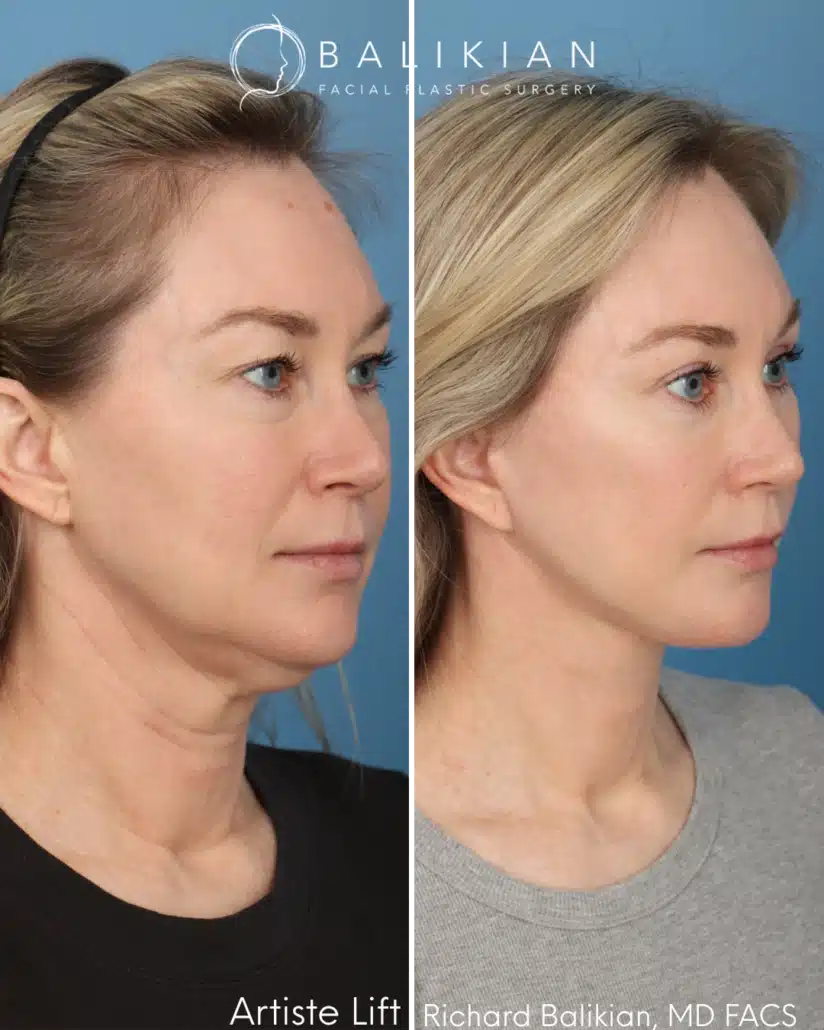
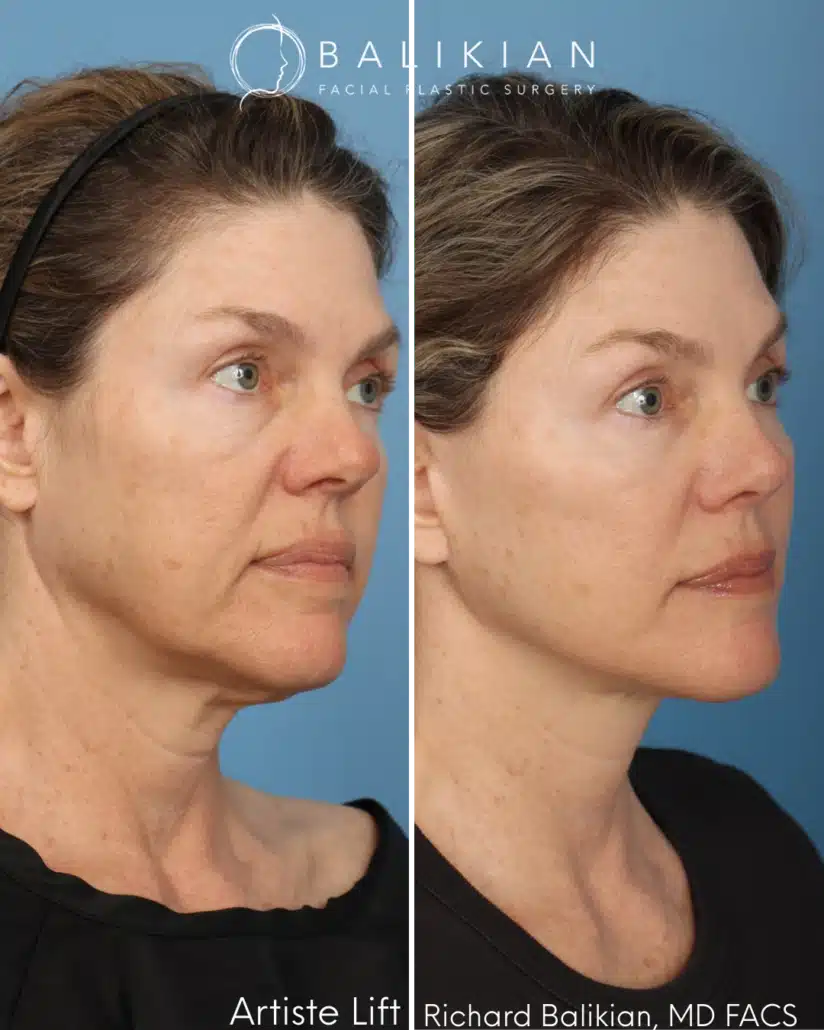
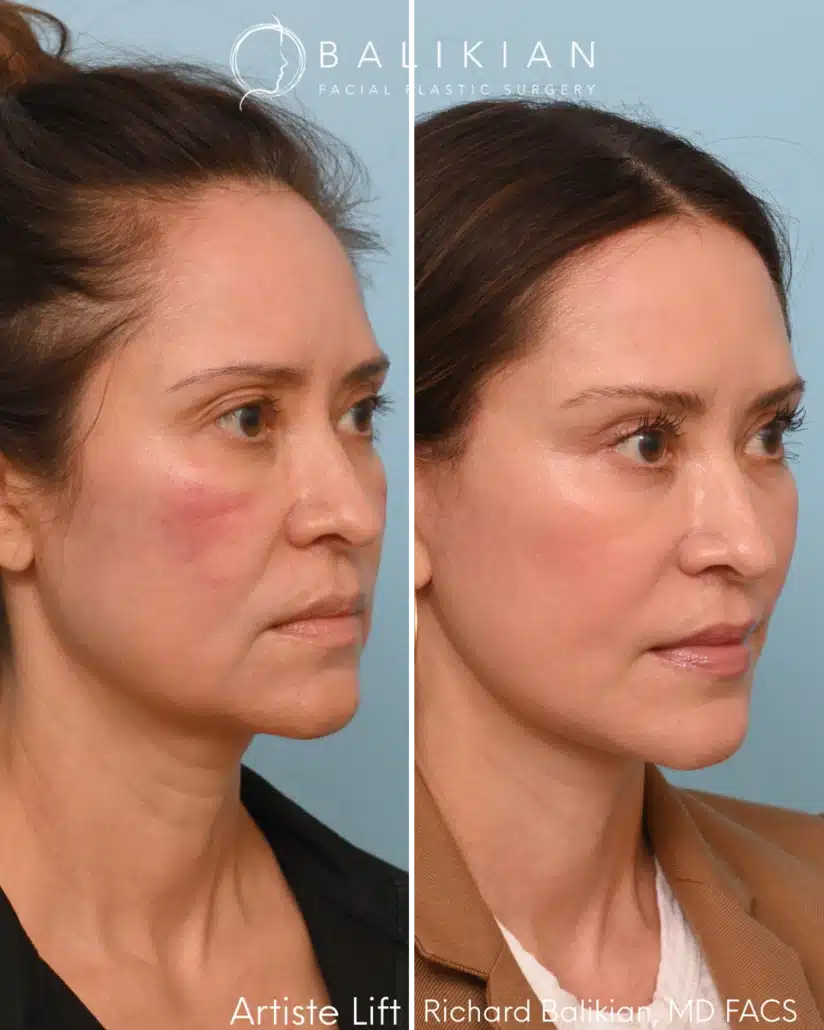
Recovery doesn’t begin after the operation is over. It begins with every decision that’s made during surgery.
Respecting blood supply.
Limiting unnecessary tissue dissection.
Preserving healthy facial support structures.
Closing the skin without tension.
Using a drainless technique.
Each of these decisions creates an environment where the face can heal more comfortably and predictably.
Healing still requires patience. Swelling gradually improves over the following weeks and the tissues continue to soften as recovery progresses. By respecting the anatomy throughout the operation, the body is given the best opportunity to heal efficiently and produce a natural, lasting result.

Hear real Artiste Lift™ patients share their recovery experiences, healing milestones and how they felt throughout their facial rejuvenation journey.
People often describe the preservation deep plane facelift as a surgical technique.
I think of it differently.
It’s a philosophy.
Every decision throughout the operation comes back to the same question:
How can facial support be restored while preserving the anatomy that makes each face unique?
That philosophy influences everything, from the initial consultation and surgical markings to tissue handling, ligament release, incision closure and recovery.
The goal isn’t simply to make someone look younger. It’s to restore facial harmony in a way that looks natural, heals beautifully and still looks like you.
What is a preservation deep plane facelift?
A preservation deep plane facelift is an advanced facelift technique that repositions the deeper facial support structures while preserving healthy blood supply and minimizing unnecessary tissue disruption. Rather than relying on skin tension, the lift comes from restoring the deeper anatomy of the face.
How is a preservation deep plane facelift different from a traditional facelift?
Traditional facelifts often rely more heavily on tightening the skin or repositioning the SMAS from above. A deep plane facelift works beneath the SMAS, releasing key retaining ligaments so the deeper facial tissues can be repositioned as a single unit. Preservation techniques further minimize unnecessary dissection whenever possible.
hy are the retaining ligaments important during a deep plane facelift?
Retaining ligaments anchor the facial soft tissues to the underlying skeleton. As the face ages, they contribute to jowls, flattened cheeks, and deeper facial folds. Carefully releasing selected ligaments allows the descended tissues to return to a more youthful position.
Does a preservation deep plane facelift create more natural-looking results?
Because the deeper tissues are repositioned instead of relying on skin tension, the face maintains its natural contours and movement. The goal is to restore youthful support without creating a pulled or over-tightened appearance.
Why doesn’t the surgeon simply tighten the skin?
Loose skin is usually a result of deeper facial support gradually descending over time. Simply tightening the skin does not address the underlying cause of facial aging. Restoring the deeper foundation allows the skin to redrape naturally with less tension.
Does preserving blood supply improve facelift healing?
Healthy blood supply plays an important role in wound healing. Modern preservation techniques aim to maintain tissue vascularity whenever possible, which may reduce swelling, bruising, and healing complications while supporting healthy scar formation.
How long does recovery take after a preservation deep plane facelift?
Most patients return to many normal social activities within two to three weeks, although swelling continues to improve for several months. Final refinement occurs gradually as the tissues soften and mature.
How long do preservation deep plane facelift results last?
While the aging process continues, a well-performed deep plane facelift typically provides long-lasting rejuvenation. Many patients continue to enjoy their results for 10 to 15 years or longer, depending on individual aging, skin quality, and lifestyle.
Who is a good candidate for a preservation deep plane facelift?
Patients with jowls, midface descent, loss of jawline definition, neck laxity, or significant facial aging are often good candidates. A consultation allows the surgeon to determine whether a preservation deep plane approach best matches the patient’s anatomy and goals.
Can a preservation deep plane facelift be combined with other procedures?
Yes. Depending on the patient’s anatomy, a preservation deep plane facelift is commonly combined with procedures such as a deep vertical neck lift, brow lift, blepharoplasty, facial fat transfer, lip lift, or CO₂ laser resurfacing to achieve balanced facial rejuvenation.
Dr. Richard Balikian is a highly respected facial plastic surgeon serving the San Diego area.
With over 20 years of experience and double board certification in Facial Plastic and Reconstructive Surgery as well as Head and Neck Surgery, Dr. Balikian offers a unique combination of technical expertise and artistic vision.
He is part of an elite group of surgeons with extensive training focused exclusively on the face and neck.