The Three Ways Your Face Ages
Dr. Richard Balikian Explains Why Gravity, Volume Loss, and Skin Texture Changes Each Require a Different Treatment
Before discussing surgery, Dr. Richard Balikian asks a different question.
How has your face changed over time?
Rather than viewing facial aging as a single process, he evaluates three distinct categories of aging. Each changes the face in its own way, and each requires its own approach to treatment. This philosophy challenges one of the biggest misconceptions about facial rejuvenation: that everyone ages the same way.
In reality, no two faces age alike.

Two people can be the same age, have similar lifestyles, and share many of the same concerns, yet require completely different treatment plans to achieve a natural result. As Dr. Balikian often tells his patients, there are three categories of facial aging. Understanding them is the foundation of natural facial rejuvenation.
This is usually the first thing patients notice.
“Things fall. The best way to treat them is to lift them back up.”
– Dr. Balikian
The jawline loses definition. Jowls begin to appear. The neck becomes softer. The cheeks seem lower than they used to be. Even the upper eyelids can begin to feel heavier.
Most people assume these changes happen because the skin has become loose. While skin certainly changes over time, that’s only part of the story.
Beneath the skin is a layer of muscles and connective tissue that supports the entire face. As we age, gravity gradually pulls these deeper structures downward. The cheeks descend. The jawline softens. The neck loses its youthful contour.
The skin simply follows.
This is one of the reasons Dr. Balikian performs preservation deep plane facelifts. Rather than relying on tension placed on the skin, the procedure restores the deeper facial support structures to a more youthful position.
As the deeper support structures of the face gradually descend, you may begin to notice one or more of the following changes:
While these changes are often blamed on loose skin, they are usually the result of deeper tissues shifting downward over time.
Because gravity affects the deeper layers of the face, treatment focuses on restoring those structures to a more youthful position rather than simply tightening the skin.
The right treatment depends on where gravity has had the greatest impact. During your consultation, Dr. Balikian evaluates each area individually to create a personalized plan that restores natural facial harmony.
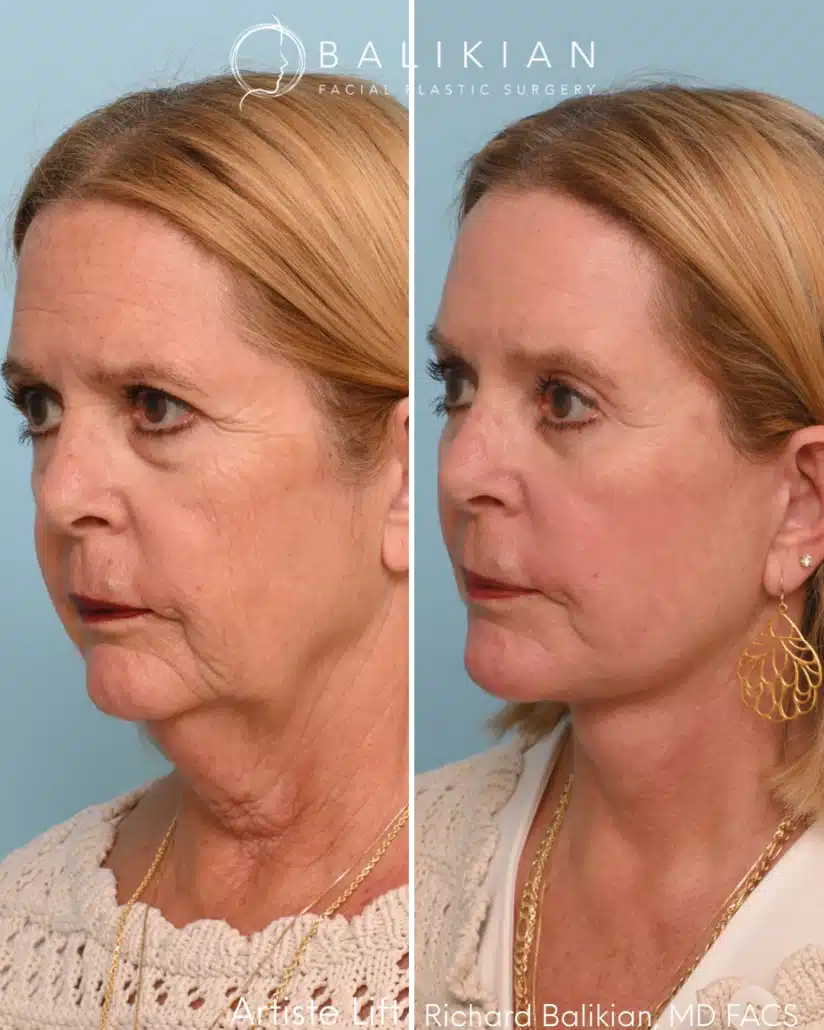
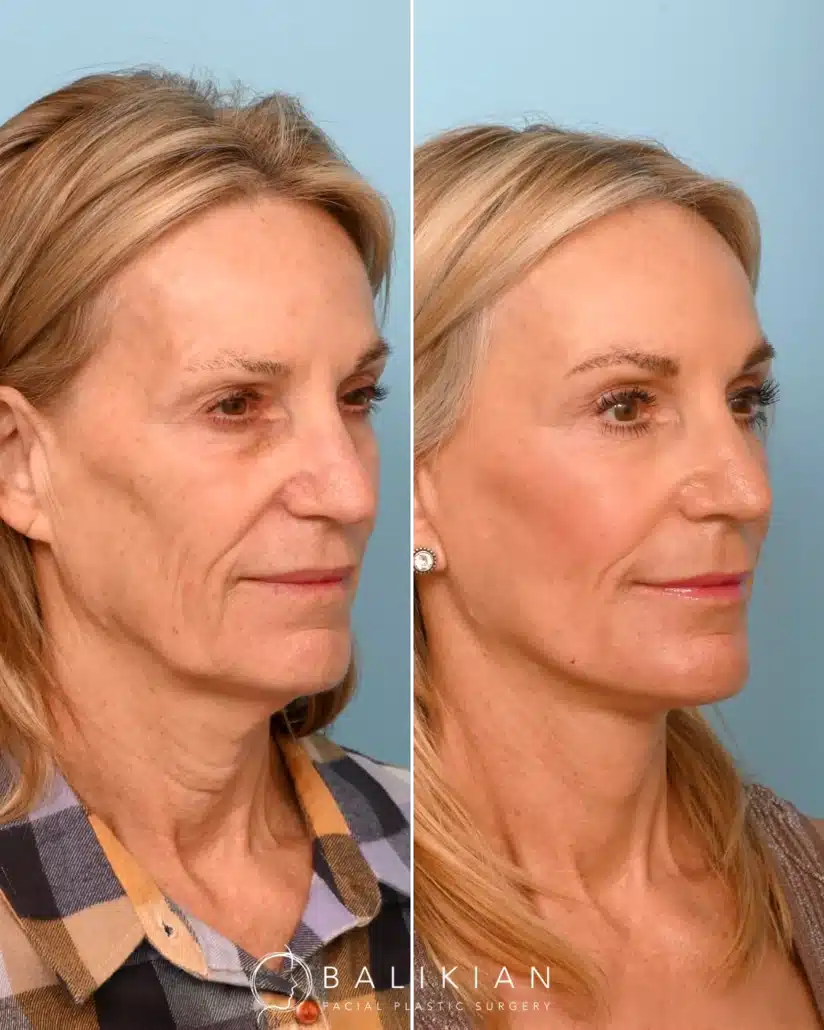
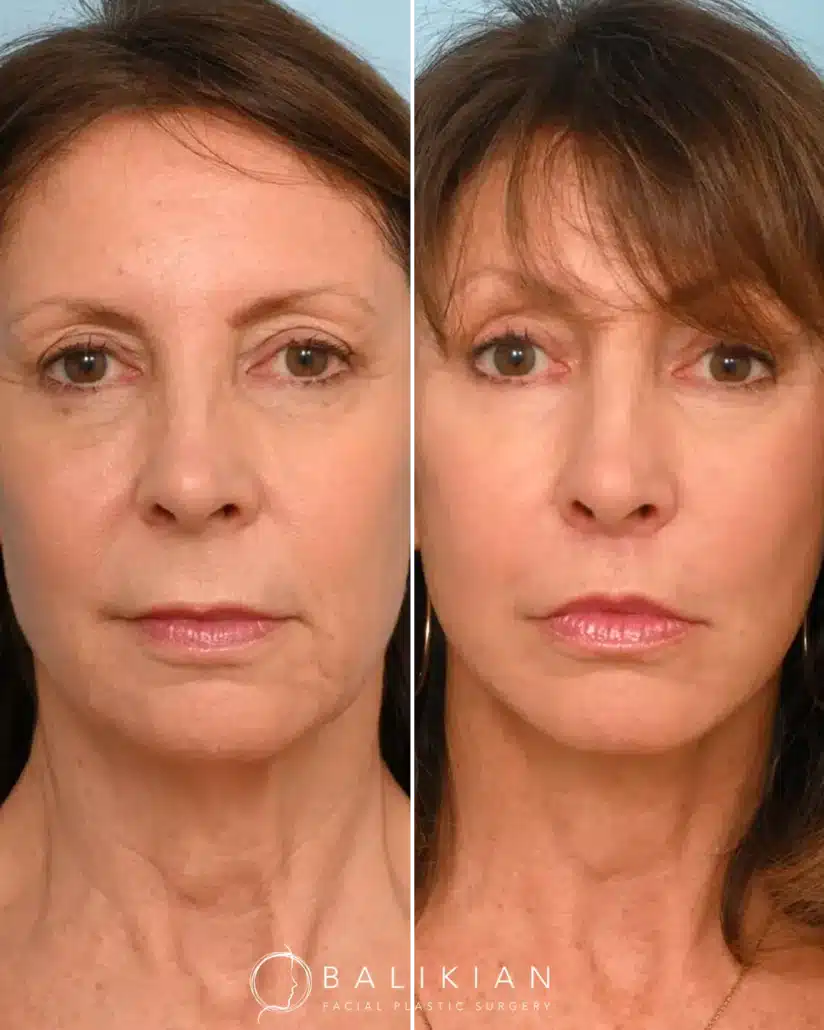
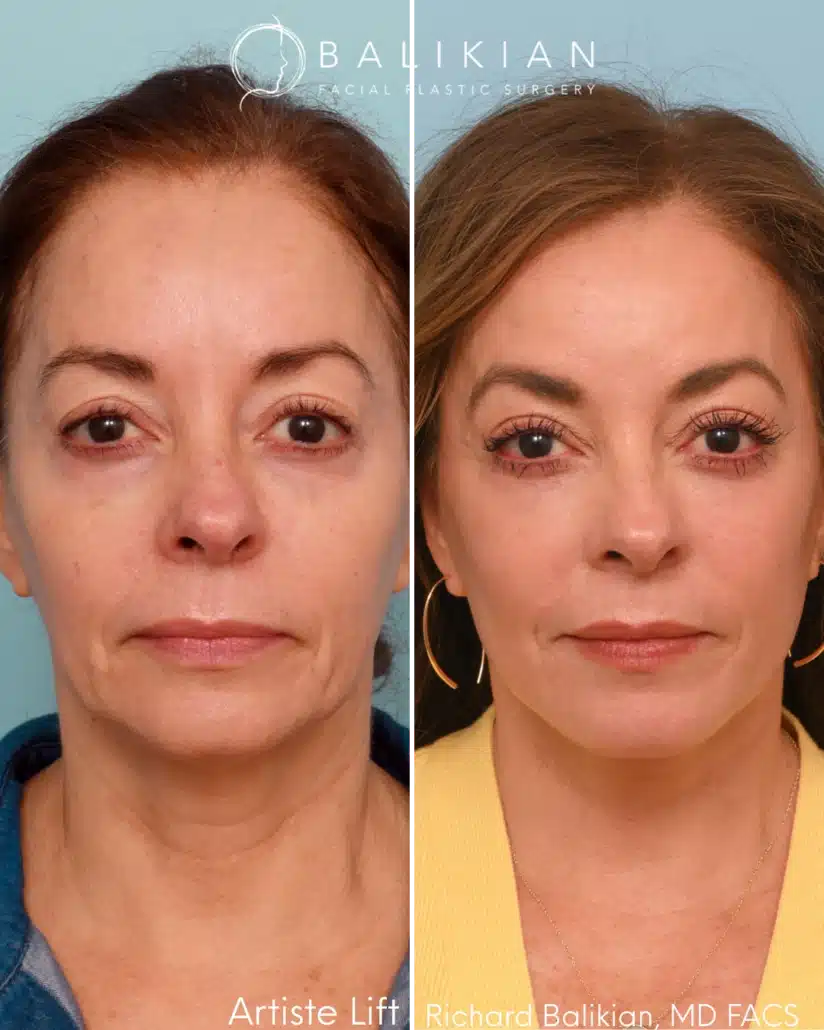
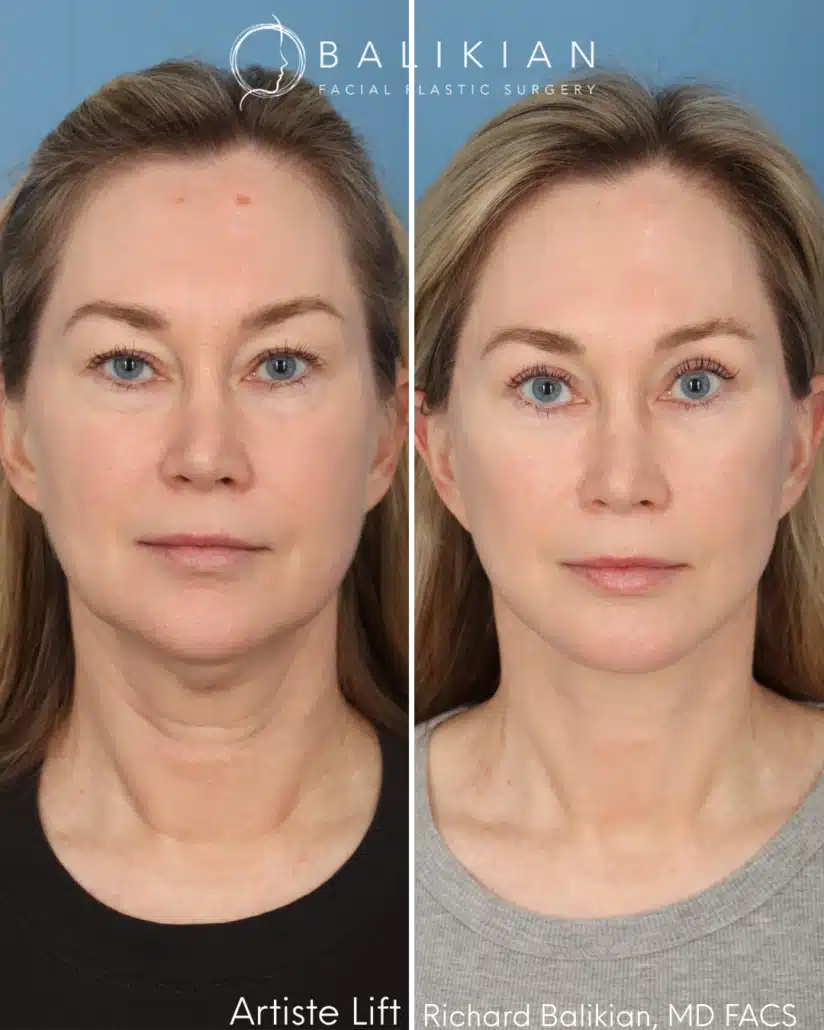
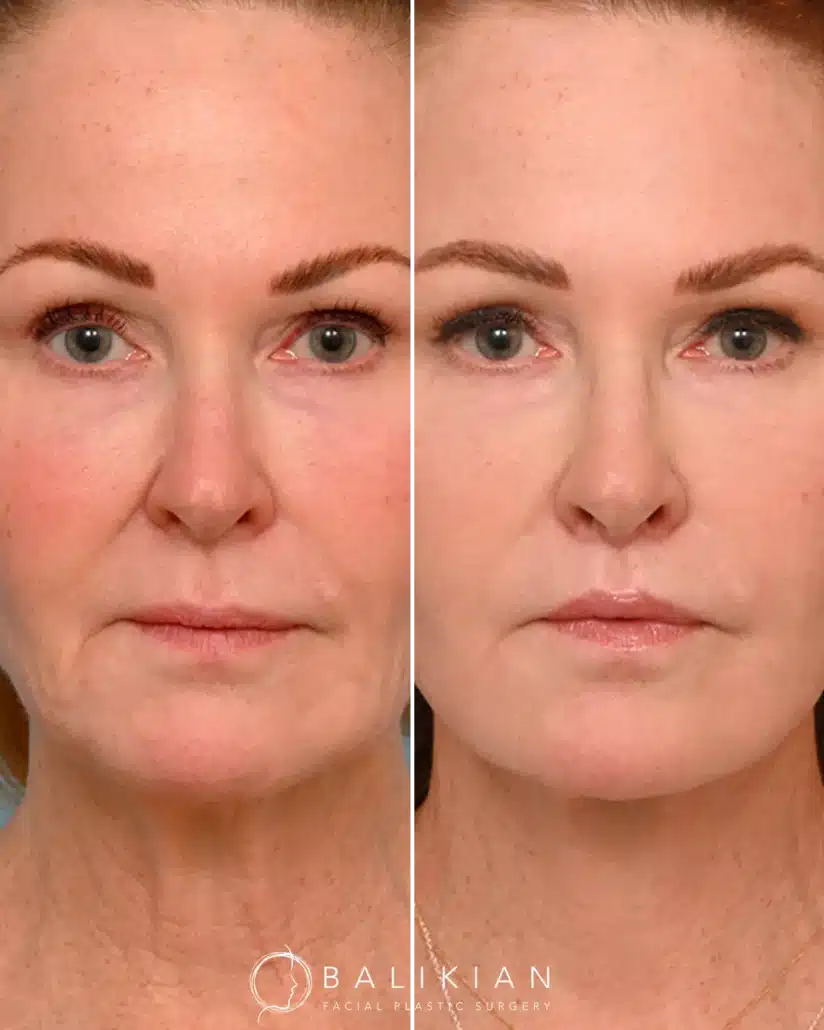
Notice how restoring the deeper support structures sharpens the jawline, lifts the cheeks, and improves the neck without creating a pulled appearance.
Gravity isn’t the only reason the face changes. Over time, the face gradually loses volume.
“We lose fat, bone, and muscle. We shrink from a grape in our twenties to a raisin as we turn one hundred.”
– Dr. Balikian
The fat compartments that once gave the cheeks and temples youthful fullness become smaller. Bone support subtly changes. Even muscle volume decreases with age.
These changes create shadows.
The temples become hollow. The cheeks flatten. Under-eye hollows deepen. Folds around the mouth become more noticeable.
Many people assume these areas simply need to be lifted, but lifting alone cannot replace volume that no longer exists. When volume loss plays a significant role in facial aging, restoring carefully placed volume can soften shadows while preserving natural facial harmony.
As facial fat, bone, and muscle gradually diminish with age, the face can lose its youthful fullness and begin to develop deeper shadows and hollow areas.
Unlike gravity, which causes tissues to descend, volume loss creates a deflated appearance that often requires restoring what has been lost rather than simply lifting the face.
When volume loss is a significant contributor to facial aging, treatment focuses on restoring natural contours while maintaining facial balance and harmony.
Rather than adding volume indiscriminately, Dr. Balikian carefully restores fullness only where it has been lost, helping patients look refreshed without appearing overfilled.
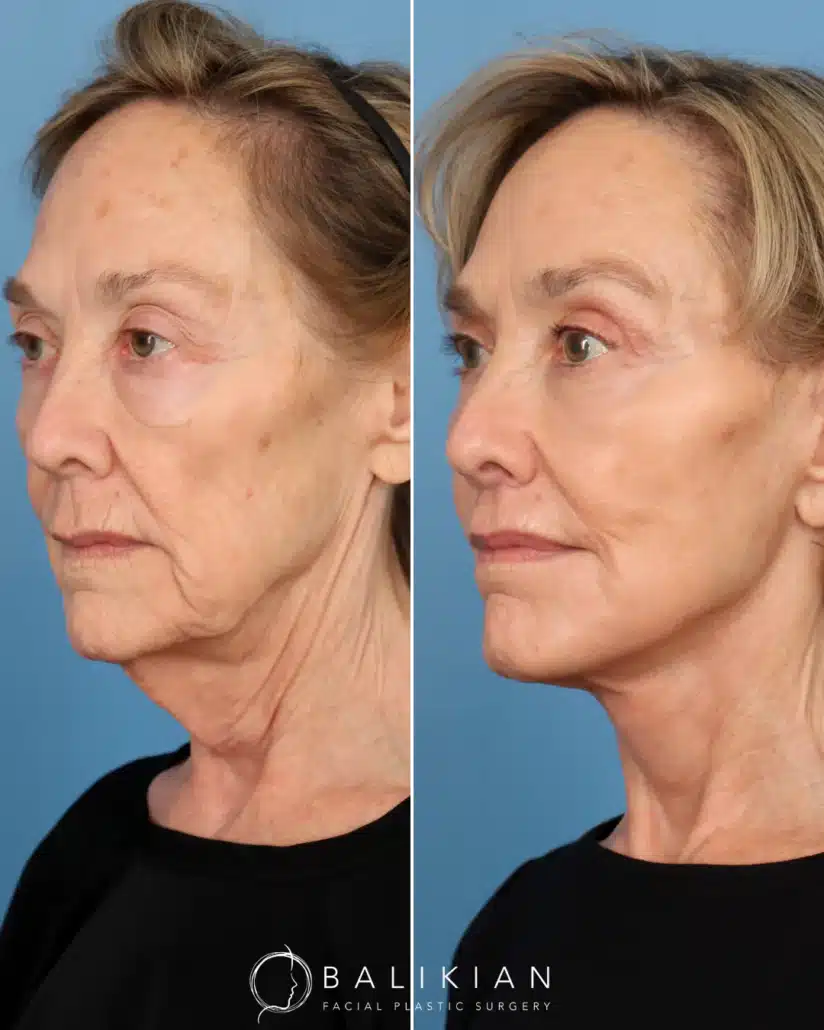
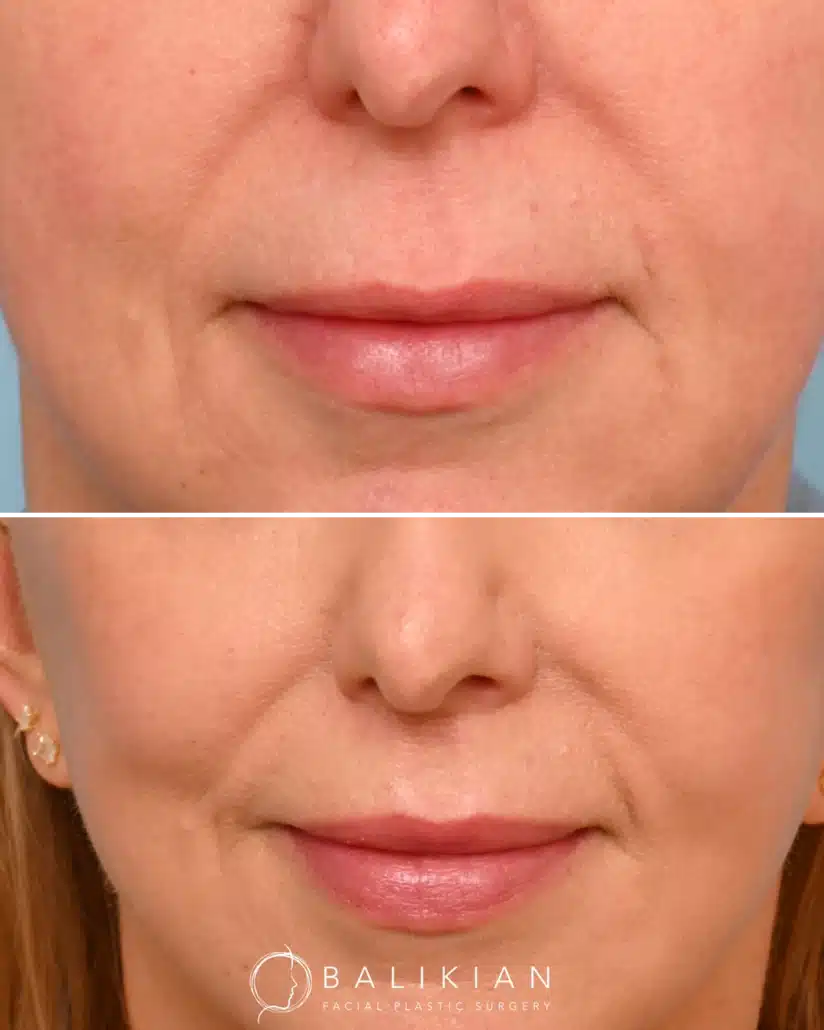
Restoring facial volume softened shadows and recreated youthful contours without looking overfilled.

This may be the biggest misconception in facial rejuvenation. Many people believe wrinkles are treated with a facelift. They’re not.
“A facelift isn’t a face pull.”
– Dr. Balikian
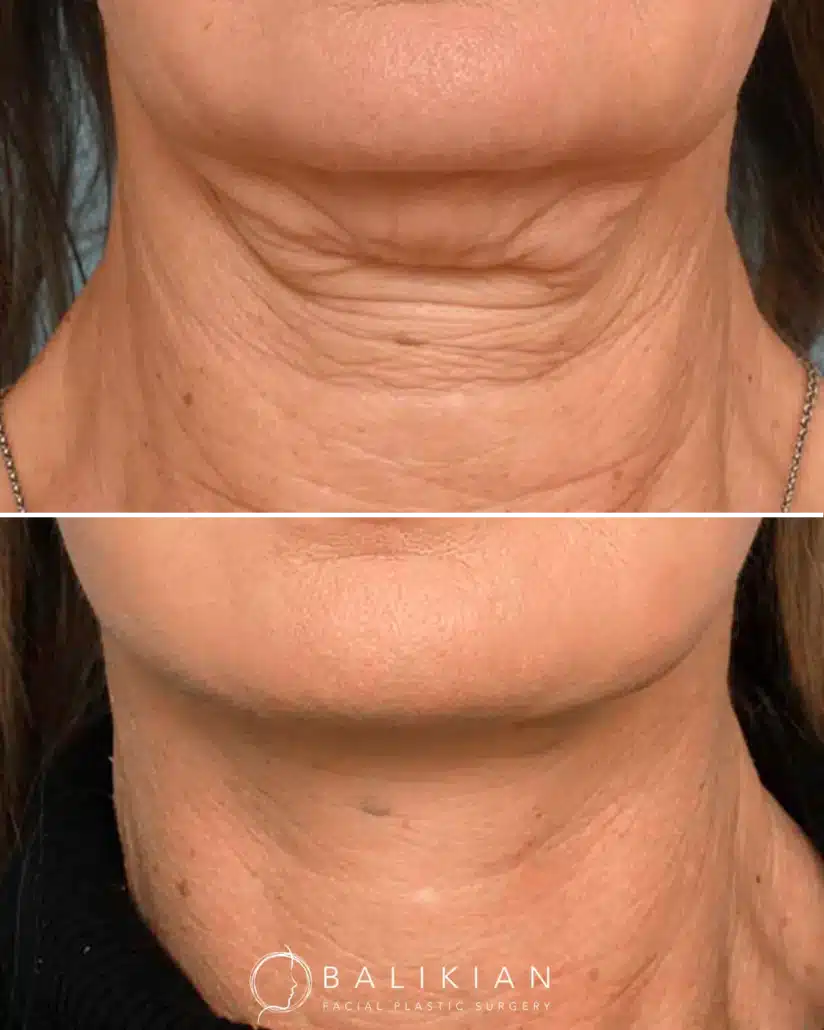
As collagen and elastin gradually decline, the skin itself changes. Fine lines develop. Wrinkles deepen. Years of sun exposure become more apparent. The skin becomes thinner, less elastic, and rougher in texture.
Lifting the face can improve sagging tissues, but it doesn’t change the quality of the skin.
That’s why skin resurfacing often becomes an important part of facial rejuvenation. By improving the skin itself, treatments such as CO₂ laser resurfacing can soften wrinkles and restore a healthier, smoother appearance.
As collagen and elastin decline, the skin itself begins to change. These changes affect the surface of the skin rather than the position or volume of the face.
Unlike gravity or volume loss, changes in skin texture are treated by improving the quality of the skin itself, helping restore a smoother, healthier, and more youthful appearance.
When skin quality is the primary concern, treatment focuses on stimulating collagen, improving texture, and addressing years of sun damage rather than lifting or restoring volume.
By combining skin rejuvenation with procedures that address gravity and volume loss when needed, Dr. Balikian creates comprehensive facial rejuvenation that treats all three categories of aging while preserving a natural appearance.
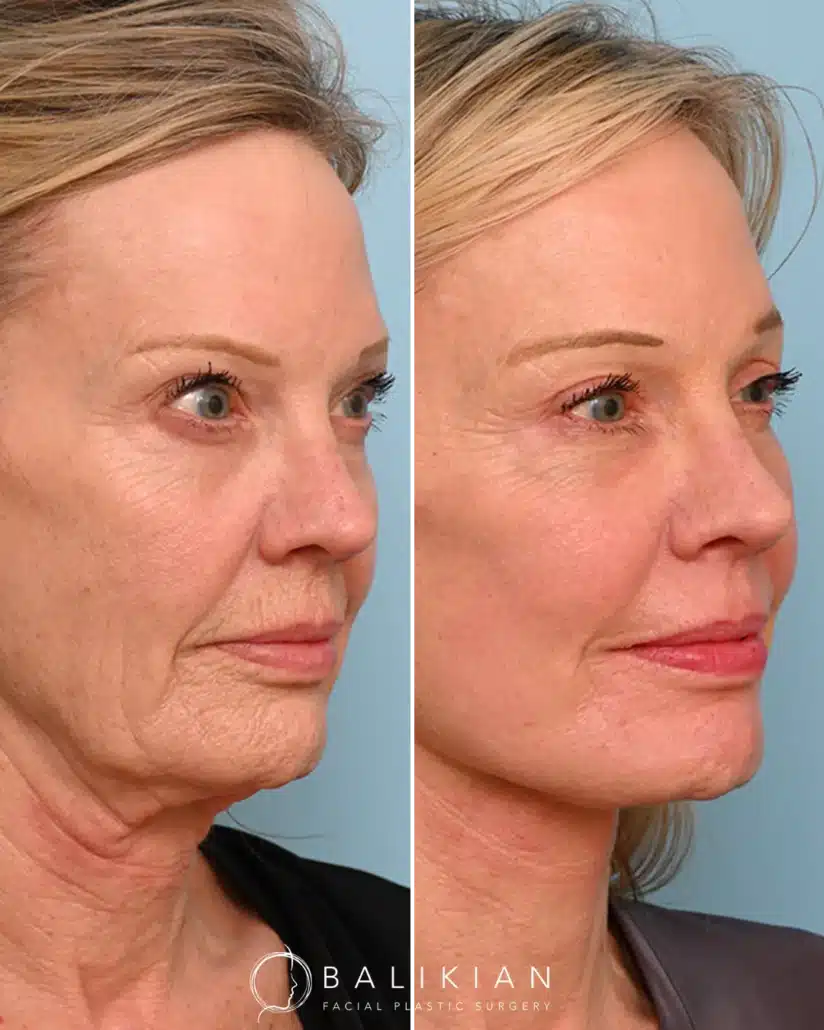
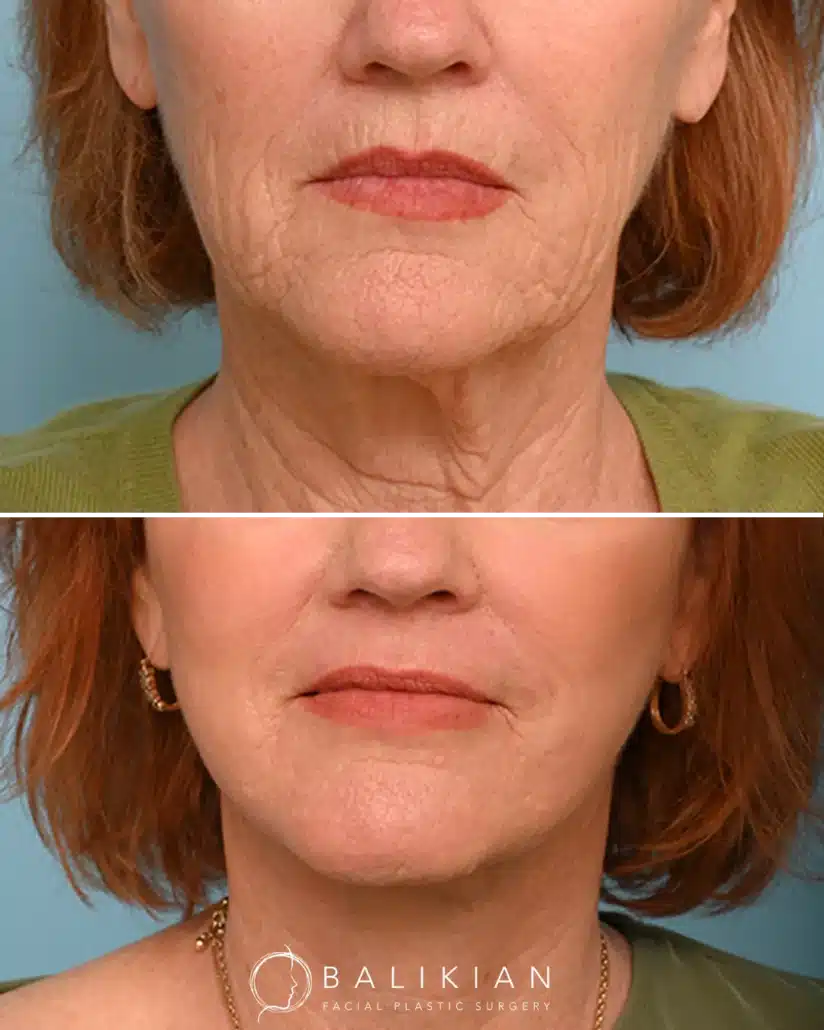
Notice the smoother texture, softer wrinkles, and healthier appearance.
Although we’ve discussed gravity, volume loss, and skin texture changes as separate categories, they rarely occur in isolation. Most people experience a combination of all three. The difference is that one category is often more dominant than the others.
One patient may be bothered primarily by jowls and loss of jawline definition caused by gravity. Another may have relatively little facial descent but significant volume loss in the cheeks and under the eyes. Someone else may have excellent facial structure yet notice that wrinkles, sun damage, and changes in skin texture make them look older than they feel. Because every face ages differently, there is no single procedure that is right for everyone.
A facelift can restore tissues that have descended, but it doesn’t replace lost volume or improve skin texture. Fat transfer can restore youthful contours, but it won’t lift sagging tissues. Laser resurfacing can dramatically improve skin quality, but it doesn’t reposition facial structures. Each treatment addresses a different category of aging.
That’s why Dr. Richard Balikian doesn’t begin a consultation by asking, “What surgery do you want?” Instead, he begins by understanding how your face has changed over time.
Only after identifying the role that gravity, volume loss, and skin texture changes play in your appearance can he recommend the combination of treatments that will produce the most natural result. Sometimes that means a preservation deep plane facelift alone. Sometimes it’s a facelift combined with fat transfer, laser resurfacing, eyelid surgery, or a brow lift. In other cases, surgery may not be the right first step at all.
The goal isn’t to perform more procedures. It’s to recommend the right treatment for the right reason.
That philosophy is the foundation of the Artiste Lift™ and the reason every treatment plan is personalized to the individual sitting in front of him.
Why does my face look older even if I take good care of my skin?
Healthy skin is important, but skin care alone cannot prevent all aspects of facial aging. Over time, gravity causes tissues to descend, facial fat and bone gradually lose volume, and collagen and elastin decline. Most people experience a combination of all three changes.
What are the three categories of facial aging?
Dr. Balikian evaluates facial aging in three categories: gravity, volume loss, and skin texture changes. Gravity affects facial position, volume loss changes facial contours, and skin aging leads to wrinkles, discoloration, and loss of elasticity. Identifying which category is most responsible for your concerns helps determine the most appropriate treatment.
Does everyone age the same way?
No. Genetics, sun exposure, lifestyle, anatomy, and bone structure all influence how the face ages. Two people of the same age may have completely different concerns and require different treatment plans.
Can a facelift fix wrinkles?
Not by itself. A facelift repositions descended facial tissues and improves the jawline and neck, but it does not directly improve skin texture or fine wrinkles. Those concerns are often better treated with laser resurfacing, skin care, or other skin rejuvenation procedures.
Why do I have jowls if I haven’t gained weight?
Jowls usually develop because gravity causes the deeper facial tissues to descend over time. At the same time, changes in bone and facial fat reduce support along the jawline, making the lower face appear heavier.
What causes hollow cheeks and under-eye shadows?
These changes are typically the result of facial volume loss rather than gravity alone. As deep fat compartments and facial bone gradually diminish with age, the face loses support, creating hollows and shadows.
At what age does facial aging usually become noticeable?
Facial aging begins long before most people notice it. Small changes in collagen, fat, and bone often begin in the 30s, while gravity and skin laxity become more apparent during the 40s and 50s. The timing varies significantly between individuals.
How do you determine which treatment I need?
Rather than recommending a procedure first, Dr. Balikian evaluates how your face has changed over time. By identifying the relative contribution of gravity, volume loss, and skin quality, he develops a personalized treatment plan designed to restore facial harmony while preserving your natural appearance.
Can nonsurgical treatments address all three categories of aging?
Nonsurgical treatments can improve many signs of aging, but no single treatment addresses every category. Skin resurfacing improves texture, fillers or fat transfer restore volume, and some devices provide mild lifting. More advanced tissue descent may require surgical repositioning for the most durable result.
Why is a personalized treatment plan so important?
Because every face ages differently. Treating volume loss when the primary issue is gravity, or performing a facelift when skin texture is the main concern, may leave patients disappointed. A comprehensive evaluation helps ensure each treatment addresses the underlying cause of aging rather than simply the visible symptom.
Dr. Richard Balikian is a highly respected facial plastic surgeon serving the San Diego area.
With over 20 years of experience and double board certification in Facial Plastic and Reconstructive Surgery as well as Head and Neck Surgery, Dr. Balikian offers a unique combination of technical expertise and artistic vision.
He is part of an elite group of surgeons with extensive training focused exclusively on the face and neck.