The Art of Fat Preservation in Lower Eyelid Surgery
Why Removing Too Much Fat Ages the Eyes and How Dr. Balikian Prevents Hollowing
The lower eyelids are one of the most delicate areas of the face. Small changes create big visual differences.
When lower eyelid surgery is done well, the eyes look refreshed, brighter and naturally youthful.
When it is done poorly, the eyes can look hollow, pulled or surgically altered.
Dr. Richard Balikian teaches that the goal of modern lower eyelid surgery is not to remove fat, but to preserve and reposition it. Years ago many surgeons believed the way to fix under eye bags was simply to take fat out. Today we know that removing too much fat makes the eyes look older, not younger.

This article explains why fat preservation matters, how dark circles form and why Dr. Balikian uses advanced techniques to protect the natural shape of the lower lid.
Most people think bags under the eyes are only caused by excess fat. In reality, several layered changes create the tired look.
The main causes include:
The tired or puffy appearance is often a contrast problem. A bulge sits next to a hollow and the shadow makes the bulge look worse.
Removing fat alone only solves half the problem and often exaggerates the hollow underneath.
“I never want to hollow the eyes. Instead of removing too much fat, we reshape it and fill the trough so the area looks smooth, not operated.”
– Dr. Balikian
Older techniques focused on fat removal. Patients often looked hollow, skeletonized or prematurely aged only months after surgery.
This happened because:
Dr. Balikian frequently sees revision cases where too much fat was removed elsewhere. These patients want fullness restored because the hollow makes them look tired, even though they had surgery to look refreshed.
Instead of removing fat, Dr. Balikian uses fat preservation or fat transposition. This means the fat is moved, not removed.
Fat preservation achieves several goals:
This technique keeps the natural volume that belongs under the eye while eliminating the bulge that makes the area look tired.
“Bags under the eyes are really shadows created by contour changes. Our goal is to bring the bulge down and the hollow up so the shadow is less.”
– Dr. Balikian
Most dark circles are not caused by pigment. They are caused by shadowing. The eye looks dark because a bulge sits above a hollow.
By repositioning fat downward into the hollow, Dr. Balikian creates a gentle, blended contour. The shadow disappears because the curve is now smooth instead of concave.
This is why fat repositioning often looks more natural and more youthful than surgery focused on fat removal alone.


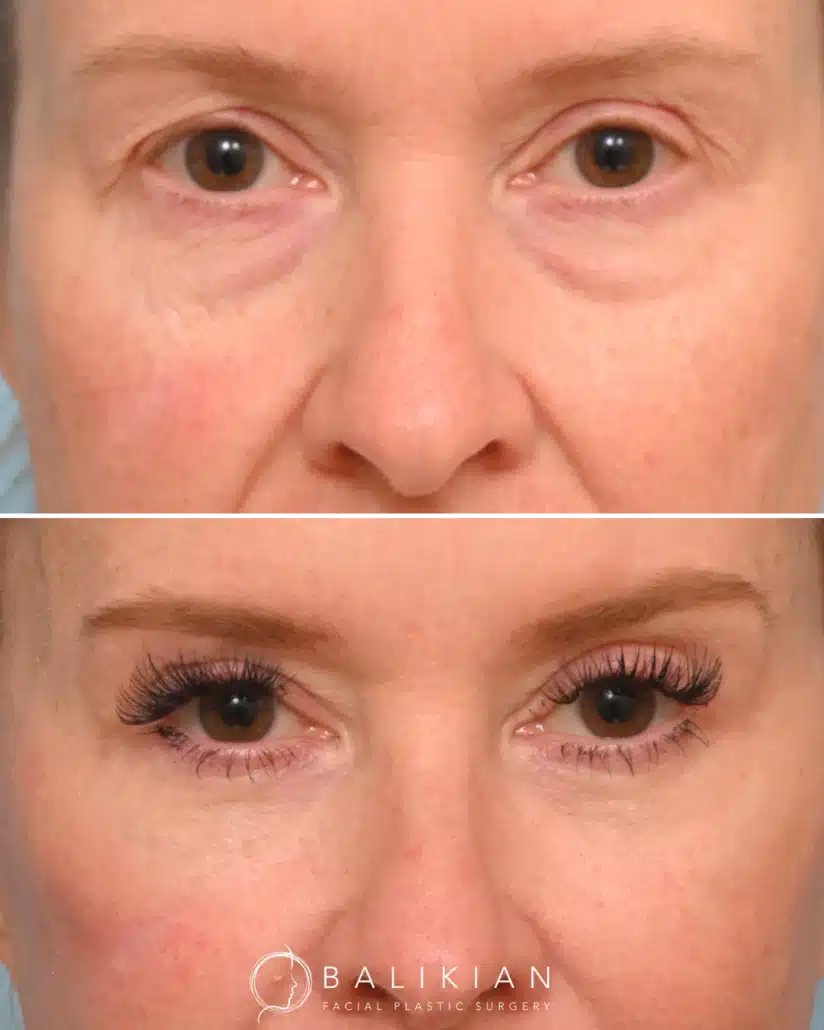
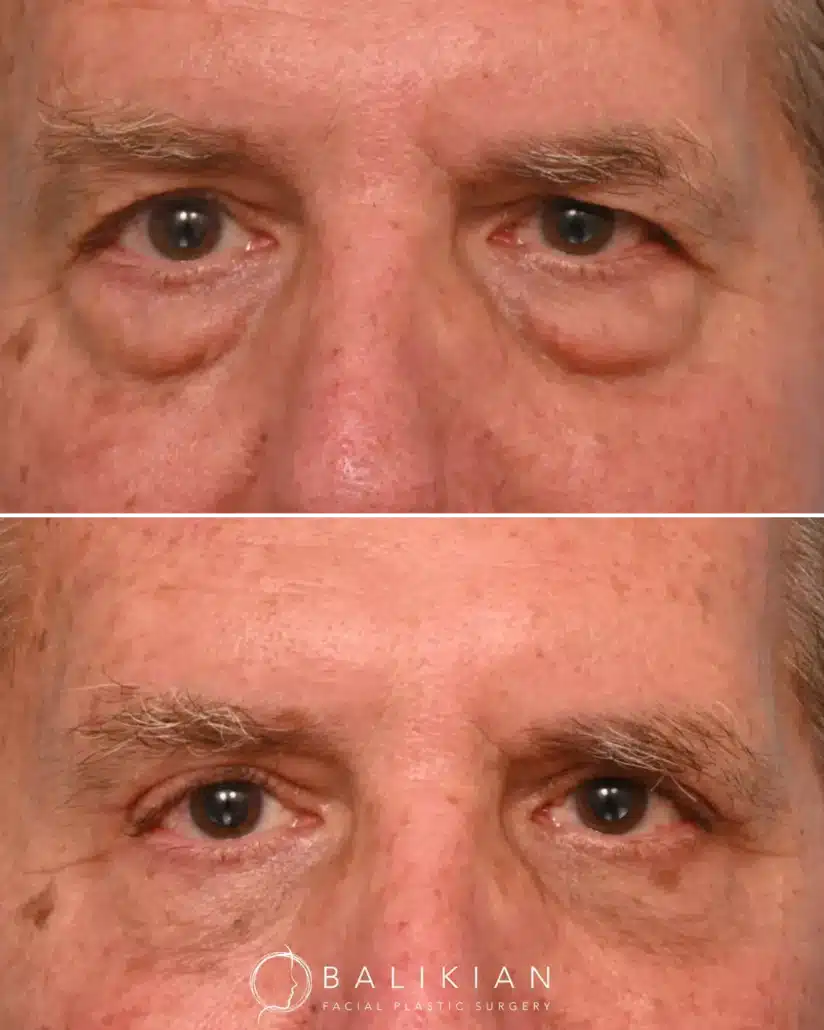


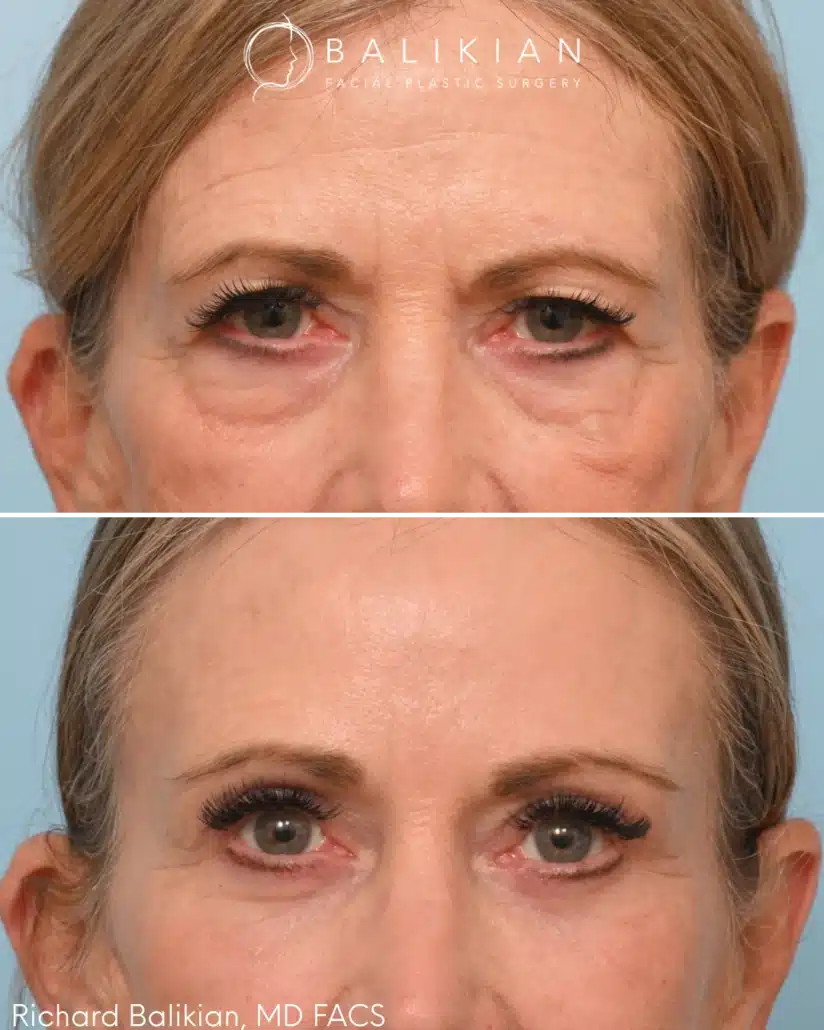
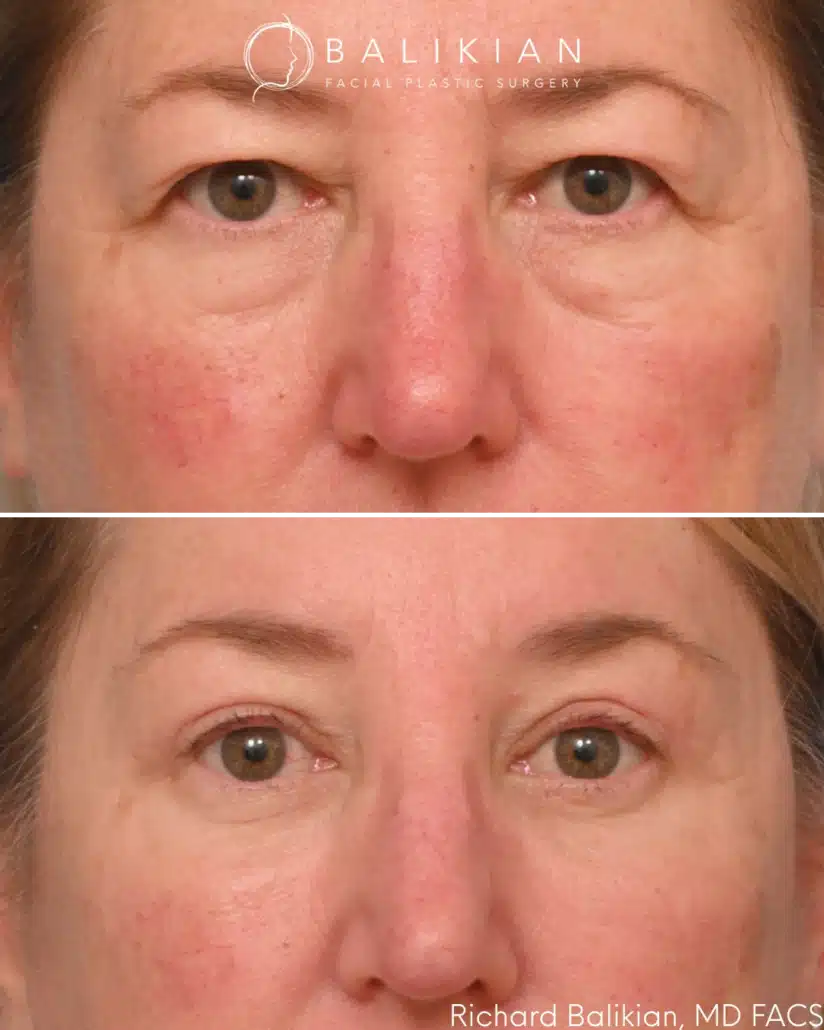
Dr. Balikian’s lower eyelid philosophy centers on three principles.
1. Protect the structural support of the lower lid
He avoids techniques that pull or weaken the lid.
2. Preserve natural fullness
A youthful eye has gentle volume. Hollowing makes the eye look aged.
3. Reposition fat with precision
The fat is moved into the tear trough to smooth the lid-cheek junction.
In this video, Dr. Balikian explains how the lower eyelid is supported beneath the surface and why maintaining that support is critical to achieving natural results. He also demonstrates how fat repositioning and preservation techniques help smooth contour while avoiding the hollow or overdone appearance.

These principles are what allow the eyelid to maintain its natural shape after surgery. By preserving structure, maintaining volume, and carefully repositioning tissue, the result is a smoother transition between the eyelid and cheek without distortion or tension.
“We can treat the bags from inside the eyelid without cutting the skin, which keeps the eyelid supported and avoids that pulled-down look.”
– Dr. Balikian
Depending on the patient’s anatomy, Dr. Balikian may perform:
Every plan is customized to maintain harmony between the upper lid, lower lid, and cheek.
Fat preservation creates a smoother and more youthful lower eyelid because it restores the natural volume that aging takes away instead of removing it.
Patients choose Dr. Balikian because:
His consistent focus is to help patients look like themselves, just clearer, smoother and more refreshed.
Fat preservation may be the right choice if your under eye concerns come from both fullness and hollowing, since this approach restores balance rather than simply removing tissue.
You may be a good candidate if you have:
For patients looking to improve lower eyelid contour while preserving natural fullness, fat preservation provides a more balanced approach that avoids the hollow appearance associated with more aggressive techniques. To learn more about how this works, visit our Eyelid Surgery Education Hub.
What does “fat preservation” mean in lower eyelid surgery?
Fat preservation involves repositioning or redistributing orbital or post-septal fat rather than removing large amounts. The goal is to maintain a smooth lid-cheek transition and avoid hollowing.
Why is over-removal of fat in the lower eyelid problematic?
Excessive fat removal can lead to a sunken appearance, exaggerated tear tractor shadows and permanent “skeletonized” look. Studies show hollowing increases with aggressive fat excision.
When is fat repositioning preferred to fat removal?
When patients display hollows, tear-trough deformities or under-eye shadowing, fat repositioning or grafting offers better aesthetic continuity.
Does fat preservation affect visible scarring or recovery?
While scarring is more about incision type, preserving fat can result in less overall tissue trauma, smoother healing and reduced risk of lid malposition.
Are there scientific data supporting fat repositioning vs removal in lower blepharoplasty?
Yes. Comparative studies demonstrate improved outcomes and fewer complications when fat is repositioned instead of removed in select patients.
How does fat preservation help avoid the “operated” look?
By blending volumes and maintaining natural contours (rather than making dramatic deficits), the result appears restored, not altered, helping patients “look like themselves, but refreshed.”
What anatomical factors guide the fat preservation decision?
Surgeons evaluate skin laxity, orbit and cheek support (vector), fat herniation, lids muscle tone and hollowing. Understanding these lets the surgeon pick repositioning over removal when appropriate.
Can fat preservation be combined with other techniques?
Yes. Fat preservation can be paired with skin pinch, laser resurfacing or minimal skin excision when skin laxity is also present, giving a comprehensive, tailored result.
How long do results last when fat preservation is used?
Studies indicate repositioned fat or fat grafted areas maintain contours longer than simple excision alone. Long-term impact depends on underlying aging and lifestyle.
How should I ask about fat preservation during consultation?
Ask: “Will you preserve or reposition fat under my lower eyelid? What prevents me from looking hollow? Will I need skin removal too? What incision will you use?”
Dr. Richard Balikian is a highly respected facial plastic surgeon serving the San Diego area.
With over 20 years of experience and double board certification in Facial Plastic and Reconstructive Surgery as well as Head and Neck Surgery, Dr. Balikian offers a unique combination of technical expertise and artistic vision.
He is part of an elite group of surgeons with extensive training focused exclusively on the face and neck.