Lower Blepharoplasty | Under-Eye Surgery For Natural, Rested Eyes
Lower Blepharoplasty For Natural, Rested Eyes With Scarless Inside Lid Access And Precise Skin Refinement
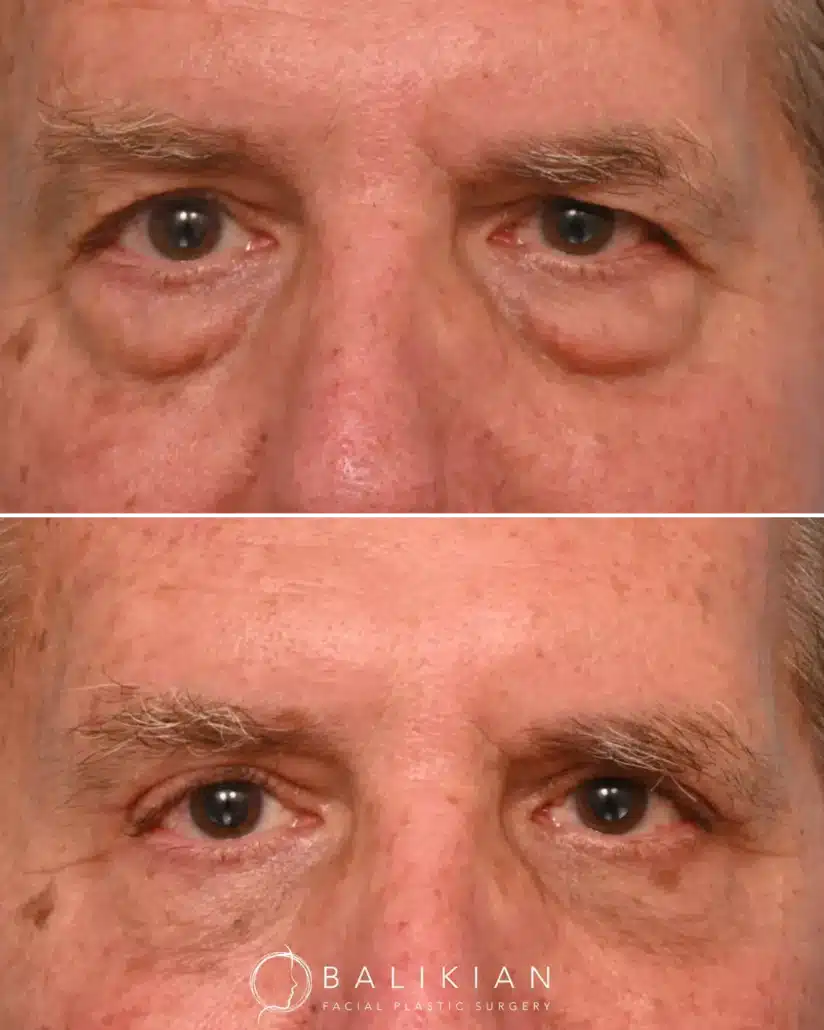
Lower eyelid plastic surgery smooths under eye bags, blends the lid to cheek transition, and refines loose skin under the eyes without changing your expression. Modern blepharoplasty focuses on lifting and blending.

Fat is repositioned or conservatively removed and the skin is treated so the surface matches the support beneath.
“The eyes are the window to the soul… We have to get those looking right… It’s not about making big surprised eyes. It’s about having youthful, pleasant eyes.”
– Dr. Balikian
The goal is a rested look that moves naturally.
Lower eyelid surgery is one component of eyelid rejuvenation and is planned differently than upper eyelid procedures. To better understand how eyelid surgery techniques vary and how surgeons evaluate the eyelids as a whole, explore our Eyelid Surgery Education hub.
Lower blepharoplasty may be right for you if under eye puffiness, hollows, or loose skin create persistent shadows that make you look tired despite good skincare and rest.
You may be a good candidate if you notice:
Your plan is tailored. Options include transconjunctival access from inside the eyelid for fat work when skin excess is minimal, skin pinch blepharoplasty for true extra skin, laser or peel for crepey texture, and blepharoplasty with fat transfer for hollowing.
As a double board-certified facial plastic and reconstructive surgeon, Dr. Richard V. Balikian treats under eye bags with a preservation-focused plan that begins with scarless transconjunctival access and prioritizes natural contour and eyelid support.
Every step is tailored to your anatomy to smooth shadows, protect eyelid function, and deliver a rested look that is younger, not different.



Here is a quick guide to the core techniques we use, matched to your anatomy to smooth under-eye bags, blend the lid to cheek transition, and protect eyelid support.
Each technique is selected based on the underlying cause of the concern, not just how it appears on the surface. By tailoring the approach to factors such as fat position, skin quality, and eyelid support, it is possible to create a more balanced and natural result rather than relying on a single method.

In the above video, Dr. Balikian walks through how different techniques are used to address under-eye bags and contour changes. He explains how preserving and repositioning tissue, rather than removing it aggressively, allows for smoother transitions and more natural-looking outcomes.
Inside-lid access treats the fat pads while preserving eyelid support and avoiding an external scar. It is ideal when skin excess is minimal and can be paired with a light laser or peel to smooth crepey texture.
This approach helps maintain natural eye shape and reduces the risk of lower-lid retraction.
A precise pinch removes a narrow strip of extra skin just beneath the lashes without undermining the muscle. It is best for true skin redundancy and fine wrinkling, and it can be combined with transconjunctival fat work in the same session.
Healing is typically predictable because the support structures are left intact.
“Most lower bags are treated through a scarless inside the eyelid approach. When hollowness remains, I add micro fat to lift the trough without puffiness.”
– Dr. Balikian
Micro-fat is harvested and placed in tiny droplets to soften deeper hollows and reduce shadowing along the tear trough and lid-cheek junction. It is helpful when native fat is insufficient after repositioning.
Careful layering aims for a smooth blend that looks natural in motion.
Orbital fat is gently movedfat downward to fill the hollow at the lid-cheek junction for a smooth transition. This preserves your own tissue, avoids an over-reduced or hollow look, and can lessen future dependence on fillers.
It is tailored by compartment and often paired with a small skin pinch or resurfacing for the most refined finish.
Most patients describe tightness more than pain during the first days. Swelling and bruising soften through week one. Light social time is common by weeks two to three, with continued refinement over several months.
A preservation strategy that avoids wide skin undermining supports a smoother early recovery.
Lower blepharoplasty smooths under eye bags, blends the lid to cheek transition, and reduces shadows that make eyes look tired. The eye shape stays natural because support structures are preserved and fat is repositioned rather than over removed.
When true extra skin is present, a precise skin pinch blepharoplasty refines the surface while keeping the lash line stable. If hollowness remains, micro fat transfer adds soft volume for a balanced contour.
What You Can Expect
The result is younger, not different, with eyes that look rested, refined, and authentically you.
Below are straightforward answers to the questions we hear most about lower blepharoplasty, including which under eye surgery fits your anatomy, what scars to expect, how fat is handled, and when fillers make sense.
If puffiness is the issue and skin excess is minimal, the transconjunctival approach lets the surgeon treat and reposition fat from inside the lid. If loose skin remains, a skin pinch or limited skin flap addresses redundancy. Technique follows anatomy.
The transconjunctival route leaves no external scar. A skin pinch places a fine line just beneath the lashes that is designed to be discreet once healed.
The emphasis is on fat preservation or repositioning to avoid hollowness. When needed, blepharoplasty with fat transfer can restore soft volume for a longer lasting blend.
Fillers can camouflage mild hollows. For true bags or significant troughs, surgery with fat repositioning or fat transfer offers a structural, longer lasting solution.
Peer reviewed studies describe strong satisfaction with modern lower blepharoplasty that favors preservation and blending. Transconjunctival access from inside the eyelid treats fat while protecting eyelid support and is associated with a lower risk of lid retraction when skin excess is minimal. Fat repositioning smooths the tear trough by moving your own tissue to the hollow and can reduce the need for fillers later.
When there is true extra skin, a skin pinch blepharoplasty removes a narrow strip just beneath the lashes without undermining the muscle. This tissue sparing method supports predictable healing and can be paired with laser or a peel for crepey texture. For deeper hollows, careful micro fat transfer placed in tiny droplets improves contour with high patient satisfaction when performed with precise technique.
Taken together, the literature supports a preservation approach. Treat fat thoughtfully, protect support, remove only the skin that is truly extra, and use micro fat or resurfacing when needed. The goal is clear. Eyes look younger, not different, with results that move naturally and age gracefully.
What is lower blepharoplasty and who is it for?
Lower blepharoplasty is under eye surgery that treats puffiness, bags, hollows, and loose skin under the eyes. It smooths the lid to cheek transition so your eyes look rested and natural.
Is transconjunctival lower blepharoplasty right for me?
Yes if you have under eye bags with minimal extra skin. The transconjunctival approach treats fat from inside the eyelid, protects eyelid support, and leaves no external scar.
What is skin pinch blepharoplasty?
Skin pinch blepharoplasty removes a narrow strip of extra skin just beneath the lashes without undermining the muscle. It refines true skin redundancy and can pair with laser for surface smoothing.
What is fat repositioning in lower eyelid plastic surgery?
Fat repositioning moves your own orbital fat downward to fill the tear trough and blend the lid to cheek junction. It helps avoid hollowing and supports a smooth, long-lasting transition.
What is blepharoplasty with fat transfer and when do you use it?
Blepharoplasty with fat transfer adds micro fat in tiny droplets to treat deeper hollows when native fat is not enough. It reduces shadowing and improves contour for a soft, natural look.
Will I have a visible scar after under eye surgery?
The transconjunctival route leaves no external scar. A skin pinch creates a fine line under the lashes that is designed to be discreet once healed.
How do you treat loose skin under the eyes versus crepey texture?
True loose skin is best treated with a precise skin pinch blepharoplasty. Crepey texture often responds better to laser resurfacing or a chemical peel rather than cutting.
How long is the recovery after bag under eye surgery?
Most patients feel tightness more than pain for a few days. Swelling and bruising ease during week one, light social time is common by weeks two to three, and refinement continues for several months.
Will I look pulled or different after lower blepharoplasty?
No. The goal is younger, not different. By preserving eyelid support and using fat repositioning or fat transfer as needed, the eyes look rested and move naturally.
How long do results last after lower eyelid plastic surgery?
Results are long lasting because the procedure treats the structure that causes bags and hollows. Healthy habits and good skin care help maintain the outcome over time.
Can lower blepharoplasty be combined with upper blepharoplasty or a brow lift?
Yes. Combining lower blepharoplasty with upper blepharoplasty, a subtle brow lift, or laser resurfacing can create harmony across the eyes when the exam shows it will help.
What are the risks and how does Dr. Balikian reduce them?
Risks include bruising, swelling, asymmetry, dry eye, or lid malposition. Dr. Balikian reduces risks by using inside-lid access when appropriate, preserving muscle and support, handling fat conservatively, and tailoring the plan to your anatomy.
Dr. Richard Balikian is a highly respected facial plastic surgeon serving the San Diego area.
With over 20 years of experience and double board certification in Facial Plastic and Reconstructive Surgery as well as Head and Neck Surgery, Dr. Balikian offers a unique combination of technical expertise and artistic vision.
He is part of an elite group of surgeons with extensive training focused exclusively on the face and neck.
Read the Science