Upper Eyelid Surgery for Brighter, More Open Eyes
Discover How Upper Eyelid Surgery Can Brighten and Rejuvenate Your Eyes
If your upper eyelids feel heavy, hide your natural crease, or make you look more tired than you feel, upper eyelid surgery may be the right solution. Often called upper blepharoplasty, hooded eye surgery, or eyelid lifting, this precise procedure removes extra skin and reshapes soft tissue to create a smoother crease, open your eyes and refresh your overall expression.

Modern studies show that upper blepharoplasty can do more than improve appearance. Research reports high patient satisfaction, better comfort, and in some cases measurable improvement in the visual field. When performed with thoughtful planning and preservation-focused technique, the results look natural, last for years and have a very low rate of serious complications.
Upper eyelid surgery addresses excess skin and heaviness, but it represents only one part of eyelid rejuvenation. Our Eyelid Surgery Education hub explains how upper and lower eyelid procedures differ and how surgical planning is approached.
Many people seek upper eyelid surgery when heavy, sagging lids change how their eyes look and feel, making them appear tired or affecting daily comfort.
Upper eyelid plastic surgery can restore a more awake, open appearance and relieve the sense of heaviness many patients feel. For some, it can also improve how light enters the eye and widen peripheral vision.
Dr. Richard Balikian performs upper eyelid surgery with a focus on precision, preservation, and results that look refreshed yet natural. Each procedure begins with a careful evaluation and detailed surgical planning, ensuring that the approach is tailored to the patient’s unique anatomy rather than following a standard template.

By preserving structure and thoughtfully addressing skin and underlying fullness, the goal is to restore a more open and balanced upper eyelid. This measured approach allows for improvement in contour and definition while maintaining the natural character of the eyes.
“An upper blepharoplasty is not just taking away skin. It is about precision and preservation. I remove only what is necessary, keep the eyelid muscle intact so blinking stays comfortable, and maintain gentle fullness for a soft, youthful lid.”
– Dr. Balikian
During upper eyelid plastic surgery, Dr. Balikian:
This modern, preservation-focused method is supported by current research, which shows better long-term comfort and a natural lid shape compared with aggressive tissue removal.
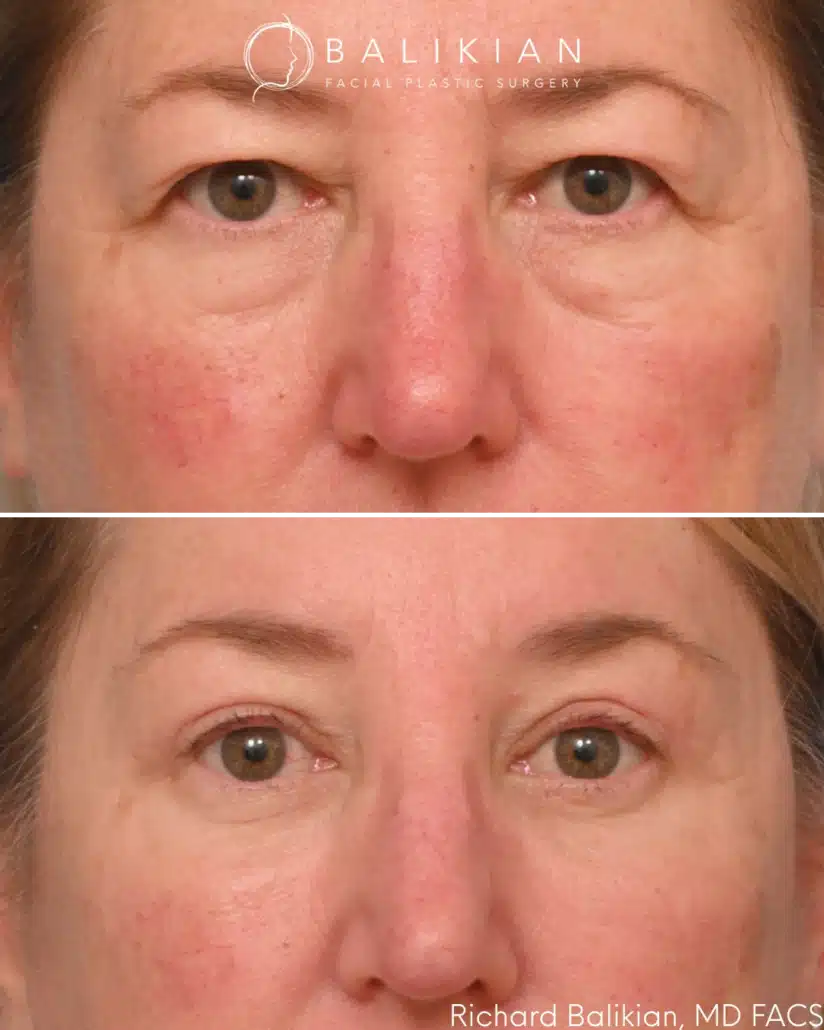

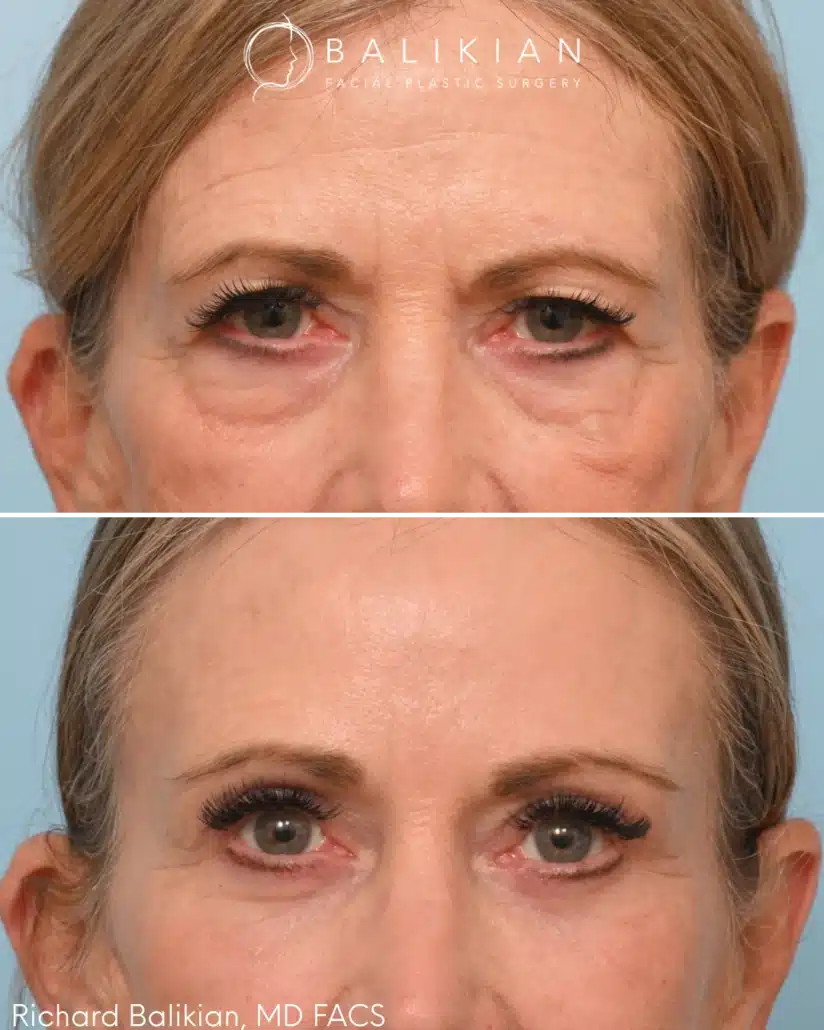
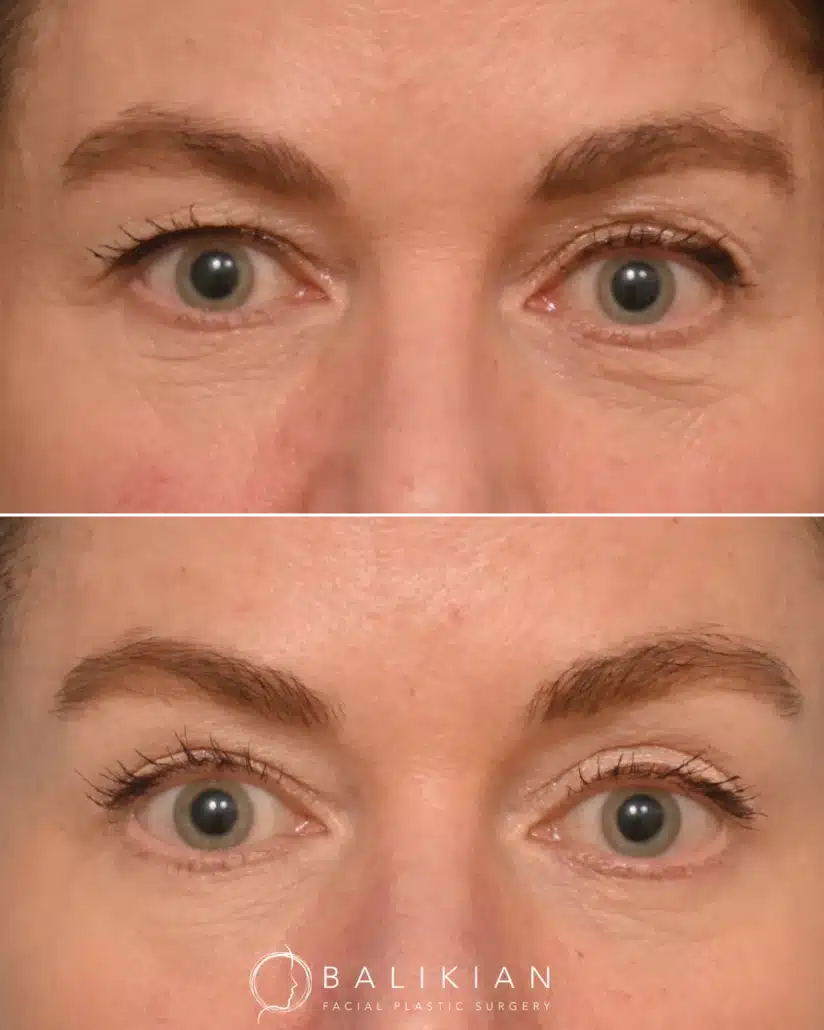
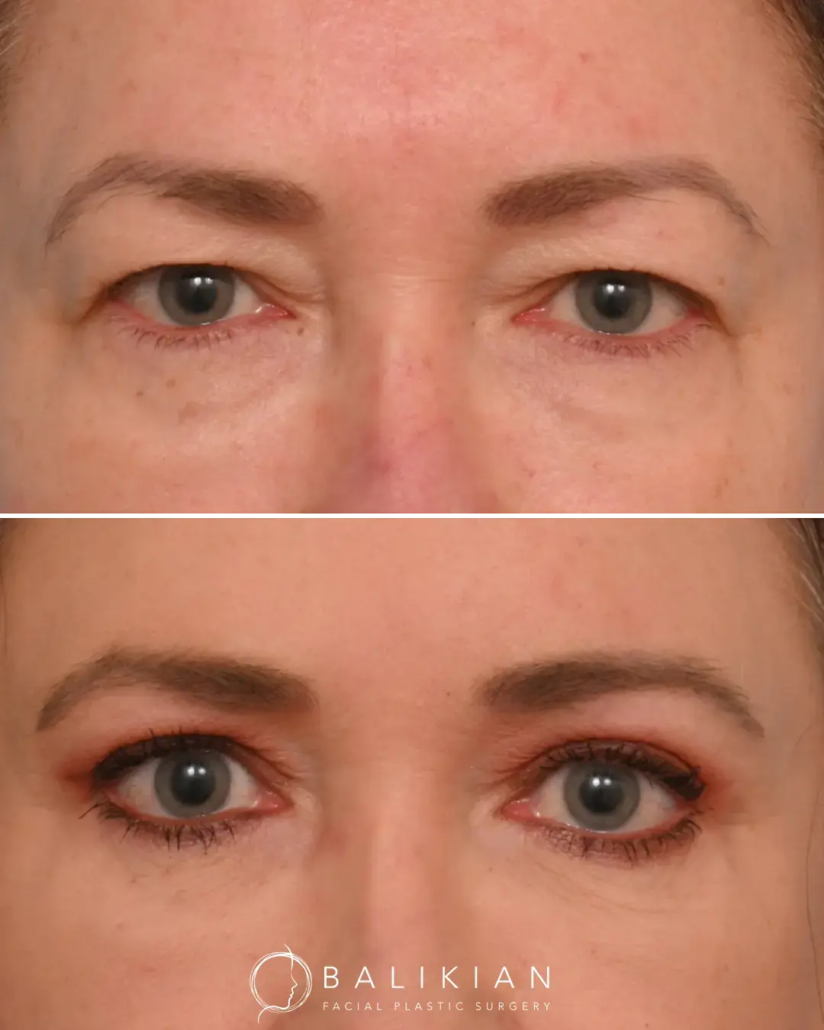
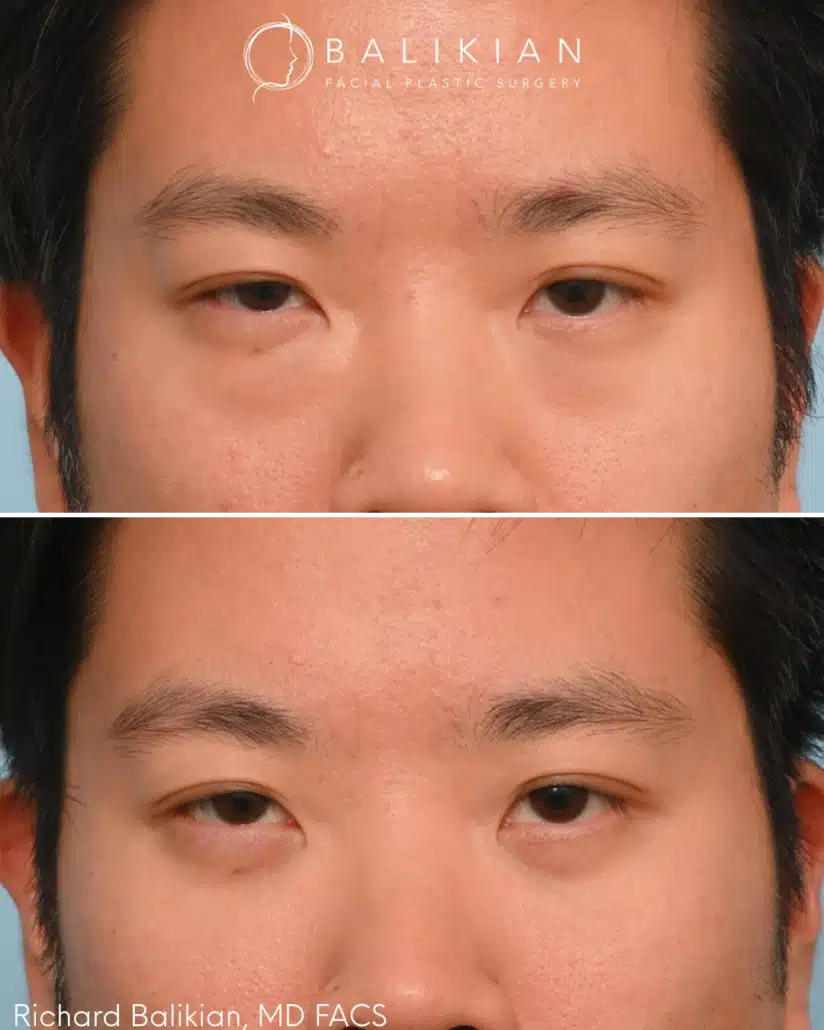
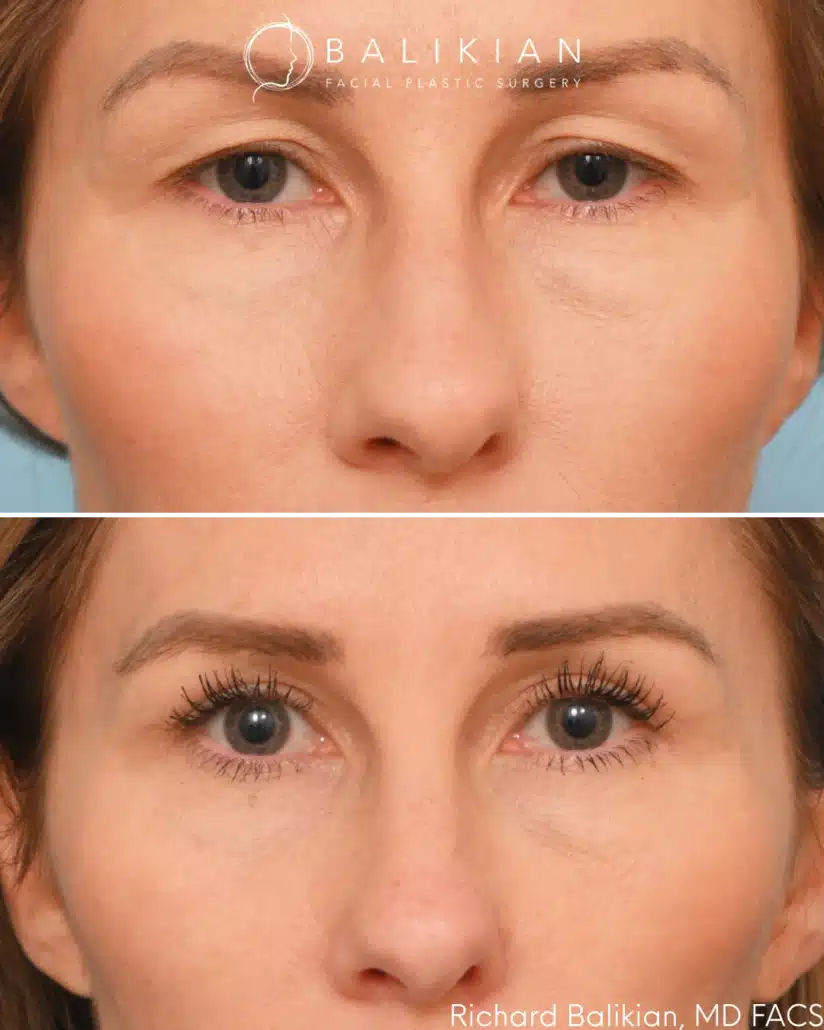
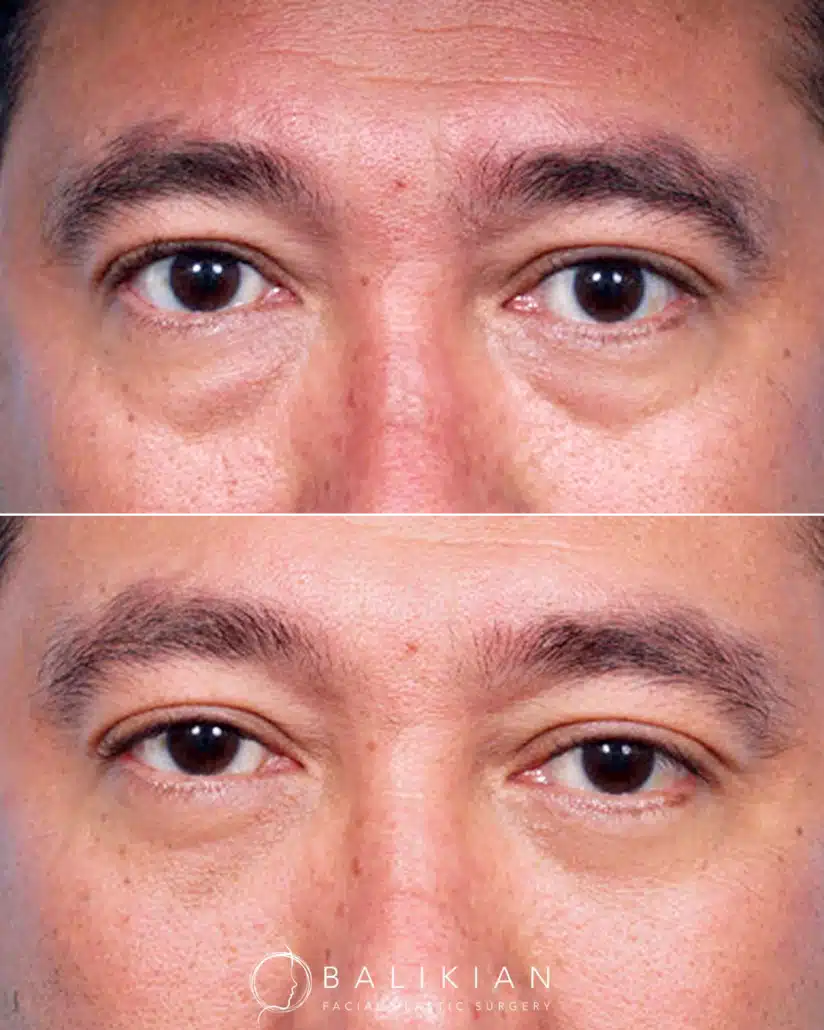
Upper eyelid surgery is performed as an outpatient procedure with local or light anesthesia for comfort. While you are sitting upright, Dr. Balikian carefully marks your natural lid crease to plan the most discreet incision.

He removes just the right amount of skin to open and refresh the eyes, keeps the eyelid muscle intact for comfortable blinking, and preserves or gently repositions fat to maintain a soft, natural contour. Fine sutures close the incision within the crease, where it blends in once healed.
Dr. Balikian designs your recovery following eyelid surgery to be smooth and predictable.
Most people feel comfortable returning to social or professional activities within 10 to 14 days while full refinement continues for several months.
With a carefully planned approach, upper eyelid plastic surgery can rejuvenate tired eyes and create results that feel authentic to you.
With Dr. Balikian’s precision technique, results are natural and durable. Research shows high patient satisfaction and a very low rate of serious complications when surgery is planned carefully.
Modern research confirms that upper blepharoplasty is one of the most reliable and satisfying procedures in facial rejuvenation, with proven cosmetic, functional and quality-of-life benefits.
These findings show why choosing a surgeon who understands preservation techniques and eyelid function is essential for safe healing, natural contour and long-lasting satisfaction.
What is upper blepharoplasty?
Upper blepharoplasty is upper eyelid plastic surgery that removes extra skin and refines soft tissue to open the eyes, define the crease and reduce heaviness.
Who is a good candidate?
Healthy adults who notice hooded lids, lost crease definition, or a tired look. If skin rests on the lashes or narrows the upper visual field, surgery may also improve function.
Will I still look like myself?
Yes. Dr. Balikian removes only what is necessary, keeps the eyelid muscle intact, and preserves gentle fullness so your eyes look brighter without a hollow or operated look.
Where is the incision placed and will it show?
The incision sits in the natural lid crease and blends in as it heals. It may extend slightly into a crow’s feet line if needed to keep the scar discreet.
How long is recovery?
Plan for 10 to 14 days before social events. Swelling and bruising peak in the first few days, then fade over the next 2 to 3 weeks. Final refinement continues for several months.
Is the procedure painful?
Discomfort is usually mild. Patients describe tightness or tenderness more than pain. Cool compresses and medication help in the first few days.
Can upper blepharoplasty improve vision?
In the right candidates, yes. Removing skin that weighs on the lashes can widen the visual field and ease eyelid strain. Dr. Balikian evaluates this during your exam.
Do you remove fat or preserve it?
Dr. Balikian preserves most fat to maintain a youthful contour. If a small bulge is present near the inner corner, he may reduce or reposition it to smooth the crease without hollowing.
How long do results last?
All surgery has risks such as bleeding, infection, asymmetry, or delayed healing. Serious complications are uncommon. Careful planning, muscle preservation, and precise skin removal help keep risk low.
Can I combine this with other treatments?
Yes. Some patients pair upper blepharoplasty with a brow lift, laser resurfacing, or Dr. Balikian’s Artiste Lift™ to create balanced, natural rejuvenation with one recovery.
When can I wear makeup and contact lenses again?
Makeup to camouflage color is usually fine after about two weeks. Most contact lens wearers feel comfortable resuming lenses around that time as well.
What makes Dr. Balikian’s approach different?
He treats the eyes as part of the whole face, plans the incision while you are seated to mirror your natural fold, keeps the eyelid muscle intact for comfortable blinking and preserves soft volume for a youthful shape. The goal is eyes that look brighter and natural, not different.
Dr. Richard Balikian is a highly respected facial plastic surgeon serving the San Diego area.
With over 20 years of experience and double board certification in Facial Plastic and Reconstructive Surgery as well as Head and Neck Surgery, Dr. Balikian offers a unique combination of technical expertise and artistic vision.
He is part of an elite group of surgeons with extensive training focused exclusively on the face and neck.
Read the Science