Upper and Lower Blepharoplasty Are Not the Same Procedure
Understanding the Anatomical Difference Between Upper and Lower Blepharoplasty
When patients first begin researching blepharoplasty, many assume upper and lower eyelid surgery are essentially the same procedure performed in different locations around the eye. In reality, the upper and lower eyelids age differently, function differently and require very different surgical thinking.
Modern blepharoplasty is not simply about removing skin around the eyes. The anatomy surrounding the eyes is delicate, complex, and deeply connected to the brows, cheeks, forehead and overall structure of the face. Even subtle changes around the eyes can dramatically affect facial balance and expression. That is why natural eyelid rejuvenation requires a much more nuanced approach than simply tightening or removing tissue.

According to facial plastic surgeon Richard V. Balikian, MD, FACS, the goal is not to create dramatically different eyes. The goal is to restore youthful, pleasant eyes while preserving natural expression and harmony throughout the face.
Upper blepharoplasty primarily addresses heaviness along the upper eyelids. Patients commonly notice excess skin folding over the eyelid crease, hooding near the outer corners of the eyes, or a tired appearance that gradually worsens over time. In some patients, the heaviness can even begin affecting peripheral vision.
But the upper eyelid itself is often only part of the story.
One of the most important concepts in modern upper eyelid rejuvenation is understanding the relationship between the eyelids and the brows. As the forehead and brows descend with age, tissue gradually pushes downward onto the upper eyelids, creating additional heaviness around the eyes. Many patients subconsciously elevate their brows throughout the day to compensate, which can contribute to forehead tension and fatigue.
Upper blepharoplasty is often less about the eyelid itself and more about understanding why the upper eyes begin to feel heavy over time.
Patients considering upper blepharoplasty often notice:
That is why experienced facial plastic surgeons evaluate the entire upper face rather than focusing only on excess eyelid skin. Some patients primarily need upper blepharoplasty. Others may have significant brow descent contributing to the heaviness around their eyes. Understanding the difference is essential when creating natural-looking results.
The position of the brows plays a major role in how the upper eyelids appear. As the brows gradually descend over time, they increase pressure on the upper eyelids and contribute to hooding and heaviness around the eyes.
In some patients, the upper eyelids may appear heavy primarily because the brows have fallen lower. In others, excess upper eyelid skin may be the dominant issue. Many patients actually have a combination of both.
This relationship between the brows and upper eyelids is one of the reasons upper facial rejuvenation requires careful anatomical evaluation rather than simply removing more skin.
Dr. Balikian’s approach to upper blepharoplasty emphasizes restraint and preservation. Historically, some surgeons aggressively removed fat and muscle from the upper eyelids in an attempt to create sharper contours. Although this could initially produce a more dramatic appearance, it often created hollow or skeletonized eyes over time.
Today, preservation-based approaches focus on maintaining natural fullness and softness whenever possible. The objective is not to hollow the eyes. The objective is to reduce heaviness while preserving natural contour and expression.
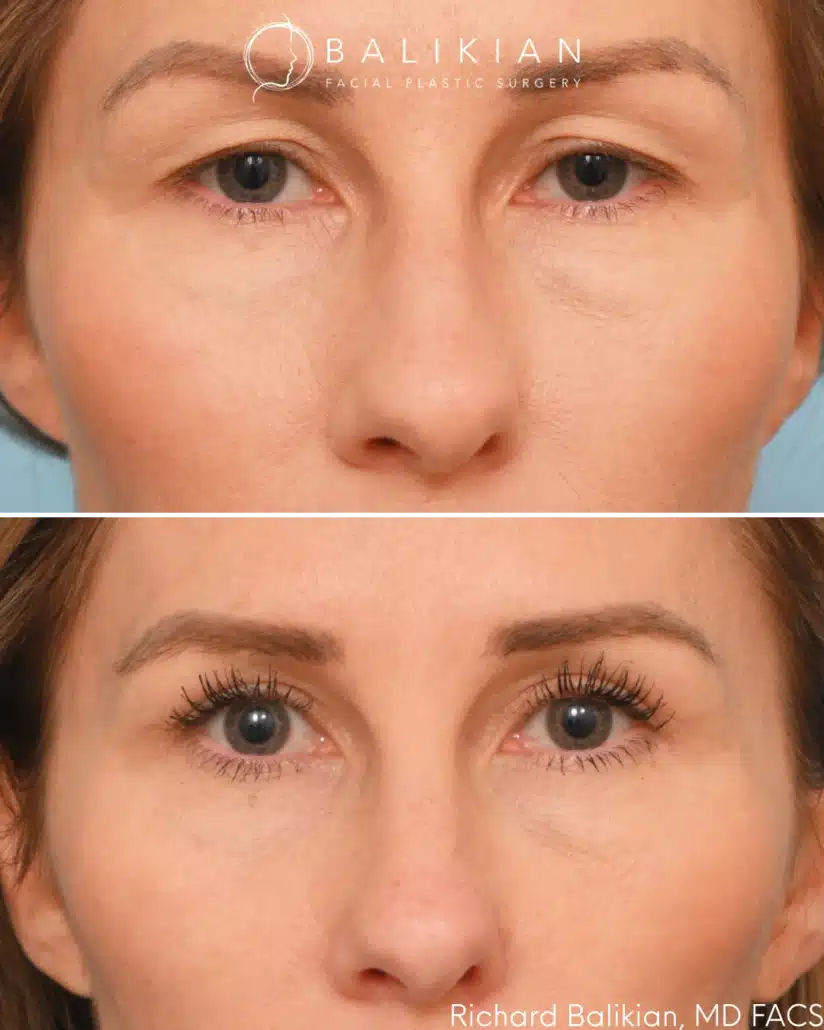
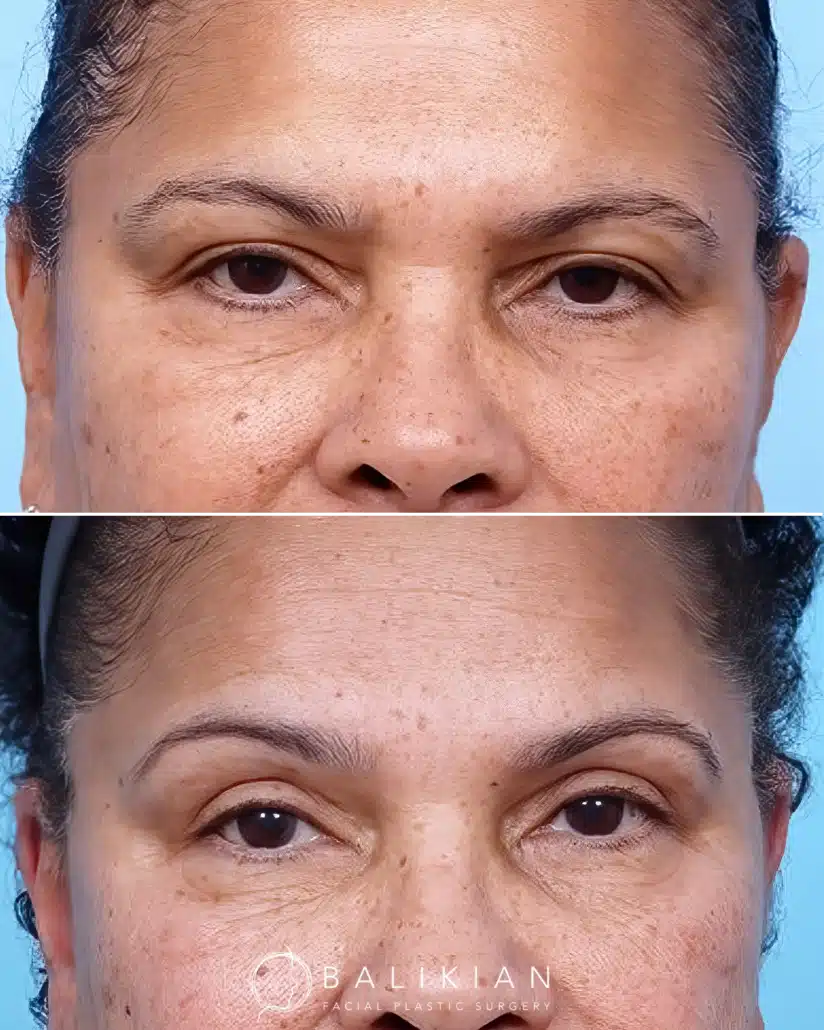
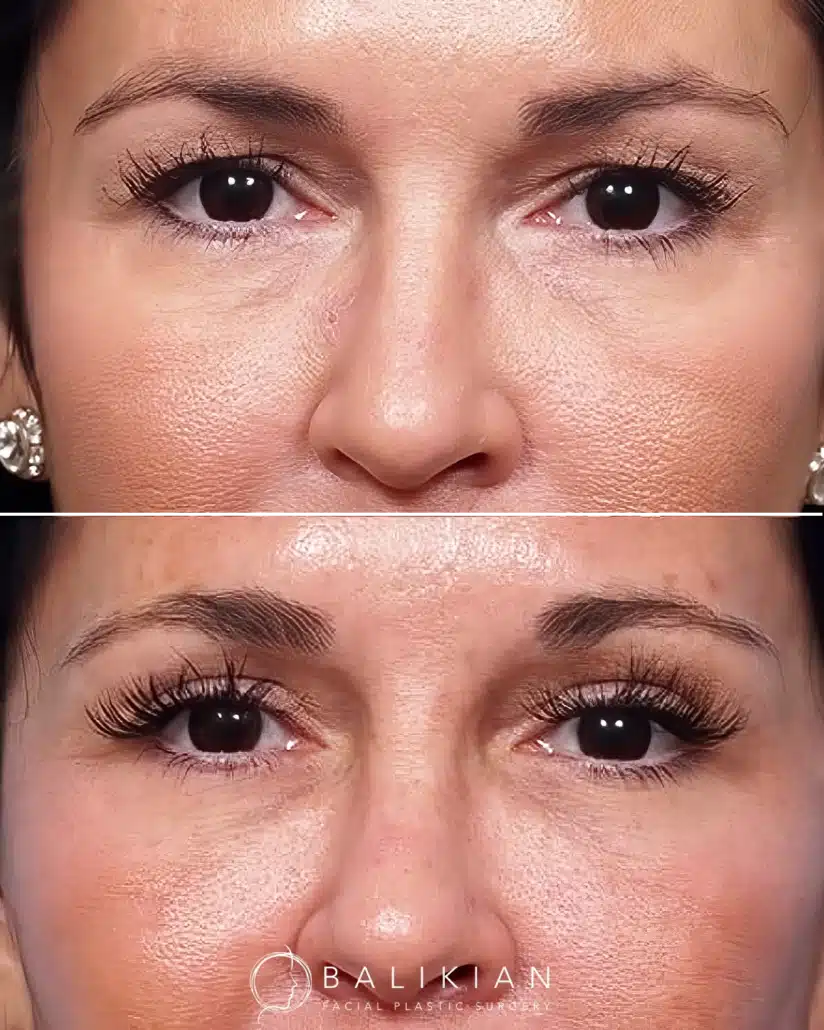
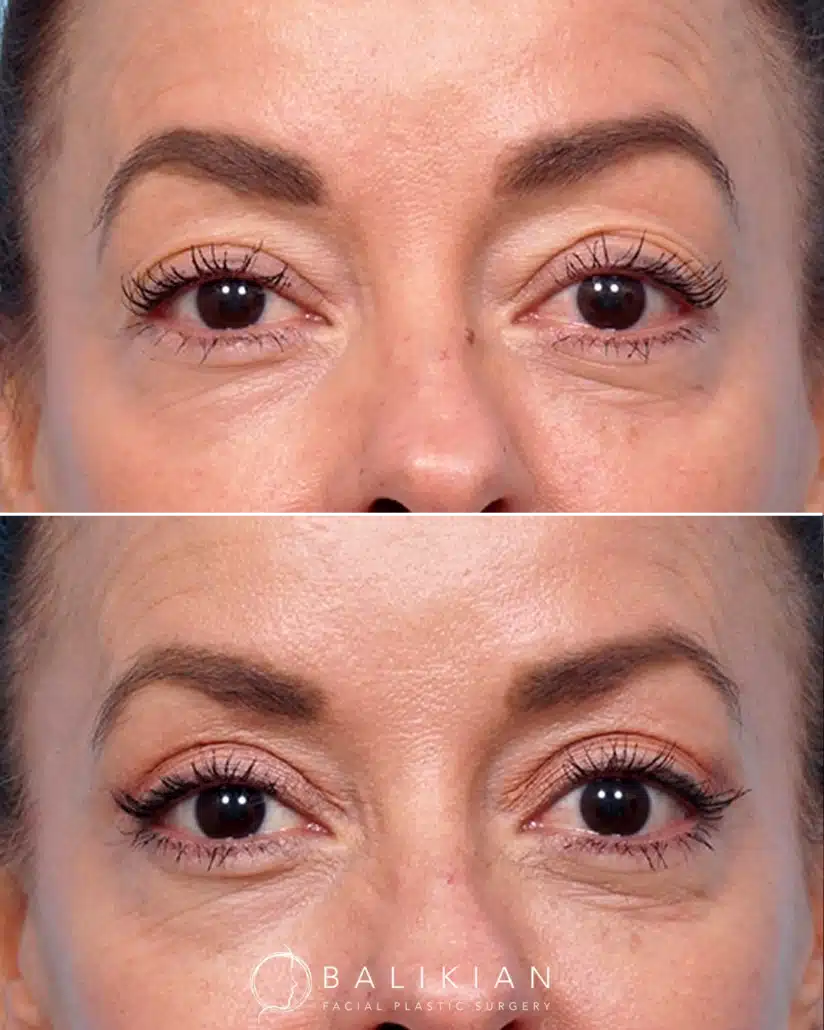
Lower blepharoplasty is often less about removing under eye bags and more about restoring smooth contour and structural support beneath the eyes.
Lower blepharoplasty is fundamentally different because the lower eyelid is closely connected to the cheek, midface and deeper support structures beneath the eyes.
Most patients describe the issue simply as “under eye bags,” but under eye aging is usually caused by a combination of structural changes happening together. Fat compartments beneath the eyes gradually become more prominent as support structures weaken over time. At the same time, adjacent areas beneath the eyes can lose volume and develop hollowing. The contrast between the protruding fat and the hollow below it creates shadowing and the appearance of fatigue.
Lower eyelid aging usually develops gradually and often involves a combination of puffiness, hollowing, shadowing and changes in lower eyelid support.
Patients considering lower blepharoplasty often notice:
This is why modern lower blepharoplasty is often more complex than upper eyelid surgery.
Historically, many lower blepharoplasty procedures focused heavily on removing fat beneath the eyes in order to flatten puffiness. While this could initially improve contour, aggressive fat removal often created hollow eyes that looked unnatural as patients continued aging.
Modern lower eyelid surgery has evolved significantly. Instead of simply removing tissue, contemporary approaches focus more on preservation, contour balance and support of the lower eyelid itself. In many cases, fat is conservatively repositioned or reshaped to soften the transition between the lower eyelid and cheek while maintaining natural fullness beneath the eyes.
Support of the lower eyelid is also critically important. The orbicularis muscle surrounding the eye plays an important role in blinking, eyelid position and facial expression. Aggressive manipulation of this muscle can increase the risk of lower eyelid pulling or changes in eye shape.
Preservation-focused lower blepharoplasty techniques help maintain natural support and function whenever possible. The objective is not to create a flat or hollow lower eyelid. The objective is to restore smoother contour while preserving natural anatomy and facial expression.
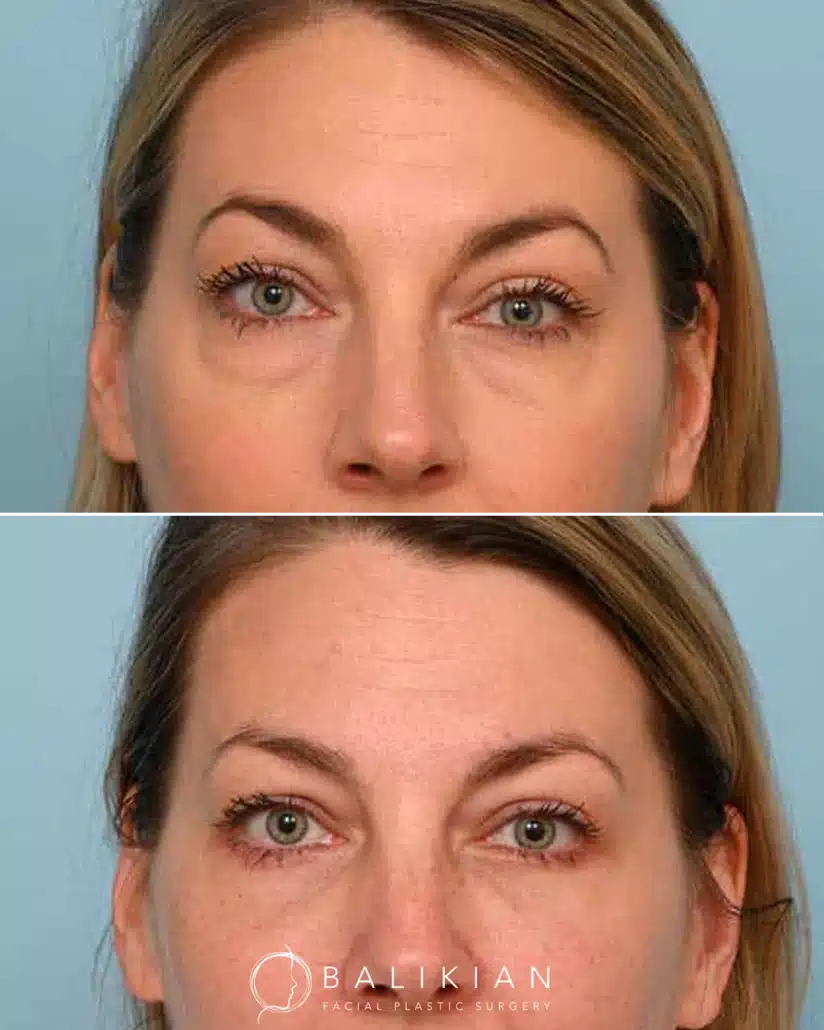
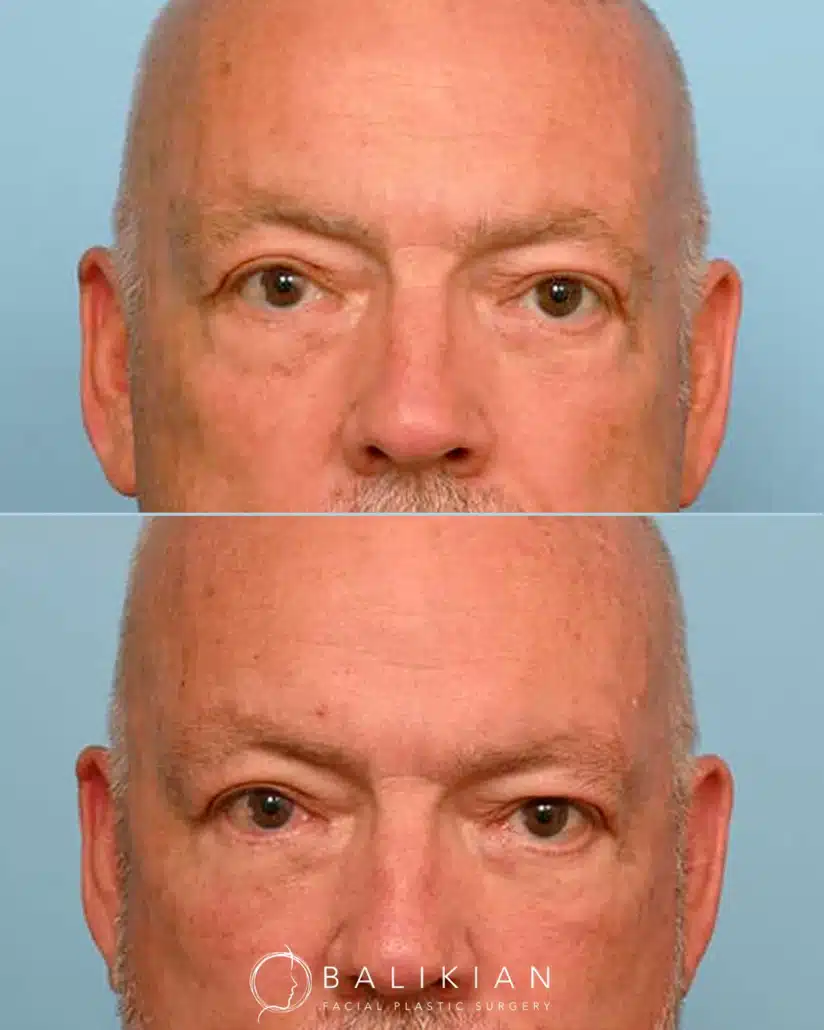
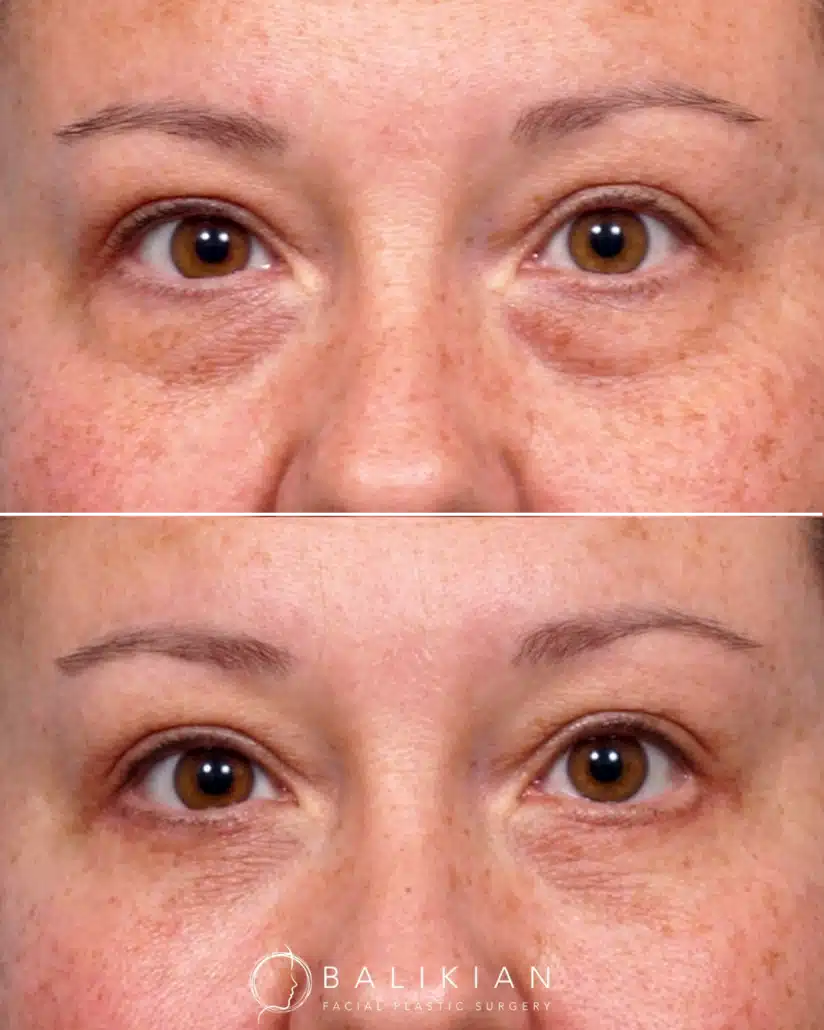
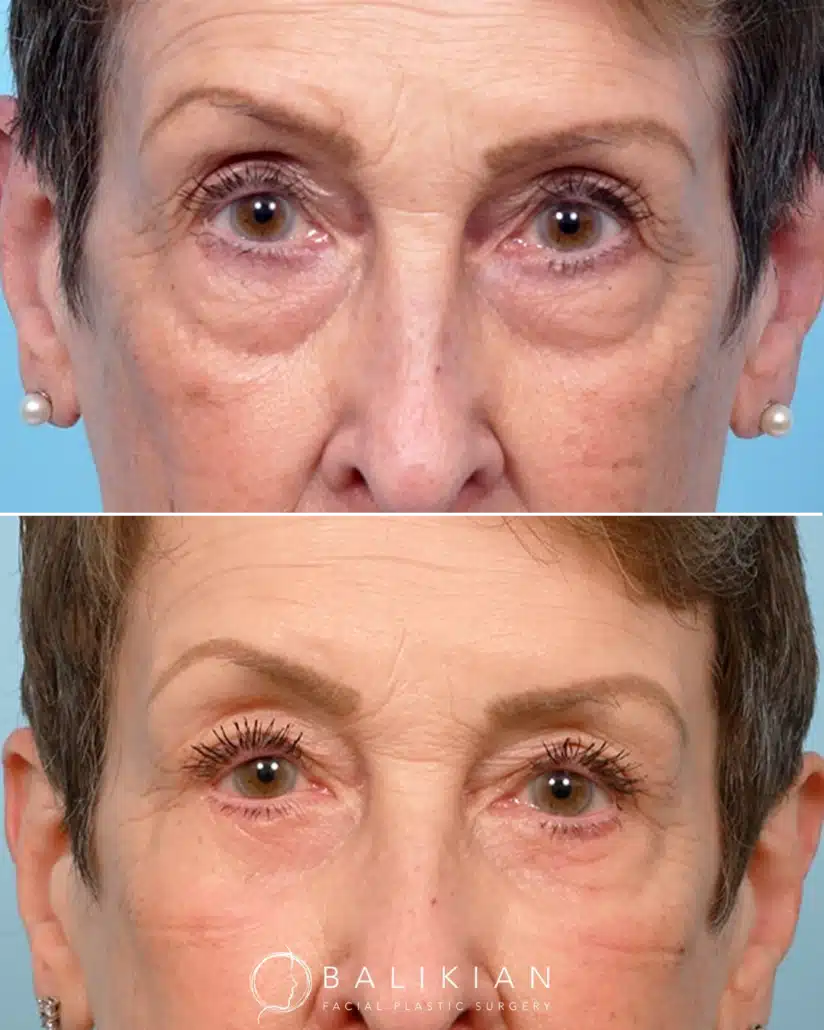
The eyes are one of the most expressive areas of the face, which means even subtle anatomical changes can affect how natural, rested, or balanced someone appears. Small differences in eyelid position, contour, or support can significantly influence overall facial harmony.
This is one of the reasons blepharoplasty requires such careful planning. Upper and lower eyelid surgery cannot be approached as identical procedures because the anatomy, aging patterns, and surgical goals are fundamentally different.
The eyes sit at the center of facial expression, which means even subtle anatomical changes can affect how natural, rested, or balanced the face appears. Small differences in eyelid position, contour, or support can significantly influence facial harmony.
This is one of the reasons blepharoplasty requires such careful planning. The objective is not simply to remove tissue. The objective is to preserve the natural relationship between the eyelids, brows, cheeks and surrounding facial structures while reducing the appearance of heaviness or fatigue.
In the upper eyelids, excessive removal of skin or fat can create hollowing and a fatigued appearance over time. In the lower eyelids, disruption of support structures can affect lower eyelid position or alter the natural shape of the eyes. Because the eyes are so anatomically delicate, subtlety and restraint play an important role in achieving natural-looking results.
Upper blepharoplasty is often focused more on heaviness, brow position, and excess skin. Lower blepharoplasty is often focused more on contour relationships, lower eyelid support, and the transition between the eyelid and cheek.
The lower eyelid in particular requires careful structural support because even subtle changes in lower eyelid position can affect the overall shape of the eyes. Preservation of the orbicularis muscle, lower eyelid support structures, and the natural lid-cheek junction all contribute to results that appear balanced rather than overcorrected.
In the upper eyelids, excessive removal of skin or fat can create hollowing and a fatigued appearance over time. In the lower eyelids, overly aggressive surgery can disrupt lower eyelid position or alter the natural contour beneath the eyes. Because the eyes are anatomically delicate and central to facial expression, subtlety plays an important role in achieving natural-looking rejuvenation.

Successful blepharoplasty depends on understanding how the eyelids, brows, cheeks and surrounding facial structures work together. Some patients primarily struggle with upper eyelid heaviness caused by excess skin or brow descent. Others are more affected by contour changes beneath the eyes, including under eye bags, hollowing, and weakening support structures. Many patients have a combination of both.
That is why blepharoplasty requires individualized evaluation rather than a one-size-fits-all approach. Careful diagnosis helps determine whether the primary issue involves skin excess, brow position, lower eyelid support, volume loss, contour imbalance, or multiple aging changes occurring together.
The best eyelid surgery results rarely look obvious. Patients often simply appear more rested, refreshed and naturally balanced without looking dramatically different.
This page is part of a larger educational series focused on eyelid anatomy, facial aging, brow position, under eye bags, lower eyelid support and modern approaches to blepharoplasty.
By breaking down these concepts individually, patients can better understand how the eyes age and why natural-looking rejuvenation depends on anatomy, balance and careful surgical planning.
Are upper and lower blepharoplasty performed differently?
Yes. Upper and lower blepharoplasty address different anatomical problems and require different surgical approaches. Upper blepharoplasty is often focused more on excess skin, heaviness, brow position, and the upper eyelid crease. Lower blepharoplasty is more focused on under eye bags, tear trough contour, lower eyelid support, and the transition between the eyelid and cheek. Research also emphasizes that upper eyelid evaluation should include brow position, eyelid support, facial asymmetry, and surrounding facial anatomy.
Can brow descent make the upper eyelids look heavier?
Yes. Brow descent can contribute significantly to upper eyelid heaviness and hooding. Research notes that brow ptosis and dermatochalasis are closely related and should be evaluated together during consultation and surgical planning.
Can removing too much fat during blepharoplasty create hollow eyes?
Yes. Excessive removal of skin or fat can flatten natural eyelid contours and contribute to hollowing around the eyes over time. Modern blepharoplasty techniques often emphasize preservation and contour balance rather than aggressive tissue removal.
Why is lower blepharoplasty often considered more complex than upper blepharoplasty?
The lower eyelid is closely connected to the cheek, tear trough, orbital fat compartments, and lower eyelid support structures. Because of these anatomical relationships, lower blepharoplasty requires careful attention to contour, support, and eyelid position in order to maintain natural eye shape and function.
Why do some patients still look tired even after getting enough rest?
A tired appearance around the eyes is often caused by structural aging changes rather than fatigue alone. Under eye bags, hollowing, brow descent, excess upper eyelid skin, and changes in lower eyelid support can all contribute to shadowing and heaviness around the eyes.
Why does natural-looking blepharoplasty require individualized evaluation?
The anatomy surrounding the eyes is highly interconnected. Upper eyelid heaviness, brow position, lower eyelid support, fat distribution, skin quality, and facial balance all influence surgical planning. Modern blepharoplasty depends on understanding how these structures work together rather than treating every patient the same way.
Can upper eyelid heaviness be caused by something other than excess skin?
Yes. Upper eyelid heaviness may also be caused by brow descent, ptosis, forehead compensation, fat distribution changes, or a combination of multiple anatomical factors. Careful evaluation helps determine the true source of heaviness around the eyes.
Why is preserving lower eyelid support important during surgery?
Lower eyelid support structures help maintain eyelid position, blinking function, and natural eye shape. Research has shown that disruption of these structures can increase the risk of eyelid malposition or rounding of the eyes after surgery.
Why do modern blepharoplasty techniques focus more on preservation?
Contemporary blepharoplasty techniques increasingly emphasize preservation because aggressive tissue removal can create hollowing, imbalance, and unnatural contour changes as the face continues aging. Modern approaches focus more on contour refinement and maintaining natural anatomy.
Why are the eyes considered one of the most important areas in facial rejuvenation?
The eyes are highly expressive and sit at the center of facial communication and facial balance. Even subtle changes in eyelid contour, brow position, or lower eyelid support can significantly affect how rested, approachable, or natural the face appears.
Dr. Richard Balikian is a highly respected facial plastic surgeon serving the San Diego area.
With over 20 years of experience and double board certification in Facial Plastic and Reconstructive Surgery as well as Head and Neck Surgery, Dr. Balikian offers a unique combination of technical expertise and artistic vision.
He is part of an elite group of surgeons with extensive training focused exclusively on the face and neck.