Upper Blepharoplasty and Facial Harmony
Why Looking Beyond the Eyelids Creates More Natural Results
Patients often come in asking about upper blepharoplasty because they feel their upper eyelids have become heavy. While some patients are truly excellent candidates for upper eyelid surgery alone, the eyelids are only one part of the equation.
The upper eyelids do not exist in isolation.
How does the upper eyelid relate to the brow? Is brow descent contributing to the heaviness? Is there volume loss through the temples or cheeks? How do the lower eyelids compare to the upper eyelids? Would treating only the upper eyelids create balance, or would it leave the face looking incomplete?

Facial harmony is about relationships.
The relationship between the upper eyelids and the brow. The relationship between the upper and lower eyelids. The relationship between facial volume and support. Looking at one structure without considering the others does not always create the most balanced result.
The upper eyelids and brows function together.
As the outer brow descends with age, heaviness often develops along the lateral upper eyelids and temples. What appears to be excess skin may actually involve changes in brow position.
“When I’m looking at someone’s upper eyelids, I’m really looking at the whole upper face.”
– Dr. Balikian
This does not mean every patient needs a brow lift. It means the brow deserves consideration.
Sometimes the discussion includes whether a temporal lift or 4-Point Brow Lift should be performed at the same time as upper blepharoplasty. In other patients, upper blepharoplasty alone creates the balance they are looking for.
The answer depends on anatomy rather than a formula.
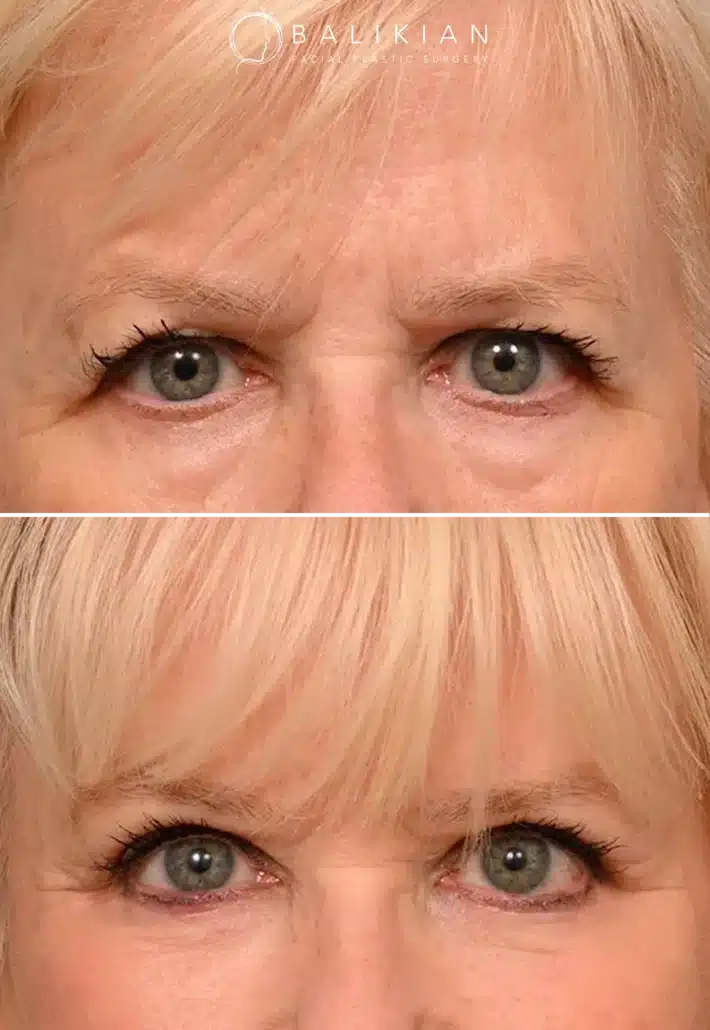
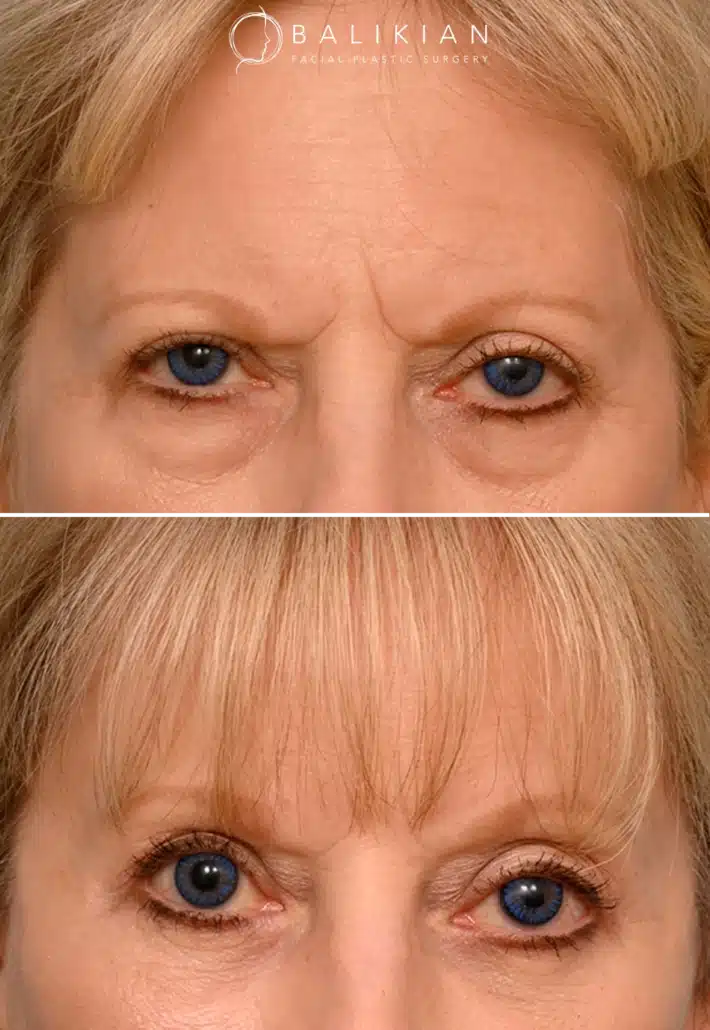
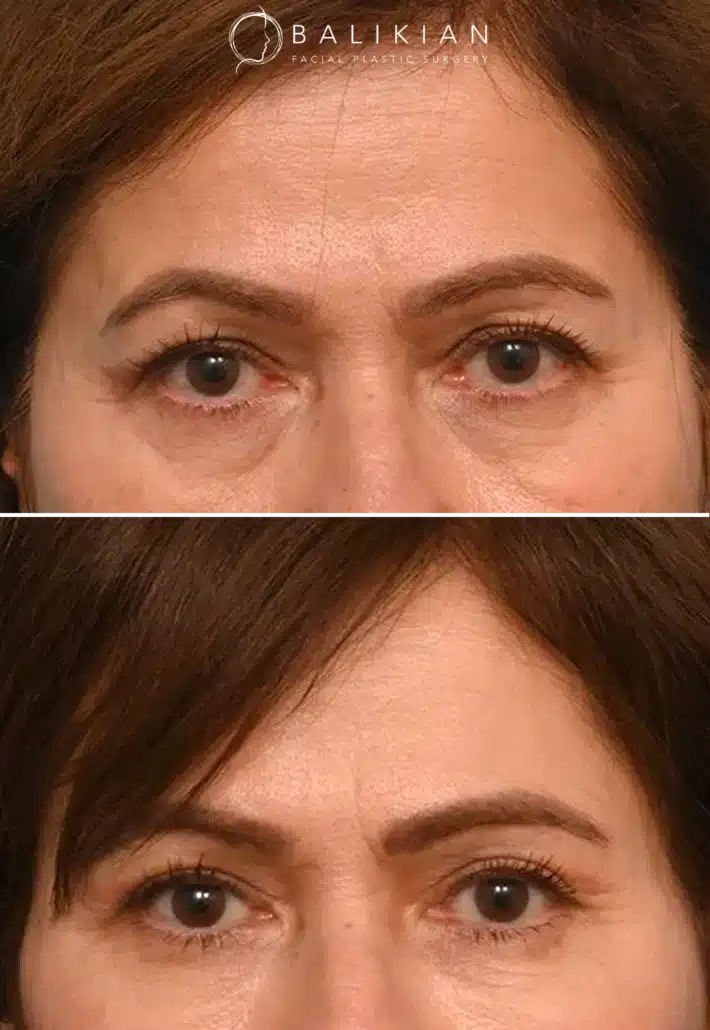
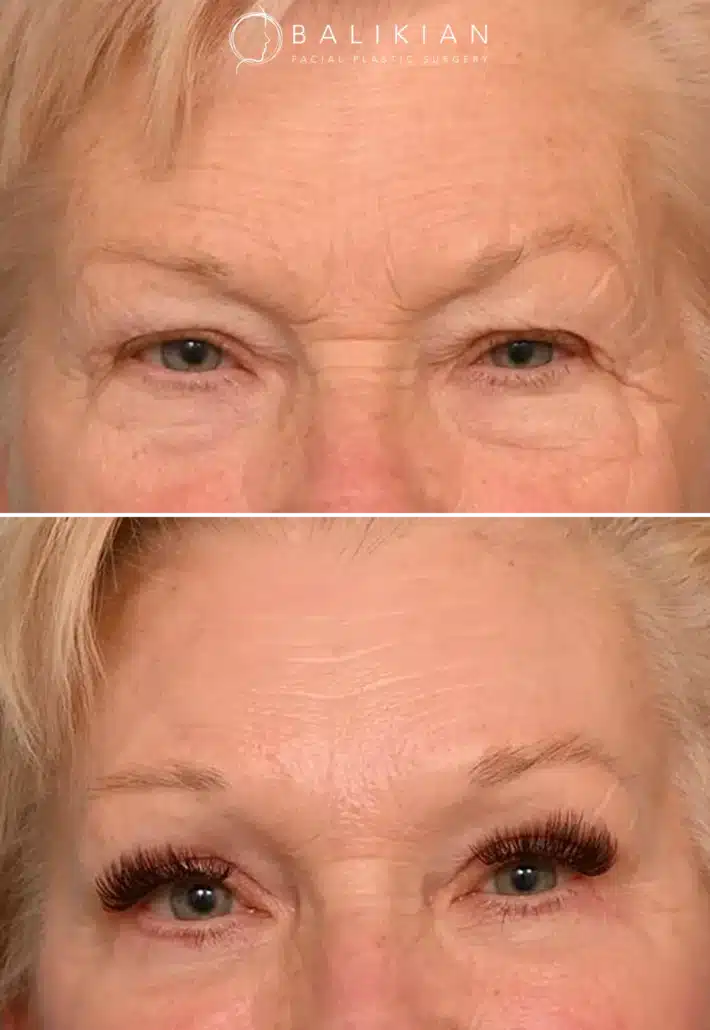
The eyes are seen as a whole rather than as separate structures.
Changes beneath the eyes influence the way the upper eyelids are perceived. Puffiness, hollowing and differences between the upper and lower eyelids can affect overall facial balance. Treating only the upper eyelids without considering the lower eyelids may leave the eyes feeling incomplete, even when the upper eyelid surgery itself is technically successful.
This is one reason upper and lower eyelid surgery are often discussed together.
Balance between the upper and lower eyelids is just as important as the eyelids themselves. A heavy upper eyelid combined with puffiness or hollowing beneath the eyes can create a tired appearance that does not originate from a single structure.
Maintaining the natural shape of the eyes remains important.
“When I do upper eyelid and lower eyelid surgery, I want your eye shape to stay the same. I don’t want to change it unless there’s a deformity there to begin with.”
– Dr. Balikian
The goal is not to make the eyes look different. The goal is to create harmony between the upper and lower eyelids while preserving the natural character of the eyes.
Facial aging is not simply about gravity.
Volume loss changes the relationship between the eyes and the surrounding structures. As support diminishes through the temples and cheeks, the upper face can appear heavier and less defined. Shadows become deeper. Hollowing becomes more noticeable. The eyes themselves may appear more tired even when excess skin is not the primary issue.
This is one reason volume deserves consideration when planning upper facial rejuvenation. Do we need to add fat where volume loss has developed because everything is being dragged down?
For selected patients, facial fat transfer may be part of the conversation. In others, upper blepharoplasty alone may be all that is needed. Understanding what has changed is often more important than applying the same treatment to everyone.
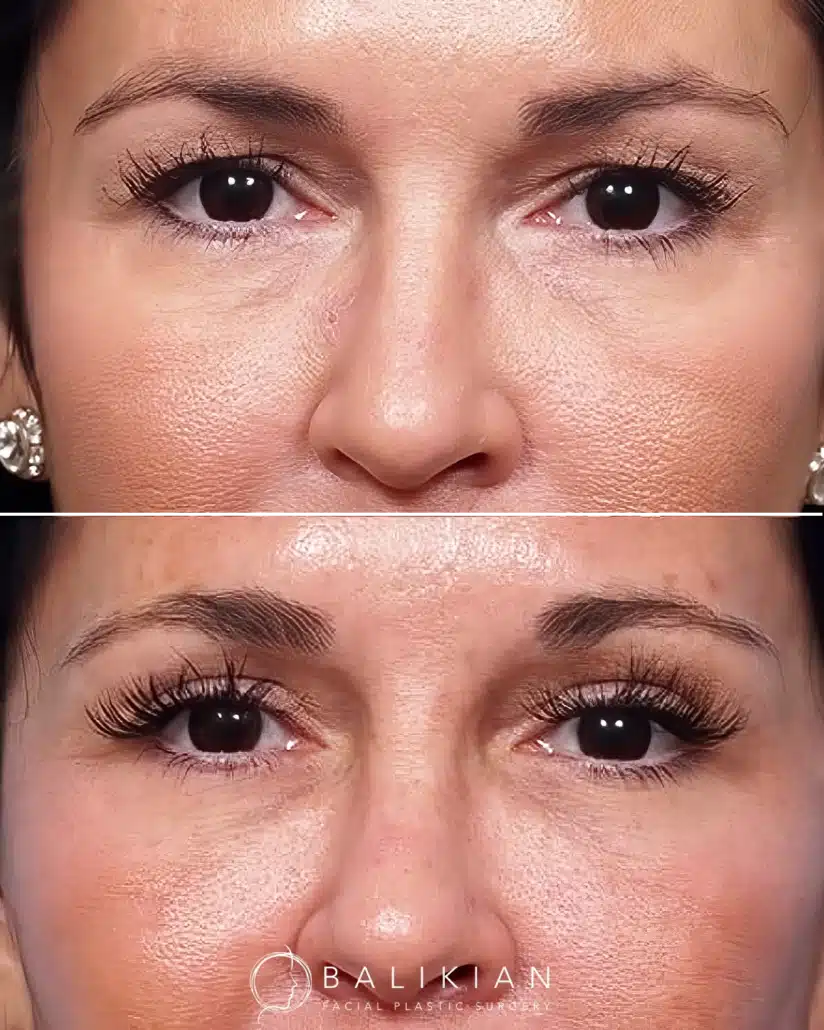
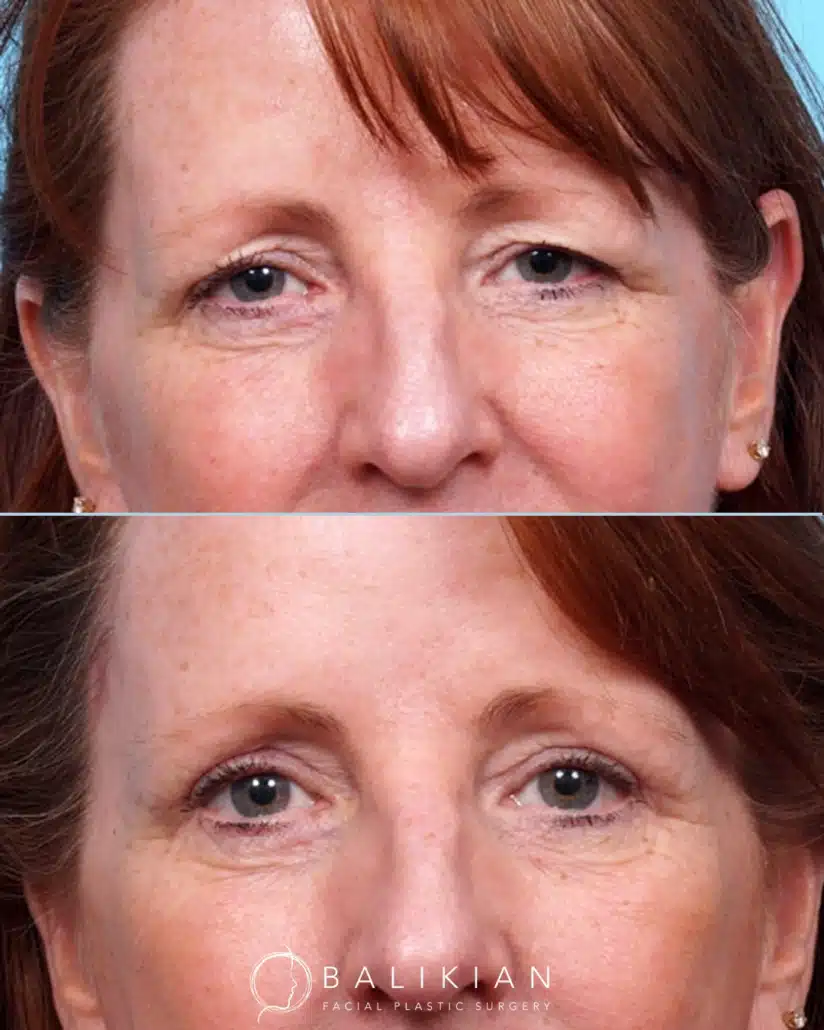
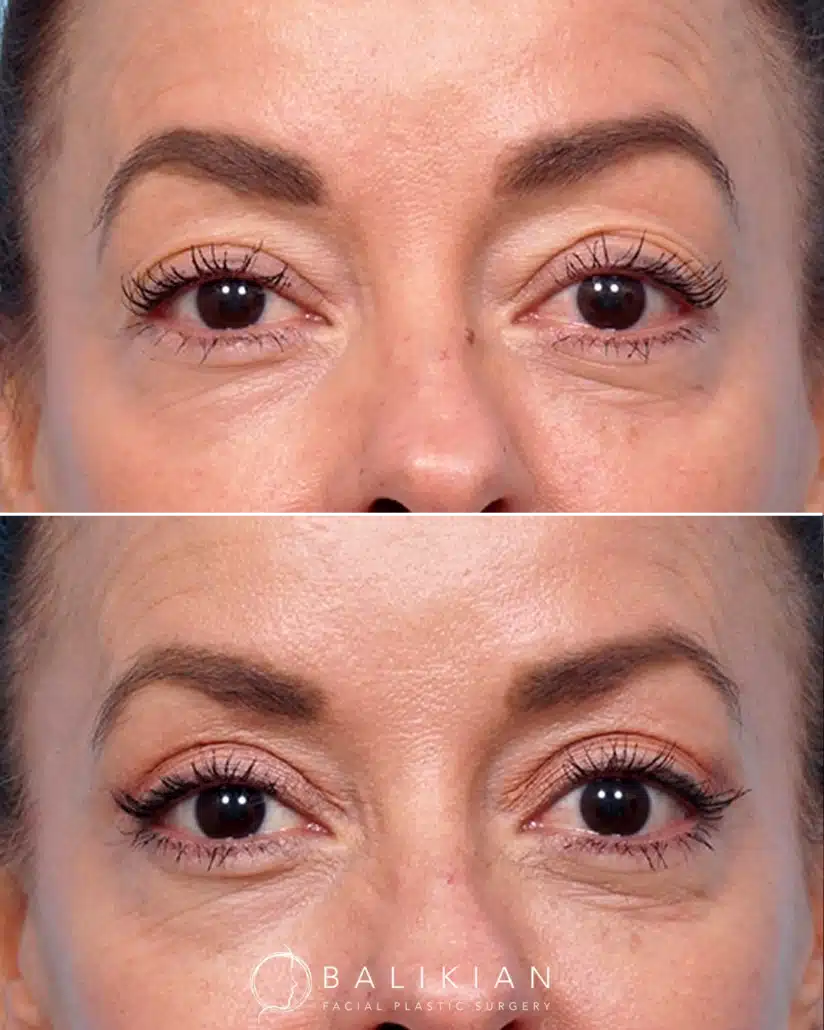

Looking beyond the upper eyelids does not necessarily mean adding more procedures.
Some patients are truly excellent candidates for upper blepharoplasty alone. Others may benefit from addressing brow position, lower eyelid aging or volume loss that has changed the balance of the upper face.
The answer is different for every patient.
More surgery does not automatically create a better result.
“The question isn’t how much skin should we remove. The question is what is really going to make everything look harmonious and balanced.”
– Dr. Balikian
Upper blepharoplasty is often thought of as a procedure that removes excess skin. But the upper eyelids are only one part of the upper face.
Some patients are truly just upper blepharoplasty.
Others benefit from looking beyond the eyelids.
Understanding the relationship between the upper eyelids, brow, lower eyelids and facial volume is what creates facial harmony.
Is upper blepharoplasty always just about removing excess skin?
No. Heavy upper eyelids may involve brow descent, lower eyelid aging, volume loss, or other anatomical changes. Treating the upper eyelids alone does not always create the most balanced result.
Can brow position affect the appearance of the upper eyelids?
Yes. Studies have shown that brow position and eyelid aging are closely related. Descent of the outer brow can contribute to hooding and heaviness around the eyes.
Do all patients with heavy upper eyelids need a brow lift?
No. Some patients are truly excellent candidates for upper blepharoplasty alone. Others may benefit from addressing brow position at the same time. Treatment depends on anatomy rather than a formula.
Why are the upper and lower eyelids often discussed together?
The eyes are perceived as a whole rather than as separate structures. Puffiness, hollowing, and lower eyelid support influence the appearance of the upper eyelids and overall facial balance.
Can volume loss make the eyes appear heavy?
Yes. Loss of support through the temples and cheeks can create shadows, hollowing, and heaviness that may not be corrected by skin removal alone.
Will upper blepharoplasty change the position of my eyebrows?
Upper blepharoplasty can influence brow posture, although studies have shown that significant changes in brow height are uncommon in most patients.
Can upper blepharoplasty affect dry eyes?
Patients with preexisting dry eye symptoms should be evaluated carefully. Conservative surgical planning and preservation of eyelid function help minimize the risk of worsening dry eye symptoms.
Is canthopexy or canthoplasty always necessary during eyelid surgery?
No. Canthal support procedures are typically reserved for patients with lower eyelid laxity or specific anatomical concerns. They are not required in every patient.
Can a prolapsed lacrimal gland contribute to heavy upper eyelids?
Yes. A prolapsed lacrimal gland can create fullness near the outer upper eyelid and may mimic excess fat. Proper diagnosis and treatment can improve upper blepharoplasty results.
Does upper blepharoplasty always need to be combined with other procedures?
No. Some patients are truly just upper blepharoplasty. Others may benefit from addressing brow position, lower eyelids, or volume loss. The important question is not how many procedures can be performed, but what will create the most harmonious and balanced result.
Dr. Richard Balikian is a highly respected facial plastic surgeon serving the San Diego area.
With over 20 years of experience and double board certification in Facial Plastic and Reconstructive Surgery as well as Head and Neck Surgery, Dr. Balikian offers a unique combination of technical expertise and artistic vision.
He is part of an elite group of surgeons with extensive training focused exclusively on the face and neck.