Upper Blepharoplasty Isn’t Always an Eyelid Operation
Why Supporting the Brow Creates More Natural Results
One of the most common things I hear during consultations is:
“I just want my upper eyelids done.”
It’s an understandable request. Patients notice heavy eyelids, hooded skin or a tired appearance in the mirror and assume the problem begins and ends with the eyelids. Sometimes that’s true. But just as often, it isn’t.
The challenge is that the heaviness patients see isn’t always coming from the eyelid itself. In many cases, the eyebrow has gradually descended over time, creating the appearance of excess eyelid skin.



Explore Dr. Richard Balikian’s complete collection of blepharoplasty education, surgical case reviews, patient testimonials, recovery guidance, and before-and-after results. Learn what makes modern eyelid surgery look natural through real patient experiences and expert surgical insight.
When I evaluate someone for upper blepharoplasty, I’m not only looking at the eyelids. I’m looking at the relationship between the eyelids, the eyebrows, and the forehead. Those structures age together, and treating one without understanding the others can lead to results that look unnatural or don’t last as well.
This is one of the biggest differences between simply performing an operation and diagnosing the cause of the problem. My job isn’t to recommend the surgery a patient asks for. My job is to determine why the eyelids look heavy in the first place. That means evaluating the entire upper face, not just the eyelids, to understand how the brows, forehead, temples and eyelids work together.
That’s why upper blepharoplasty isn’t always just an eyelid operation. Sometimes the real problem is the brow.
Many patients are surprised that our consultation doesn’t begin by measuring eyelid skin. It begins by understanding the anatomy of the upper face as a whole. Brow position, forehead support, eyelid skin, muscle tone and facial balance all influence one another. Looking at only the eyelids can overlook the real reason they appear heavy.
Patients usually describe the same symptoms.
“My eyelids feel heavy.”
“My eyes always look tired.”
“My makeup disappears beneath my eyelids.”
The natural assumption is that excess skin is covering the eyelid.
While excess skin certainly develops with age, another important change often happens at the same time. The outer third of the eyebrow gradually begins to descend. As the tail of the brow settles lower, it creates additional heaviness over the outside of the upper eyelid.
Patients see extra eyelid skin. I see a brow that has gradually lost support over time. That difference matters because it changes the diagnosis. Rather than focusing on a single structure, I evaluate how the eyelids, eyebrows, temples and forehead function together before recommending surgery. The most natural result usually comes from treating the underlying cause rather than simply removing more skin.
It’s similar to replacing the roof on a house when the foundation has settled. The roof isn’t always the source of the problem. Sometimes it’s responding to changes happening underneath.
Understanding that difference changes the entire surgical plan.
Upper blepharoplasty removes excess upper eyelid skin. That’s exactly what it’s designed to do. But if the outer brow has already descended, simply removing more skin may create a different problem.
To eliminate all of the heaviness, the incision may need to extend farther toward the temple. That creates a longer scar than I’d like. More importantly, removing too much skin can gradually pull the tail of the eyebrow downward instead of supporting it.
That’s the opposite of what we’re trying to accomplish.
The goal isn’t simply to remove tissue. The goal is to restore balance.
One of the simplest ways to appreciate the relationship between the brow and the upper eyelid is by looking at real patient results. Notice how restoring subtle support to the outer brow often allows the eyes to appear more open and refreshed without creating an over-elevated or surprised appearance.
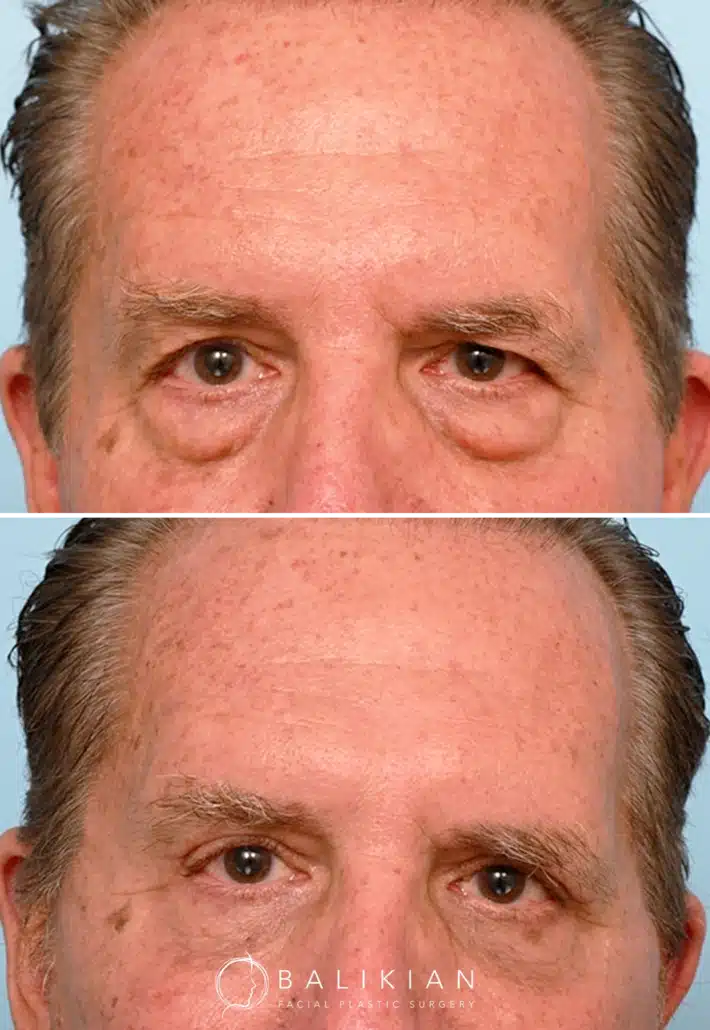
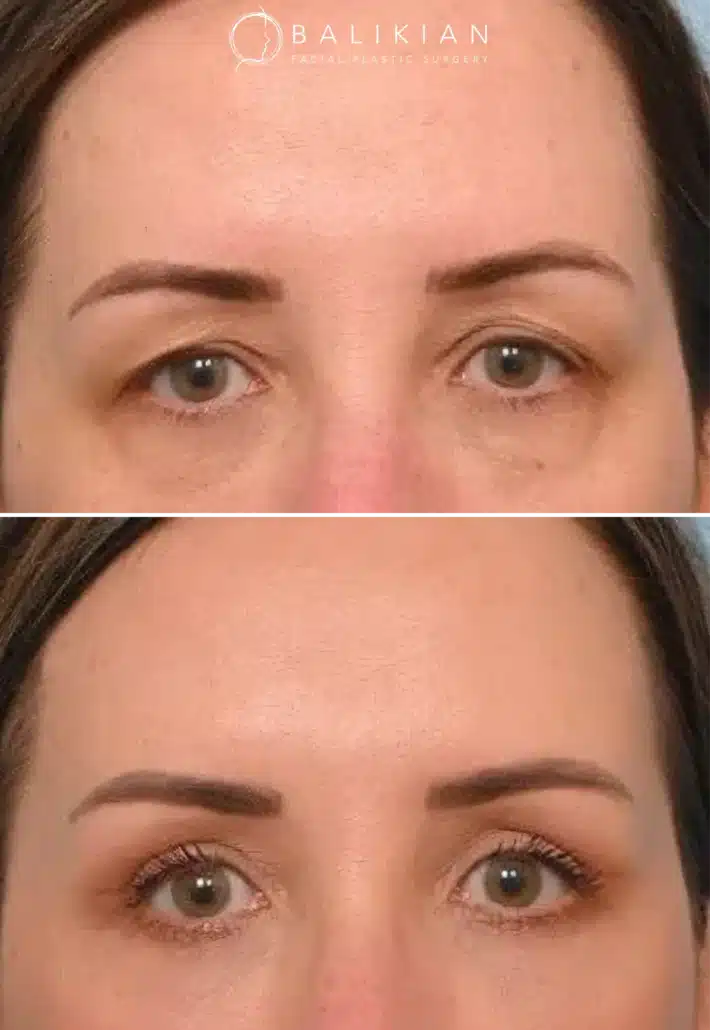

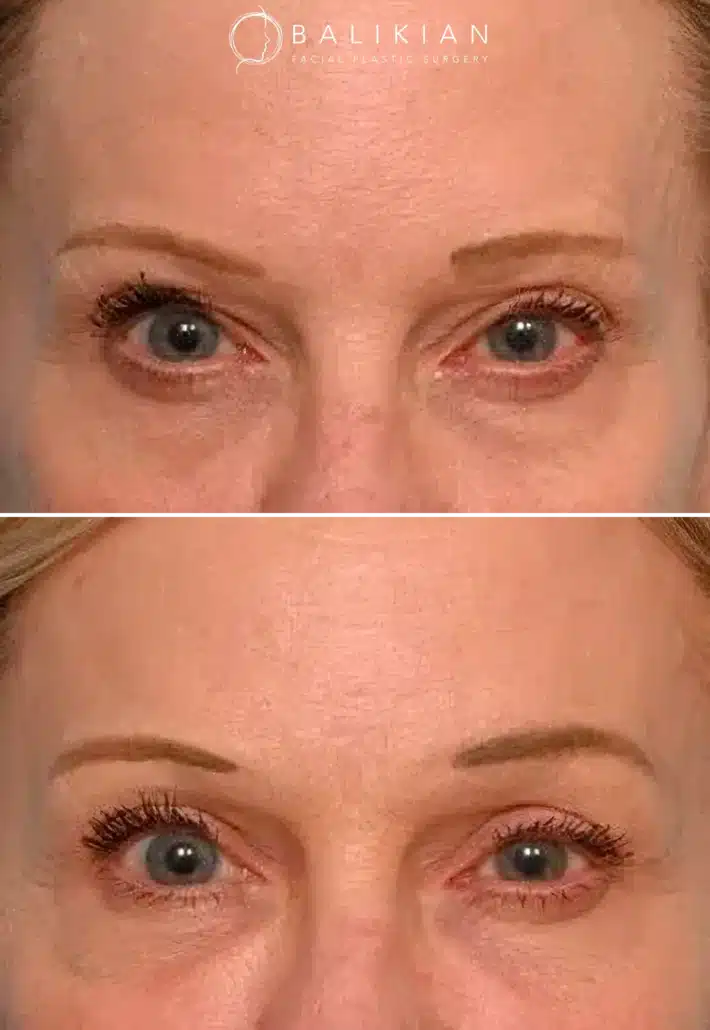

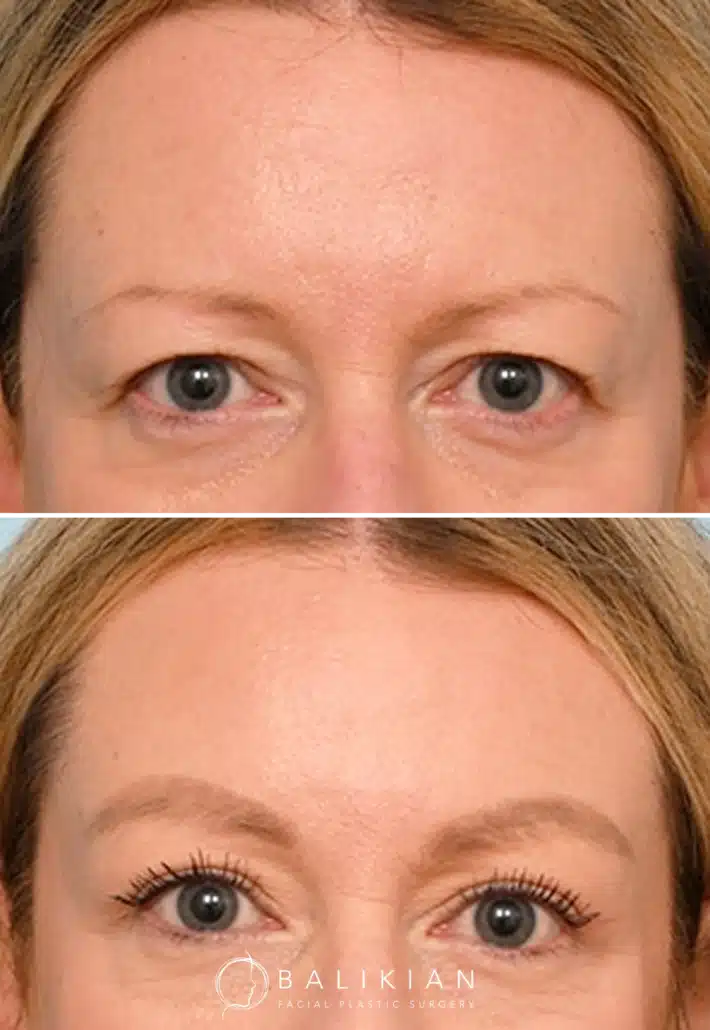
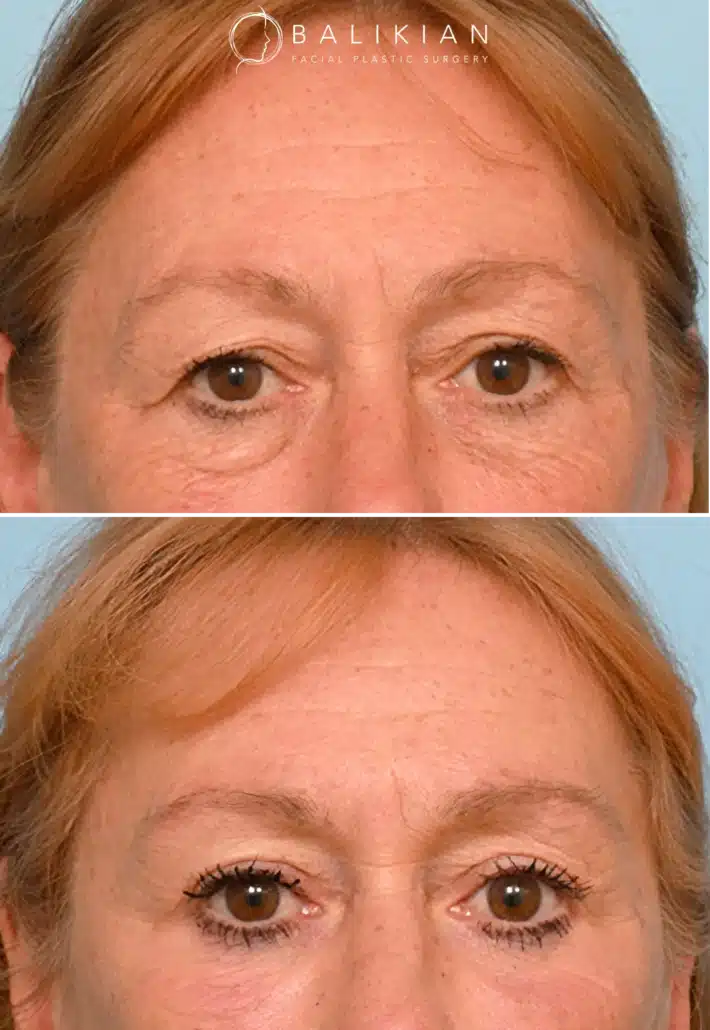
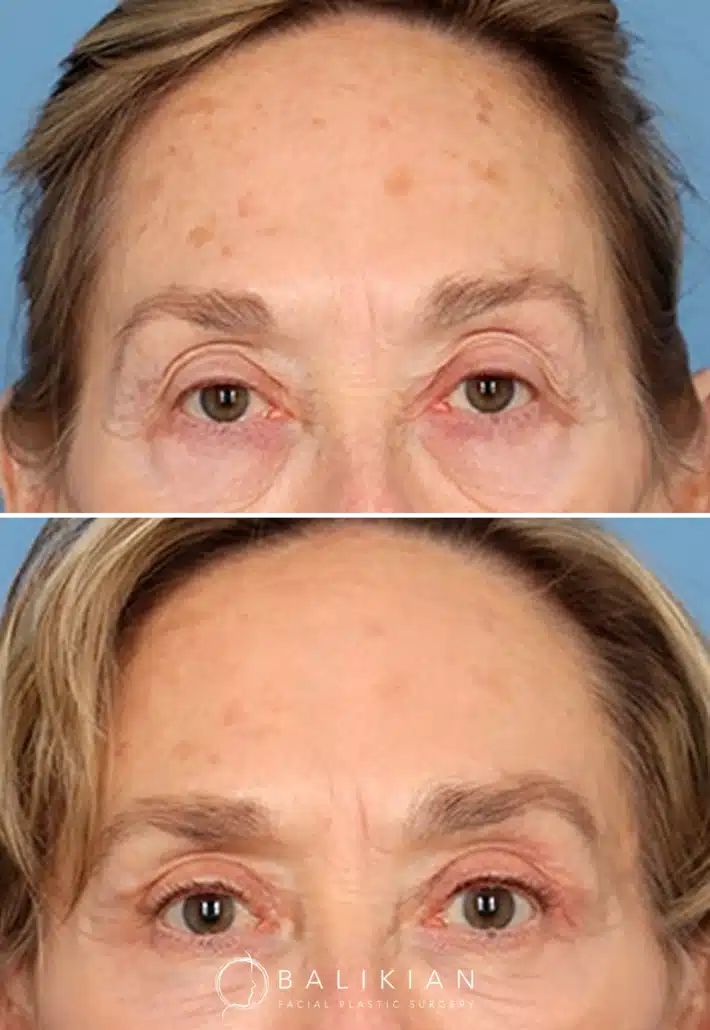
This is why I frequently combine upper blepharoplasty with a temple lift. One of the biggest misconceptions patients have is thinking a temple lift is simply another name for a brow lift. It isn’t.
I’m not trying to pull the eyebrows dramatically higher.
I’m not trying to create a “cat-eye” appearance.
I’m not trying to change the natural shape of your eyes.
The purpose of a temple lift is much simpler. It’s to support the outer brow. Through a small incision hidden behind the hairline, I release the deeper tissues and restore support to the tail of the eyebrow. Once that support has been restored, I can remove only the excess eyelid skin that’s truly necessary.
That often allows me to create a shorter upper blepharoplasty incision while preserving the natural position of the brow.
Supporting the brow changes the way I plan and perform upper blepharoplasty. Once I understand how the eyelids, brow and forehead work together, I can treat the underlying cause of the heaviness instead of relying on skin removal alone.
The result is a more balanced operation that respects the natural anatomy of the face.
| Upper Blepharoplasty Alone | Upper Blepharoplasty + Temple Lift |
|---|---|
| Removes excess eyelid skin | Removes excess skin while restoring brow support |
| May require a longer incision | Often allows for a shorter incision |
| Can pull the outer brow downward if too much skin is removed | Maintains the natural position of the outer brow |
| Treats excess eyelid skin | Treats excess eyelid skin while restoring brow support |
| Good for isolated eyelid skin excess | Ideal when outer brow descent contributes to heaviness |
When brow descent contributes to upper eyelid heaviness, combining a temple lift with upper blepharoplasty may allow me to:
The objective isn’t to perform more surgery. It’s to recommend the procedure that addresses the true source of the problem and creates the most natural result.
One concern I hear frequently is whether a temple lift will make patients look permanently surprised. Done properly, it shouldn’t.
The goal isn’t to elevate the brows as high as possible. The goal is to restore them to where they naturally belong. Most people won’t notice that your brows are slightly better supported. What they notice is something much more subtle.
Your eyes look brighter.
You look more rested.
You look less tired.
Most importantly, you still look like yourself.

Learn why understanding facial anatomy is the foundation of natural facial rejuvenation and the right surgical diagnosis.
Patients often arrive expecting a discussion about eyelid surgery. Instead, we begin by understanding why the eyelids look the way they do.
Sometimes the eyelids truly are the primary problem. Other times, the brow, temple, or forehead is contributing to the heaviness. Only by evaluating the entire upper face can I determine whether upper blepharoplasty alone or a combination of procedures will create the most natural, long-lasting result.
Not every patient who undergoes upper blepharoplasty needs a temple lift. Some patients have isolated excess upper eyelid skin and achieve excellent results with eyelid surgery alone.
Others have significant brow descent contributing to their heaviness. In those patients, treating only the eyelids means treating the symptom rather than the underlying cause.
One of the most important parts of my consultation isn’t deciding how much skin to remove. It’s determining why the skin appears heavy in the first place. By understanding how the eyelids, brows, temples and forehead work together, I can recommend the procedure that addresses the true source of the problem instead of simply treating its appearance.
One of the reasons I enjoy educating patients is that understanding anatomy often changes the entire conversation. Many people come into my office expecting to talk about excess eyelid skin. By the end of the consultation, they understand that the brow may be playing an equally important role.
That’s why upper blepharoplasty isn’t always an eyelid operation.
Sometimes the best result comes not from removing more skin, but from restoring the support that has been lost over time.
When we treat the underlying cause instead of simply the symptom, we create results that look balanced, refreshed and completely natural because they are built on the right diagnosis from the very beginning.
How do you know if my heavy upper eyelids are caused by excess skin or a drooping brow?
The only reliable way to determine the cause is through a comprehensive examination of the upper face. During your consultation, your surgeon evaluates the position of your eyebrows, forehead, upper eyelid skin, eyelid muscles, and surrounding facial anatomy. Many patients have a combination of excess eyelid skin (dermatochalasis) and brow descent, both of which contribute to a heavy appearance. Identifying the underlying cause allows the surgical plan to be tailored to your anatomy rather than simply removing skin.
Can a drooping brow make it look like I need upper blepharoplasty?
Yes. As the brow gradually descends with age, especially along the outer third of the eyebrow, it can push tissue downward onto the upper eyelid. Patients often believe the problem is excess eyelid skin when the brow is contributing significantly to the heaviness. In these cases, restoring brow support may improve the overall result.
Why would a surgeon recommend a temple lift instead of removing more eyelid skin?
A temple lift and upper blepharoplasty treat different anatomical problems. Upper blepharoplasty removes excess eyelid skin, while a temple lift restores support to the outer brow when brow descent contributes to eyelid heaviness. Addressing both structures when appropriate often creates a more balanced and natural-looking result.
Can removing too much upper eyelid skin pull the brow downward?
It can. Studies have shown that some patients experience brow descent following upper blepharoplasty, particularly older patients and men. For patients with pre-existing brow ptosis, combining brow support with blepharoplasty may help maintain a more natural brow position.
Will a temple lift create a surprised appearance?
A properly planned brow or temple lift is designed to restore youthful brow position rather than excessively elevate it. Modern techniques emphasize subtle support and preservation of natural facial expression.
Why is facial harmony important in upper blepharoplasty?
Upper blepharoplasty should not be planned in isolation. The eyelids, brows, forehead, and temples function together, so heaviness over the eyes may come from more than excess eyelid skin. Evaluating the entire upper face helps the surgeon avoid over-removing eyelid skin and create a result that looks balanced rather than operated on.
Can upper blepharoplasty improve vision?
Yes. In patients with significant upper eyelid skin redundancy, blepharoplasty can improve superior visual field obstruction. However, proper evaluation is important because brow ptosis, eyelid ptosis, and dermatochalasis can all contribute to visual blockage.
Why do natural-looking eyelid surgery results begin with diagnosis?
Natural results depend on identifying the real cause of eyelid heaviness. Some patients need skin removal alone. Others also have brow descent, eyelid ptosis, or upper facial aging that changes the surgical plan. The right diagnosis helps prevent a one-size-fits-all operation.
Can combining a temple lift with upper blepharoplasty create a more natural result?
In selected patients, yes. When lateral brow descent contributes to hooding, supporting the outer brow while removing true excess eyelid skin can create a more complete and balanced rejuvenation. The key is patient selection, not combining procedures for everyone.
Why does Dr. Balikian evaluate the entire upper face before recommending surgery?
Because heavy eyelids do not always begin in the eyelids. Brow position, eyelid skin, eyelid ptosis, forehead support, and temple descent can all affect how the eyes appear. Evaluating the entire upper face allows the surgical plan to address the true cause of the concern.
Dr. Richard Balikian is a highly respected facial plastic surgeon serving the San Diego area.
With over 20 years of experience and double board certification in Facial Plastic and Reconstructive Surgery as well as Head and Neck Surgery, Dr. Balikian offers a unique combination of technical expertise and artistic vision.
He is part of an elite group of surgeons with extensive training focused exclusively on the face and neck.