Rhinoplasty to Breathe Better | Combining Form and Function
An In-Depth Look at How Nasal Surgery Can Resolve Obstruction and Support Structural Harmony
While rhinoplasty is commonly known for improving the appearance of the nose, it can also be a powerful tool for improving how you breathe.
For patients struggling with nasal obstruction due to a deviated septum, narrowed nasal valves, or other internal structural issues, rhinoplasty for breathing, often combined with septoplasty, offers functional relief with natural-looking results.

At Balikian Facial Plastic Surgery, Dr. Richard Balikian blends form and function to restore nasal airflow while enhancing your facial balance.
Functional rhinoplasty refers to a rhinoplasty operation performed with the primary goal of improving nasal breathing.
This often involves septoplasty, a procedure that corrects a deviated nasal septum, the cartilage and bone that divides the nasal cavity. When combined, this approach is often called a septorhinoplasty.
Common structural problems addressed include:
These issues can obstruct airflow, making it difficult to breathe through the nose, especially during sleep or exercise.
As a double board-certified facial plastic and reconstructive surgeon and ENT specialist, Dr. Balikian takes a comprehensive approach to every rhinoplasty case. His focus is on creating results that feel as good as they look.
“Function always comes first. If a patient can’t breathe well, fixing the structure and improving airflow is the foundation of everything else we do.”
– Dr. Balikian
Each breathing-focused rhinoplasty is custom-designed to:
This personalized approach ensures that patients not only breathe better but also achieve natural, balanced results that enhance both function and appearance.

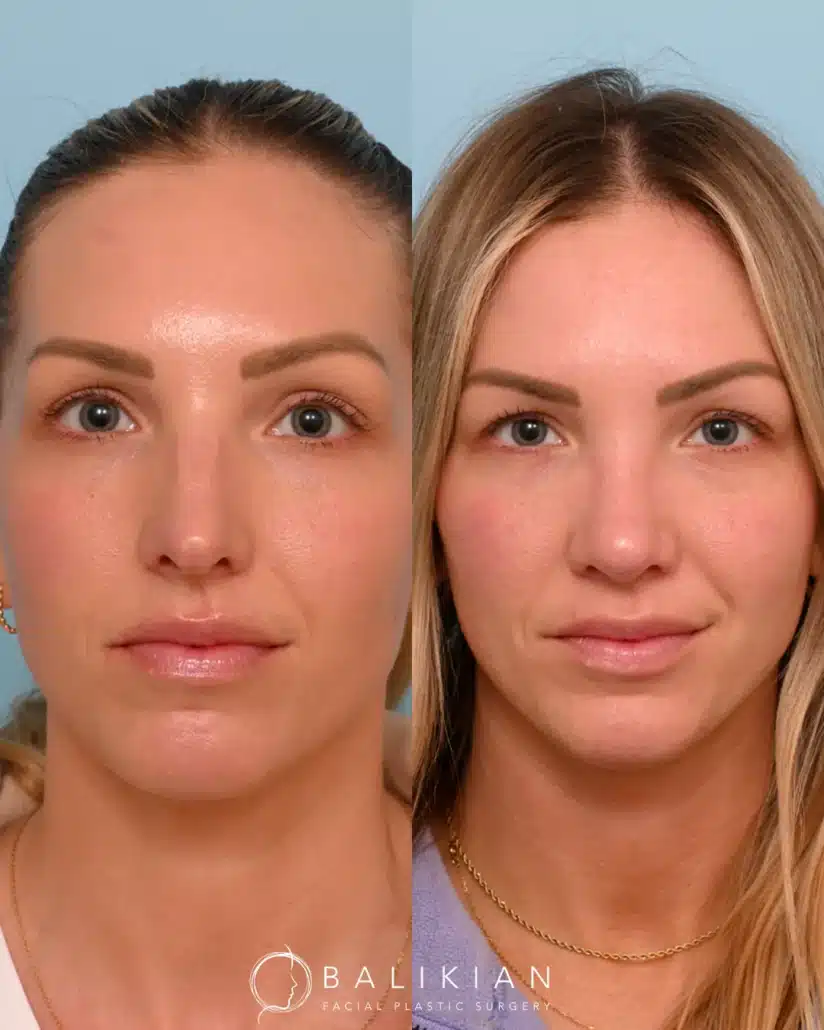

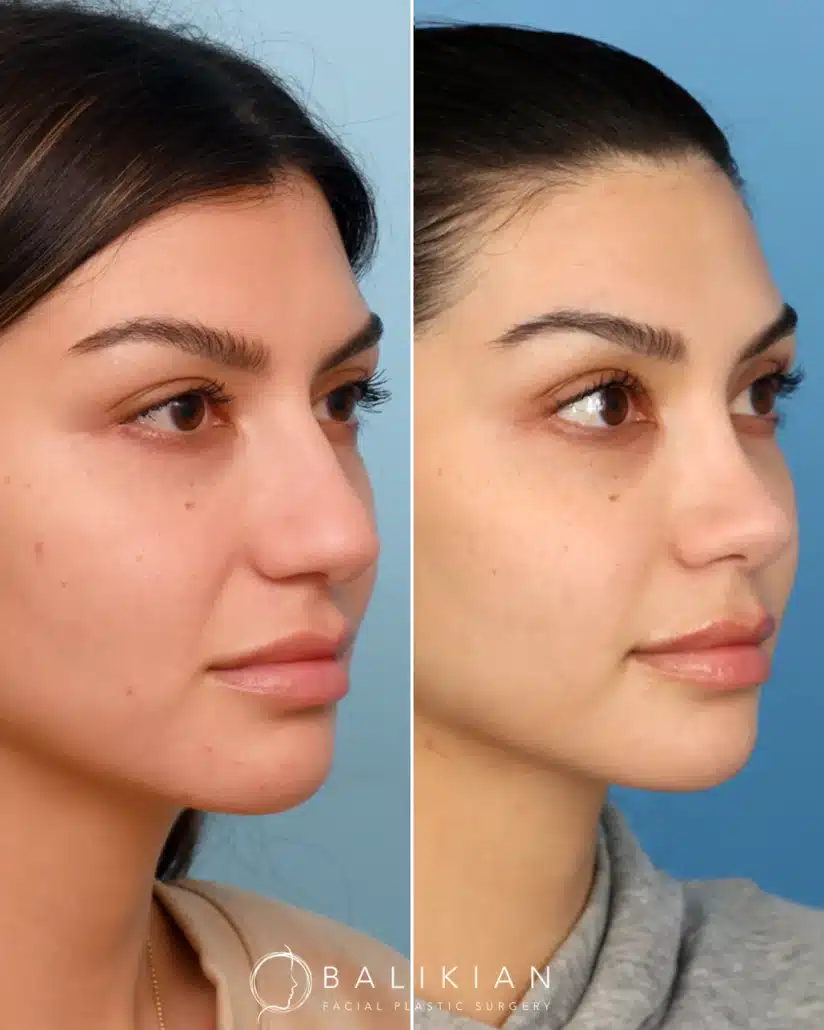
If you struggle with nasal obstruction, a breathing-focused rhinoplasty can offer lasting relief that goes far beyond appearance.
By improving airflow and nasal structure, rhinoplasty helps patients not only look better, but feel healthier, more energized, and more comfortable every day. Many patients also report improved smell, energy, and quality of life after surgery.
The procedure typically takes 1 to 2 hours and is performed under general anesthesia. Dr. Balikian uses a closed or open technique depending on your anatomy and goals.
With each stage of healing, patients experience steadily improving function and appearance, culminating in long-term results that enhance both breathing and confidence.
If you’re considering rhinoplasty to both improve your breathing and enhance the appearance of your nose, Dr. Balikian can often address both goals in a single, thoughtfully planned procedure.
By combining septoplasty or internal nasal corrections with cosmetic refinement, he ensures that the structural function of your nose is optimized, while also creating a balanced, natural look that complements your features.
This integrated approach not only reduces the need for multiple surgeries but also leads to more cohesive, satisfying results.
You may benefit from rhinoplasty for breathing if you:
By planning your procedure with function in mind, you reduce the risk of post-operative obstruction and get long-term results that support both airflow and aesthetics.
What is functional rhinoplasty and how is it different from cosmetic rhinoplasty?
Functional rhinoplasty prioritizes airflow by correcting structural issues like a deviated septum, narrow internal valves, or enlarged turbinates, and it can be paired with cosmetic refinement in a single septorhinoplasty.
Can rhinoplasty meaningfully improve nasal breathing and quality of life?
Yes. Contemporary studies report significant improvements in validated patient-reported measures after rhinoplasty and septorhinoplasty, including NOSE and ROE scores, with quality-of-life gains sustained at follow up.
When is septoplasty alone enough, and when do I need septorhinoplasty?
If obstruction is mainly from a deviated septum, septoplasty with or without turbinate reduction often suffices. When the mid-vault or valves also contribute, combining septoplasty with structural rhinoplasty provides more complete relief.
How are narrow internal nasal valves treated during surgery?
Surgeons commonly reinforce the mid-vault with spreader grafts or autospreader flaps to widen the internal valve angle and stabilize airflow. Evidence supports both methods, with some data favoring spreader grafts for aesthetic satisfaction in selected patients.
Will surgery to improve breathing change how my nose looks?
It can. Dr. Balikian plans form and function together so airway support, mid-vault symmetry, and tip balance align with your facial harmony. Many patients choose small aesthetic refinements while addressing obstruction.
Does better nasal airflow help with sleep or exercise tolerance?
Improved nasal patency is associated with reduced obstruction symptoms and better overall comfort, which may translate to easier sleep and activity. Patient-reported outcomes consistently improve after functional surgery.
Can rhinoplasty or septorhinoplasty affect sense of smell?
Most patients maintain or report improved olfaction when obstruction is relieved. Recent studies show olfactory gains after rhinoplasty or functional septorhinoplasty in selected groups.
What is the recovery timeline for breathing improvement?
On your protocol, splints and cast are removed around week 1. Breathing begins to improve through weeks 2 to 4 and continues to refine for months as internal healing settles.
Is open or closed rhinoplasty better for breathing problems?
Both approaches can achieve excellent functional outcomes. Choice depends on anatomy and surgeon preference, with recent reviews showing comparable improvements in NOSE and ROE scores.
What are the main risks when surgery is done for both function and appearance?
Typical risks include bruising, swelling, infection, bleeding, and the possibility of revision. Large series report low major-complication rates in healthy patients when surgery is planned to preserve support and valve function.
How do I know if I am a good candidate for functional rhinoplasty with cosmetic refinement?
If you have persistent obstruction that has not responded to medical therapy, have septal deviation or valve collapse, or want balanced aesthetic changes while improving airflow, a consultation focused on both structure and appearance is appropriate.
Dr. Richard Balikian is a highly respected facial plastic surgeon serving the San Diego area.
With over 20 years of experience and double board certification in Facial Plastic and Reconstructive Surgery as well as Head and Neck Surgery, Dr. Balikian offers a unique combination of technical expertise and artistic vision.
He is part of an elite group of surgeons with extensive training focused exclusively on the face and neck.
Read the Science