What It’s Really Like to Have a Deep Plane Facelift
Real Patients Share the Fears, Decisions, Recovery, and Moments that Changed the Way They Saw Themselves.
Sylvia had stopped recognizing herself in the mirror. Her goal wasn’t to look like someone else. It was to see a younger, more refreshed version of the woman she’d always been.
See the Jawline Return
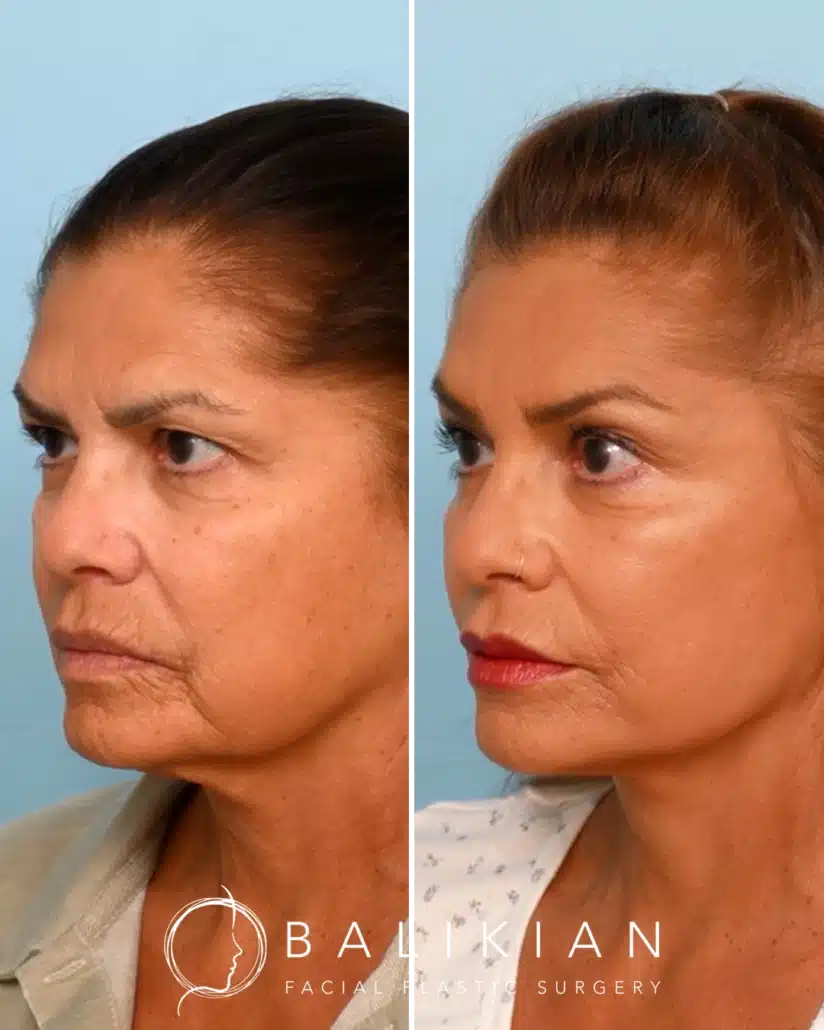
Notice the sharper jawline, improved neck definition, and natural transition between the face and neck without an over-tightened appearance.
Still Her. Just Refreshed.
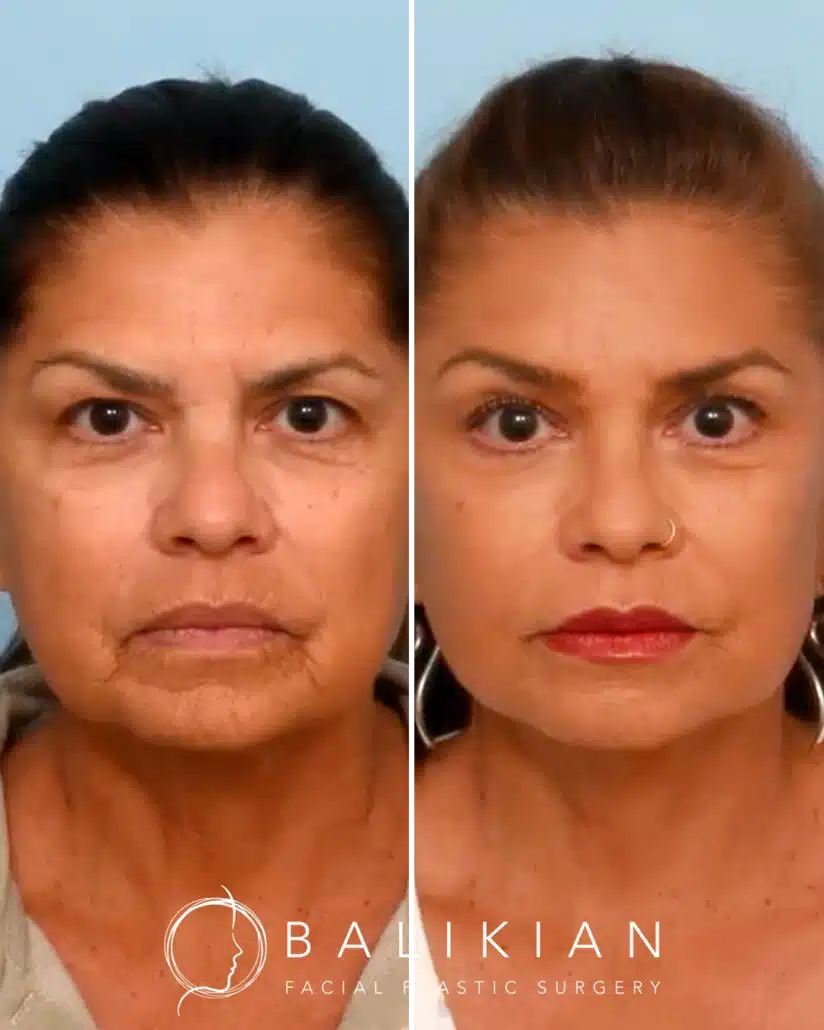
From the front, the goal isn’t a different face. It’s a younger, healthier, more refreshed version of the same person.
Natural Facial Harmony
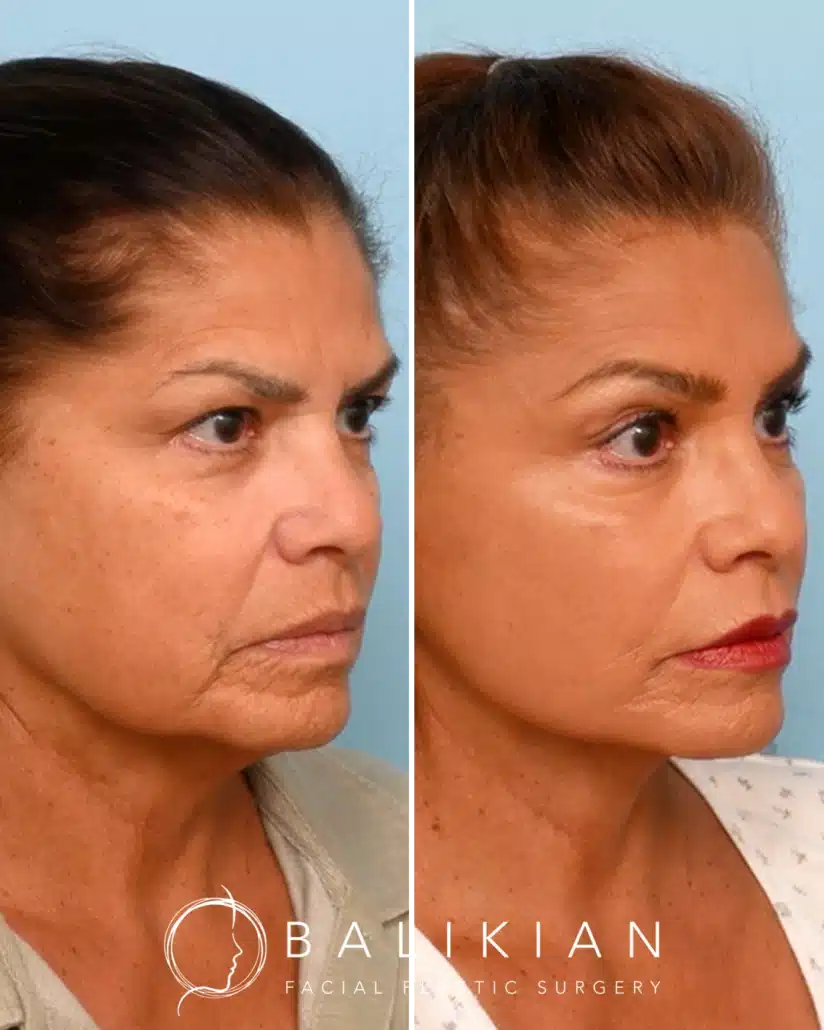
A preservation deep plane facelift restores youthful contours while maintaining the patient’s unique facial features and expression.
Sylvia wasn’t celebrating a new face. She was celebrating the return of one she’d been missing for years.
For people considering a deep plane facelift, that may be the greatest hope of all.
Not looking different.
Looking like yourself again.
For almost everyone considering facial rejuvenation, the biggest question isn’t, “Will I look younger?”
It’s much more personal.
Will I still look like me?
That question comes up in consultation after consultation. Patients aren’t looking for a different face. They want to look younger, healthier and more refreshed while preserving the expressions, personality and character that make them who they are.
Dr. Richard Balikian often tells patients that the goal isn’t for someone to sit across from them at lunch and think, “Who did your facelift?” The goal is for that person to simply think, “That’s my friend.”
As we spoke with patients who underwent deep plane facelift surgery, that philosophy surfaced again and again. They came from different backgrounds, different careers and different stages of life. Some had been considering surgery for decades. Others spent years researching surgeons before scheduling a consultation. A few had already met with multiple surgeons before finding the right fit.
Their stories were different.
Their concerns were different.
Their recoveries were different.
But they all shared one hope.
Not to become someone else.
To look in the mirror and recognize the person looking back.
Very few people wake up one morning and decide to have a facelift. For most of the patients we spoke with, it was a decision that unfolded over years.
It might begin with an unexpected photograph. A reflection in the mirror that no longer matched the way they felt. Or the realization that they always looked tired, even after a full night’s sleep.
One patient had been thinking about surgery for years.
“I wasn’t recognizing myself anymore.”
– Sylvia
Another first came to Dr. Balikian after noticing changes in her face and neck in her early fifties. After her consultation, she decided to wait. Several years later, she returned because the timing finally felt right. She wasn’t hoping to become someone different. She simply wanted to restore what time had gradually changed.
For Tracy, the decision wasn’t really about age.
“I wasn’t interested in looking younger. I just didn’t want to look so tired. I wanted to look how I felt inside.”
– Tracy
That feeling came up again and again throughout these conversations.
No one talked about chasing perfection.
No one expected to look twenty-five again.
They wanted their reflection to match the way they still felt inside. For many of them, deciding to have surgery wasn’t about changing who they were. It was about feeling that the person they saw in the mirror finally matched the person they had always been.
Deciding to have facelift surgery is a major decision. Deciding who to trust with your face is even bigger.
For many of the patients we interviewed, that process took months. Some met with multiple surgeons. Others spent years researching techniques, studying before and after photographs and watching educational videos before scheduling a consultation. A few traveled hours because they felt they had finally found someone whose philosophy matched what they were looking for.
What stood out wasn’t just the surgical results. It was the consultation. Again and again, patients talked about feeling heard.
One patient said Dr. Balikian listened carefully to what bothered her, explained the anatomy behind those changes, and recommended only the procedures that would truly address her concerns.
“He really listened to my concerns.”
– Stephanie
Tracy, a registered nurse, remembered something much simpler.
“He was never in a rush.”
– Tracy
She described leaving her consultation feeling as though every question had been answered and every concern had been heard.
Another patient drove more than two hours after consulting with several surgeons because, in her words, she felt comfortable from the moment she met him. She believed he genuinely wanted the best outcome for his patients and that confidence made all the difference.
That reflects the way Dr. Balikian approaches every consultation.
He often says that faces are not templates. Every patient ages differently, every face has unique anatomy and every treatment plan should be just as individual. Patients frequently arrive convinced they need a specific procedure because of something they’ve read online or seen on social media. Rather than starting with the procedure, he starts by understanding why the face has changed.
Many consultations include anatomy drawings, photographs and long conversations before surgery is ever discussed. Once patients understand what’s happening beneath the skin, the treatment plan often becomes much clearer.
That’s why so many patients left their consultation feeling they hadn’t just received a recommendation. They had received an education.
Even after deciding to move forward, nearly every patient admitted they had the same concern. Not the surgery itself. The recovery.
Would it be painful?
How long would they be swollen?
Would they recognize themselves in the mirror?
Would everyone know they had surgery?
Those questions are completely normal, and they’re often made worse by the sheer amount of conflicting information online.
Carla expected recovery to take much longer. Instead, she found herself feeling like herself again sooner than she imagined.
“I was surprised by how quickly I started feeling like myself again.”
– Carla
Others shared similar concerns. They had spent months, sometimes years, researching facelift surgery, reading online forums and watching videos, only to discover that every recovery story seemed a little different.
That uncertainty can feel overwhelming.
What surprised many of the patients we interviewed wasn’t that recovery required patience. It was that the experience was often much easier than they had imagined.
Carla documented her recovery after undergoing a preservation deep plane facelift, deep vertical neck lift, brow lift, upper blepharoplasty, rhinoplasty, facial fat transfer and CO₂ laser resurfacing. The images below follow her healing from before surgery through four months, offering a realistic look at how bruising, swelling and results evolve over time.
Pre-Op

Carla before her preservation deep plane facelift, neck lift, brow lift, upper blepharoplasty, rhinoplasty, and CO₂ laser resurfacing.
Day 1

The first day after surgery with expected swelling and bruising. Recovery is underway.
Day 4

By day four, bruising and swelling are beginning to improve as the initial healing process continues.
Day 7

One week after surgery. Most bruising is resolving, and Carla’s refreshed facial contours are already becoming visible.
2 Weeks

Two weeks into recovery, Carla is feeling more comfortable going out while subtle swelling continues to improve.
1 Month

One month after surgery with a more defined jawline, smoother neck, and natural facial rejuvenation.
2 Months

At two months, most swelling has resolved, revealing a younger, refreshed appearance that still looks completely like Carla.
4 Months

Four months after surgery, Carla’s results have matured into a natural, refreshed appearance with restored facial harmony.
Please note: Every patient heals at a different pace. Recovery varies based on the procedures performed, individual healing characteristics, age, overall health, and other factors. Carla’s timeline represents one patient’s experience and should not be considered a prediction of your own recovery.
If there’s one part of facelift surgery that creates more anxiety than any other, it’s recovery.
Many patients imagine weeks of pain, significant bruising and being confined to their home. They spend hours reading online forums and watching videos, only to discover that every recovery story seems a little different. That uncertainty came up in nearly every interview.
When we asked patients what surprised them most afterward, the answer wasn’t that recovery was effortless. It was that the experience rarely matched the fears they had imagined beforehand.
Brooke, who underwent a deep plane facelift, neck lift, brow lift, upper blepharoplasty, rhinoplasty and CO₂ laser resurfacing at age 59, remembers the first night as the most difficult part.
“I won’t lie, the first night was a little rough. But once after that first week, and my nose splint came off, it was instantly like, ‘Oh my gosh.'”
– Brooke
Even though she still had bruising, she remembers seeing enough of the result to know she had made the right decision.
“The first week is the hardest,” she said. “But even that really wasn’t hard.”
– Brooke
Within about two weeks, she felt comfortable going out in public.
“I still had a little bruising, but I felt great.”
– Brooke
Other patients described similar experiences. Several expected a long, difficult recovery but found themselves returning to everyday activities much sooner than they had anticipated. One business owner admitted that downtime had been one of her biggest concerns because she wanted to get back to work as quickly as possible. Looking back, she felt recovery progressed far more quickly than she had expected.
No two recoveries are identical. Age, skin quality, the procedures performed and individual healing all play a role in the timeline.
What stood out across every interview, however, was something much simpler. Patients consistently described the anticipation of recovery as being harder than recovery itself.
Recovery is measured in days and weeks.
Results are measured in moments.
For many of the patients we interviewed, the moment they remembered most wasn’t waking up after surgery or having their bandages removed. It was the first time they looked in the mirror and saw themselves again.
One patient described it in just a few words.
“I look refreshed. I don’t look angry. My skin doesn’t look saggy.”
– Sylvia
Another smiled as she reflected on life four months after surgery.
“I feel so fortunate. Every day I like looking in the mirror again. I’m looking forward to turning 60 now.”
– Brooke
For Tracy, the goal had never been to look dramatically younger.
“When I look in the mirror now, I see a refreshed Tracy. I wanted to look how I felt inside, and I feel that Dr. Balikian and his staff really captured how I wanted to look on the outside to match how I felt on the inside.”
– Tracy
Listening to these patients, one theme surfaced again and again. None of them talked about becoming someone new. They talked about feeling like themselves again.
That reflects Dr. Balikian’s philosophy of facial rejuvenation. A successful facelift shouldn’t make people wonder what procedure you had. It should simply help you look younger, healthier, and more refreshed while still looking unmistakably like yourself.
Not dramatic.
Not artificial.
Just… themselves.
By now you’ve met several patients whose stories began with the same hope: to look more vibrant while preserving the features that made them recognizable. Before and after photographs help tell that story.
As you look through the gallery, try not to focus on dramatic transformations. Instead, notice the subtle details. Does the smile still look natural? Does the jawline appear more defined without looking tight? Does the neck blend smoothly into the face? Most importantly, ask yourself one question:
Do they still look like themselves?
The best facelift results don’t draw attention to the surgery. They simply restore what time has changed while preserving the unique features that make each patient recognizable.
Carla • Age 64
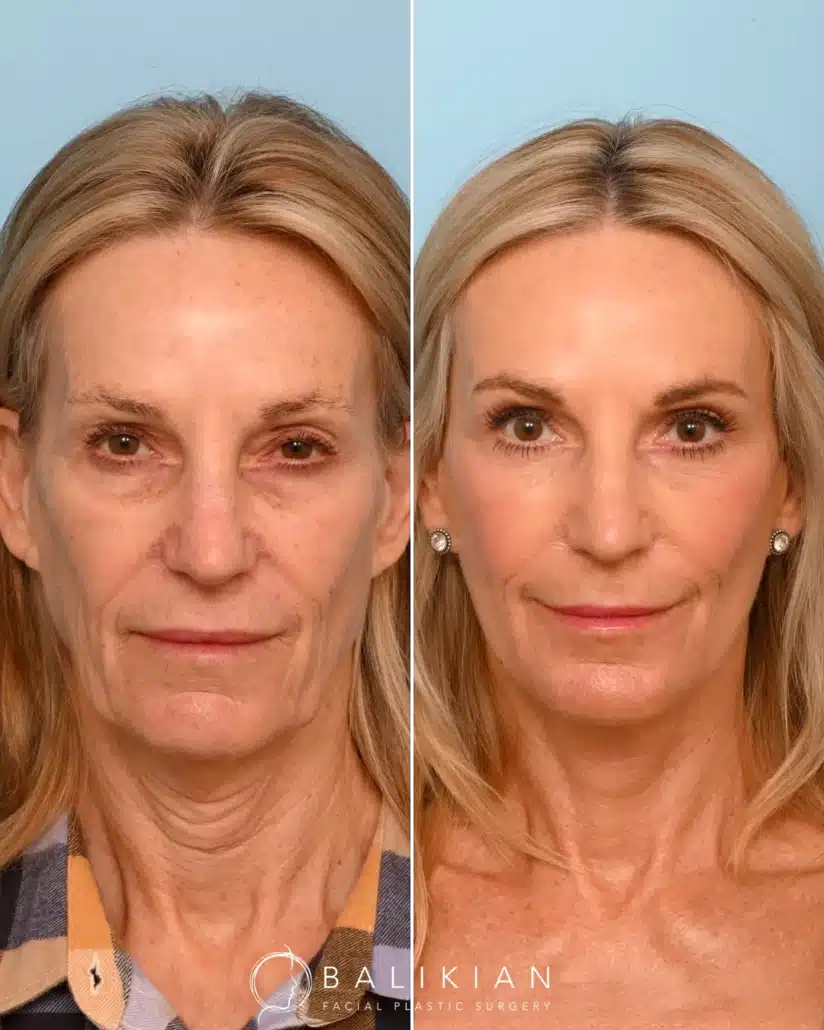
“I don’t look like I had surgery. I just look younger and healthy.”
Carla wanted her appearance to reflect how she still felt inside. Today she says she feels more confident and that her face finally matches the energy she has always felt.
Amanda • Age 50
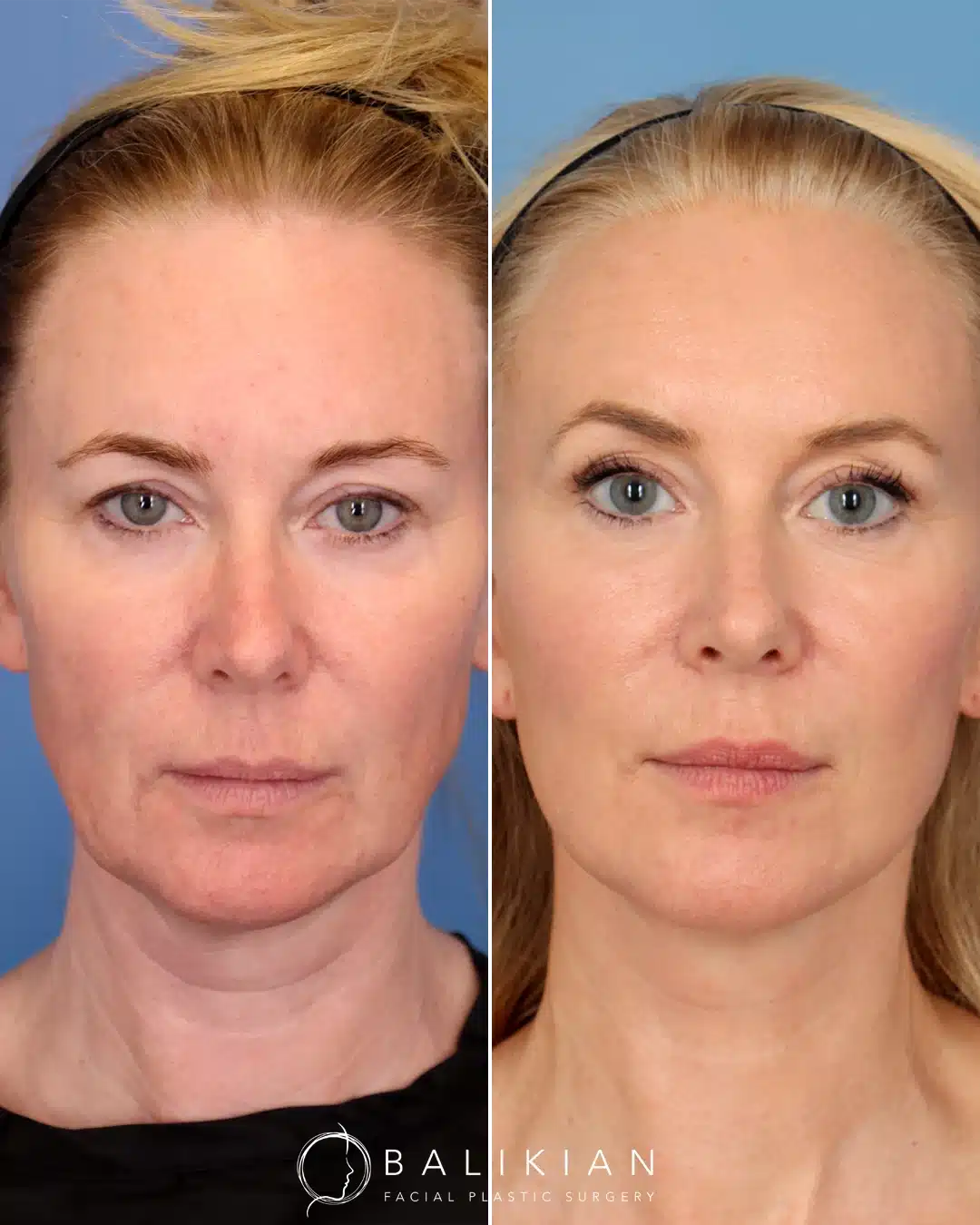
“You don’t really look like you had a facelift.”
Amanda returned to yoga expecting questions about her surgery. Instead, she found herself convincing friends that she had actually had a facelift. For her, that was the greatest compliment.
Cindy • 68

“She felt like her face wasn’t projecting out to the world the way she felt.”
Procedures: Artiste Lift™ Preservation Deep Plane Facelift, Deep Vertical Neck Lift, Temporal Brow Lift, Upper Blepharoplasty, Facial Fat Transfer, CO₂ Laser.
Heather • Age 64
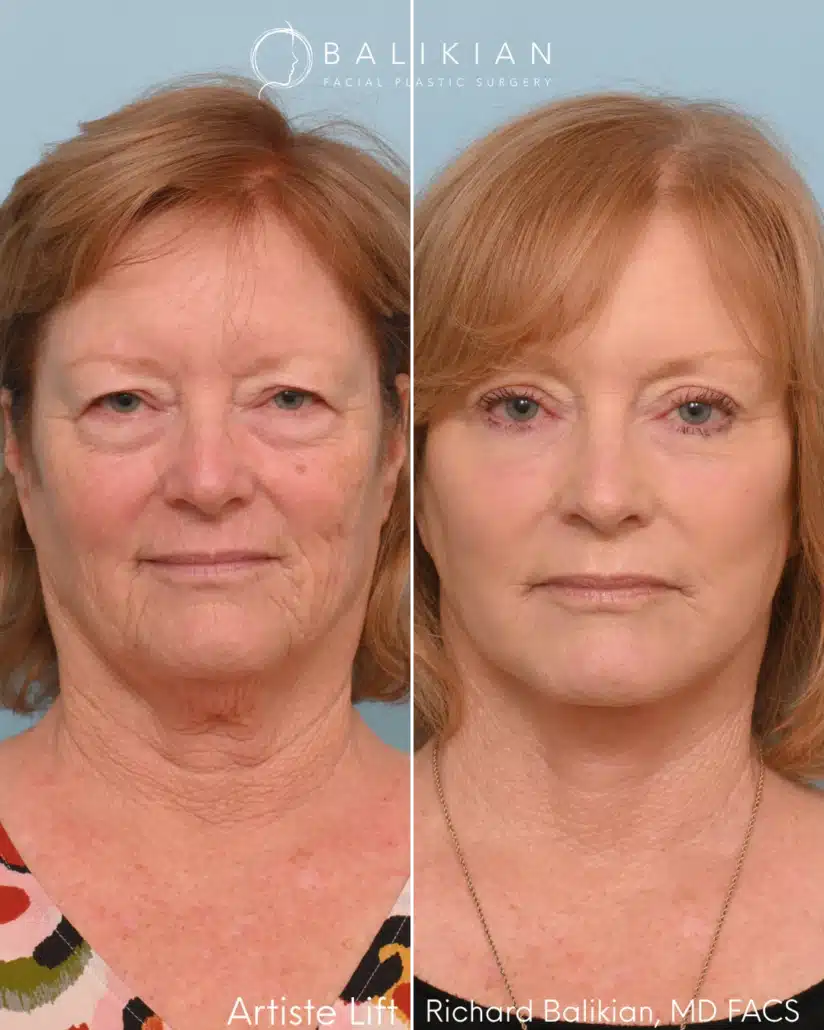
“What happens here is not vanity. It’s soul work.”
Three months after her facial rejuvenation, she says the experience helped her feel like herself again and marked the beginning of a new chapter in her life.
Kathleen • Age 63
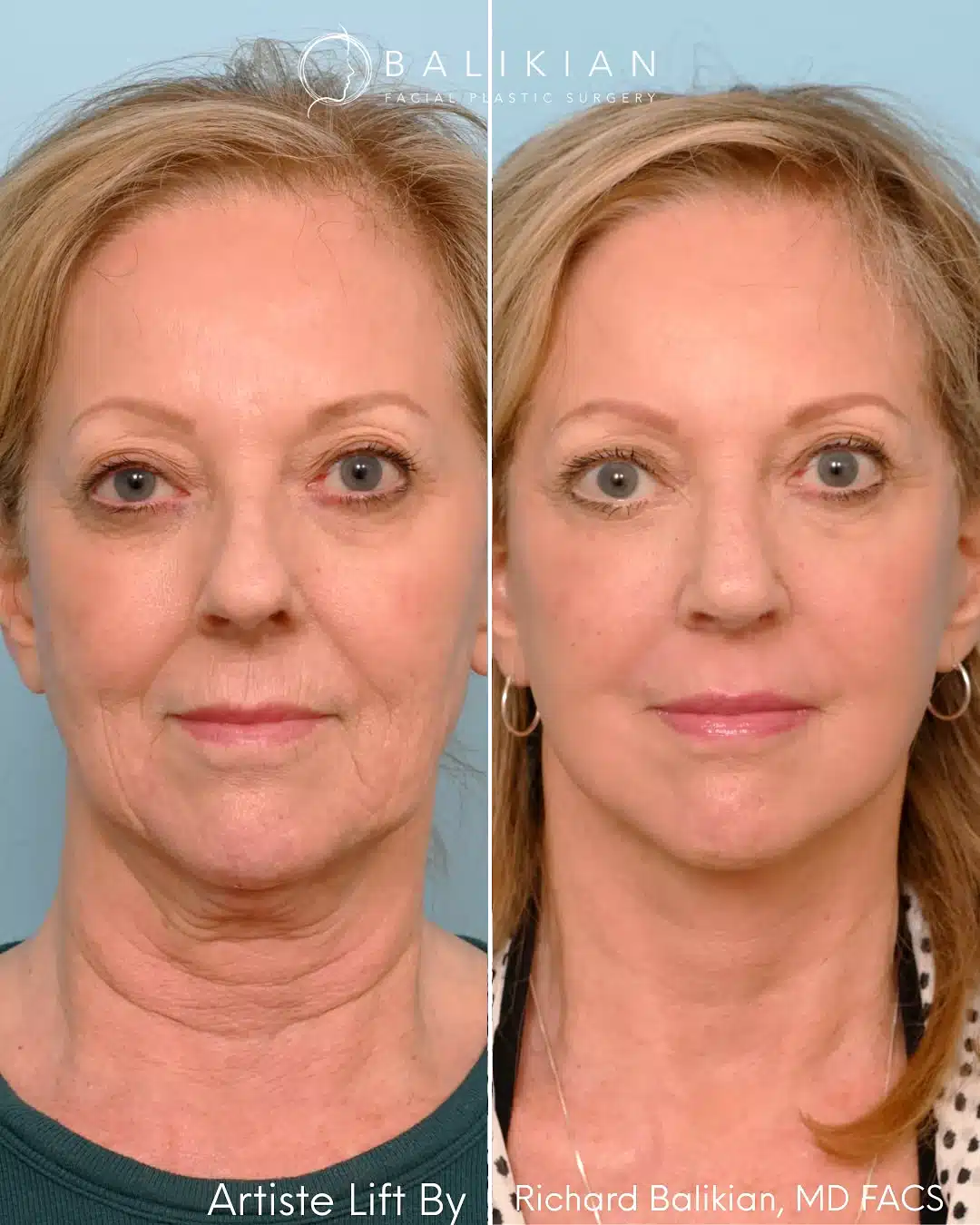
“I want to look like myself. I want to look refreshed. I want to look younger. I don’t want anybody to notice that I had surgery done.”
This patient’s customized treatment plan was designed around those goals, creating a natural, refreshed result that still looked unmistakably like her.
Stephanie • Age 50
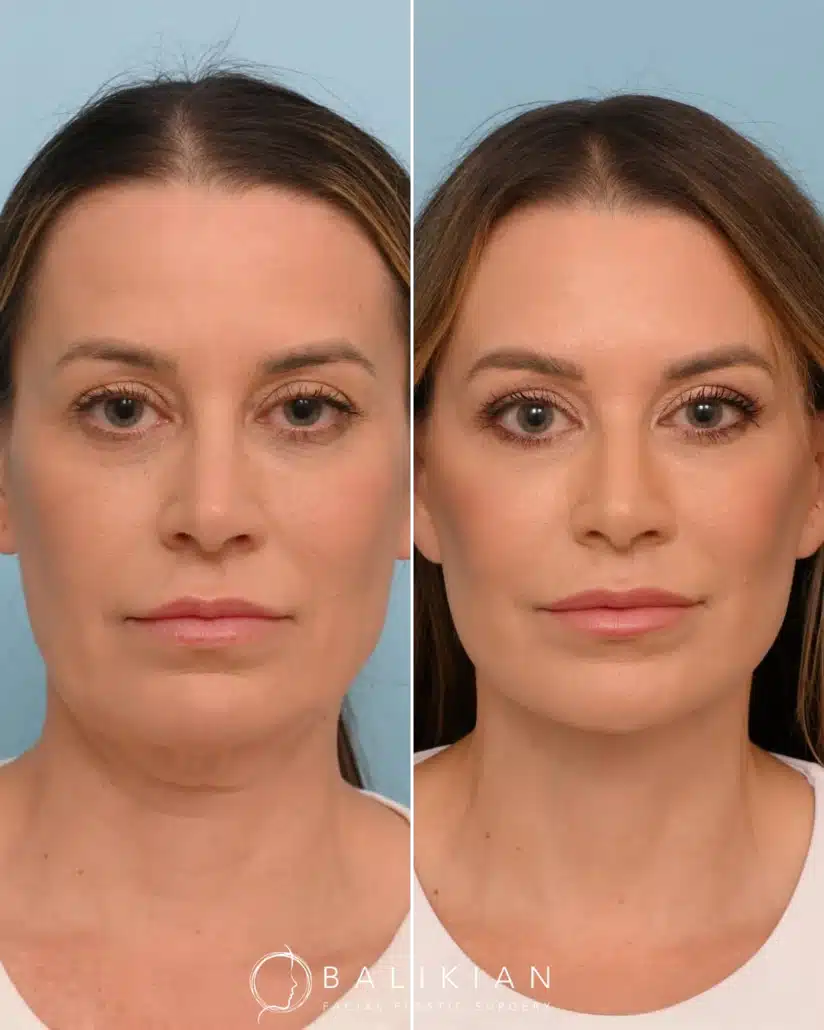
“He really listened to my concerns and understood exactly what was bothering me.”
After watching a friend’s natural results and waiting until she felt ready, Stephanie chose facial rejuvenation that addressed the changes she noticed without looking overdone.
Brooke • Age 59
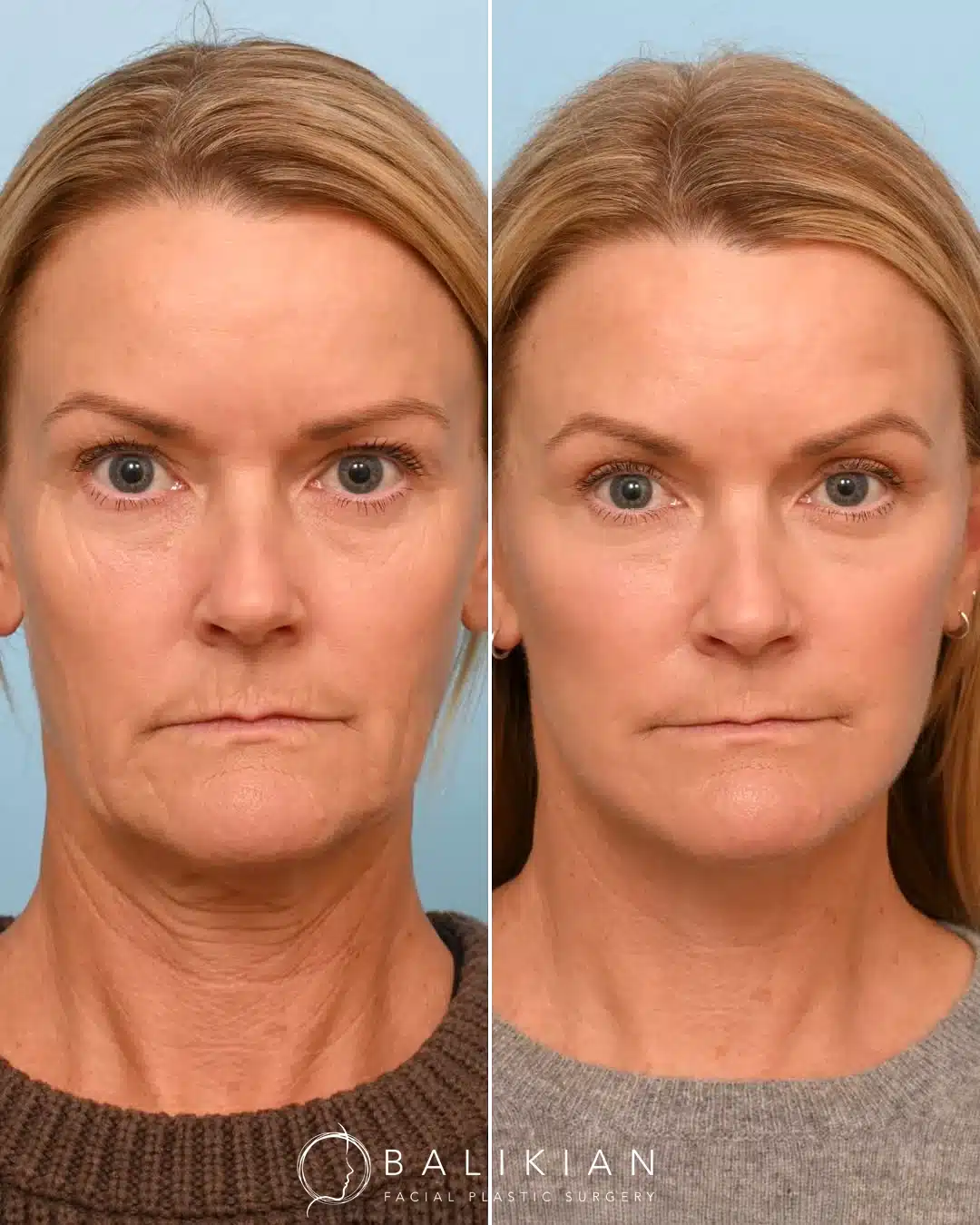
“Every day I like looking in the mirror again. I’m looking forward to turning 60 now.”
After years of researching deep plane facelift surgery, Brooke chose comprehensive facial rejuvenation to achieve a natural, long-lasting result that still looked like her.
Kristine • Age 55

“I really wanted to look just like myself, just match myself to how I feel and how the rest of my body is.”
Five weeks after surgery, she says her recovery has been smooth, with swelling gradually improving and no significant pain. She chose Dr. Balikian because she believed he would recommend only what would create the most natural result.
As we listened to patient after patient describe their experience, something became clear. Very few of them spent much time talking about looking younger. Instead, they talked about confidence.
They talked about feeling comfortable in photographs again. They talked about going out with friends without thinking about the loose skin beneath their chin or the tired expression staring back at them in the mirror.
Several patients described reaching a point where they simply stopped thinking about their surgery altogether. It had become part of their story, but it no longer defined it.
One patient, who had been considering surgery for years, summed it up beautifully.
“You don’t really look like you had a facelift.”
– Amanda
Another patient described the result in an entirely different way.
“I look as good as I feel.”
– Tracy
She wasn’t trying to become someone new. She wanted the way she looked on the outside to reflect how she already felt on the inside.
For another patient, the change wasn’t measured by compliments. It was measured by confidence.
“I have so much more confidence because I feel that I have regained my youth. I feel like I can conquer the world.”
– Margie
Those reactions highlight something that often gets overlooked when people talk about facelift surgery. A successful facelift isn’t about creating a new identity. It’s about removing the distractions that kept patients from recognizing the person they already were.
Dr. Balikian often reminds patients that facial rejuvenation should never become the first thing people notice about someone. If friends and family are focused on the surgery, something has probably been overdone.
The best outcomes are quieter than that.
People may say you look well rested.
They may ask whether you’ve been on vacation.
They may tell you that you look healthier.
What they don’t say is just as important.
They don’t say you look like someone else.
Every patient has a different story, but many arrive at the same destination. The videos below allow you to hear those stories directly from the people who lived them, from the first consultation through recovery and the moment they recognized themselves again.
Watch the complete patient playlist below.



There isn’t one “right” age to have a deep plane facelift. There isn’t one recovery experience that fits every patient. And there isn’t one reason people choose facial rejuvenation.
Some patients want to look less tired. Others want to address changes they’ve noticed over many years. Some simply want their reflection to better match the energy and confidence they still feel inside.
What united every patient we interviewed wasn’t their age, their profession, or even the procedures they chose. It was their hope of looking in the mirror and recognizing themselves again. That is ultimately the philosophy behind Dr. Richard Balikian’s approach to facial rejuvenation.
The goal isn’t to create a different face. It’s to restore what time has changed while preserving the expressions, personality, and character that make someone uniquely themselves.
As Dr. Balikian often tells his patients, the greatest compliment isn’t someone asking,
“Who did your facelift?”
It’s when an old friend sits down across the table, smiles and simply thinks,
“That’s my friend.”
After listening to these patients, it’s easy to understand why that may be the greatest compliment of all.
Will I still look like myself after a deep plane facelift?
One of the biggest concerns patients share is whether surgery will change their appearance. A well-executed deep plane facelift is designed to reposition the deeper facial tissues while preserving your unique facial features. The goal is not to create a different face, but to help you look younger, healthier, and more refreshed while remaining recognizable.
How long does recovery from a deep plane facelift usually take?
Recovery varies for every patient. Most swelling and bruising improve significantly during the first two weeks, while subtle swelling continues to resolve over several months. Many patients feel comfortable returning to social activities within two to three weeks, depending on the procedures performed and individual healing.
Is a deep plane facelift painful?
Most patients describe recovery as involving tightness, swelling, numbness, and mild discomfort rather than severe pain. Modern anesthesia techniques and comprehensive recovery protocols have made the experience much more comfortable than many people expect.
Why do so many patients spend months researching facelift surgeons?
A facelift is one of the most technically demanding cosmetic procedures. Patients often spend months or even years researching surgeons because experience, judgment, anatomy, and surgical philosophy all influence the final result. Choosing a surgeon whose aesthetic goals match your own is just as important as selecting the procedure itself.
What should I look for in before-and-after photos?
Instead of looking only for dramatic improvements, pay attention to whether patients still look like themselves. Notice their facial expression, smile, jawline, neck contour, and whether the result appears natural rather than pulled or overly tight.
Why is the deep plane facelift considered more natural?
Unlike techniques that primarily tighten skin, a deep plane facelift repositions the deeper facial support structures. By addressing the underlying anatomy rather than relying on skin tension, surgeons can often achieve more natural movement and longer-lasting rejuvenation.
Can a deep plane facelift be combined with other procedures?
Yes. Many patients combine a deep plane facelift with procedures such as a neck lift, brow lift, blepharoplasty (eyelid surgery), facial fat transfer, or laser resurfacing. Combining procedures often creates a more balanced facial rejuvenation because aging rarely affects only one area of the face.
At what age do most people consider a deep plane facelift?
There is no perfect age. Some patients begin considering surgery in their late 40s or 50s, while others wait until their 60s or later. The decision depends more on facial anatomy, skin quality, and personal goals than chronological age.
How long do deep plane facelift results last?
Although no facelift stops the aging process, deep plane facelift techniques are designed to reposition the deeper facial tissues rather than simply tighten skin. Many patients continue to enjoy noticeable improvement for 10 years or longer while aging naturally.
Why do so many patients describe feeling like themselves again after surgery?
Many people seeking facial rejuvenation are not trying to look like someone else. They simply want their appearance to reflect the way they still feel inside. Restoring facial support and youthful contours while preserving natural expression allows many patients to feel more confident without changing their identity.
Dr. Richard Balikian is a highly respected facial plastic surgeon serving the San Diego area.
With over 20 years of experience and double board certification in Facial Plastic and Reconstructive Surgery as well as Head and Neck Surgery, Dr. Balikian offers a unique combination of technical expertise and artistic vision.
He is part of an elite group of surgeons with extensive training focused exclusively on the face and neck.