Drainless Deep Plane Facelift: Why Dr. Balikian Doesn’t Use Drains
The Artiste Lift™ Eliminates Surgical Drains for a More Comfortable Recovery
One of the first questions many patients ask after learning about facelift surgery is, “Will I have drains?”
If you’ve researched deep plane facelifts, you’ve probably seen photos of patients leaving surgery with small tubes attached to collection bulbs hanging from their neck. For many people, the idea of caring for surgical drains is one of the most intimidating parts of recovery.
Patients are often surprised when I tell them they won’t have drains after their Artiste Lift™ Preservation Deep Plane Facelift and Neck Lift.

Dr. Richard Balikian explains how restoring the deeper facial structures, preserving healthy anatomy and minimizing unnecessary tissue trauma create natural-looking results and a more comfortable recovery.
Their next question is always the same. “How is that possible?”
The answer has very little to do with the drains themselves. It has everything to do with how the surgery is performed.
Surgical drains are small tubes placed beneath the skin at the end of an operation to remove blood and fluid that naturally collect as the body begins to heal. They’re connected to small bulbs that create gentle suction, drawing fluid away from the surgical site during the first day or two after surgery.
For decades, drains have been a routine part of many facelift procedures because they reduce the amount of fluid that can accumulate beneath the skin immediately after surgery. Patients typically return to the office within one or two days to have the drains removed.
While they’re temporary, they do add another step to recovery. Sleeping, showering, getting dressed, and simply moving around all become a little more complicated while the drains are in place.
Most patients don’t enjoy that part of recovery. Whether drains are necessary depends on the surgical technique, not the procedure’s name.
To understand why some surgeons use drains, it’s helpful to understand what happens during surgery.
Every facelift involves lifting tissues that have descended with age. As those tissues are repositioned, the body immediately begins its normal healing response. That response includes inflammation, swelling and a small amount of bleeding from tiny blood vessels.
When larger areas of skin are separated from the deeper tissues, a temporary space, called dead space, is created beneath the skin. Until the tissues seal back together, blood and inflammatory fluid can collect within that space. Drains simply provide a path for that fluid to leave the body while healing begins.
Using drains is not a sign that something went wrong. For many facelift techniques, they’re simply part of the surgeon’s postoperative routine.
The more important question isn’t whether a surgeon uses drains. It’s why they need them in the first place.
Not every deep plane facelift is performed the same way. The name of the procedure tells you very little about how the tissues are handled during surgery. Every surgeon develops a technique based on their training, experience and philosophy.
Some techniques involve extensive skin undermining and broad tissue separation to gain exposure. Others preserve healthy anatomy by limiting unnecessary tissue disruption while still allowing access to the deeper structures of the face. The amount of tissue that is elevated directly influences the amount of space created beneath the skin.
That difference directly influences recovery. The more tissue that is separated, the more space exists beneath the skin for blood and inflammatory fluid to collect. As that space increases, the need for surgical drains also increases.
My goal is not simply to avoid drains. My goal is to perform surgery in a way that eliminates the need for them. That begins with respecting the natural anatomy of the face throughout the operation.

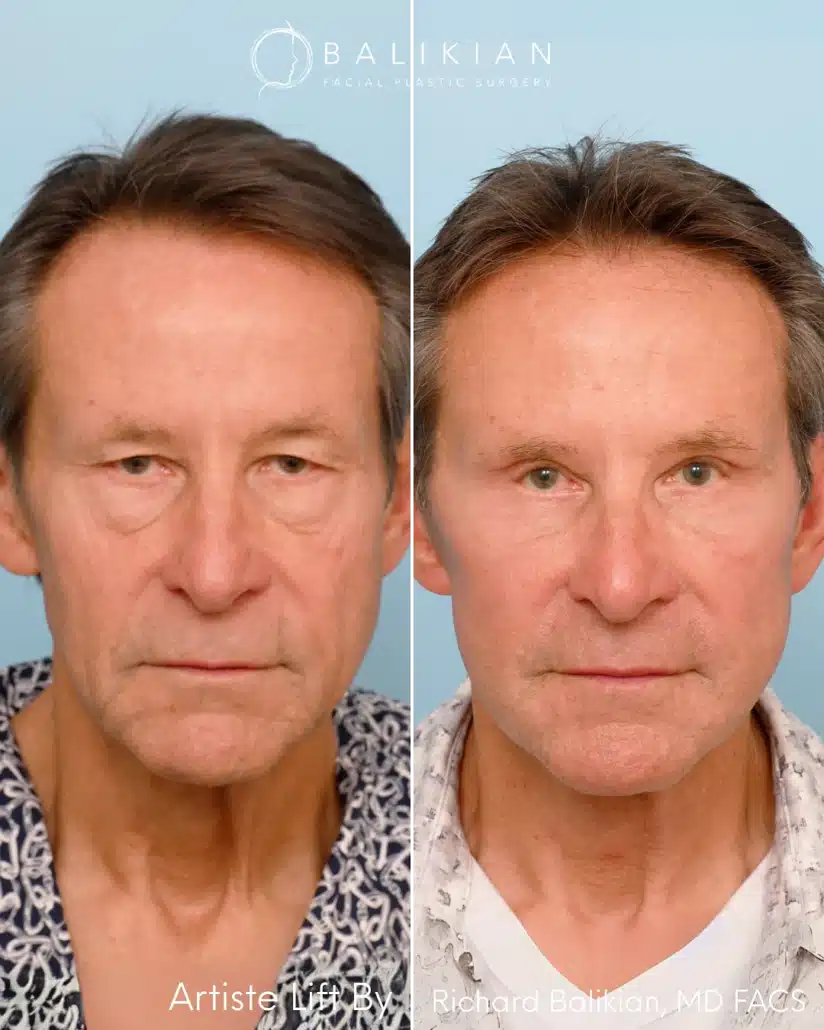
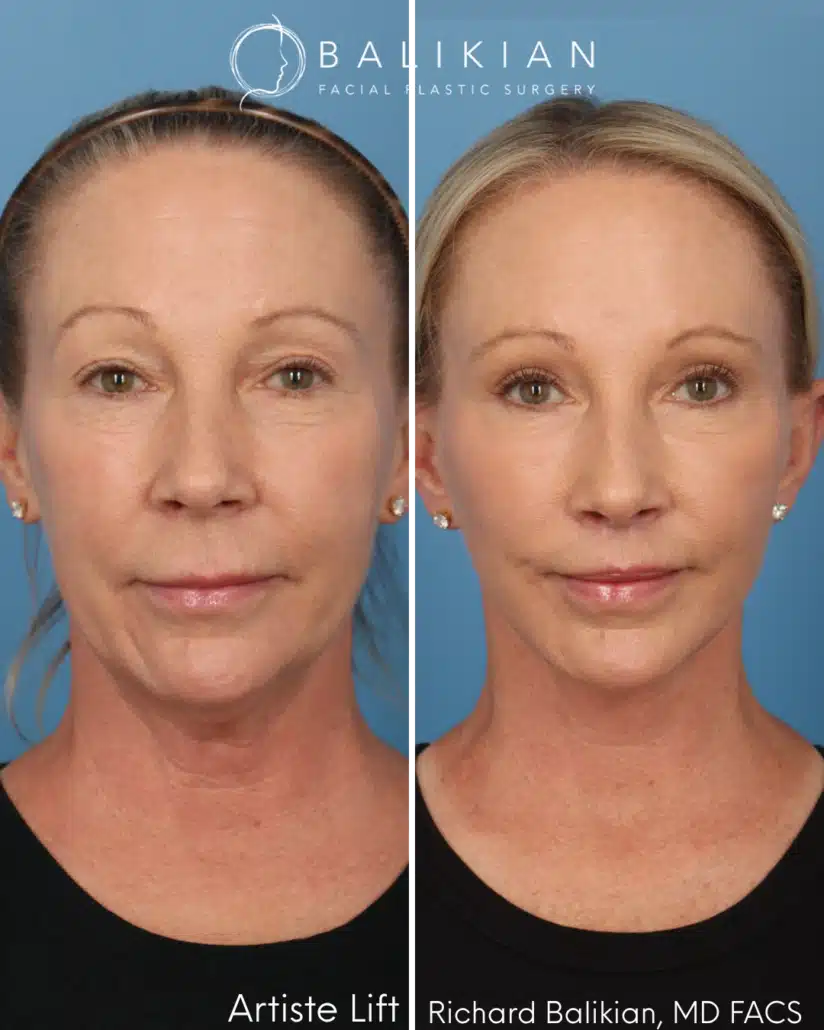
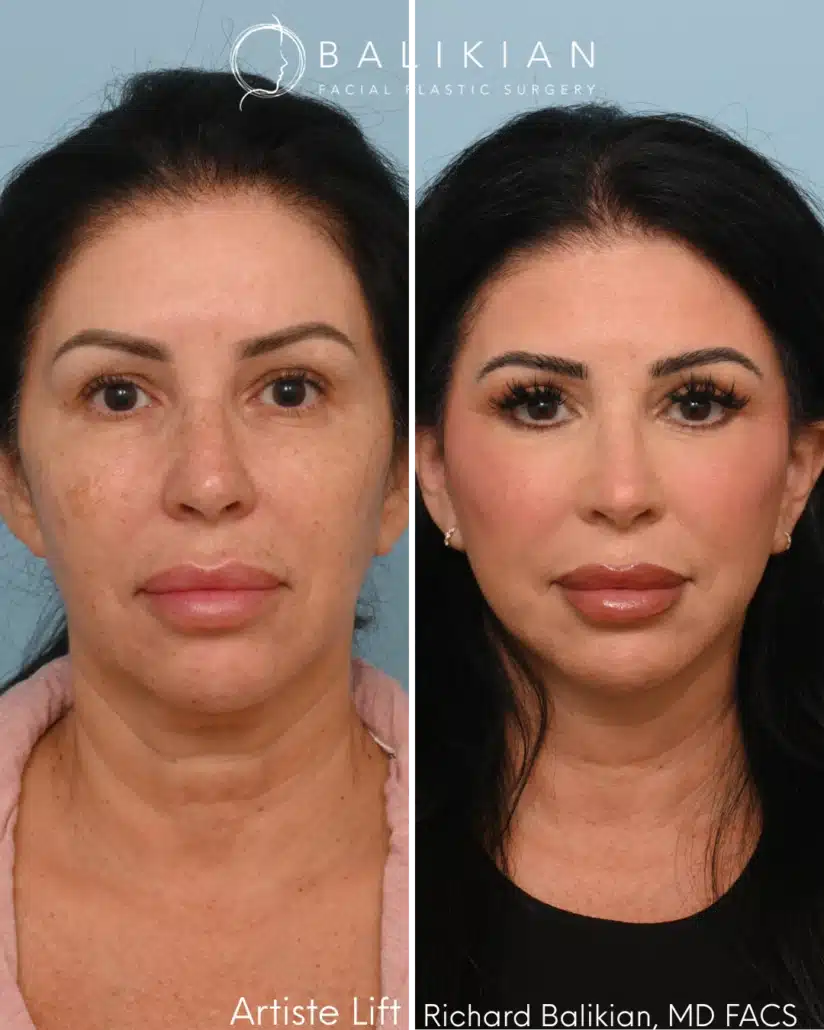
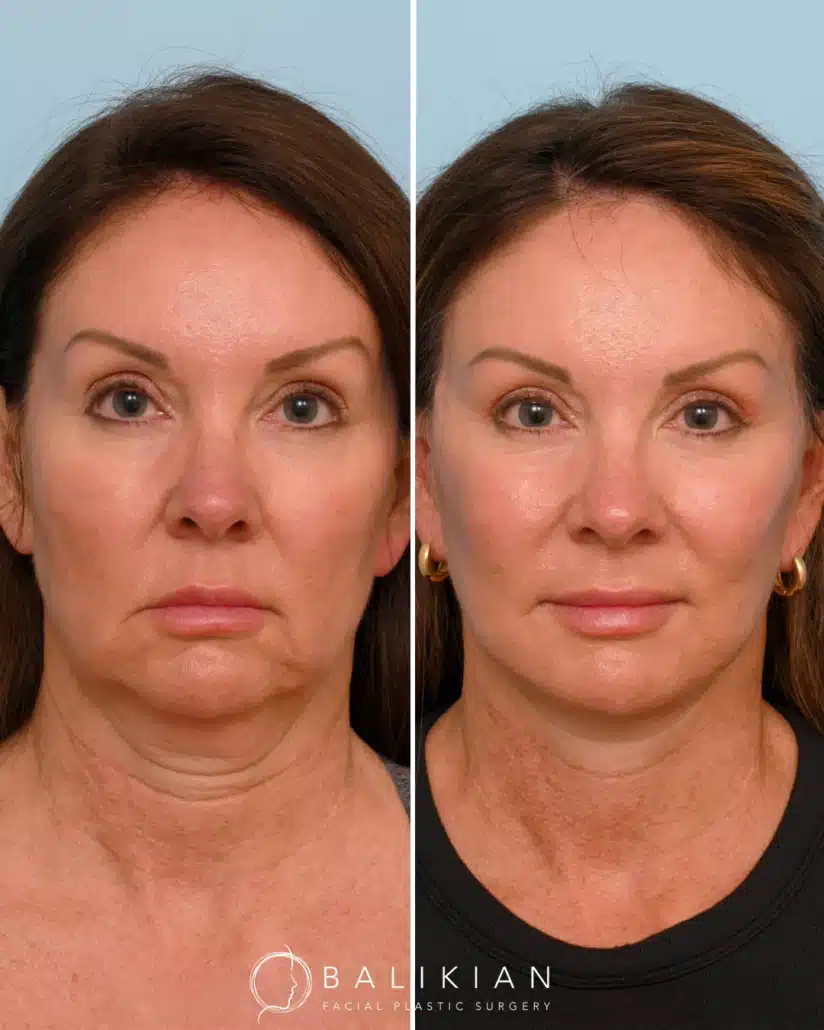
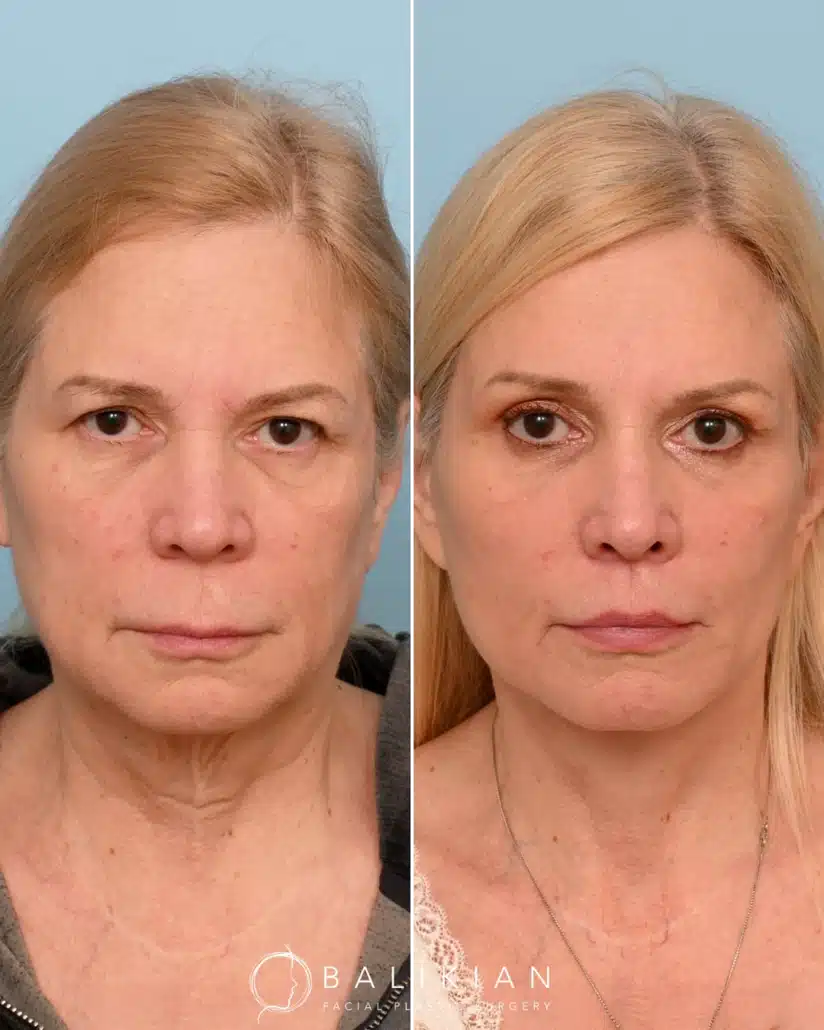
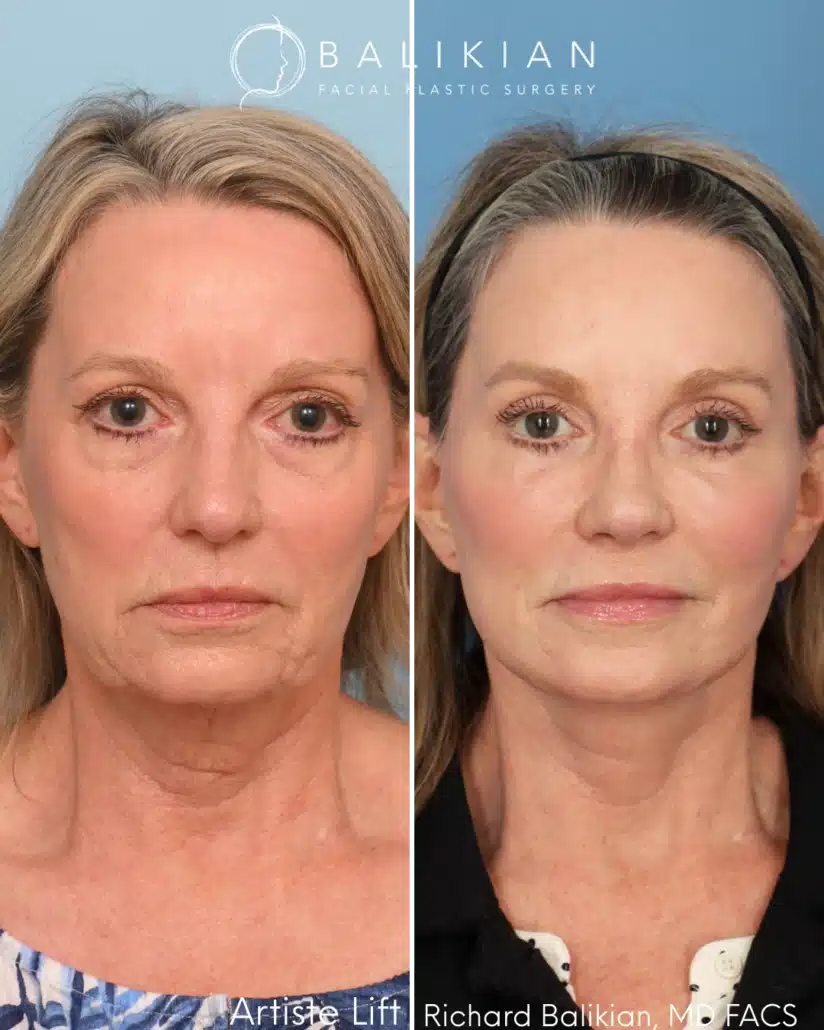
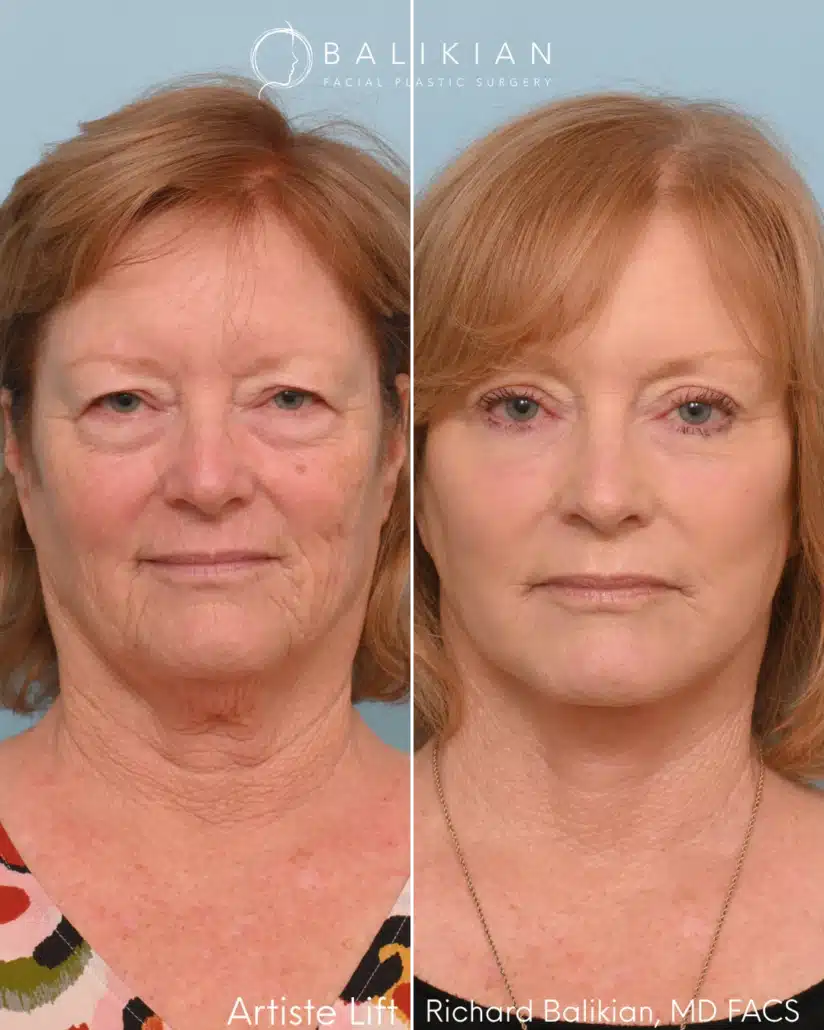
The Artiste Lift™ is a preservation deep plane facelift and neck lift. Preservation is the surgical philosophy behind every procedure I perform.
Rather than separating healthy tissue simply for exposure, I work within the natural anatomy of the face to restore the deeper structures that have changed with age. Healthy blood supply is preserved. Unnecessary tissue trauma is avoided. The natural relationships between the skin, fat, muscles, ligaments, nerves and blood vessels are respected throughout the operation.
This approach creates less empty space beneath the skin, leaving little opportunity for blood and inflammatory fluid to accumulate. At the completion of surgery, I also apply fibrin sealant to help the tissues adhere naturally during the earliest stages of healing.
Nothing in the Artiste Lift™ relies on the skin to create the result.
The deeper tissues are restored first. Fibrin sealant supports those tissues as they heal, reducing tension on both the deeper closure and the skin incision. With less tension placed on the incision, patients heal with fine, paper-thin scars while recovering without the need for surgical drains.
The absence of surgical drains reflects the preservation philosophy behind the Artiste Lift™. It is the natural result of careful surgical planning, precise tissue handling, the use of fibrin sealant and respect for normal anatomy.
Patients sometimes think drains are a separate decision made at the end of an operation. They aren’t.
Whether drains are necessary is determined by every decision made throughout the procedure. How the tissues are handled, how bleeding is controlled, how the deeper structures are restored, and how the tissues are supported during healing all influence whether drains become part of recovery.
By the time surgery is complete, the need for drains has already been determined by the surgical technique.
Patients are relieved when they learn they won’t go home with surgical drains because recovery immediately becomes simpler.
There are no collection bulbs to empty, no drainage tubes to secure while sleeping, and no concerns about catching a drain while getting dressed. Patients don’t need to return for drain removal and can focus on what matters most: resting, staying hydrated, eating well, walking regularly, and allowing the body to heal.



Every patient’s healing journey is unique, but seeing real recoveries can help you understand what to expect after an Artiste Lift™. Follow patients through the days, weeks, and months after surgery as swelling resolves and natural results continue to emerge.
Eliminating drains removes one more obstacle from the recovery process, making the first few days after surgery more comfortable and less stressful.
Recovery begins the moment surgery is complete. Every decision made in the operating room influences how patients heal over the days and weeks that follow.
Gentle tissue handling. Preservation of healthy blood supply. Respect for normal anatomy. Meticulous control of bleeding throughout the procedure. A comprehensive postoperative recovery plan. Each of these contributes to a smoother recovery experience.
The absence of surgical drains is simply one reflection of the preservation philosophy behind the Artiste Lift™. It demonstrates how respecting anatomy influences every stage of surgery, from the operation itself to the way patients heal afterward.
For me, the goal has never been to eliminate drains. The goal has always been to perform surgery in a way that makes them unnecessary. When healthy anatomy is respected, the deeper tissues are restored correctly, and every step of the procedure is performed with preservation in mind, patients recover without surgical drains while enjoying a more comfortable healing experience.
Questions Every Patient Should Ask
Why are surgical drains used after some facelifts?
Facelift surgery creates a temporary space between the elevated skin and the tissues beneath it. Blood and inflammatory fluid can collect within this space during the early stages of healing. Surgical drains use gentle suction to remove that fluid while the tissues begin to adhere.
Research on rhytidectomy confirms that drains have traditionally been used to manage fluid created within this surgical space. The need for drains depends on how the tissues are elevated, repositioned and supported during surgery.
How does fibrin sealant support a drainless facelift?
Fibrin sealant contains clotting proteins that form a thin adhesive layer between the elevated tissues. This helps the tissue surfaces adhere during the earliest stage of healing and reduces the open space where blood and inflammatory fluid could accumulate.
In a randomized, controlled facelift study, the side treated with fibrin sealant produced an average drainage volume of 7.7 mL compared with 20 mL on the untreated side. The researchers concluded that the sealant improved tissue adherence and reduced dead space without increasing hematoma or seroma rates.
Is fibrin sealant as effective as suction drains?
A randomized, double-blind study directly compared fibrin glue with suction drainage after facelift surgery. Ultrasound performed 48 hours after surgery found an average of 1.02 mL of fluid in the fibrin-glue group compared with 3.21 mL in the suction-drain group.
The researchers reported that fibrin glue was more effective than suction drainage in limiting postoperative fluid accumulation in the patients studied.
Does fibrin sealant reduce drainage after facelift surgery?
Yes. Multiple randomized trials and systematic reviews have found lower postoperative drainage volumes when tissue sealants are used during facelift surgery.
A meta-analysis of seven randomized controlled trials found that tissue sealants reduced drainage volume by an average of approximately 11 mL compared with surgery performed without sealant. An earlier randomized study reported median drainage of 10 mL on the fibrin-treated side and 30 mL on the untreated side.
Does fibrin sealant reduce the risk of hematoma?
The available research supports a reduction in hematoma risk. A 2024 systematic review of drainless facelift surgery included five studies and 1,277 patients. It found a lower cumulative hematoma rate when fibrin glue was used instead of drains or pressure dressings.
Other meta-analyses have reached similar conclusions, reporting lower hematoma rates among facelift patients treated with tissue sealants. Fibrin sealant does not replace meticulous control of bleeding. It works as one part of a broader surgical strategy that includes careful dissection, blood-pressure management and precise hemostasis.
Does a drainless facelift eliminate swelling and bruising?
No. Swelling and bruising are part of the body’s normal healing response after facelift surgery. Eliminating drains does not eliminate recovery.
Tissue sealants reduce the amount of fluid that collects beneath the elevated tissues. Research has also found reductions in drainage and postoperative swelling, but the results for bruising and seroma formation have varied between studies. Patients should still expect swelling to resolve gradually as the tissues heal.
Is fibrin sealant a substitute for surgical technique?
No. Fibrin sealant supports the surgical repair, but it cannot compensate for unnecessary tissue trauma or incomplete control of bleeding.
A drainless facelift depends on the entire operation. This includes preserving healthy anatomy, limiting unnecessary tissue separation, repositioning the deeper structures, controlling bleeding and supporting tissue adherence at closure. Current reviews of hematoma prevention identify fibrin sealant as one component within a broader perioperative strategy.
How does reducing tension support better incision healing?
Incisions heal more favorably when the skin closure is not carrying the full tension of the surgical repair. In the Artiste Lift™, the deeper tissues create the structural result. Fibrin sealant supports tissue adherence beneath the skin, allowing the incision to close with less tension placed on the skin edges.
Research outside facelift surgery has demonstrated the broader surgical principle that tension-reducing closure techniques produce narrower scars and improved scar-assessment scores. The study does not specifically prove that fibrin sealant creates paper-thin facelift scars, but it supports the relationship between reduced incision tension and finer scar formation.
Dr. Richard Balikian is a highly respected facial plastic surgeon serving the San Diego area.
With over 20 years of experience and double board certification in Facial Plastic and Reconstructive Surgery as well as Head and Neck Surgery, Dr. Balikian offers a unique combination of technical expertise and artistic vision.
He is part of an elite group of surgeons with extensive training focused exclusively on the face and neck.