Why a Facelift Is Often Combined With Eyelid or Brow Surgery
How the Artiste Lift™ Restores Balance Between the Eyes, Brows, Face and Neck
A facelift can restore descended cheeks, improve jowls, define the jawline and rejuvenate the neck. It does not automatically correct every change affecting the eyes and brows.
A patient may have a beautifully restored lower face yet still appear tired because of heavy upper eyelids, lower-eyelid bags, brow descent, or hollowing beneath the eyes. This is why Dr. Richard Balikian evaluates the entire face before recommending an Artiste Lift™.
The objective is not to perform as many procedures as possible. It is to identify which areas have changed, determine how those changes affect one another and create a surgical plan that restores proportion across the face.
Some patients benefit from combining the Artiste Lift™ with eyelid or brow surgery. Others do not need every procedure. The recommendation depends on the patient’s anatomy, aging pattern, facial expression and goals.
The Artiste Lift™ is Dr. Balikian’s comprehensive approach to facial rejuvenation. Its foundation includes an extended preservation deep plane facelift and deep vertical neck lift, with brow or temple support incorporated when needed.

Join Dr. Richard Balikian in the consultation room as he explains how facial aging is evaluated and how each Artiste Lift™ treatment plan is customized to the patient’s anatomy and goals.
Rather than relying on skin tension, the procedure releases deeper facial attachments and repositions the supportive SMAS and platysma layers.
The procedure is designed to:
These improvements address structural descent caused by gravity. They do not necessarily correct excess eyelid skin, protruding orbital fat, brow position, volume loss or changes in skin texture.
That is where complementary procedures may become important.
The eyes strongly influence whether a face appears alert, rested or tired. Their appearance depends on more than one structure.
Upper-eyelid skin, brow position, lower-eyelid fat, muscle support, volume loss and skin texture can each contribute to an aged or fatigued appearance. Because these changes require different treatments, Dr. Balikian evaluates the entire eye and brow area rather than assuming eyelid surgery alone will provide the best result.
During an eye-rejuvenation evaluation, Dr. Balikian considers:
Each concern requires a different treatment. Removing skin cannot correct every form of eyelid aging and performing a facelift alone may not improve changes that are isolated to the eyes.
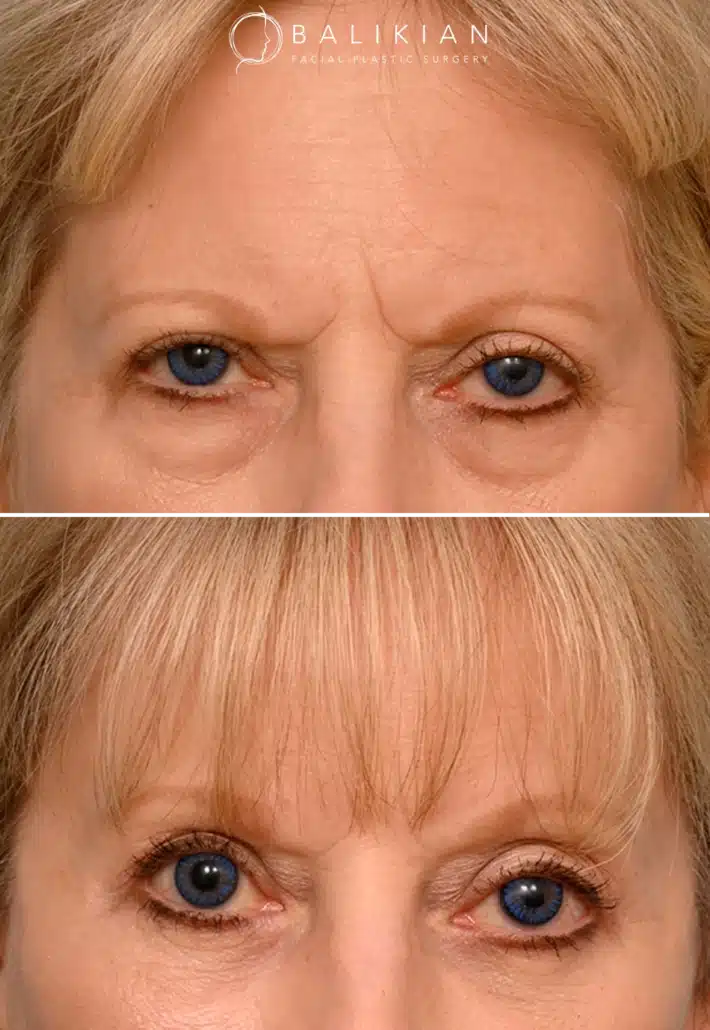
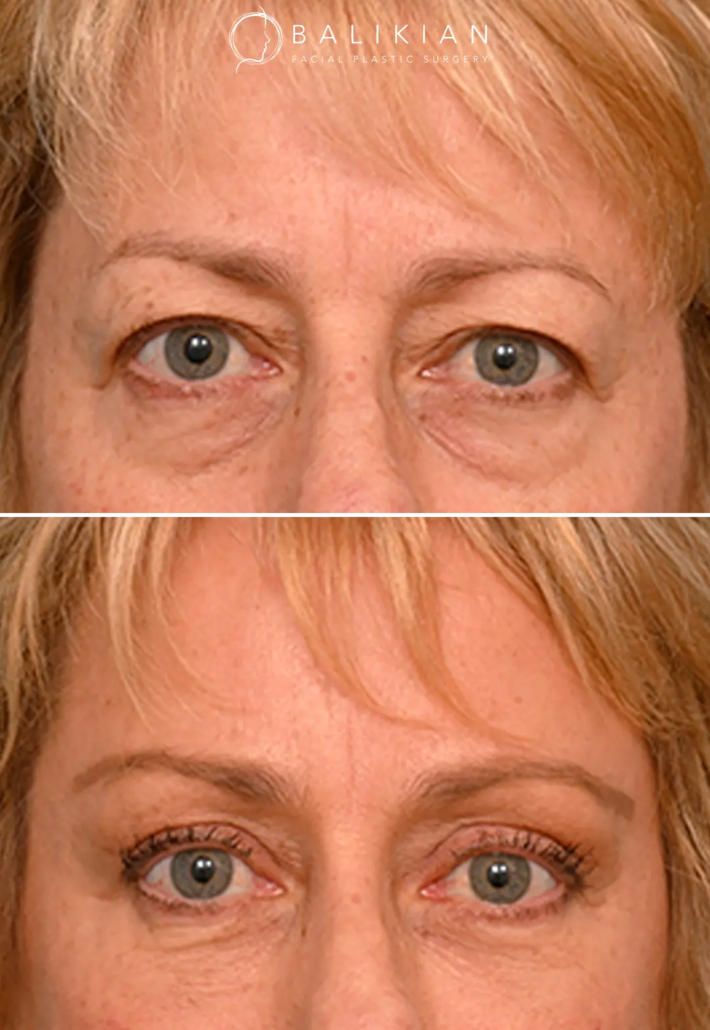
Upper blepharoplasty treats excess upper-eyelid skin that folds over the natural eyelid crease. The incision is positioned within that crease so it becomes discreet as it heals.
Dr. Balikian takes a preservation-focused approach. He removes the amount of skin needed to open the eye while leaving enough for comfortable eyelid closure. He generally preserves the orbicularis oculi muscle beneath the skin because removing muscle can contribute to hollowing and may affect long-term function.
Upper-eyelid fat is also treated conservatively. If a localized pocket near the nose is protruding, a small amount may be removed. The goal is not to excavate the eyelid or create an exaggerated crease. It is to reduce heaviness while maintaining a youthful, supported appearance.
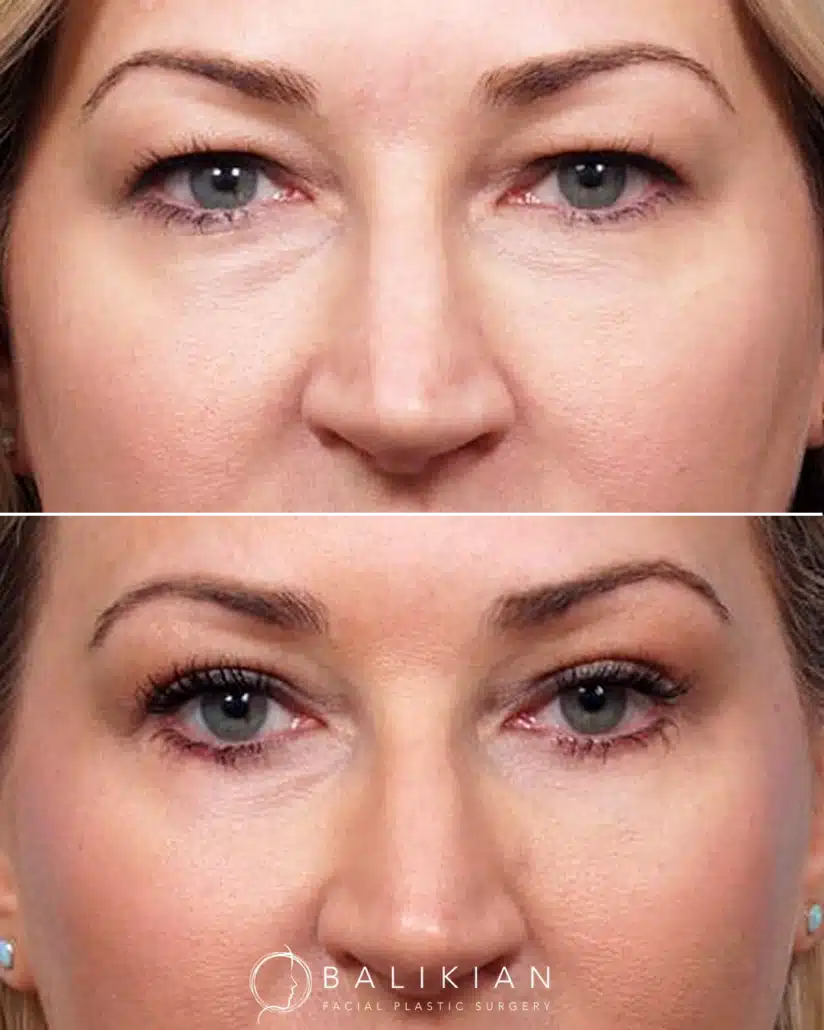
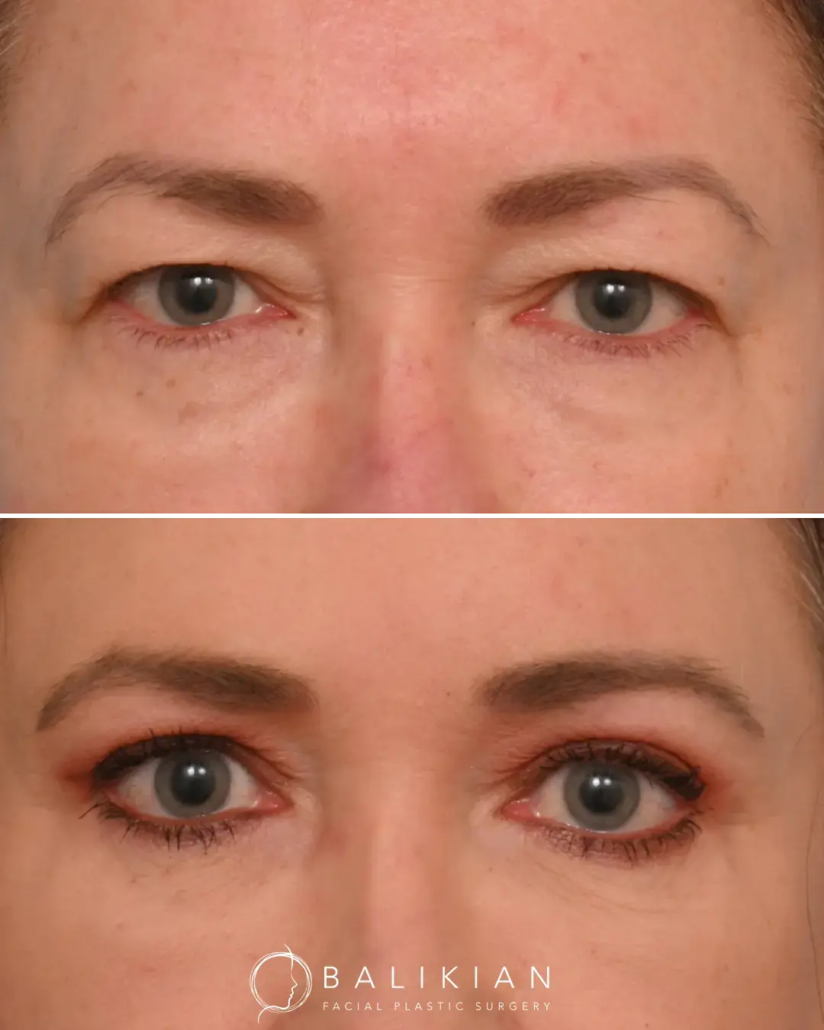
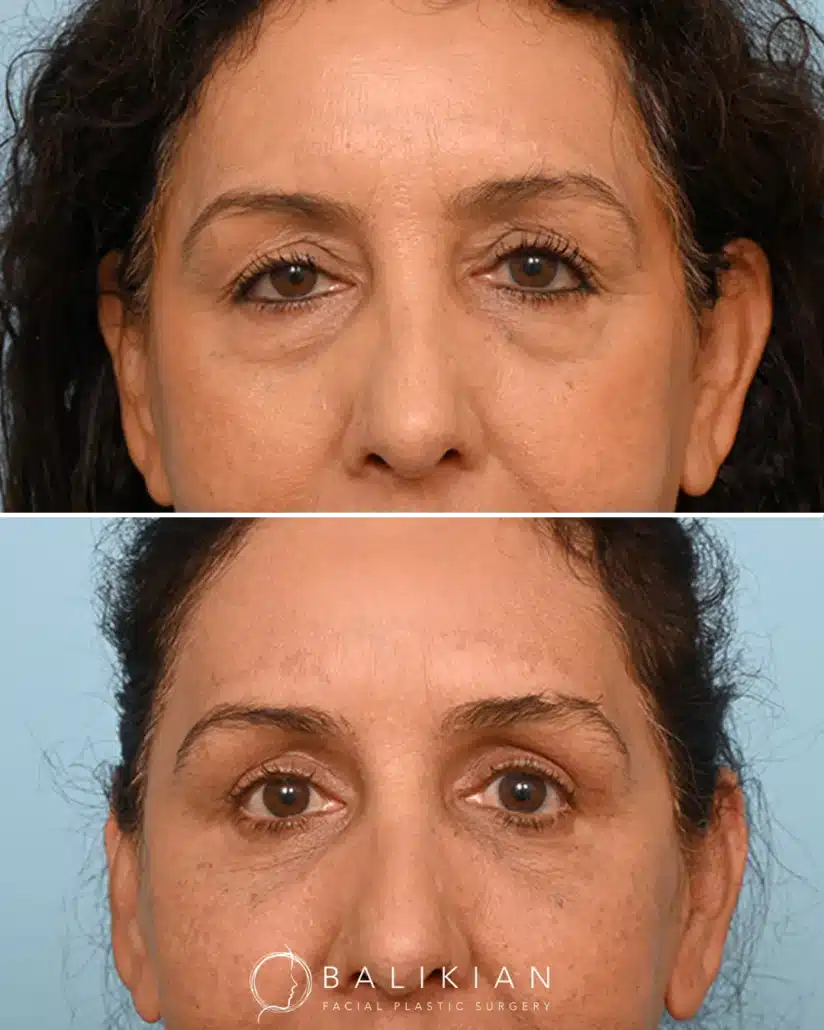
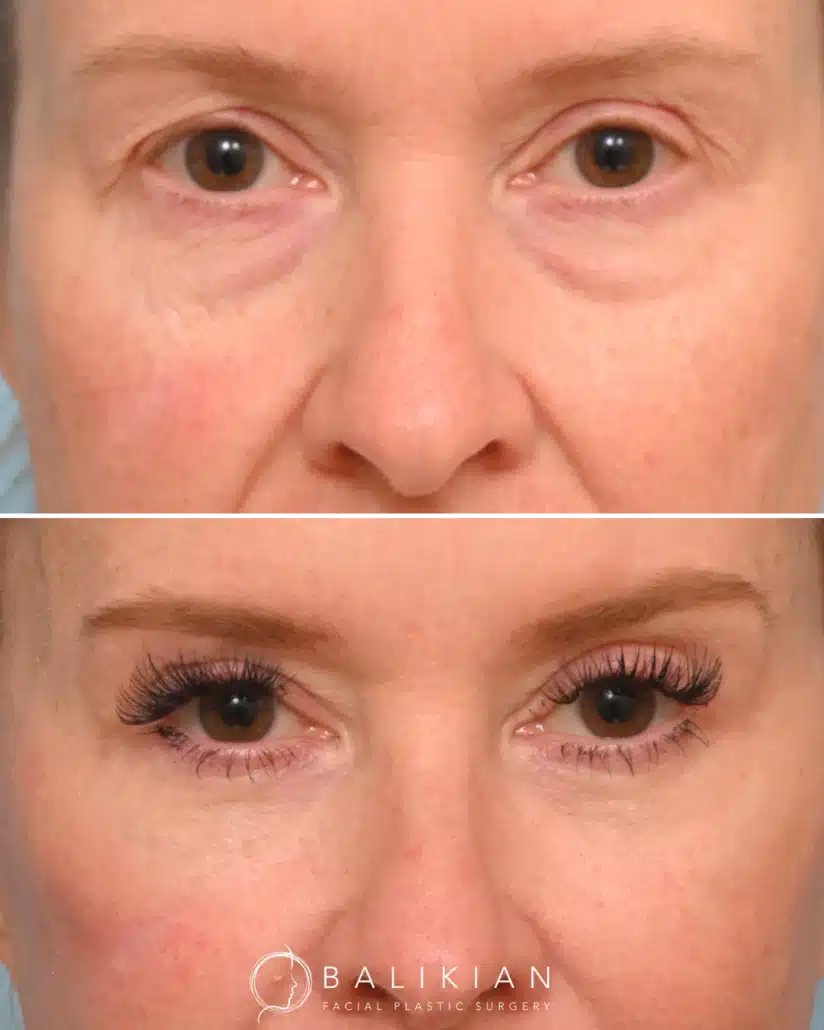

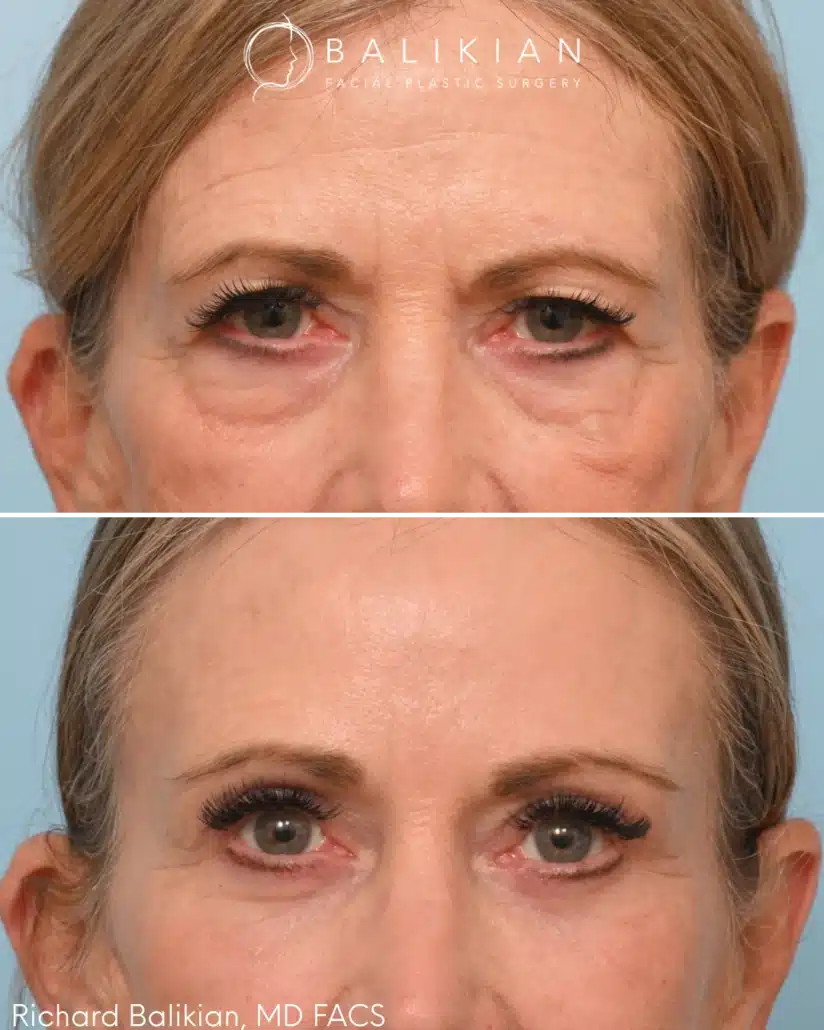
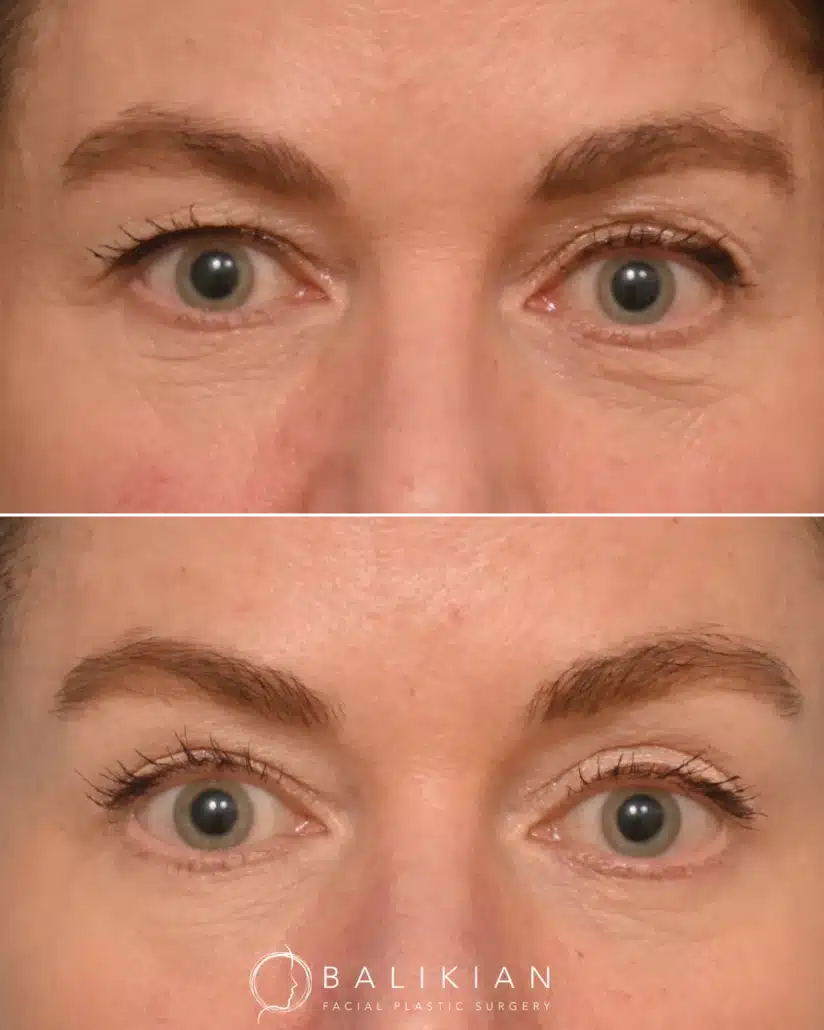
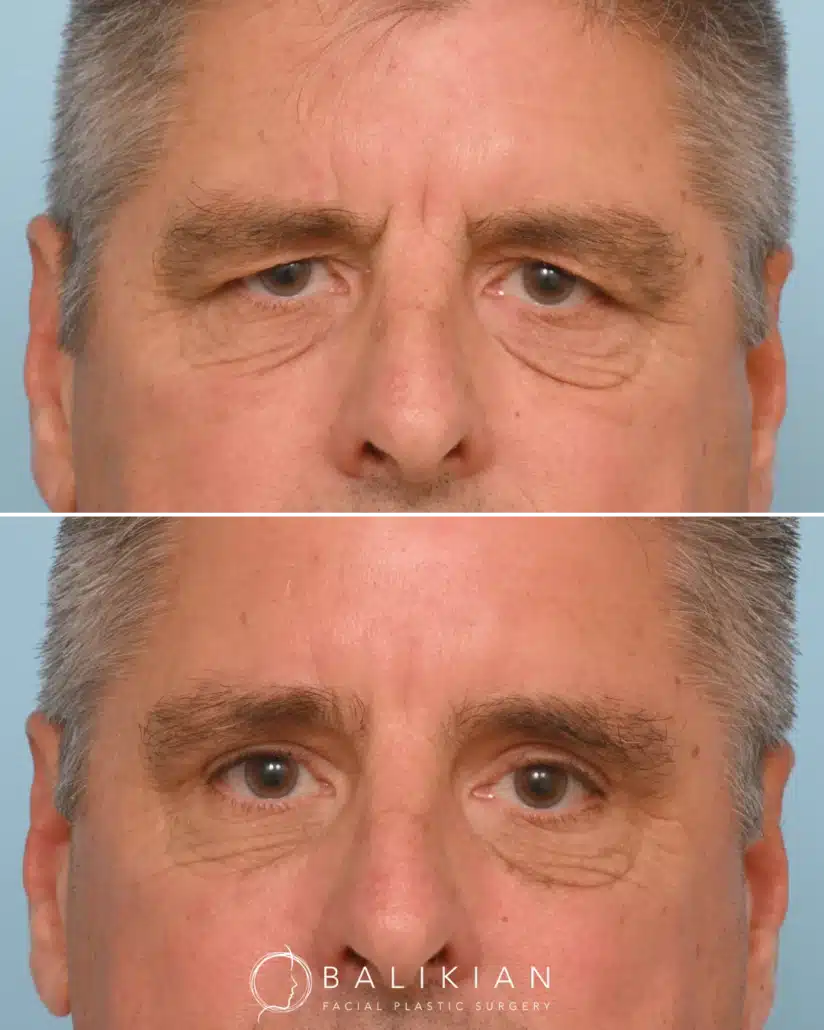
Heavy upper eyelids are not always caused by eyelid skin alone. A descended brow can push tissue downward, particularly over the outer portion of the eye.
If this relationship is not recognized, removing more eyelid skin may produce an incision that extends farther toward the temple or place additional downward tension on the outer brow.
For this reason, Dr. Balikian evaluates the eyelid and brow together. Some patients need only an upper blepharoplasty. Others benefit from combining it with a temporal lift or 4-Point Brow Lift. This is an anatomical decision, not an automatic package.
Although both procedures use small access incisions hidden behind the hairline, they address different patterns of brow descent. A temporal lift primarily supports the outer brow and smooths tissue near the temple, while a 4-Point Brow Lift allows Dr. Balikian to address more extensive heaviness across the brow.
“It’s not about lifting brows as high as we can. It’s about returning them to where they were before, respecting each patient’s unique structure and expression.”
– Dr. Balikian
The appropriate technique depends on where the brow has descended, how that position affects the upper eyelids, and the degree of support needed to create a natural result.
A temporal lift primarily addresses the outer brow and temple. It provides subtle support rather than repositioning the entire brow.
The procedure is designed to:
Because the adjustment is focused on the outer brow, a temporal lift should not create an exaggerated arch or “cat-eye” appearance. It may produce only a subtle change in brow height while helping the temple and upper eyelid appear smoother.
A minimal-access 4-Point Brow Lift addresses more extensive brow descent, including heaviness that extends beyond the outer brow. It allows Dr. Balikian to release and reposition different areas according to the patient’s brow shape and facial anatomy.
The procedure is designed to:
Once the downward attachments have been released, the brows can be secured in the position where they rest more naturally. The goal is not maximum elevation, but a softer and more refreshed brow position that remains consistent with the patient’s natural expression.
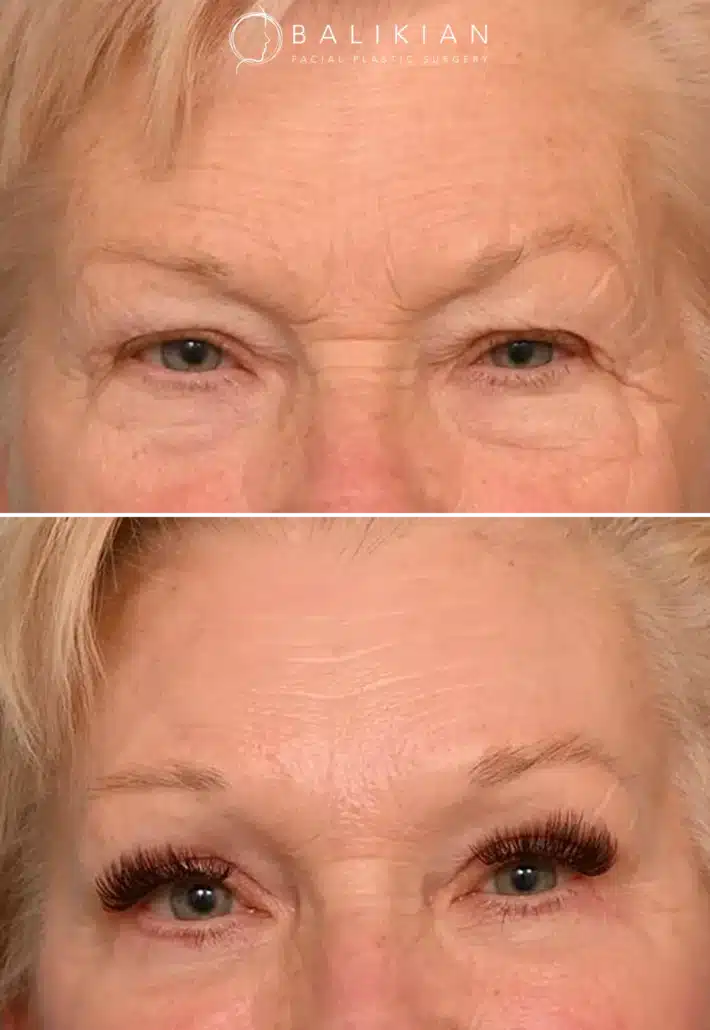
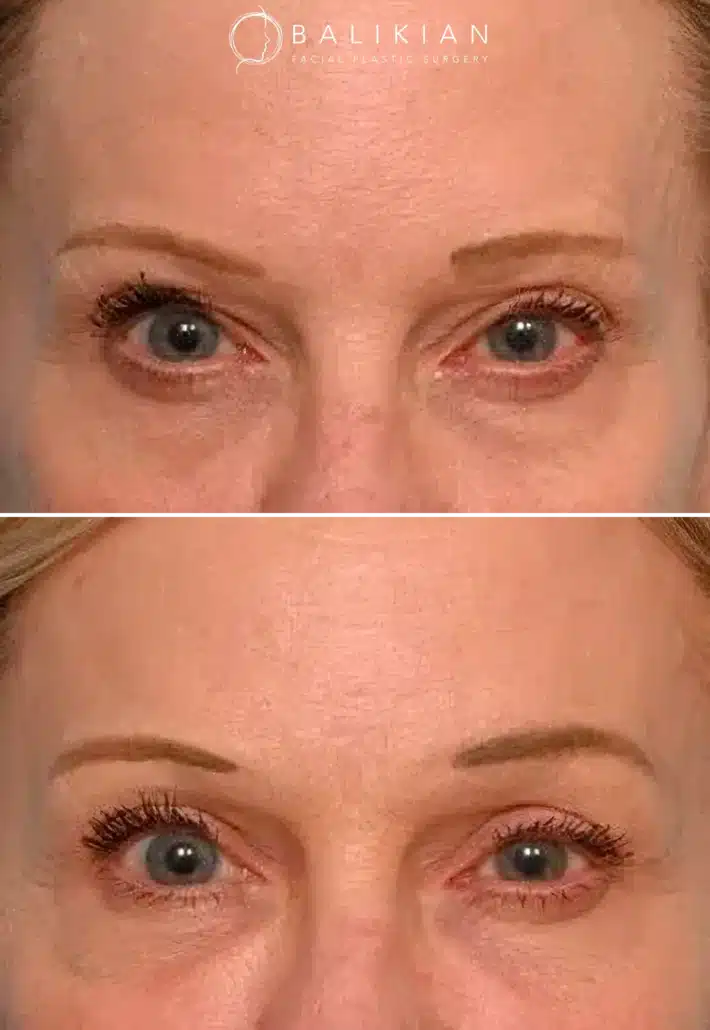
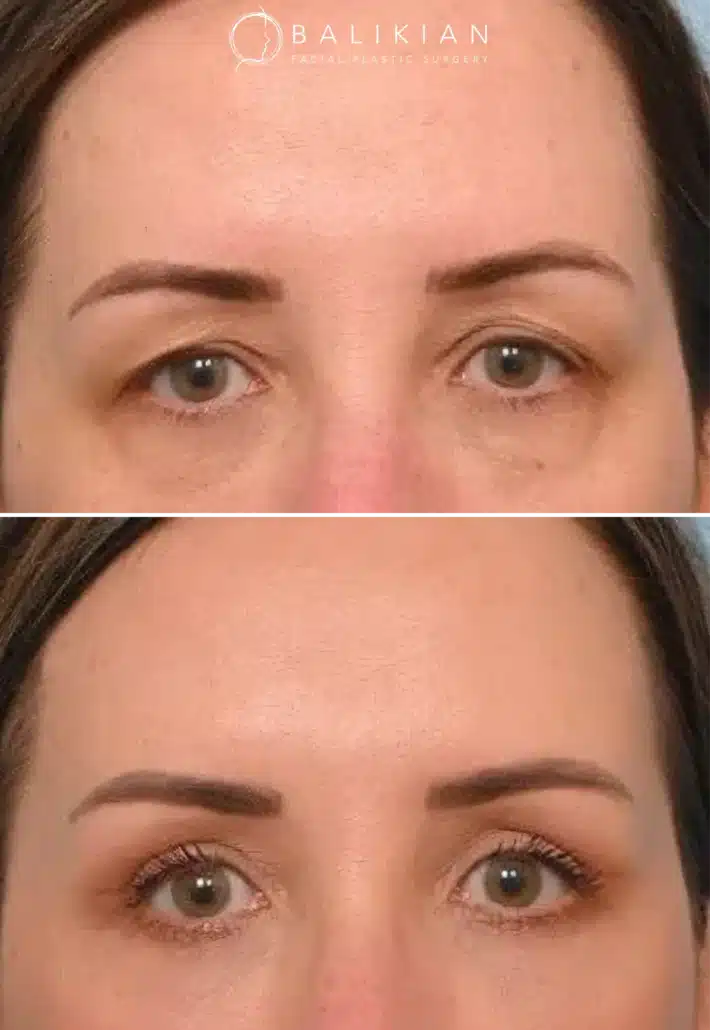

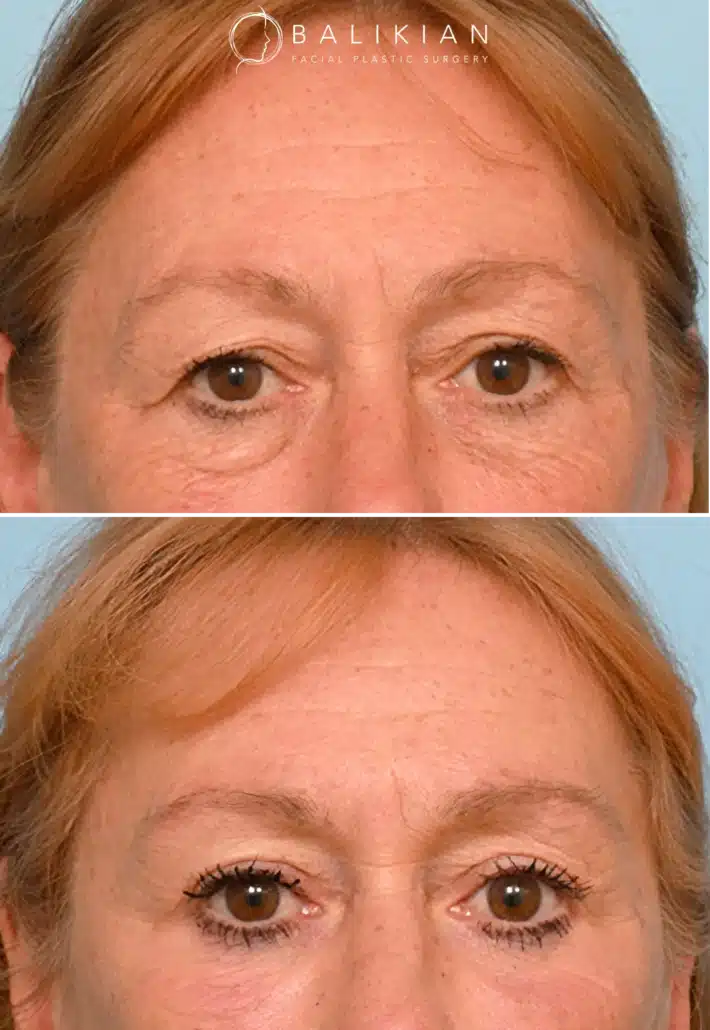

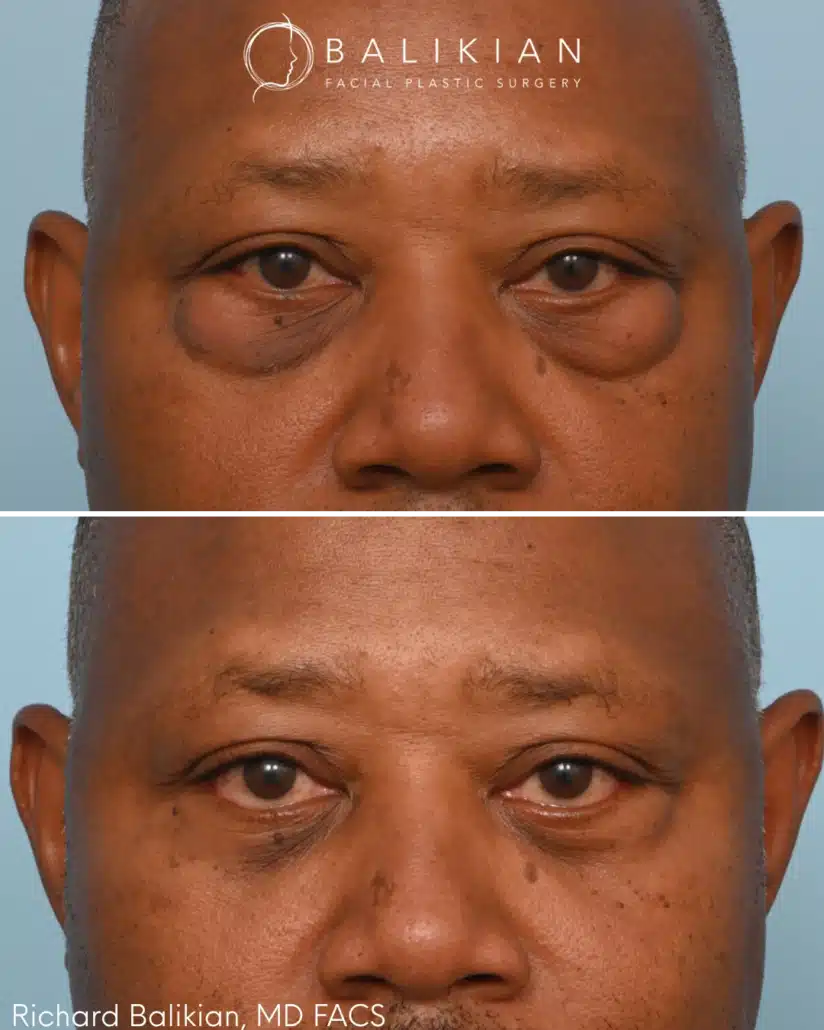
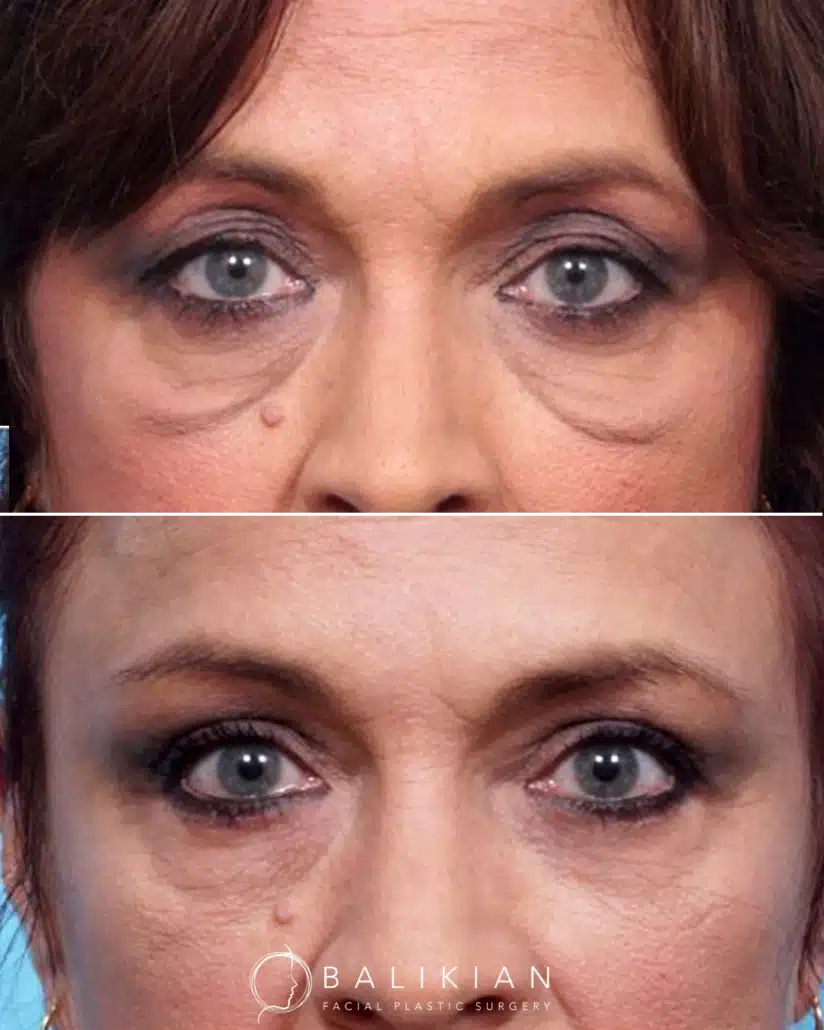
Lower-eyelid bags are created by pockets of orbital fat protruding beneath the eyes. The difference in height between a bulging fat pocket and a hollow tear trough creates a visible shadow.
“Our goal is to shorten the distance between the bulge and the trough.”
– Dr. Balikian
For most patients, he approaches the fat from inside the lower eyelid through a transconjunctival incision. This avoids cutting through the skin and orbicularis muscle to reach the fat.
Depending on the anatomy, protruding fat may be conservatively removed or repositioned into a hollow area. Preserving the lower-eyelid muscle helps protect eyelid tone and reduces the risk of changing the eye’s natural shape.
If additional volume is needed beneath the eyes or through the upper cheek, small droplets of the patient’s own fat may be placed at different depths. The purpose is to soften the shadow and create a smoother lid-cheek transition, not to make the face look full or puffy.
Lower-eyelid skin must also be evaluated independently. True excess skin may be treated with a conservative skin pinch. A discreet incision is placed beneath the lash line and a small amount of skin is removed without cutting the underlying muscle.
Crepey skin is different. Removing more skin does not necessarily correct fine texture and can create unnecessary tension.
Fractional CO₂ laser resurfacing or a chemical peel may be more appropriate for improving:
A patient may need a skin pinch, resurfacing, both treatments or neither. The choice depends on whether the concern is excess skin, skin texture or a combination of the two.

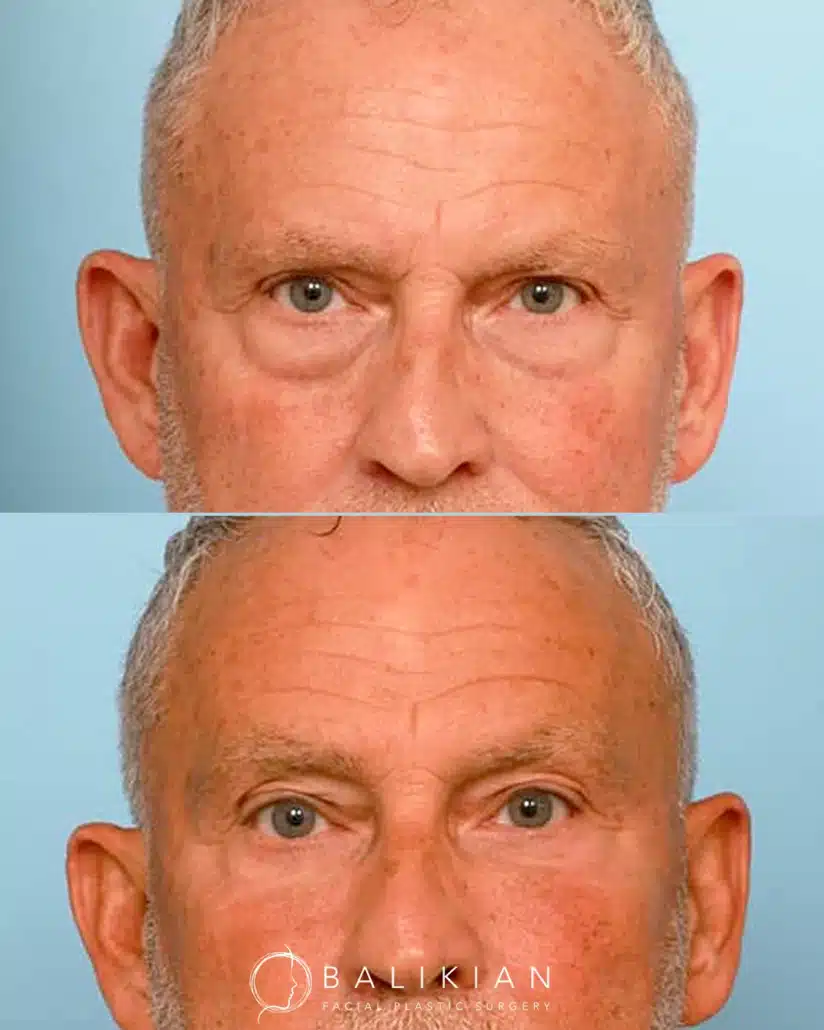


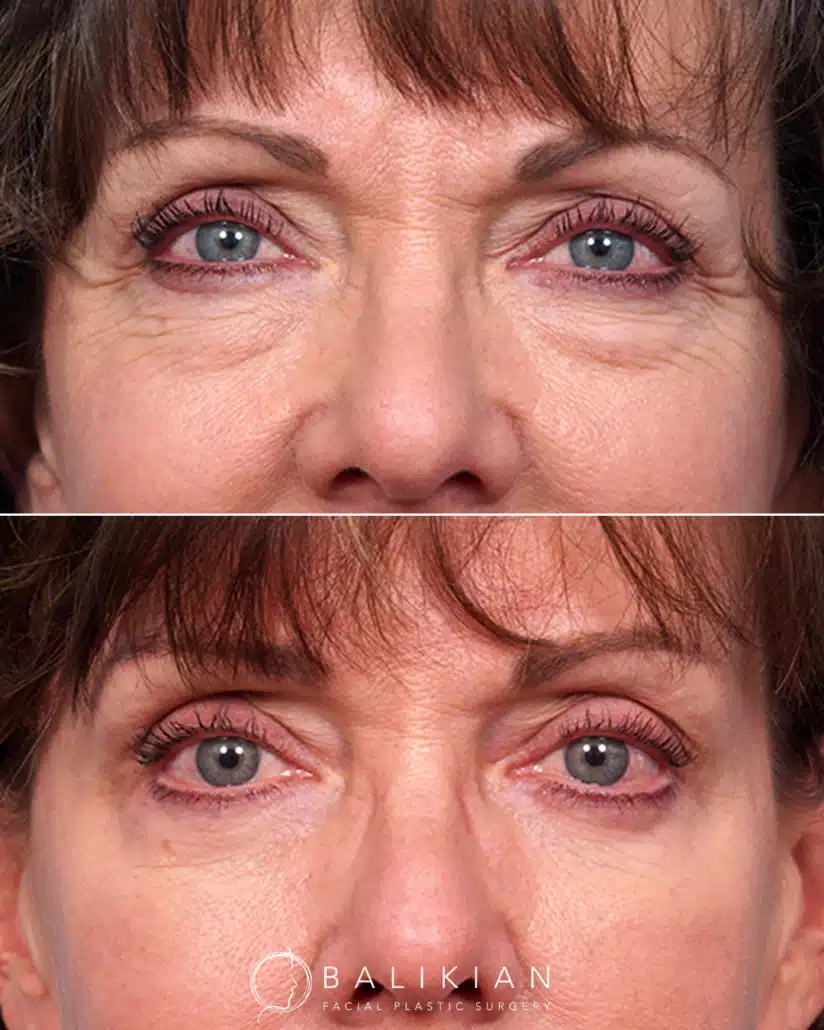
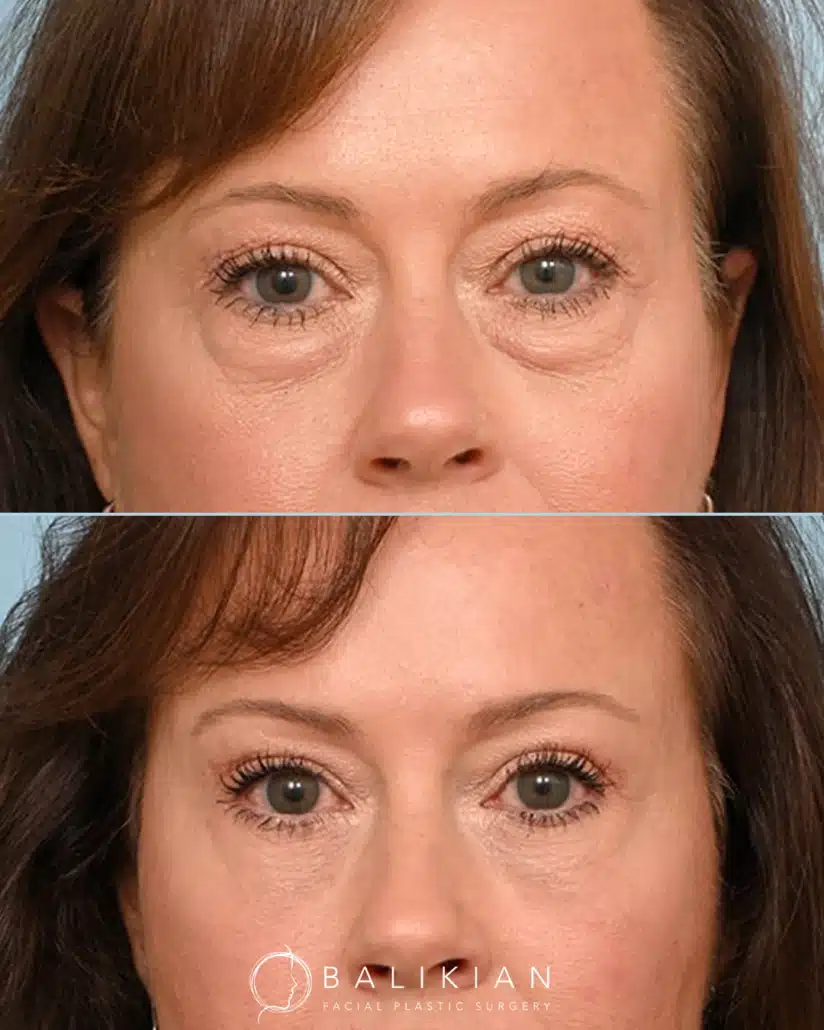
A comprehensive consultation separates facial aging into several distinct concerns:
| Concern | Possible Treatment |
|---|---|
| Descended cheeks and jowls | Preservation deep plane facelift |
| Platysma bands and neck laxity | Deep vertical neck lift |
| Excess upper-eyelid skin | Upper blepharoplasty |
| Lower-eyelid bags | Transconjunctival lower blepharoplasty |
| Hollow tear troughs or cheeks | Facial fat transfer |
| Outer-brow descent or temporal bunching | Temporal lift |
| More extensive brow descent | 4-Point Brow Lift |
| Excess lower-eyelid skin | Skin pinch |
| Fine lines and crepey texture | CO₂ laser or chemical peel |
Not every concern needs to be treated during the same operation. Some procedures are closely connected anatomically, while others remain optional refinements.
For example, an upper blepharoplasty and temporal lift frequently support one another. A patient with well-positioned brows, however, may need only eyelid surgery. Another patient may need brow support but very little eyelid skin removal.
The surgical plan follows the anatomy.
When multiple areas genuinely need treatment, combining procedures can offer several advantages.
A patient may choose not to include an upper blepharoplasty even when it could provide additional improvement. Another patient may have excellent brow position and require no brow surgery. Someone with prominent lower-eyelid bags may benefit from eyelid surgery but not be ready for a facelift.
Dr. Balikian’s responsibility is to explain:
The patient can then make an informed decision based on priorities, comfort and goals.
Recovery depends on the procedures performed and the patient’s individual healing response



Follow Artiste Lift™ patients through the early stages of recovery and the months that follow. Their experiences offer an honest look at swelling, healing milestones, returning to daily life, and the gradual development of natural facial rejuvenation results.
During the first week, swelling, tightness, bruising and temporary numbness are expected. Eyelid procedures and laser resurfacing may add swelling or redness around the eyes. Sutures are generally removed in stages according to the treatment plan.
Around two weeks, many patients feel comfortable using makeup when cleared by the surgical team and beginning to return to everyday activities. Swelling remains present even when it is no longer obvious to others.
Social confidence generally improves over the following weeks. Subtle swelling, sensation, incision color, and tissue firmness continue changing for several months. Healing and scar maturation can continue throughout the first year.
The Artiste Lift™ restores deeper support in the face and neck. Eyelid and brow procedures address separate anatomical changes that a facelift cannot always correct.
Combining these procedures is appropriate when doing so creates a more coherent result. It is unnecessary when the upper face remains youthful or when a patient’s concerns are limited to one area.
The goal is not to make every feature look younger independently. It is to ensure that no single procedure disrupts the relationship between the eyes, cheeks, jawline and neck.
“It is not about hitting an ideal. It is about creating an artistic beauty that matches that person so their friends sit across from them and say, ‘That looks like my friend.’”
– Dr. Balikian
That is the purpose of comprehensive facial rejuvenation: restoring what has changed while preserving the expressions and characteristics that still belong to you.
During your consultation, Dr. Balikian will evaluate your brow position, eyelid anatomy, facial volume, skin quality, jawline and neck to determine which procedures may work together and which are unnecessary.
Will upper blepharoplasty lift my eyebrows?
Upper blepharoplasty removes excess eyelid skin but does not reliably raise the eyebrows. If brow descent contributes to heaviness around the eyes, a temporal lift or broader brow lift may be considered separately. Evaluating both structures helps prevent an incomplete result.
How can I tell whether heavy upper eyelids are caused by excess skin, a low brow, or eyelid ptosis?
These conditions can look similar, but they require different treatments. A facial plastic surgeon should evaluate the amount of excess eyelid skin, the resting position of the eyebrows, eyelid muscle function, and whether the forehead muscles are compensating by continually lifting the brows. True eyelid ptosis is frequently subtle and may be overlooked without a careful examination.
Why might brow surgery be combined with upper blepharoplasty?
Removing eyelid skin can open the eyes, but it does not correct a brow that has descended. Combining procedures may be appropriate when both structures contribute to upper-face heaviness. The goal is not to create a high or surprised brow, but to restore a more natural relationship between the brow and eyelid.
How does a surgeon decide between a temporal lift and a more extensive brow lift?
The choice depends on where the brow has descended. A temporal lift primarily supports the outer brow, while a broader brow lift can address more extensive descent across the brow. Hairline position, forehead shape, asymmetry, previous surgery, and the patient’s natural expression should all be considered.
Can a facelift correct upper-eyelid skin or lower-eyelid bags?
A facelift primarily restores descended tissues of the cheeks, jawline, and neck. It does not directly remove upper-eyelid skin or correct lower-eyelid fat pads. These areas must be evaluated separately, even when the procedures are performed during the same operation.
Should lower-eyelid fat be removed or repositioned?
The answer depends on whether the primary concern is bulging, hollowing, or both. Conservative fat removal may reduce prominent bags, while fat repositioning can help smooth the transition between the lower eyelid and cheek. Preserving and redistributing appropriate volume may reduce the risk of creating a hollow appearance.
Can lower blepharoplasty improve tear troughs?
It may, particularly when a visible groove is created by the relationship between protruding eyelid fat and the upper cheek. Transconjunctival fat repositioning can move existing fat into the hollow and create a smoother lid-cheek transition. Some patients may benefit from facial fat transfer instead or in addition.
When is CO₂ laser resurfacing used around the eyes?
CO₂ laser resurfacing addresses fine lines, crepey texture, and certain surface-level skin changes. It does not remove significant eyelid bags or correct structural laxity. Research suggests that combining resurfacing with transconjunctival lower blepharoplasty can improve wrinkles that eyelid surgery alone may not address.
Can eyelid surgery worsen dry-eye symptoms?
Temporary dryness or irritation can occur after eyelid surgery. The risk may be greater in patients with preexisting dry eye, eyelid laxity, prominent eyes, or other anatomical factors. Patients should discuss contact-lens intolerance, eye medications, previous eye surgery, and existing dryness during their consultation.
Is it safe to combine a facelift with eyelid or brow surgery?
Combined surgery can be appropriate for carefully selected patients, but safety depends on overall health, the number of procedures, anesthesia planning, and total operating time. Large studies have found that complication rates can increase as more procedures are combined. The decision should therefore be based on the individual patient rather than convenience alone.
Will combining procedures make recovery longer?
The procedures share one recovery period, but treating multiple facial areas can produce more widespread swelling and bruising. Eyelid swelling may settle at a different rate from swelling in the cheeks and neck. Patients should ask what they are likely to look and feel like after one week, two weeks, one month, and several months.
What risks should I discuss before brow surgery?
Important topics include temporary or persistent numbness, asymmetry, visible scarring, hairline changes, hair loss near an incision, and the possibility of undercorrection or overcorrection. The likelihood of each issue varies with the surgical technique and the patient’s anatomy.
Dr. Richard Balikian is a highly respected facial plastic surgeon serving the San Diego area.
With over 20 years of experience and double board certification in Facial Plastic and Reconstructive Surgery as well as Head and Neck Surgery, Dr. Balikian offers a unique combination of technical expertise and artistic vision.
He is part of an elite group of surgeons with extensive training focused exclusively on the face and neck.