Thinking About a Deep Plane Facelift? Start With These Questions
Everything You Need to Know About Natural Results, Recovery, Choosing a Surgeon and the Artiste Lift™
If you’re thinking about a deep plane facelift, you’ve probably spent hours researching online. You’ve looked at before and after photos, watched videos and read articles, all trying to answer one simple question.
Is this the right decision for me?
That single question quickly becomes many others.
Will I still look like myself?
How much younger will I look?
How long will the results last?
Am I too young? Too old?
How do I know if I’m choosing the right surgeon?
These are the same questions Dr. Richard Balikian answers every day during consultations. One of the things patients often remember most about those conversations is something they don’t expect to hear.
“I love your face.”
That simple statement reflects Dr. Balikian’s philosophy. The goal of facial rejuvenation is not to create a different face. It is to restore the facial support that has gradually changed with age while preserving the features that make you uniquely recognizable. That is why consultations rarely begin with a discussion about surgical techniques. They begin with understanding your goals, addressing your concerns and helping you decide whether surgery is the right choice for you.
The educational video series below continues those conversations, answering the questions patients ask most often and helping you better understand what modern preservation deep plane facelift surgery can realistically achieve.



As you watch the playlist and continue through this guide, you’ll notice a common theme. Beautiful facelift results don’t begin in the operating room. They begin with understanding how the face has aged, setting realistic expectations and creating a surgical plan that’s unique to you.
For almost every patient, this is the biggest concern.
It isn’t pain.
It isn’t recovery.
It isn’t even the scars.
Patients want reassurance that they’ll still look like themselves. They want friends and family to notice they look refreshed, not wonder whether they’ve had facelift surgery. That concern is understandable. For decades, facelifts became associated with overly tight skin, windswept cheeks and unnatural expressions. Those images still shape the way many people think about facial rejuvenation today.
Modern preservation deep plane facelift surgery is fundamentally different. Instead of relying primarily on tightening the skin, it restores the deeper facial tissues that naturally descend with age. By carefully releasing the retaining ligaments and repositioning those deeper structures, the skin can be redraped with minimal tension. The result is a face that looks refreshed because it has been restored, not stretched.
Your smile should still look like your smile.
Your laugh should still look natural.
Your expressions should still reflect who you are.
As Dr. Balikian often tells patients, “I don’t want to create something new.” The goal isn’t to give you a different face. It’s to restore the one that time has gradually changed.
Once patients understand that the goal is to look like themselves, the next question is almost always, “How much younger will I look?” It’s a reasonable question, but it doesn’t have a simple answer.
Some patients are told they look ten years younger. Others hear fifteen or even twenty. While those compliments are rewarding, they aren’t how success is measured.
The real goal is to restore facial harmony.
As we age, the cheeks gradually descend, the jawline softens, jowls develop and the neck loses definition. A preservation deep plane facelift addresses those underlying changes, restoring youthful support while preserving the facial characteristics that make you recognizable. That’s why patients often hear comments like, “You look rested,” “You look healthy,” or “You look amazing.” Friends and family notice a positive change without immediately identifying why.
Rather than asking, “How many years younger will I look?” a better question is, “Will I still look like myself, only refreshed?” For most patients, that’s exactly the result they’re hoping to achieve.
Before and after photographs are an important part of your research, but knowing what to look for makes them even more valuable. Rather than focusing on dramatic transformations, look for patients who still appear like themselves. Notice whether their smile looks natural, whether the jawline is clean without appearing overly tight, and whether the neck blends smoothly into the face. The best facelift results rarely look obvious. They simply look right.
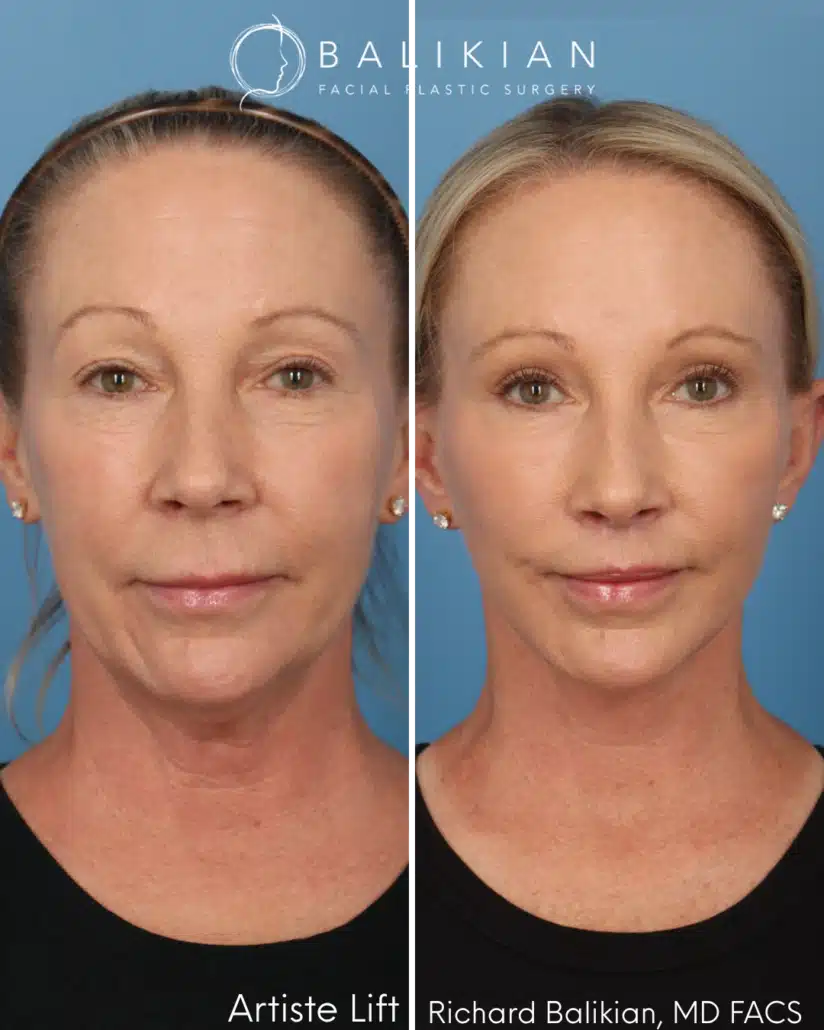
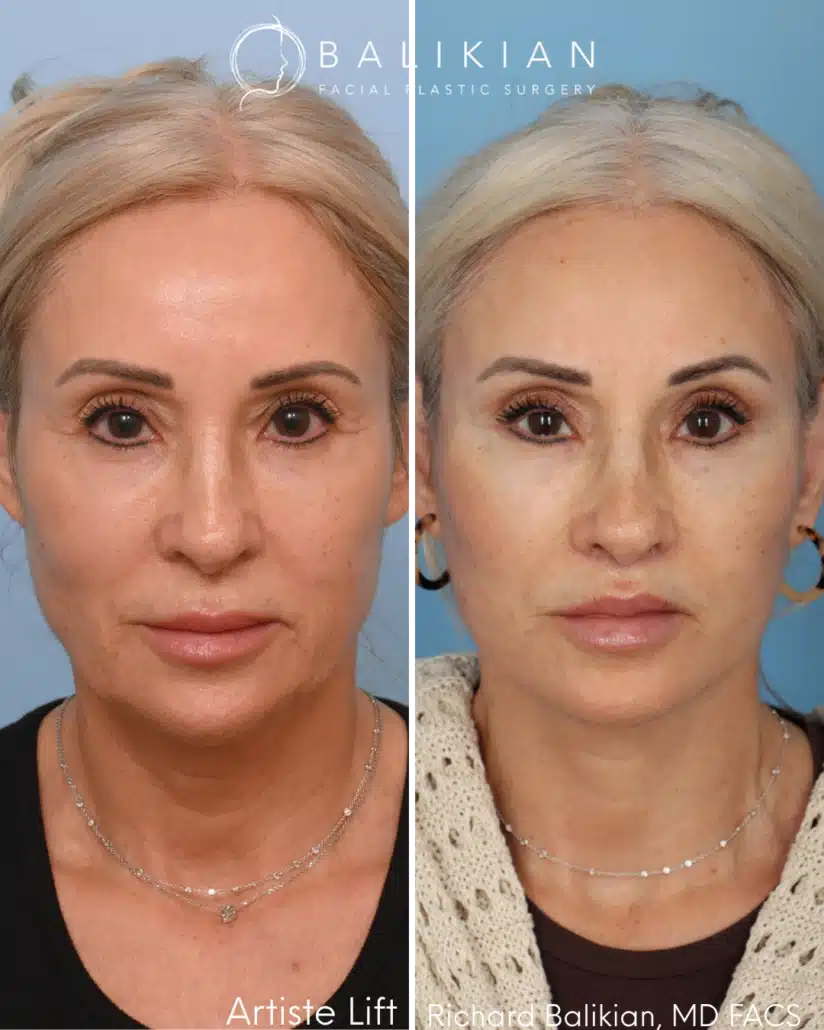
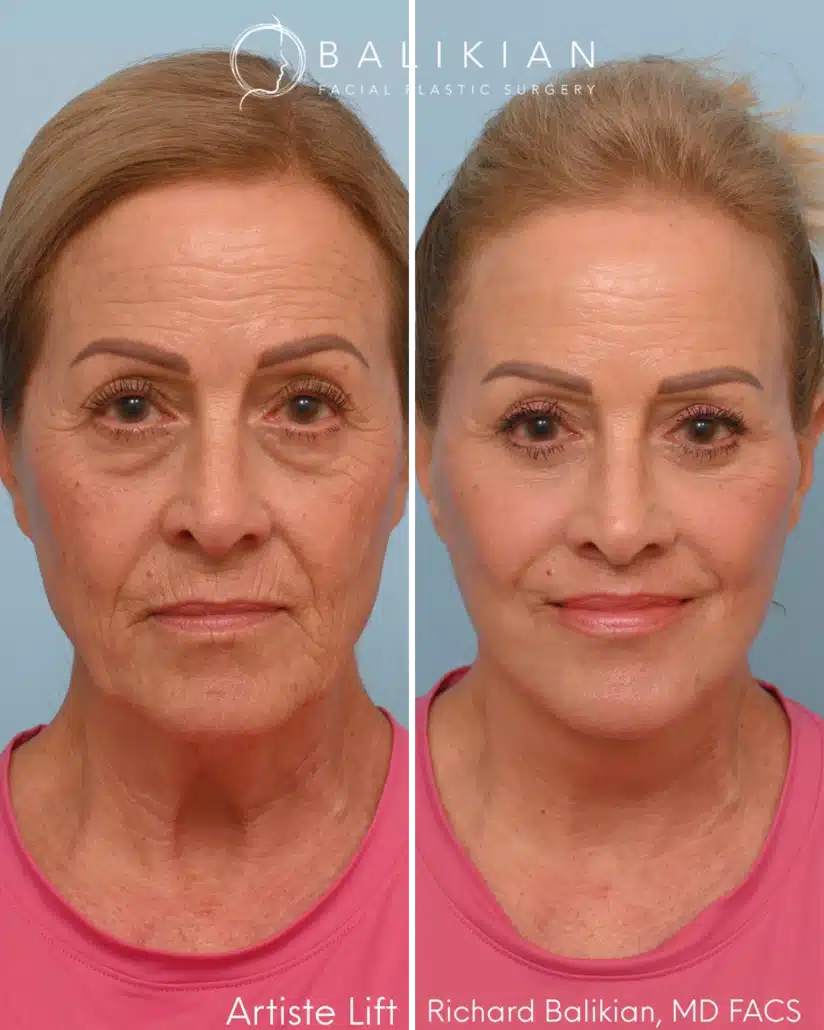
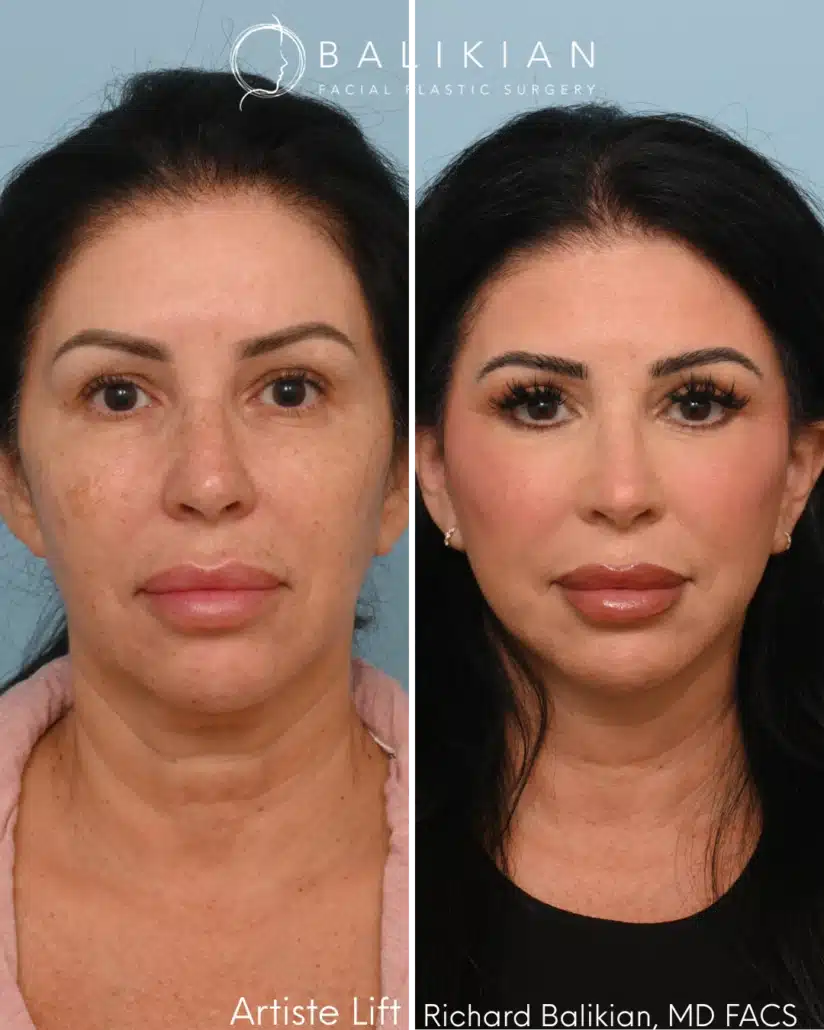
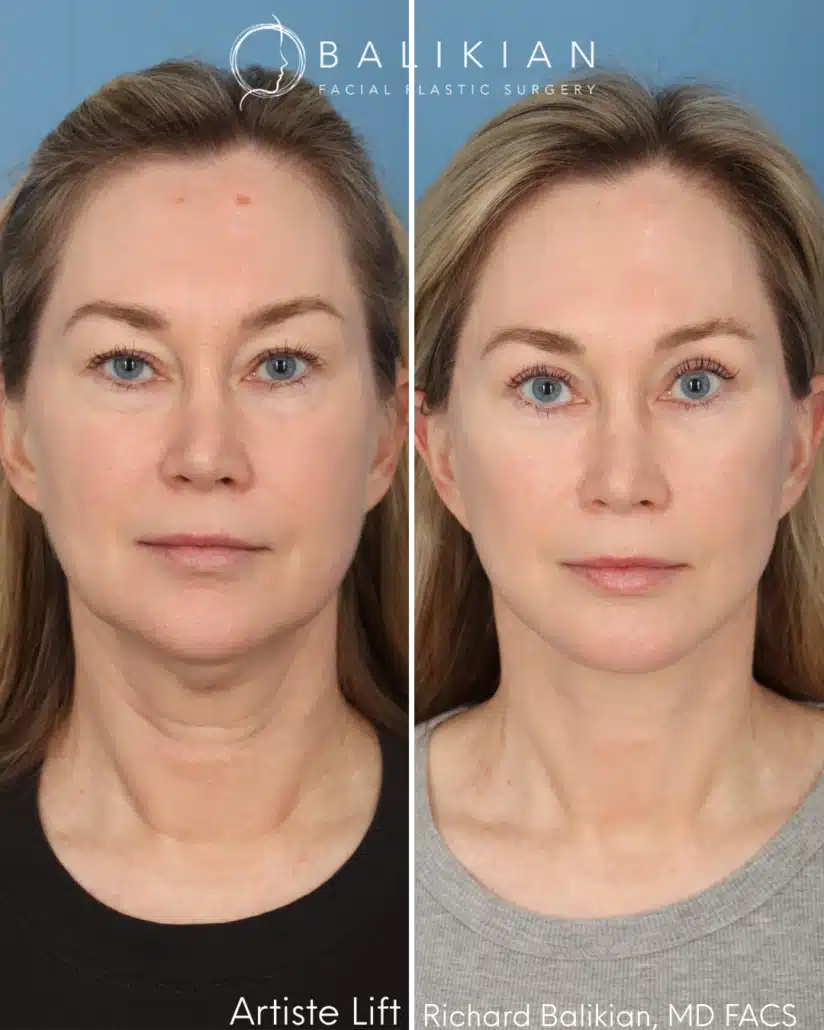
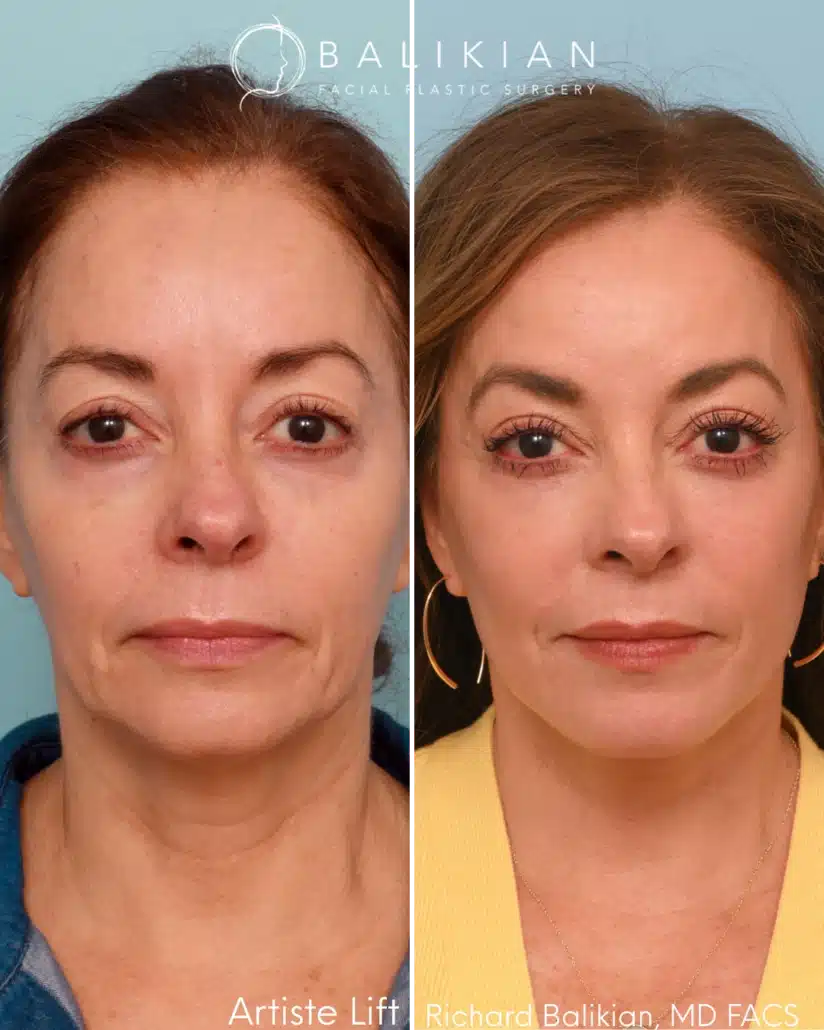
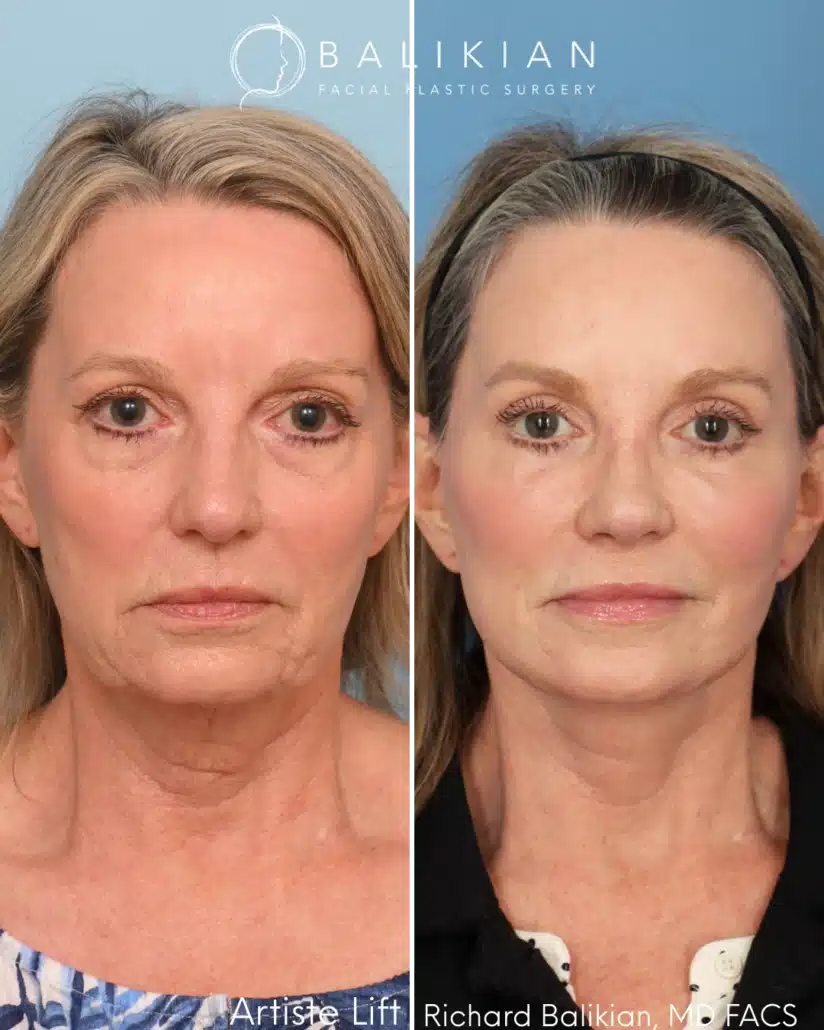
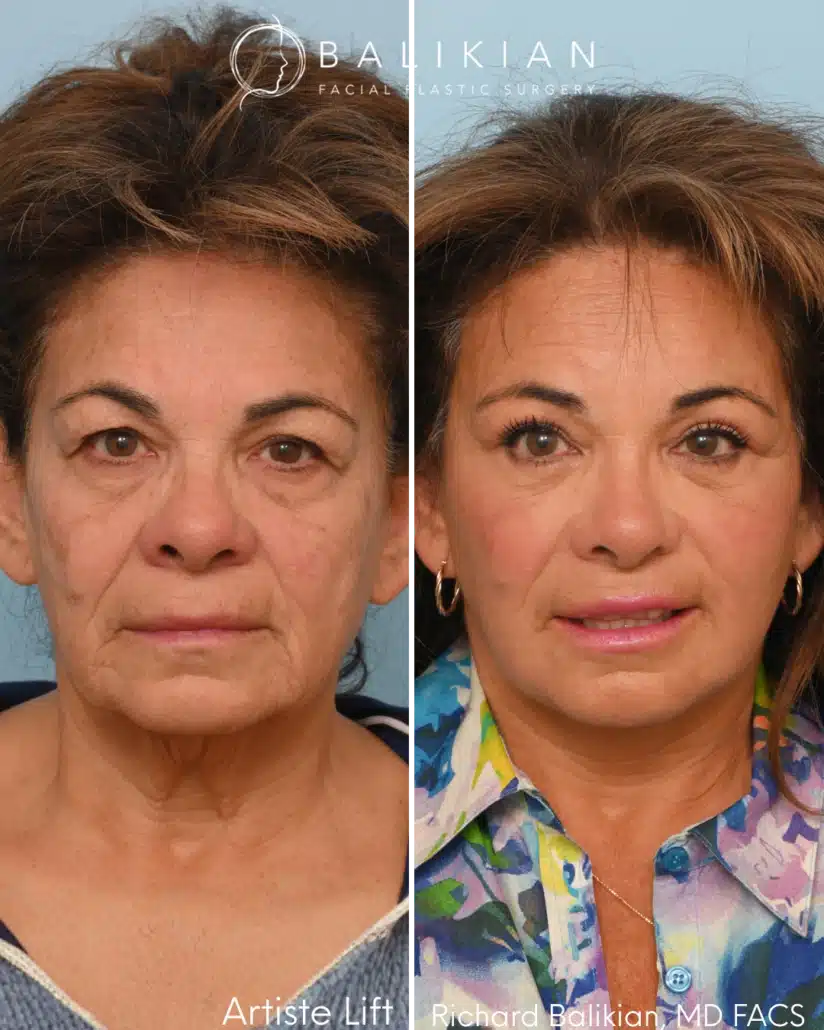
Once patients understand what a deep plane facelift can accomplish, the next question is often about timing.
“Am I too young?”
“Have I waited too long?”
The reality is there is no perfect age for facelift surgery. People age differently. Some patients begin noticing jowls, neck laxity and loss of jawline definition in their forties because of their genetics and facial anatomy. Others maintain excellent facial support well into their sixties. The calendar is only one small part of the conversation.
During consultation, Dr. Balikian evaluates how your face has aged rather than how old you are. Skin quality, facial volume, ligament laxity, neck contour, bone structure and your personal goals all help determine whether surgery is appropriate.
Your overall health is equally important. Because a facelift is an elective procedure, patient safety always comes first. Sometimes the recommendation is to move forward with surgery. Sometimes the recommendation is to wait. Occasionally, the best recommendation is no surgery at all until another medical condition has been addressed.
Those conversations are every bit as important as discussing the operation itself.
Another question almost every patient asks is whether facelift results eventually disappear. The simple answer is no.
A facelift cannot stop the aging process. Gravity continues to act on the face. Skin continues to mature. Genetics, lifestyle and sun exposure continue to influence how we age.
What changes is your starting point. After surgery, you continue aging from a more youthful foundation. Years later, you will almost always look younger than you would have if you had never undergone surgery. For many patients, one comprehensive Artiste Lift™ provides long-lasting improvement that can be enjoyed for many years. Some patients eventually choose a revision procedure later in life as aging continues, but those revisions build upon the original result rather than starting over.
Protecting your results also depends on the choices you make after surgery. Maintaining a stable weight, protecting your skin from the sun, avoiding smoking and following a consistent skincare routine all help preserve your investment.
Surgery creates the foundation. Healthy habits help maintain it.
Once patients feel confident that surgery is the right choice, the conversation naturally shifts to perhaps the most important decision of all: who should perform it?
One of the first questions patients ask is how many facelifts a surgeon has performed. Experience absolutely matters. Performing thousands of facial rejuvenation procedures develops technical precision, but it also develops judgment. Experienced surgeons recognize subtle differences in facial anatomy that influence every surgical plan. They understand how tissues respond, where additional support is needed and when less surgery often produces a better result.
Experience also teaches restraint.
One of Dr. Balikian’s favorite things to tell patients is “no.”
That may sound surprising, but it reflects one of the most important qualities patients should look for in a facial plastic surgeon. Not every patient needs every procedure.
Sometimes the best surgical plan is less extensive than a patient expected. Other times, surgery simply isn’t the right recommendation. An experienced surgeon should be just as comfortable explaining why a procedure won’t improve your outcome as they are recommending one that will.
The best consultations feel educational rather than persuasive. Patients should leave understanding why a procedure is recommended, what it can accomplish and just as importantly, what it cannot.
Watch Dr. Balikian explain why artistic restraint and knowing when to say “no” are essential to achieving natural facelift results.

If you’ve been researching facelifts online, you’ve probably noticed that almost every surgeon seems to have their own branded procedure.
At first glance, it can feel as though every facelift is completely different. In reality, many of these procedures share similar surgical principles while reflecting each surgeon’s individual philosophy, training and experience.
The name of a procedure is only one small part of the conversation.
What matters far more is how the operation is performed and why your surgeon believes that approach is the best choice for your anatomy.
During your consultation, don’t be afraid to ask questions like:
A thoughtful surgeon should be able to answer these questions in clear, understandable language without relying on technical jargon or marketing buzzwords.
Ultimately, the best facelift isn’t defined by its name. It’s defined by careful planning, sound surgical principles, artistic judgment and results that continue to look natural for years after surgery.
The procedure’s name should never be the reason you choose a surgeon. Understanding your surgeon’s philosophy, experience and approach to your individual anatomy is far more important than any trademarked name.
Once patients feel confident they’ve chosen the right surgeon, the conversation naturally shifts to recovery. For many people, recovery is the biggest remaining unknown. Fortunately, it’s often easier than patients expect.
Most people experience swelling, bruising and temporary tightness during the first several weeks, with gradual improvement over time. By about six weeks, many patients feel comfortable attending dinners, family gatherings or other social events, although healing continues well beyond that point.
One of the biggest misconceptions about facelift recovery is that it happens all at once. It doesn’t.
Recovery happens in stages. Swelling gradually subsides, sensation slowly returns, scars continue to mature and the face becomes more refined over the course of several months. Understanding those milestones before surgery helps set realistic expectations and often reduces much of the anxiety surrounding recovery.
Watch our complete Deep Plane Facelift Recovery Playlist to follow patients through every stage of healing, from the day of surgery to their long-term results.

Temporary numbness around the ears, cheeks and neck is completely normal after facelift surgery. Small sensory nerves need time to recover, so sensation gradually returns over the course of several months.
Healing also continues long after the bruising has faded. Swelling gradually resolves, scars continue to mature, the tissues soften and the final result becomes increasingly refined throughout the first year.
One of the most important things patients can do during recovery is trust the process. A facelift isn’t judged by how you look one week after surgery or even one month later. It should be judged by the natural, long-term result that gradually reveals itself as healing progresses.
Recovery rewards patience.
Recovery is a journey, not a single milestone. The resources below explore the healing process from different perspectives, helping you understand what to expect before surgery, how recovery progresses over time and what thousands of patient recoveries have taught us.
The more you understand the recovery process before surgery, the more confident you’ll feel as each milestone unfolds. These resources are designed to help you prepare, heal and appreciate the gradual transformation that takes place over the months following your procedure.
If you’ve made it this far, you’ve probably started answering many of the same questions Dr. Balikian discusses with patients every day.
Will I still look like myself?
How much younger will I look?
How long will my results last?
Am I the right candidate?
How do I know if I’m choosing the right surgeon?
Those are important questions because they lead to thoughtful decisions.
The purpose of a consultation isn’t to convince you to have surgery. It’s to help you understand your anatomy, your options and whether a preservation deep plane facelift is the right choice for your goals. Some patients decide to move forward. Some decide to wait. Others discover that another treatment may better address their concerns. Every one of those outcomes is a successful consultation because the decision is based on education, not pressure.
As Dr. Balikian often tells patients, “I love your face.” That simple statement reflects the philosophy behind every consultation and every Artiste Lift™. The goal isn’t to create someone new. It isn’t to chase trends or dramatic transformations. It’s to restore the facial support that time has gradually changed while preserving the expressions, personality and character that make you who you are.
Because the best facelift isn’t the one that changes your face. It’s the one that allows you to look in the mirror and simply see yourself again.
Will I still look like myself after a deep plane facelift?
That is the goal of modern facial rejuvenation. A deep plane facelift repositions the deeper facial tissues rather than relying primarily on tightening the skin. When performed appropriately, the objective is to restore facial harmony while preserving your natural facial expressions and identity.
How is a deep plane facelift different from a SMAS facelift?
Both techniques address the deeper facial support structures, but a deep plane facelift releases key retaining ligaments and repositions the skin, fat, and SMAS as a single unit. Current systematic reviews show that both procedures can produce excellent long-term results when performed appropriately, with the best technique depending on the patient’s anatomy and the surgeon’s expertise.
How long do deep plane facelift results last?
A facelift cannot stop the aging process, but it can restore facial tissues to a more youthful position. Patients generally continue aging from that improved starting point, which is why many continue to look younger than they would have without surgery years later.
Is there a perfect age for a deep plane facelift?
No. The decision is based on facial anatomy, skin quality, soft tissue descent, overall health, and personal goals rather than age alone. People age at different rates, so the right timing varies from person to person.
Why are retaining ligaments important in a deep plane facelift?
Retaining ligaments anchor the facial soft tissues to the underlying skeleton. Selectively releasing these ligaments allows the descended tissues to be repositioned more naturally while reducing tension on the skin. Modern facelift planning is increasingly focused on understanding these ligamentous attachments and tailoring the approach to each patient’s anatomy.
Is a deep plane facelift safe?
Facelift surgery is generally safe when performed by an experienced facial plastic surgeon, but like any operation, it carries risks. Studies show that both SMAS and deep plane techniques have high patient satisfaction, and careful patient selection, meticulous surgical technique, and proper postoperative care are essential for minimizing complications.
How long does recovery take?
Most patients experience the greatest swelling and bruising during the first few weeks, while subtle improvements continue for many months. Final refinement of the tissues and scars often continues throughout the first year. Recovery varies depending on the individual and the procedures performed.
Why do surgeons use different names for facelift procedures?
Many surgeons develop refinements to established facelift techniques and choose names that reflect their surgical philosophy. Rather than focusing on the name of a procedure, it’s more important to understand how the operation is performed, why it’s recommended for your anatomy, and what evidence supports that approach.
Dr. Richard Balikian is a highly respected facial plastic surgeon serving the San Diego area.
With over 20 years of experience and double board certification in Facial Plastic and Reconstructive Surgery as well as Head and Neck Surgery, Dr. Balikian offers a unique combination of technical expertise and artistic vision.
He is part of an elite group of surgeons with extensive training focused exclusively on the face and neck.