When Do You Start to Look Like Yourself After a Facelift?
Most patients do not ask, “When will I be healed?” They ask, “When will I look like myself again?”
That question comes up in nearly every facelift consultation and throughout recovery. It usually surfaces after the first week, when swelling begins to change and patients spend more time studying their reflection. They aren’t asking whether the surgery worked. They’re asking when the face in the mirror will feel familiar again.
That concern is completely normal. Patients want to look refreshed, not transformed. They want friends and family to notice they look well rested, not wonder what changed.
There isn’t a single moment when that happens. As swelling subsides and the deeper facial tissues settle, the face gradually becomes more recognizable. For most patients, that sense of familiarity returns earlier than they expect, even though healing continues beneath the surface for several more months.
Every facelift is customized to the individual, so no two recovery experiences are exactly alike. Your facial anatomy, skin quality, the procedures performed and your body’s natural healing response all influence how quickly you’ll begin to recognize yourself in the mirror again.



Hear patients describe why they chose facelift surgery, what recovery was like, and when they began to feel like themselves again.
While no article can predict exactly when that moment will happen, hearing from patients who have experienced it firsthand can be reassuring. Their stories offer a realistic look at how recovery unfolds and the gradual return of the natural, familiar appearance they were hoping to see.
When patients say they want to “look like themselves again,” they usually aren’t asking whether healing is complete. They’re asking something much more personal.
They want to know when they’ll stop seeing surgery every time they look in the mirror and start seeing themselves again.
For most patients, looking like themselves again means:
This moment usually arrives gradually. There is rarely a dramatic morning when everything suddenly looks perfect. Instead, patients often realize one day that they have stopped analyzing their reflection because it simply feels familiar again.
The first few weeks after a facelift can be emotionally more difficult than patients expect, even when discomfort is improving.
That’s because healing isn’t perfectly symmetrical. One side of the face may soften before the other. Swelling changes from day to day, and small differences become easy to notice when you’re looking closely in the mirror.
During this stage, patients commonly experience:
These changes are a normal part of healing. They do not mean something is wrong. They simply reflect the fact that deeper tissues recover gradually after surgery.
Every recovery is unique, but most patients experience similar milestones.

Listen as patients describe how swelling changed, when they felt comfortable going out in public, and the moment they realized they looked like themselves again.
For a more detailed week-by-week guide, see our Preservation Deep Plane Facelift Recovery Timeline.
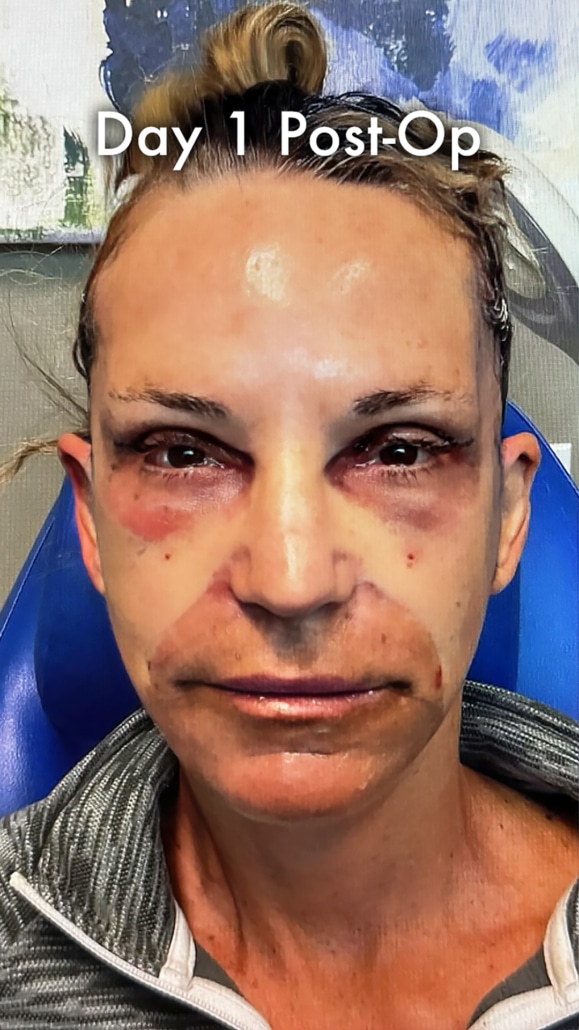
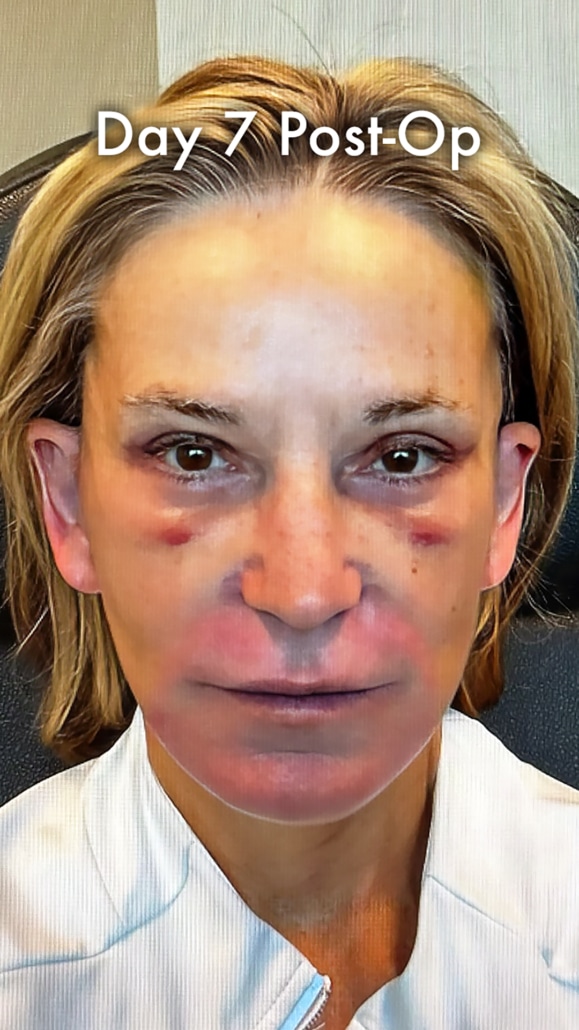
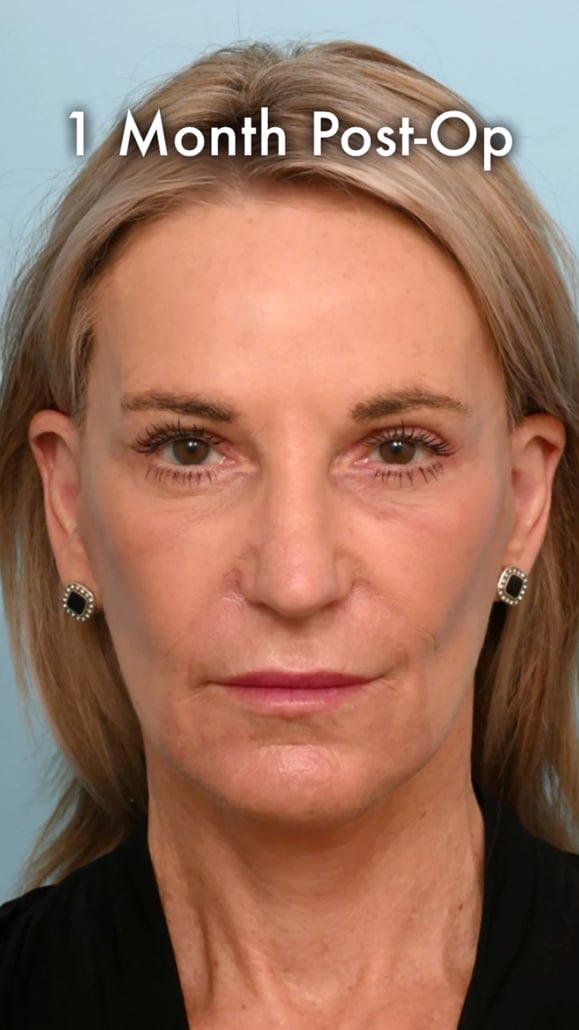
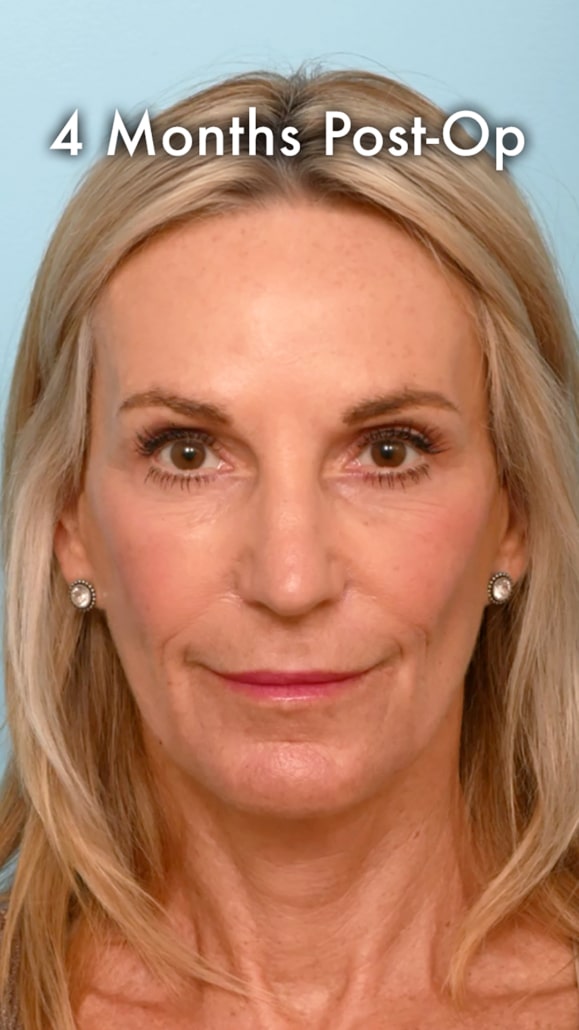
One of the biggest surprises for many patients is realizing that feeling comfortable in public and achieving final results are two different milestones.
Most patients feel ready to return to their normal routines once:
That doesn’t mean healing is complete.
The deeper tissues continue to settle for several more months, refining the contours of the face in subtle ways. Most people around you won’t notice those changes, but you and your surgeon will. Looking like yourself again often happens long before the final result is reached.
A natural-looking facelift isn’t judged by how it looks two weeks after surgery. It’s judged by how it looks months and years later.
As healing continues:
This gradual refinement is one of the reasons preservation deep plane facelift techniques produce such natural-looking results. Rather than creating a tight appearance immediately after surgery, the goal is to restore youthful facial support while allowing the face to heal into a refreshed, familiar appearance.
Dr. Richard Balikian’s approach focuses on preservation rather than tension, creating results that continue to improve as healing progresses.
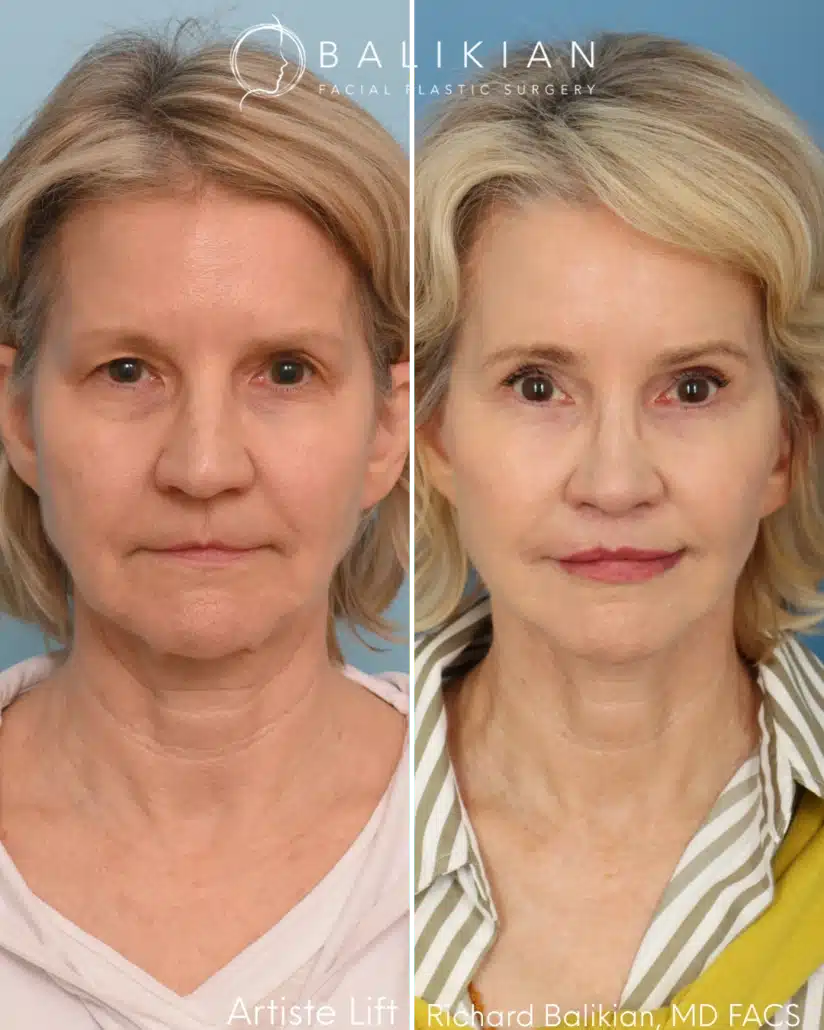
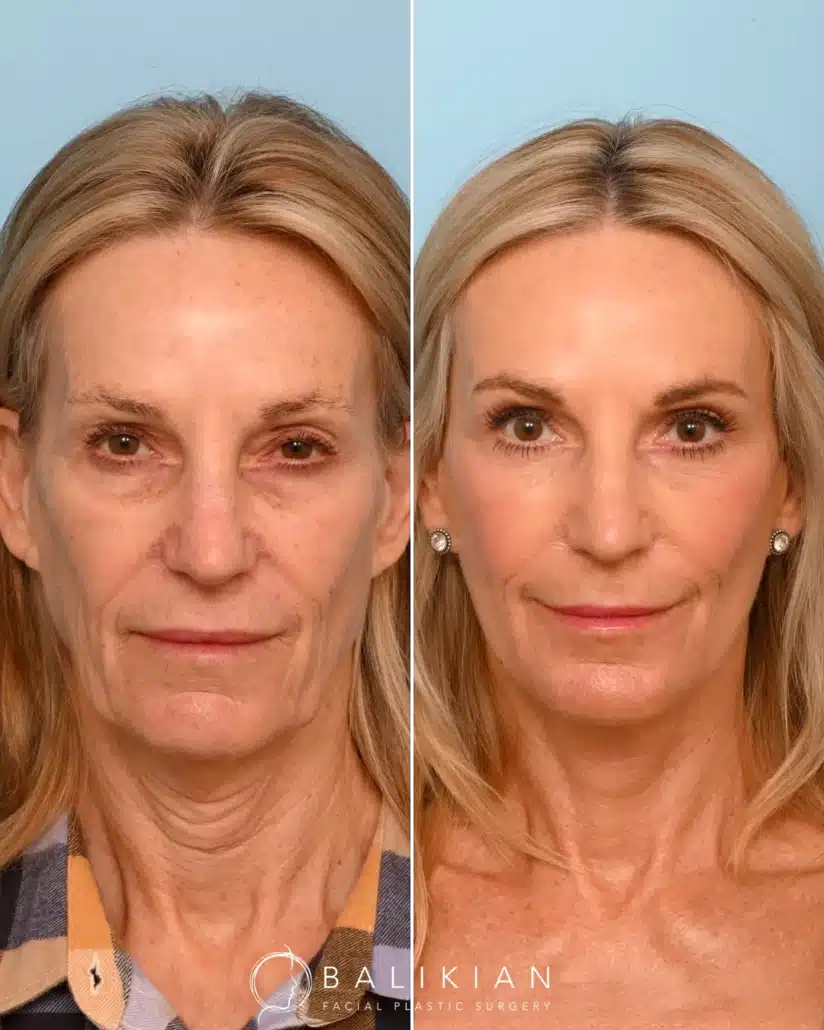
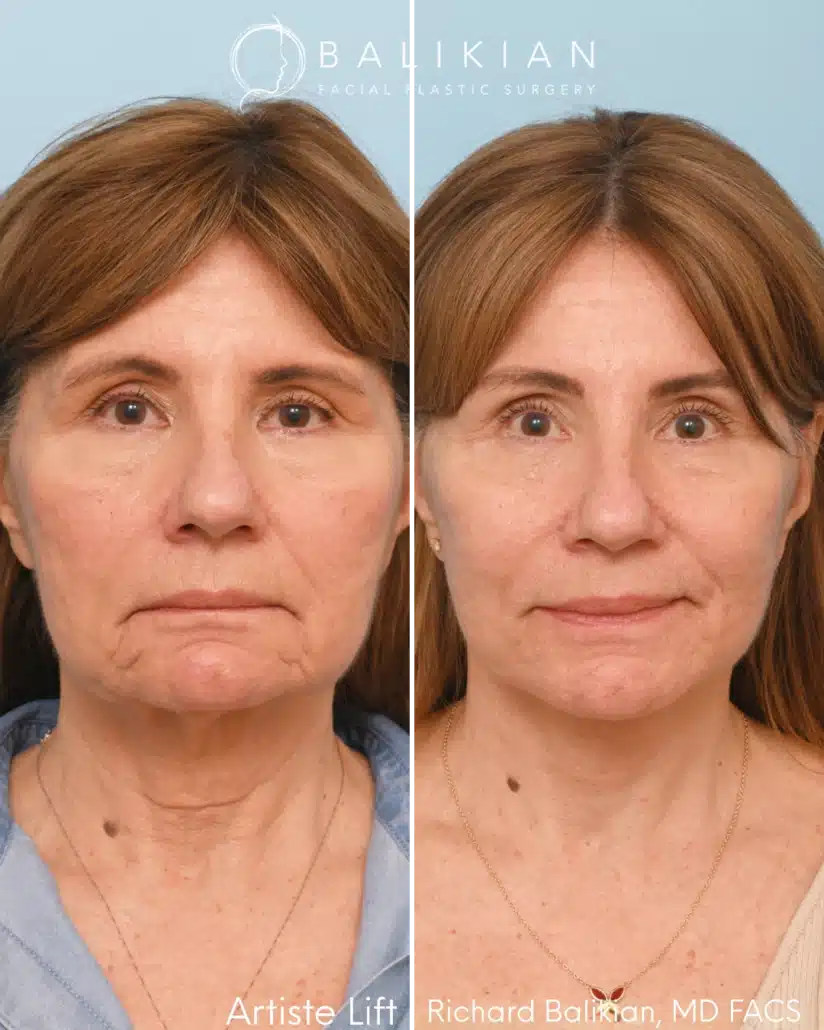
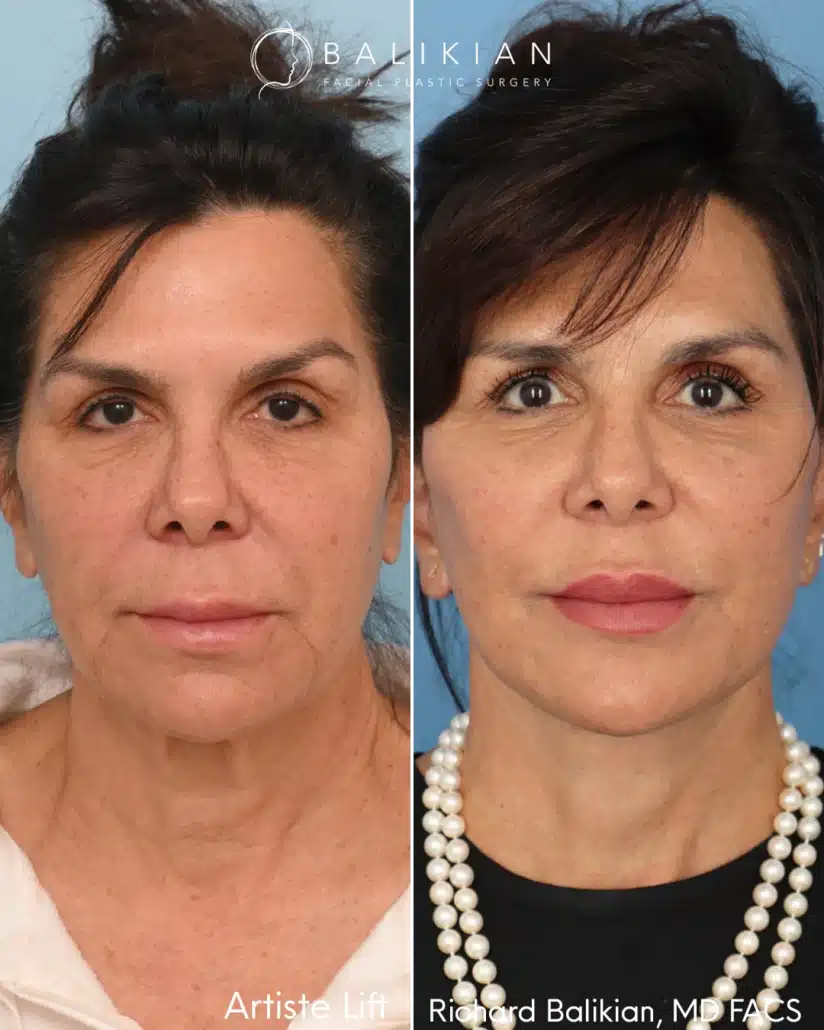
Before and after photos can be incredibly helpful, but they’re most meaningful when you know when they were taken.
A photo taken two weeks after surgery may still show swelling and firmness, while one taken several months later reflects how the tissues have settled and softened over time.
That’s why it’s important to look beyond the immediate transformation. A well-performed facelift should continue to look more natural as healing progresses, not more noticeable. The best results don’t draw attention to the surgery. They simply leave people thinking you look rested, healthy, and like yourself.
Recovery is more than a physical process. It is an emotional one as well.
As swelling changes from week to week, it’s normal to question what you’re seeing in the mirror. Some days you’ll notice steady improvement. Other days it may feel like nothing has changed at all. That doesn’t mean healing has stopped. It simply means recovery isn’t perfectly linear.
Many patients experience:
These emotional ups and downs are a normal part of the recovery process. Knowing what to expect can make them much easier to navigate.
If you’re early in your recovery and wondering when you’ll look like yourself again, you’re not alone. Nearly every facelift patient asks the same question.
The answer is rarely found on a calendar.
For most patients, it happens gradually. One day you stop examining every small detail in the mirror. You stop comparing one side of your face to the other. You stop looking for signs of swelling.
Instead, you simply see yourself again. Not because healing is finished, but because your face feels familiar.
That quiet moment is one of the most rewarding parts of recovery. It usually means you’re no longer focused on the surgery. You’re simply getting back to living your life, with a refreshed appearance that still feels authentically you.
When do most patients start to look like themselves again after a facelift?
Most patients begin to feel more “like themselves” once early swelling and bruising have improved and facial movement feels natural again. Research shows postoperative edema can be measured and follows a predictable pattern, but it resolves gradually rather than all at once.
Why does swelling feel uneven during facelift recovery?
Swelling after facelift is partly related to postoperative fluid shifts and temporary disruption of lymphatic drainage. Recent research has specifically looked at quantifying postoperative edema after facelift, supporting the idea that swelling is expected and follows a pattern rather than disappearing evenly.
How long does swelling last after a deep plane facelift?
Swelling typically improves substantially in the first weeks, then continues to settle more subtly over the following months. A 2025 study introduced an objective way to measure and track postoperative edema after facelift, reinforcing that swelling resolution is gradual and measurable over time.
What is the most common serious complication after a facelift?
Across recent literature, hematoma remains the most commonly reported facelift complication. A 2025 systematic review of rhytidectomy complications found hematoma was the most frequently reported complication in more recent years, followed by scarring issues and neurapraxia.
What increases the risk of hematoma after facelift surgery?
Evidence reviews identify multiple factors associated with higher hematoma risk, including patient and perioperative factors. A 2024 evidence review summarizes known risk factors and prevention strategies used in facelift surgery.
Are there proven methods that help reduce hematoma risk?
Recent research has evaluated adjuncts used during facelift surgery to reduce hematoma risk, including approaches such as tranexamic acid and other intraoperative techniques, with the goal of improving evidence based prevention.
Is nerve injury common after facelift?
High quality reviews suggest nerve injury is uncommon overall. A 2025 systematic review and meta analysis reported pooled rates of nerve injury under 1 percent and permanent nerve injury under 0.1 percent for motor and sensory lesions.
If facial nerve weakness happens after facelift, does it usually resolve?
Most facelift related facial nerve issues are temporary and improve with time, depending on severity. A 2025 systematic review on facial nerve injury after rhytidectomy reports that most cases recover favorably, with many recovering within months.
Does smoking affect facelift healing?
Yes. Smoking is associated with higher risk of wound healing problems across common aesthetic procedures, including increased risk of infection, delayed wound healing, and skin necrosis.
What are other common facelift complications patients should know about?
Recent complication reviews continue to report hematoma most often, with scarring concerns, temporary nerve symptoms like neurapraxia, and seroma also appearing in published data.
How safe is facelift surgery overall?
Large studies and reviews describe rhytidectomy as generally safe when performed by experienced surgeons, while emphasizing that complication risks vary with patient factors and whether additional procedures are combined.
Dr. Richard Balikian is a highly respected facial plastic surgeon serving the San Diego area.
With over 20 years of experience and double board certification in Facial Plastic and Reconstructive Surgery as well as Head and Neck Surgery, Dr. Balikian offers a unique combination of technical expertise and artistic vision.
He is part of an elite group of surgeons with extensive training focused exclusively on the face and neck.