Facelift Anatomy : The Three Layers Surgeons Treat During Surgery
Learn How the Skin, SMAS Support Layer, and Deeper Facial Structures Influence Modern Facelift Surgery
Facelift surgery is often misunderstood as simply tightening loose skin. In reality, modern facial rejuvenation requires a deep understanding of facial anatomy.
When facial plastic surgeon Dr. Richard Balikian explains facelift surgery, he often describes the face as consisting of three anatomical layers that surgeons evaluate and treat during surgery. Each layer plays a different role in facial aging and must be addressed carefully to achieve natural results.

Understanding these layers helps patients better understand how modern facelift techniques restore youthful facial contours.
Surgeons often think about the face in layers when performing facelift surgery. Each layer of facial anatomy plays a different role in how the face ages and how it must be treated during surgery.
During facelift surgery, surgeons work through three primary layers of facial anatomy:
Each layer contributes differently to the aging process and each must be treated in a precise way during surgery.
The outermost layer of the face is the skin.
Over time, the skin gradually loses elasticity as collagen production declines. Sun exposure, genetics, and natural aging all contribute to thinning skin and reduced resilience.
These changes lead to many of the visible signs of aging, including:
Older facelift techniques focused primarily on tightening the skin itself. While this approach could temporarily improve the appearance of laxity, it often created results that looked tight or unnatural.
Modern facelift surgery treats the skin differently. Rather than using the skin to create the lift, surgeons primarily reposition deeper structures and then gently redrape the skin over the newly restored contours.
Beneath the skin lies the primary support structure of the face, known as the SMAS (Superficial Musculoaponeurotic System).
The SMAS is a fibromuscular layer that connects facial muscles to the overlying skin and soft tissue. It plays a critical role in maintaining facial shape and movement.
In the neck, this same support layer continues as the platysma muscle. Together, the SMAS and platysma form a continuous sheet that supports the cheeks, jawline, and neck.
As this layer descends with age, it contributes to many of the most recognizable features of facial aging, including:
During facelift surgery, surgeons reposition this layer to restore natural facial structure.
Addressing the SMAS allows the face to be lifted without placing tension on the skin, which helps produce smoother, more natural-looking results.
This deeper approach to lifting the face is discussed further in our guide to SMAS facelift techniques.
When the SMAS layer is elevated during surgery, surgeons gain access to the deeper anatomical structures of the face.
These structures form the underlying framework that shapes facial contour and expression. They include:
Facelift surgery does not radically alter these deeper structures. However, a surgeon must clearly understand their location and function in order to safely reposition tissues and refine facial contours.
A detailed knowledge of facial anatomy allows surgeons to work precisely while protecting important nerves and structures beneath the surface.
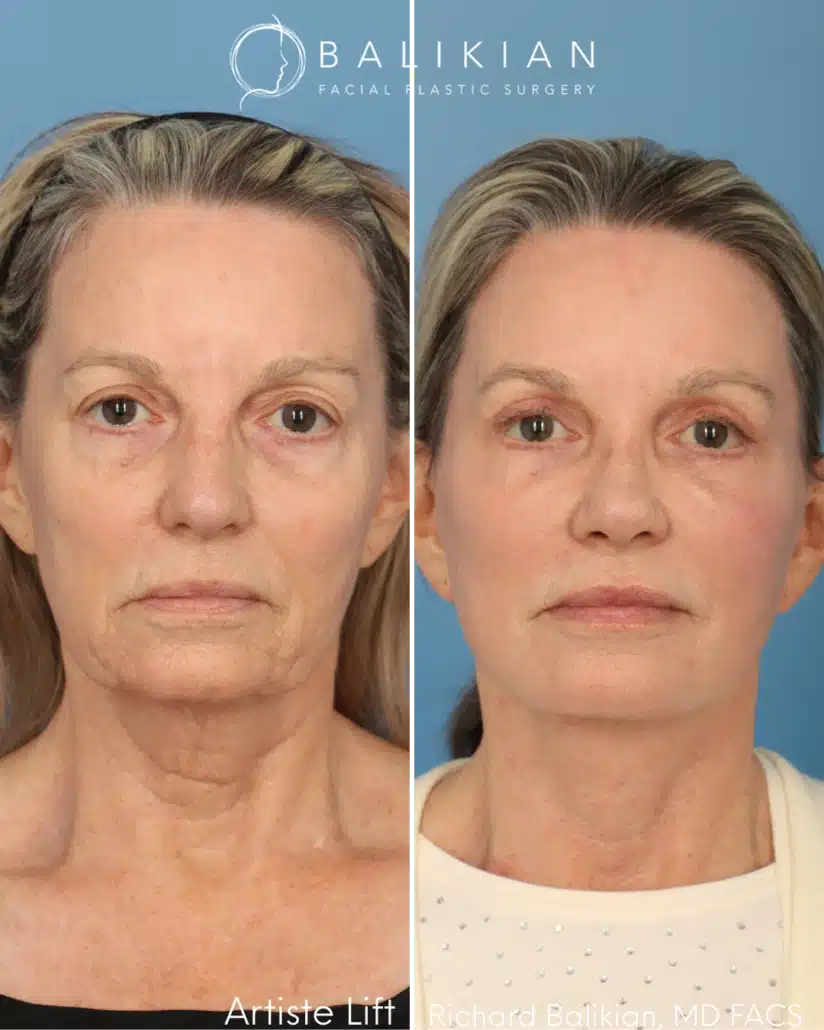
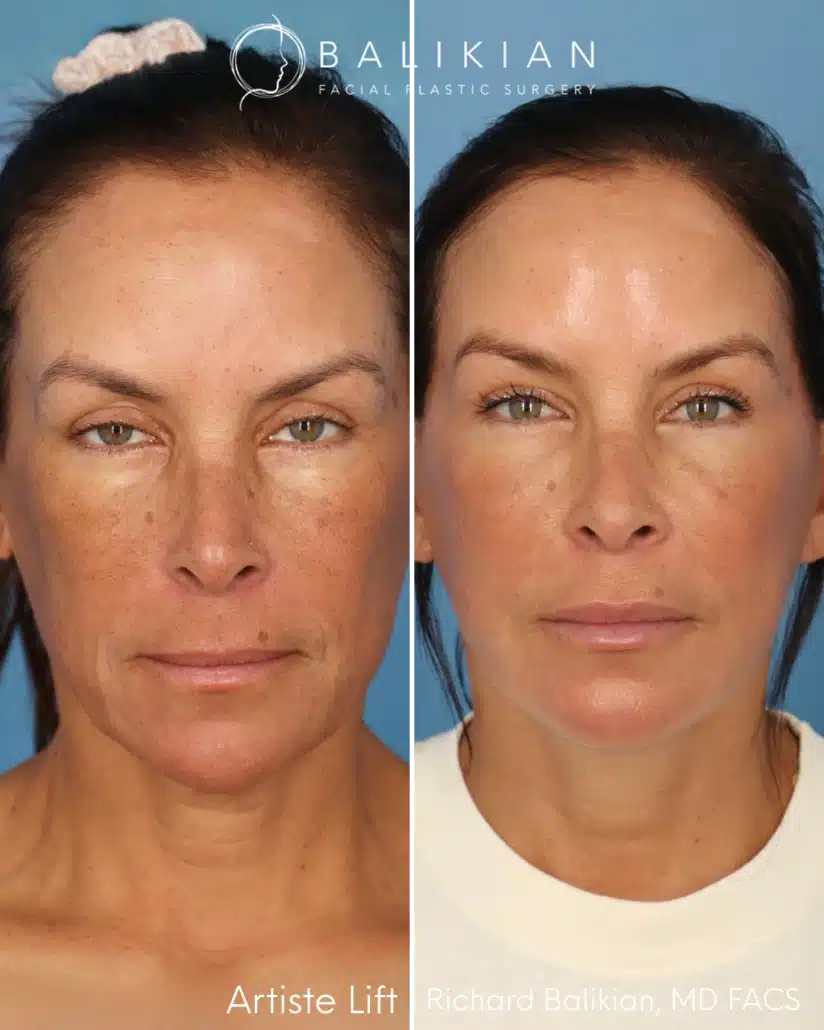
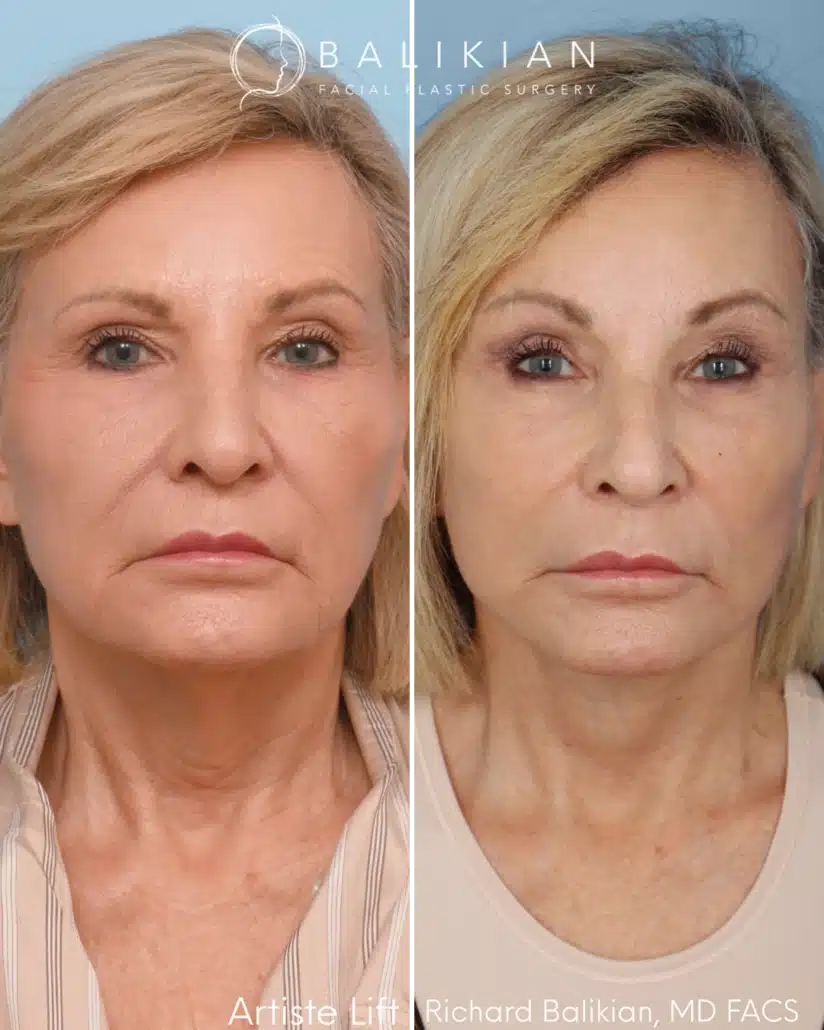
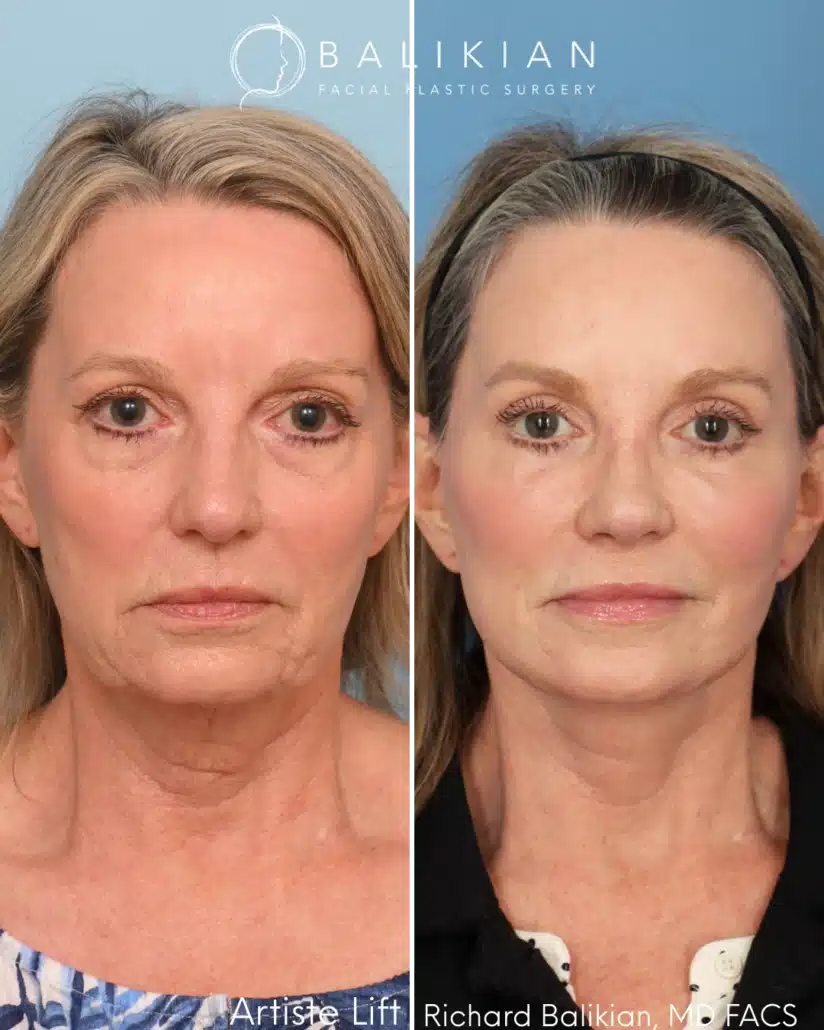
Facelift surgery is not simply about tightening tissue. It also involves lifting facial structures in the correct anatomical direction.
Certain muscles, such as the zygomaticus major and minor, help determine the natural vector of facial movement and expression. These structures influence how the cheeks should be repositioned during surgery.
By respecting these natural anatomical vectors, surgeons can restore youthful contours while preserving the patient’s natural facial expressions.
You can learn more about this concept in our article on vertical vector facelift techniques.
Facelift surgery requires both technical precision and artistic judgment.
Once the deeper layers of the face are exposed, surgeons evaluate how the facial structures interact. Subtle adjustments may be made to reposition tissues and restore balanced facial contours.
Dr. Balikian often describes this process as sculpting the face, using anatomical knowledge to recreate the soft, heart-shaped facial balance associated with youth.
The goal is not to change how someone looks. Instead, the goal is to restore the natural contours that have gradually shifted over time.
Understanding facial anatomy is one of the keys to achieving natural facelift results.
To explore more educational resources about facelift surgery, visit our complete facelift surgery guide, which covers surgical techniques, recovery and what patients can expect during consultation.
What are the three layers surgeons think about during facelift surgery?
Surgeons commonly think about facelift anatomy in three practical levels: the skin, the support layer made up of the SMAS and platysma, and the deeper structures beneath that layer, such as deeper fascia, fat compartments, glands, and important nerves. This layered framework helps explain why modern facelift surgery is about more than tightening the surface of the skin.
Does a facelift only tighten the skin?
No. Modern facelift surgery is designed to reposition deeper facial tissues, not just pull the skin tighter. Recent reviews describe rhytidectomy as a procedure that repositions facial soft tissues to create a more youthful and harmonious appearance, and anatomy studies show that tissue mobility, retaining fibers, and deeper dissection planes all affect how lifting actually works.
What is the SMAS in facelift surgery?
The SMAS, or superficial musculoaponeurotic system, is a key support structure in the face that surgeons use when lifting and repositioning facial tissues. Recent PubMed literature describes it as an important superficial fascial structure, especially in the parotid and cheek regions, where it helps separate superficial and deep fat layers.
Is the platysma part of facelift anatomy too?
Yes. The platysma is a major muscle of the lower face and neck, and surgeons often think of it together with the SMAS when evaluating the jawline and neck. Newer anatomy studies also support the clinical importance of the platysma in lower-face descent and neck contour.
Why does anatomy matter so much in a facelift?
Facelift surgery is performed close to important structures, including the facial nerve, deeper fascia, glands, and fat compartments. Recent anatomical studies show that facial nerve branches are embedded within the deep fascia and can become more vulnerable in certain dissection planes, which is why a detailed knowledge of anatomy is essential for both safety and natural-looking results.
What are the deeper structures beneath the SMAS?
Beneath the SMAS, surgeons encounter deeper tissues that help shape the face and neck, including deep fascia, fat compartments, the parotid region, masseteric region, submandibular area, and facial nerve pathways. Recent cadaveric studies show that these deeper layers are more complex than older textbook diagrams suggested, which is one reason advanced facelift surgery requires such precise anatomical planning.
Why do some facelifts look more natural than others?
A natural result usually depends on how the deeper tissues are repositioned, not just how the skin is redraped. Recent literature on facial glide planes, retaining fibers, and deep-plane anatomy shows that facial tissues move along specific anatomical pathways, which helps explain why deeper, anatomically respectful lifting can look more natural than skin-only tightening.
Does the direction of lift matter in facelift surgery?
Yes. The direction of lift matters because facial tissues do not age or move in a single straight line. Current anatomy research emphasizes the importance of tissue mobility, retaining ligaments, and the way deeper structures glide during redraping, all of which influence how surgeons choose lift vectors.
Can deeper anatomy affect the neck and jawline too?
Yes. The neck and jawline are strongly influenced by structures below the platysma, not just loose skin above it. A 2023 cadaver study found that achieving exceptional neck contour often requires addressing structures deep to the platysma, including the submandibular region, when appropriate.
Is facelift surgery still safe when deeper layers are treated?
When performed by a surgeon with a detailed understanding of facial anatomy, deeper-plane surgery can be performed safely, but it requires precision. Recent publications emphasize that facial rejuvenation has become more anatomically sophisticated over time and that careful handling of the facial nerve network, SMAS suspension, deep neck contouring, and skin management are all essential to protect safety while pursuing natural outcomes.
Is deep plane facelift better than SMAS facelift?
The literature does not support a one-size-fits-all answer. A recent systematic review and meta-analysis found that both SMAS and deep plane facelift techniques produced high patient satisfaction and durable outcomes, though their complication profiles differed. That makes surgeon judgment, anatomy, and surgical planning more important than choosing a technique name alone.
Why do surgeons talk about “layers” if anatomy is more complex than that?
Because “layers” is a useful way to help patients understand facelift surgery. At the same time, recent anatomical papers point out that the real anatomy is more nuanced, especially in the midface, where the SMAS may not behave like one perfectly continuous sheet everywhere. So the layered explanation is still helpful, but modern facelift surgery is guided by a more detailed understanding of fascia, muscles, fat, ligaments, and nerve pathways.
Dr. Richard Balikian is a highly respected facial plastic surgeon serving the San Diego area.
With over 20 years of experience and double board certification in Facial Plastic and Reconstructive Surgery as well as Head and Neck Surgery, Dr. Balikian offers a unique combination of technical expertise and artistic vision.
He is part of an elite group of surgeons with extensive training focused exclusively on the face and neck.