Submandibular Gland and Jawline Definition in Neck Lift Surgery
Why Fullness Beneath the Jawline Is Not Always Skin or Fat
One of the most common concerns in neck aging is loss of definition along the jawline. Patients often notice fullness beneath the jaw, a softer transition into the neck and a contour that no longer appears clean or structured.
In a youthful neck, the jawline creates a clear separation between the face and the neck. This definition is supported by underlying structures that hold the tissue in position and maintain a smooth, continuous contour.



Over time, those structures begin to change. The platysma muscle starts to separate, structural support weakens and soft tissue gradually descends. As this occurs, the jawline loses its sharpness and the transition into the neck becomes less defined.
These changes are often attributed to loose skin or excess fat. In many cases, however, the cause is deeper. Fullness beneath the jawline may reflect not only surface changes, but also underlying anatomy that has shifted or become more visible over time.
The submandibular glands are normal salivary glands located just beneath the jawline.

Submandibular glands beneath the jawline, which can become more prominent as structural support in the neck changes over time.
In a youthful neck, these glands are typically not visible. They are supported by surrounding structures and remain well concealed.
As the neck ages, that support begins to change:
As this occurs, the submandibular glands can become more prominent, creating fullness beneath the jawline that is not related to fat or skin alone.
Changes in the neck do not occur at a single layer. The skin, fat, muscle and deeper structures all contribute to the final contour.
As support diminishes over time, the platysma muscle begins to separate and descend. This allows deeper structures to become more visible.
Fullness beneath the jawline may therefore reflect a combination of factors, including muscle laxity, fat and structural prominence.
Understanding which layer is contributing to the contour is essential to achieving a refined result.
A common misconception is that a neck lift is primarily a skin-tightening procedure. While skin tightening can improve laxity, it does not address all sources of fullness.
If deeper structures are contributing to the contour, surface correction alone may lead to partial improvement but not complete refinement.
This is why some results appear tighter but still lack a clean, defined jawline.
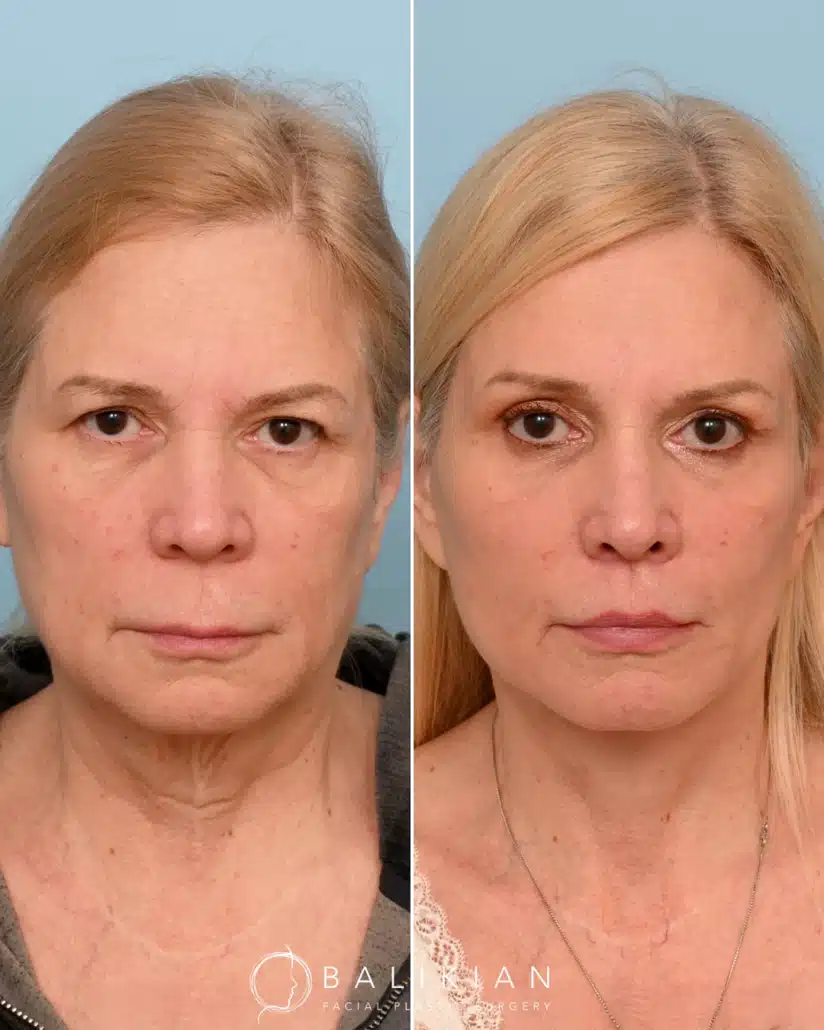
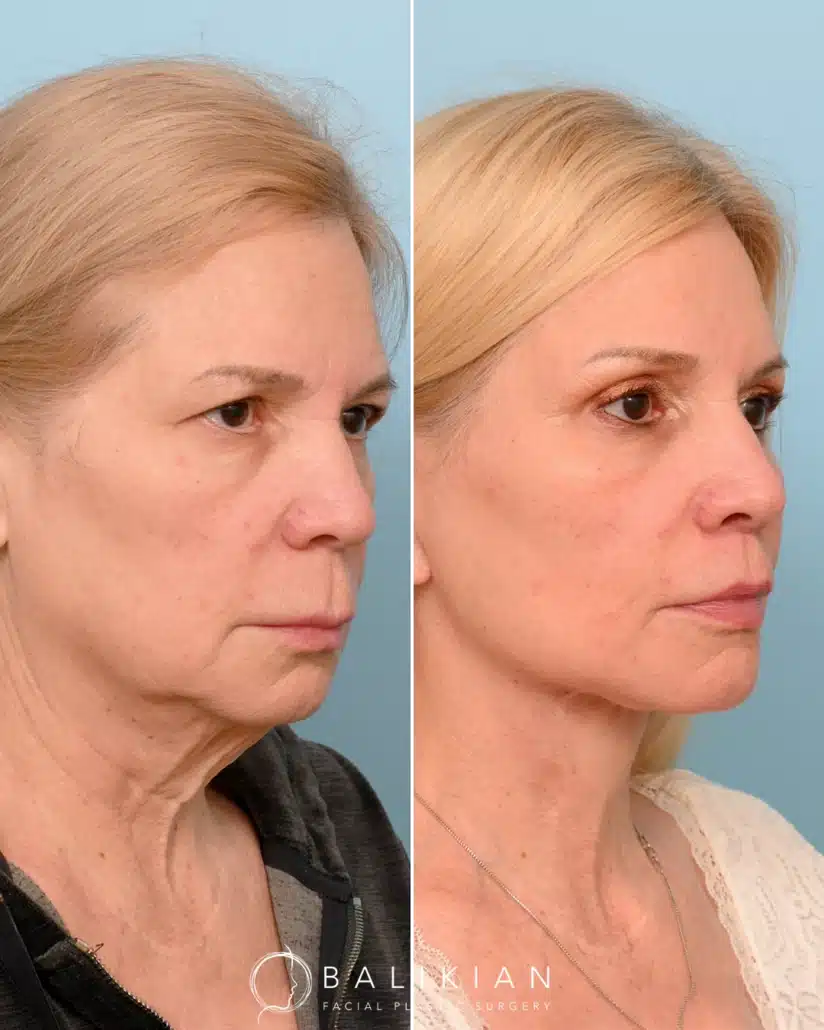
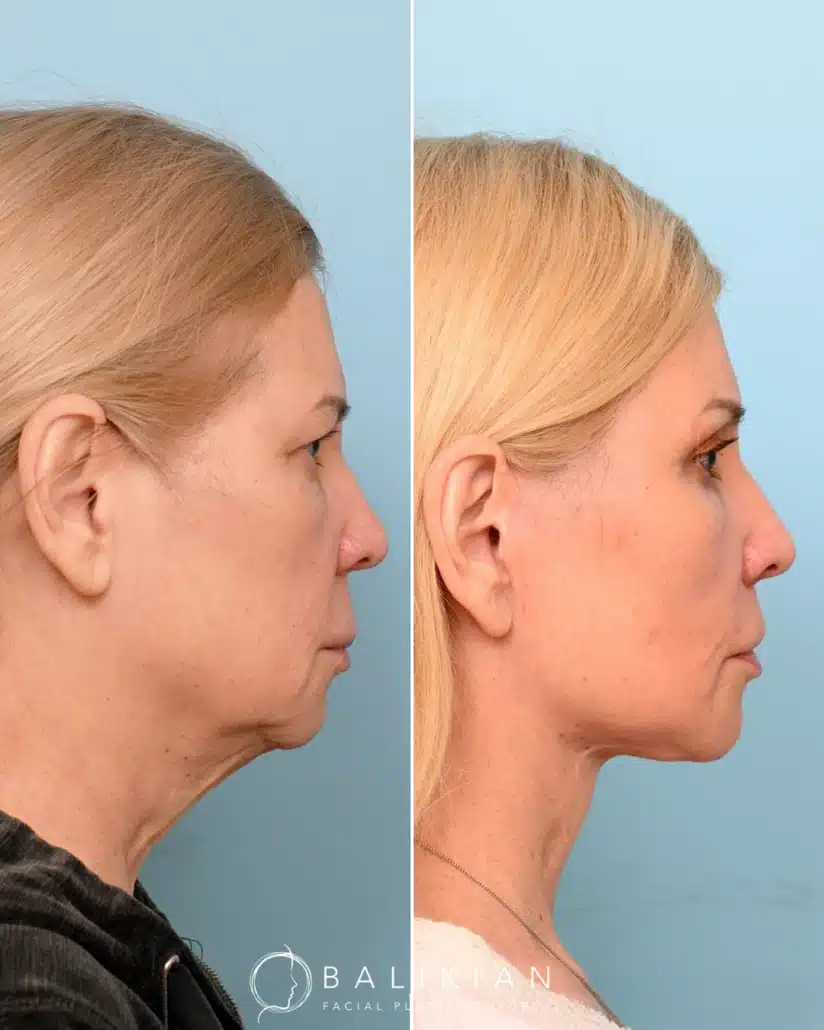
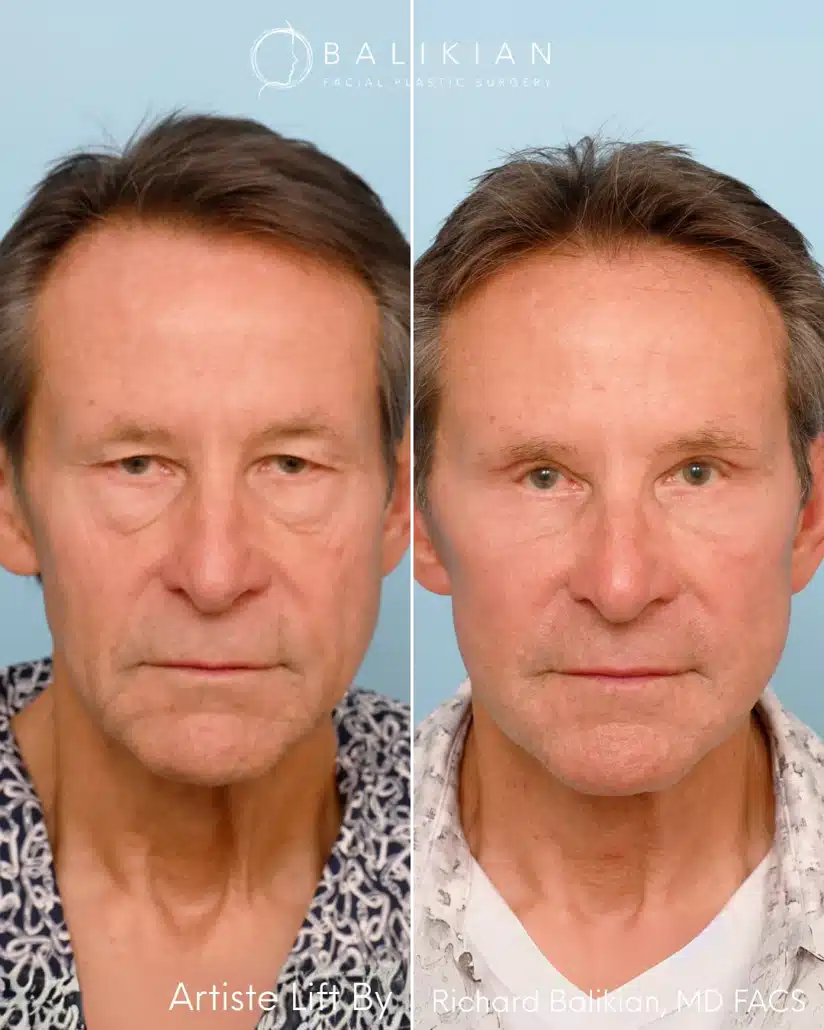
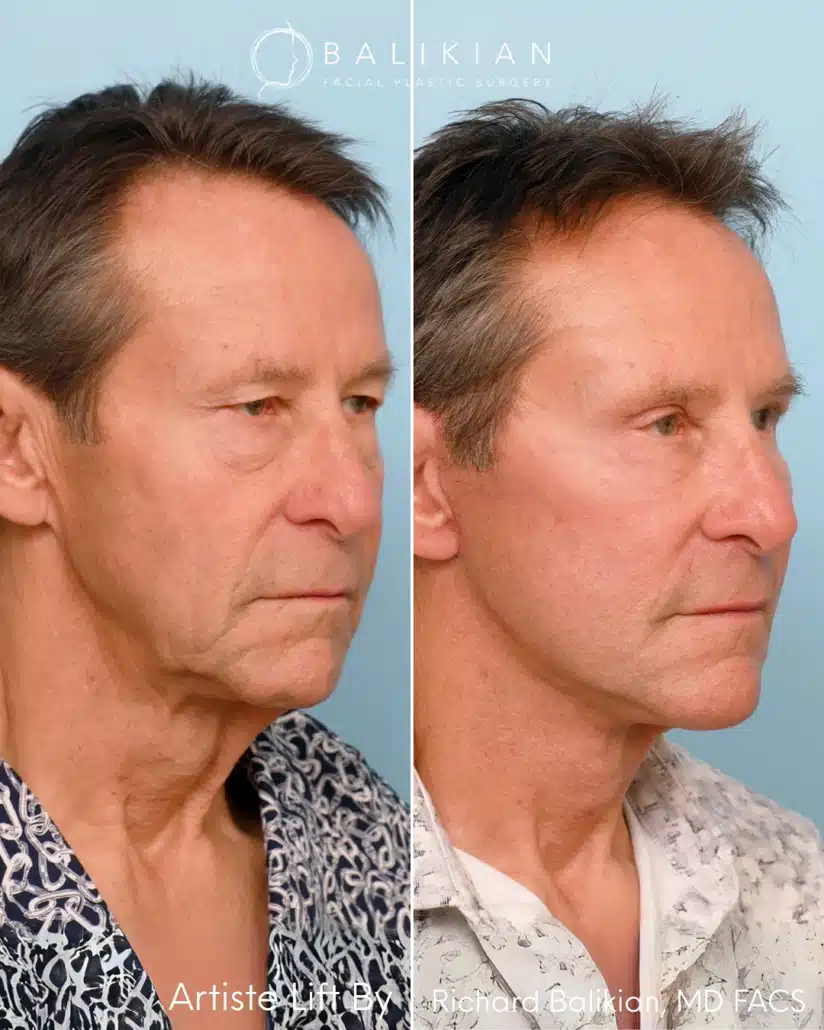

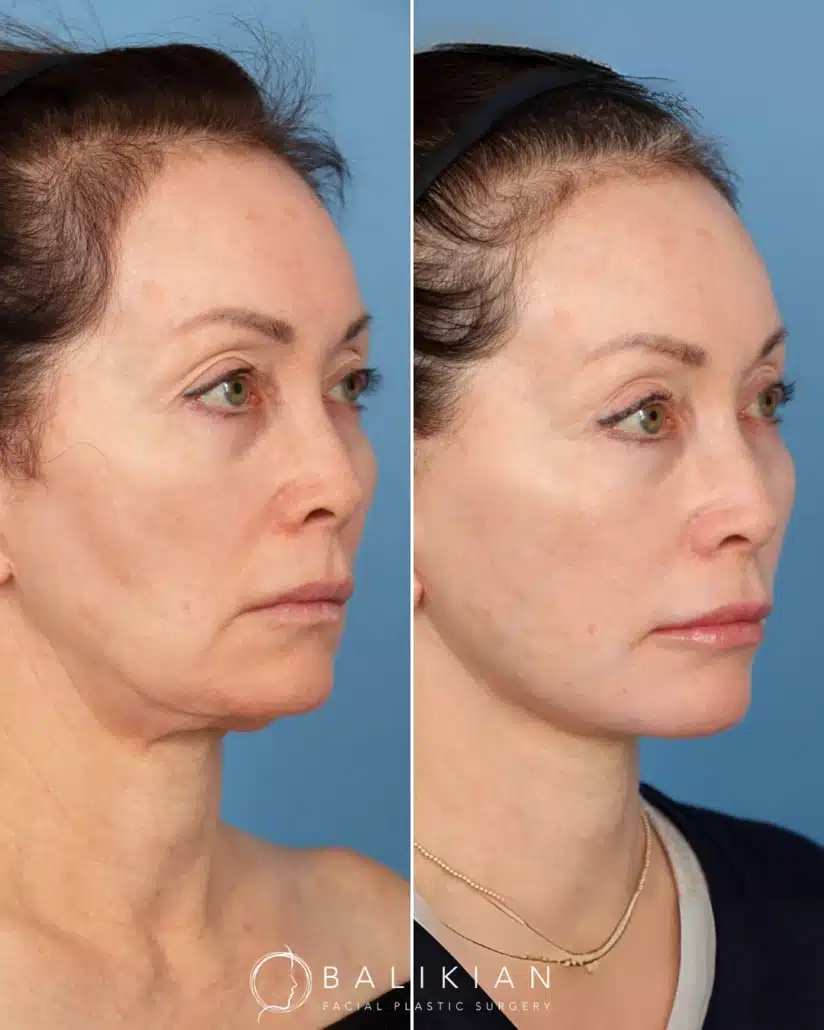

A deep vertical neck lift is designed to address the neck at a structural level.
Through a small incision beneath the chin, the deeper layers of the neck can be accessed directly.
This allows for:
Instead of pulling the neck backward, the structures are repositioned vertically into a more natural position.
This restores support and allows the skin to redrape without tension.
Submandibular gland reduction is not a standalone procedure. It is one component of deeper neck contouring, performed selectively when the gland contributes to fullness beneath the jawline.
During a deep neck lift, each layer is evaluated. If the gland is prominent and disrupts the contour, it may be reduced carefully. If it is not contributing to the contour, it is preserved.
The decision is based entirely on the underlying anatomy.
Not every patient requires submandibular gland reduction.
When it is performed, it must be done conservatively. Over-reduction can create unnatural contours. Under-reduction can leave residual fullness.
A balanced approach allows for refinement while preserving normal structure and function.
A defined jawline is not created by tightening skin alone.
It is the result of addressing all contributing structures, including:
Once these structures are identified, the goal is not simply to tighten them. The deeper layers are released, excess weight is reduced, and the neck is repositioned vertically into a more natural position.
When these elements are treated together within a deep vertical neck lift, the result is more complete.
Submandibular gland reduction plays an important role in select neck lift procedures. It is not performed routinely, but it can be essential when deeper structural fullness limits the contour of the jawline.
A refined result depends on understanding the anatomy beneath the surface and addressing each contributing layer appropriately.
When done correctly, the outcome is not simply tighter. It is cleaner, more natural and structurally balanced.
What is the submandibular gland?
The submandibular glands are normal salivary glands located beneath the jawline. In some patients, they become more visible over time and can contribute to fullness under the jaw, which may blunt the jawline and soften the neck contour.
Why would the submandibular gland matter in a neck lift?
A neck lift can improve skin laxity, muscle separation, and excess fat, but some patients also have deeper structural fullness beneath the jawline. When the submandibular gland is prominent, it can continue to interrupt the contour even after other parts of the neck are improved, which is why selective gland reduction may be considered in deeper neck work.
Does everyone need submandibular gland reduction during a neck lift?
No. Current literature supports a selective approach rather than routine treatment. Recent reviews of deep neck lifting and submandibular gland reduction describe this as an adjunct for properly chosen patients, not a standard step for every neck lift.
Is submandibular gland reduction safe?
Published studies generally report that submandibular gland reduction can be performed safely in experienced hands, but it is still an advanced part of neck contouring surgery and carries real risks. A 2026 systematic review covering 51 studies and 2,971 patients found favorable overall outcomes, while also noting meaningful complication risk and emphasizing the importance of surgical judgment, technique, and patient selection.
What are the risks of submandibular gland reduction?
The main concerns discussed in the literature include bleeding, fluid-related issues, contour irregularity, and nerve injury. In the 2026 systematic review, nerve injury was the most commonly reported complication across techniques, which is one reason this is treated as a selective structural maneuver rather than a routine one.
Will submandibular gland reduction cause dry mouth?
Research and surgical reviews suggest that partial gland reduction in aesthetic neck surgery is intended to preserve function while improving contour. The available literature does not describe chronic dry mouth as an expected routine outcome when the procedure is performed selectively and appropriately, though salivary anatomy and function are part of why careful technique matters.
Can submandibular gland reduction improve jawline definition?
Yes, in the right patient. Studies describing deep neck contouring consistently identify the submandibular gland as one of the deeper structures that may need to be addressed to improve the cervicomental angle and create a cleaner transition from jawline to neck.
Is submandibular gland reduction done on its own or as part of a larger procedure?
Most of the aesthetic literature discusses it as part of broader neck rejuvenation, often alongside platysmaplasty, subplatysmal fat management, and other deep structural refinements. In other words, it is usually one part of a deeper neck contouring strategy rather than a standalone aesthetic procedure.
What kind of results does research show?
Recent publications describe submandibular gland treatment as effective for improving neck contour in selected patients, especially when deeper fullness would otherwise limit the final result. A 2025 review of deep plane neck lifting found that the submandibular gland and digastric muscles were among the most commonly altered deep structures in modern techniques, while a 2025 series on LigaSure-assisted excision reported effective contour improvement with no postoperative hematomas or sialomas in that cohort.
Is this the same as removing the entire gland?
Not necessarily. The literature includes different approaches, including partial reduction and other selective methods depending on anatomy and technique. Reviews emphasize that the goal in aesthetic neck surgery is contour refinement, not unnecessary removal of normal anatomy.
Dr. Richard Balikian is a highly respected facial plastic surgeon serving the San Diego area.
With over 20 years of experience and double board certification in Facial Plastic and Reconstructive Surgery as well as Head and Neck Surgery, Dr. Balikian offers a unique combination of technical expertise and artistic vision.
He is part of an elite group of surgeons with extensive training focused exclusively on the face and neck.