Neck Lift Recovery Time | What to Expect After Surgery
A Complete Guide to Neck Lift Recovery Time and Healing Stages
Neck lift surgery is one of the most powerful ways to refine the jawline, smooth banding and treat fullness or laxity under the chin. At Balikian Facial Plastic Surgery, the neck lift is usually performed as part of a deep structural rejuvenation, often combined with preservation deep plane facelift or deep vertical neck lift techniques that tighten the platysma, sculpt the deeper fat and refine the skin envelope.
Understanding what recovery feels like day to day helps you prepare, lower anxiety and protect your result. The overview below combines Dr. Balikian’s protocol with current evidence from facial plastic surgery literature on neck rejuvenation, healing and complication prevention.
Neck lift surgery reshapes several layers at once.
Because these layers are addressed in a precise, preservation minded way, patients usually describe feeling tightness and fullness more than sharp pain. The first few weeks are about letting swelling settle and giving the deeper tissues time to adhere in their new position.
Your neck lift recovery time is shaped by several factors.
The most meaningful insight comes from seeing real results, which is why our neck lift before and after gallery offers a closer look at how beautifully the neck and jawline can be restored.

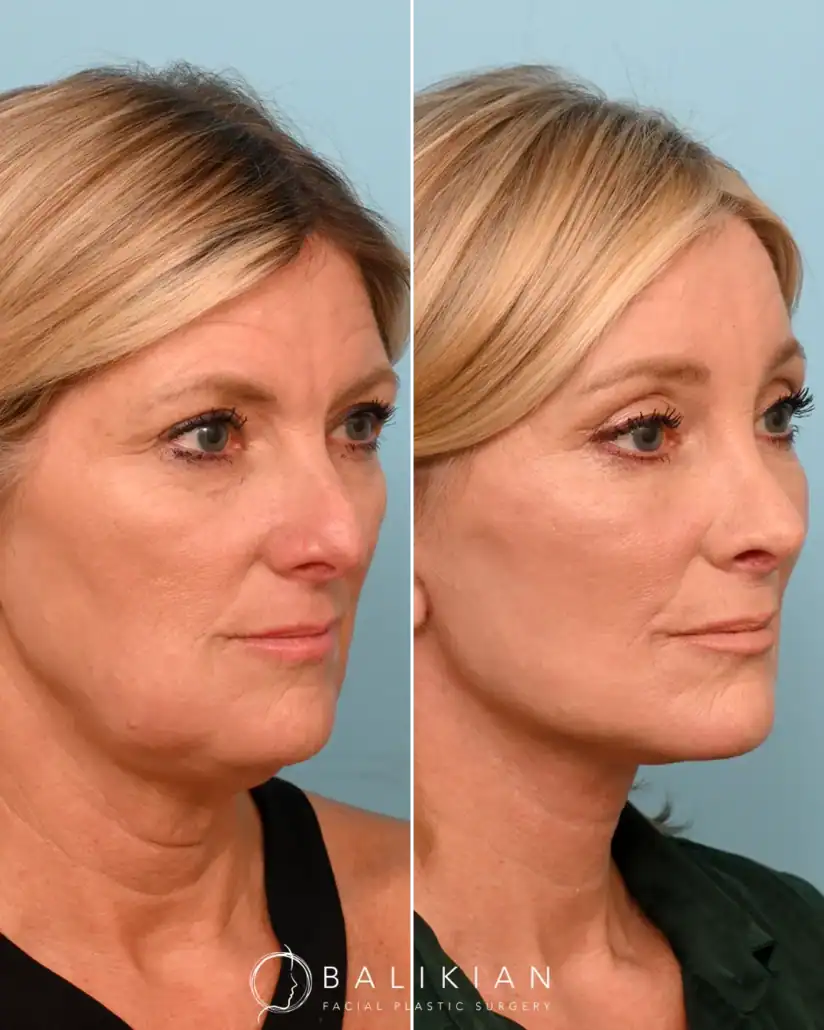

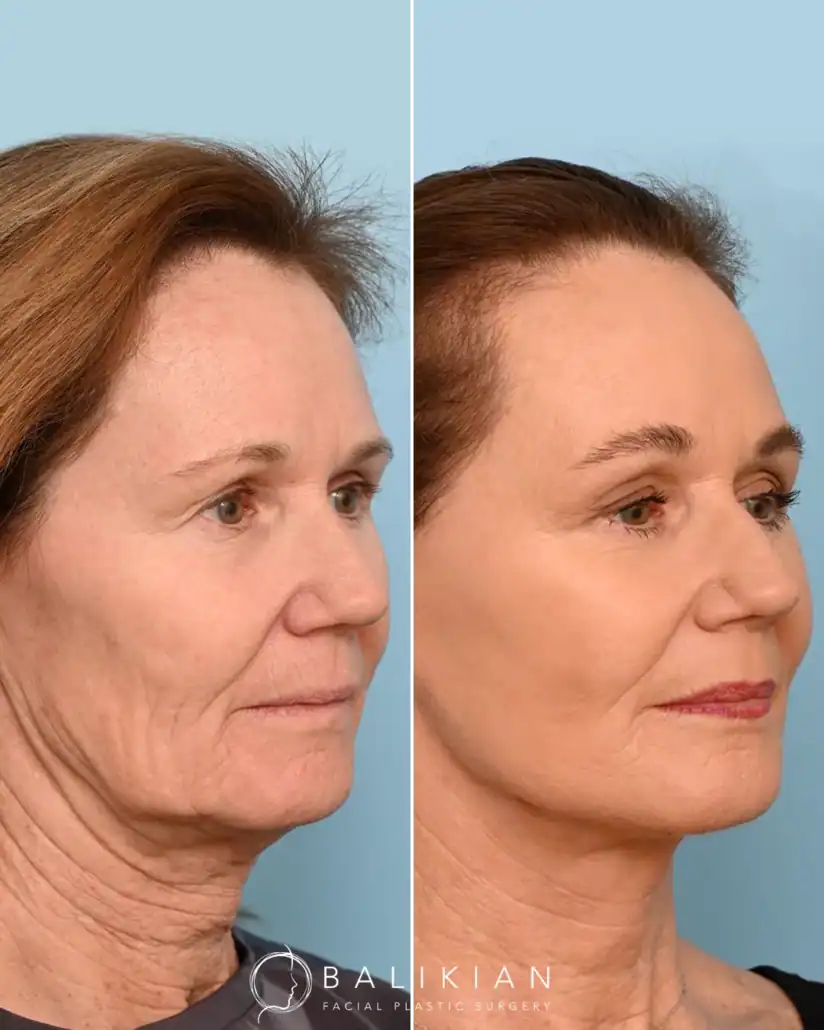
Every patient heals at a slightly different pace. The outline below gives a realistic idea of what most patients can expect.
You will go home the same day with a supportive neck garment or dressing that helps maintain the new contour. It is normal for the neck to feel tight, heavy and full during the first few days. Most patients describe the discomfort as manageable pressure rather than sharp pain.
Prescribed medications, cool compresses (placed on the cheeks, not the neck), and proper head elevation help keep you comfortable and support early healing.
During the first few days after a neck lift, the focus is on rest and managing swelling while the deeper tissues begin their initial healing.
Most patients spend this period resting, taking short walks around the house to support circulation, and focusing on hydration and nutrition.
By the end of the first week, most patients notice the early swelling beginning to settle and the bruising shifting into lighter tones as healing progresses.
This stage is about gentle movement, patience, and letting the tissues continue to calm so you can transition smoothly into the next phase of recovery.
By the second and third week after surgery, most patients notice a meaningful shift in their appearance as bruising fades and swelling continues to improve.
Clinical studies on neck rejuvenation show that most early swelling and stiffness after platysmaplasty and cervicoplasty improves significantly over the first two to three weeks, while deeper remodeling continues for several months.
By weeks four through six, most patients transition from early healing into a noticeable refinement stage where the neck contour begins to look smoother, more defined, and increasingly natural.
At this stage most people feel “public ready” without needing to explain recent surgery, although they will often still notice subtle firmness or tightness that others do not see.
By the three to six month mark, your neck lift results begin to look fully refined as the deeper tissues complete their healing process.
Long term studies of neck and lower face rejuvenation show that properly executed platysmaplasty and cervicoplasty maintain improved contour and cervicomental angle for many years in most patients, with low rates of significant recurrence of banding.
By the one year mark, the neck lift has fully matured and the results blend naturally with the rest of the face.
Most patients describe this stage as the point where their results feel completely their own, with a neck contour that looks refreshed, balanced and entirely natural.
Neck lift incisions are typically placed around the ears and sometimes under the chin where they can blend with natural creases. Early on, scars look pink and firm.
Over time they:
Using sun protection, avoiding smoking, and following scar care instructions all support better cosmetic outcomes.
Dr. Balikian incorporates photobiomodulation in his recovery protocol for many facelift and neck lift patients. Treatments with specific wavelengths of light have been shown in dermatology and surgical studies to help modulate inflammation, improve microcirculation and support faster healing in selected procedures.
In practice, patients often report:
Although nothing replaces precise surgical technique and proper aftercare, light based therapy serves as a valuable complement during recovery.

It supports calmer tissue response, steadier healing and improved comfort in the early weeks. Used alongside Dr. Balikian’s preservation techniques, it helps create a more seamless recovery experience.
Tightness, fullness, and mild stiffness are normal sensations after a neck lift. These feelings come from swelling and from the deeper muscular work that supports your new contour.
You may notice:
These changes usually improve steadily over two to three months as nerves regenerate and tissues soften. If you experience increasing pain, sudden swelling on one side, or drainage from incisions, you should contact the office promptly to rule out complications such as hematoma or infection, which are uncommon but well documented in rhytidectomy and neck lift literature.
Dr. Balikian provides specific instructions tailored to your procedure. In general:
Protecting your result during this window helps reduce the risk of swelling flares, bleeding and widening of scars.
Neck lift recovery is a process, not a single moment. The first week is about rest and protection. The first month is about returning to normal life while swelling and tightness slowly fade. Over the following months the neck settles into its long term contour, with a sharper profile and a more defined, youthful angle under the chin.
With thoughtful planning, clear expectations and a surgeon who focuses solely on the face and neck, most patients describe the experience as very manageable and well worth the recovery time.
How long does swelling and bruising usually last after a neck lift?
Most swelling and bruising peak during the first few days after surgery and begin to subside by the end of the first 1–2 weeks.
When can I return to light work or normal daily activities?
Many patients are able to resume non-strenuous work or daily tasks around 1–2 weeks post-operation, assuming there are no complications and their surgeon approves.
When will I begin to see visible contour improvements?
By weeks 2 to 4, bruising is often gone, swelling has significantly diminished and the neck and jawline contour starts to become more defined.
When can I resume light exercise or normal social activities?
Between weeks 4 and 6 most patients feel comfortable resuming low-impact activities and a regular social schedule, though some residual tightness or firmness may persist.
When are final results typically visible?
Most neck-lift outcomes mature between 3 and 6 months, when swelling resolves, tissues settle, and scar lines soften.
Does the type or extent of neck lift affect recovery time?
Yes. A limited neck lift without extensive muscle or skin tightening often heals faster. More comprehensive procedures (e.g. platysma tightening, deep-plane lifts) typically require longer recovery.
What common side effects should I expect during recovery?
Temporary tightness, sensation of fullness, mild bruising or firmness are common early on. These usually improve gradually over weeks as healing progresses.
How important is post-operative care and following instructions?
Very important. Sleeping with head elevated, avoiding strenuous activity, protecting incisions from sun and limiting neck strain all support smoother healing and better final results.
Is there a risk my neck will look “pulled” or unnatural after healing?
When performed by an experienced surgeon using proper technique, neck lifts generally yield natural-looking, refined results; most modest swelling resolves within weeks and full soft tissue settling over months.
Will scars be visible long term?
Scars are typically hidden along natural neck contours (behind ears, under chin, or in folds). With proper wound care, they fade and become difficult to detect over months.
Dr. Richard Balikian is a highly respected facial plastic surgeon serving the San Diego area.
With over 20 years of experience and double board certification in Facial Plastic and Reconstructive Surgery as well as Head and Neck Surgery, Dr. Balikian offers a unique combination of technical expertise and artistic vision.
He is part of an elite group of surgeons with extensive training focused exclusively on the face and neck.