How the Vertical Vector Facelift Restores Facial Balance
Why Lift Direction Matters More Than Tightening Skin
One of the most misunderstood aspects of facelift surgery is direction. For decades, facelifts were commonly performed by pulling tissue sideways and slightly upward. While this approach can tighten skin, it often fails to follow how the face actually ages.

A vertical vector facelift is based on a different principle. Rather than pulling tissue laterally, it focuses on restoring facial structures along the same direction they naturally descend over time.
Facial aging does not occur straight downward, and it does not occur purely sideways. Instead, soft tissues descend along a diagonal path that closely follows the orientation of the zygomaticus major muscle.
This muscle runs from the cheekbone toward the corner of the mouth and plays a central role in facial expression and support. Over time, the cheeks, midface, and lower face settle downward along this anatomical line.
When facelift surgery ignores this vector:
Recognizing this natural aging pattern is essential for planning a facelift that restores balance rather than creating tension or distortion.
Vertical vector does not mean lifting straight up. That would be anatomically inaccurate. It means lifting along the correct vertical-diagonal plane that reflects how each individual face ages.
There is no single lifting angle that works for everyone.
Vertical vector planning accounts for:
In practice:
A true vertical vector facelift adapts the direction of lift to the patient’s anatomy rather than forcing every face into the same pattern.
Related Education: Learn how lift direction influences outcomes in our overview of Types of Facelifts.
No two faces age the same way. Bone structure, facial width, muscle orientation and soft tissue volume all influence the ideal lift direction.
A vertical vector approach is inherently individualized. It is guided by anatomy, not templates or standardized angles.

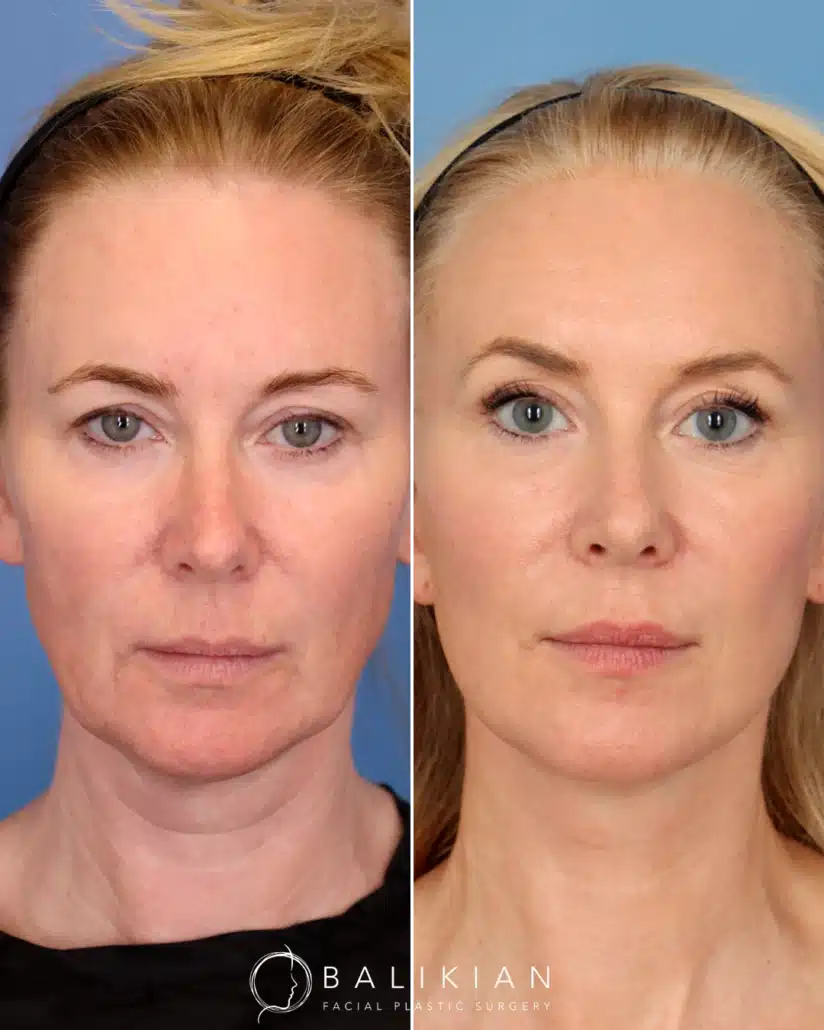
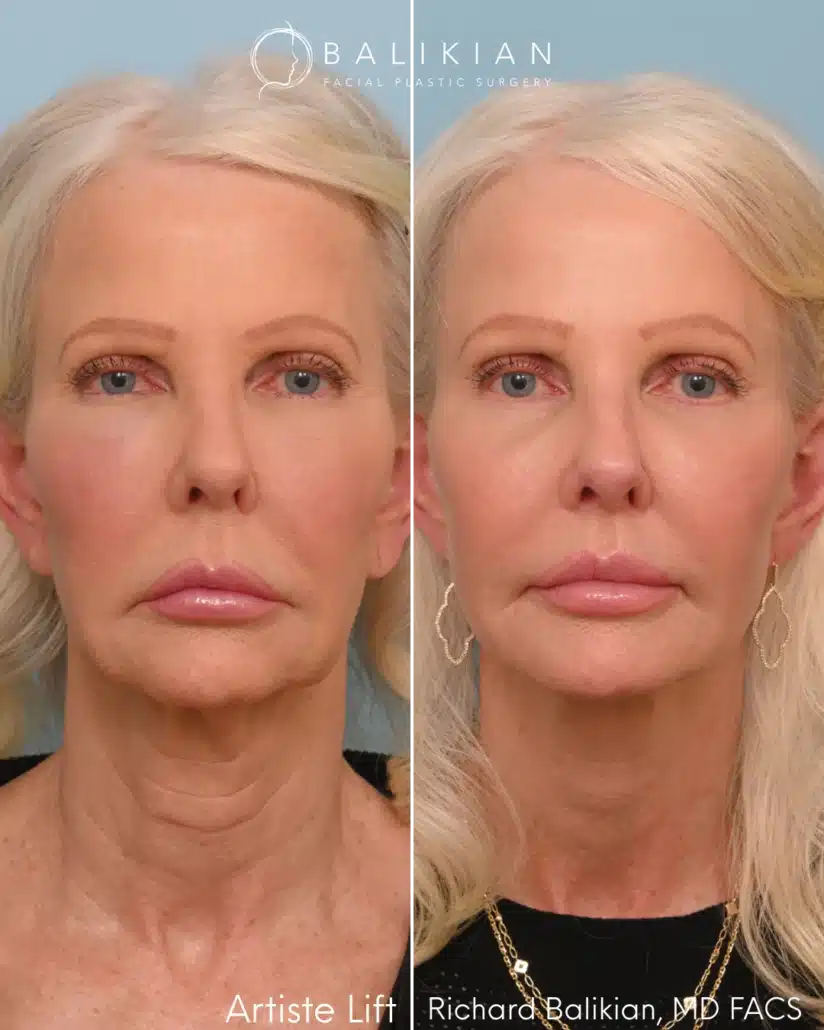
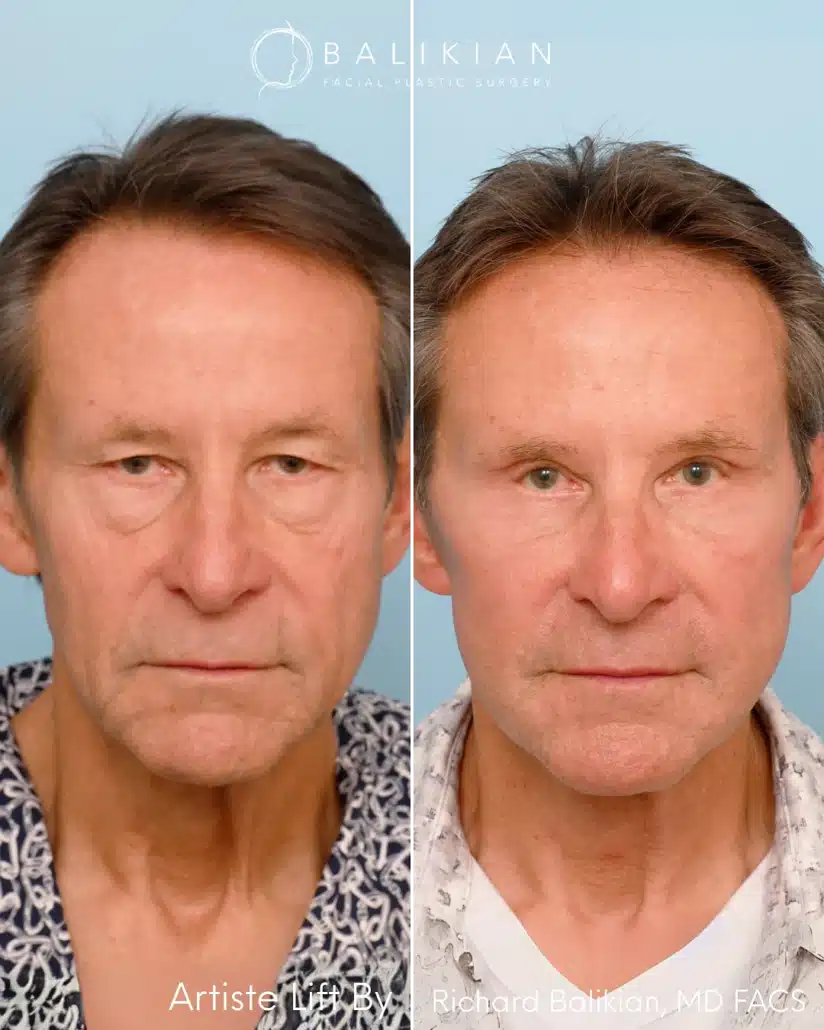


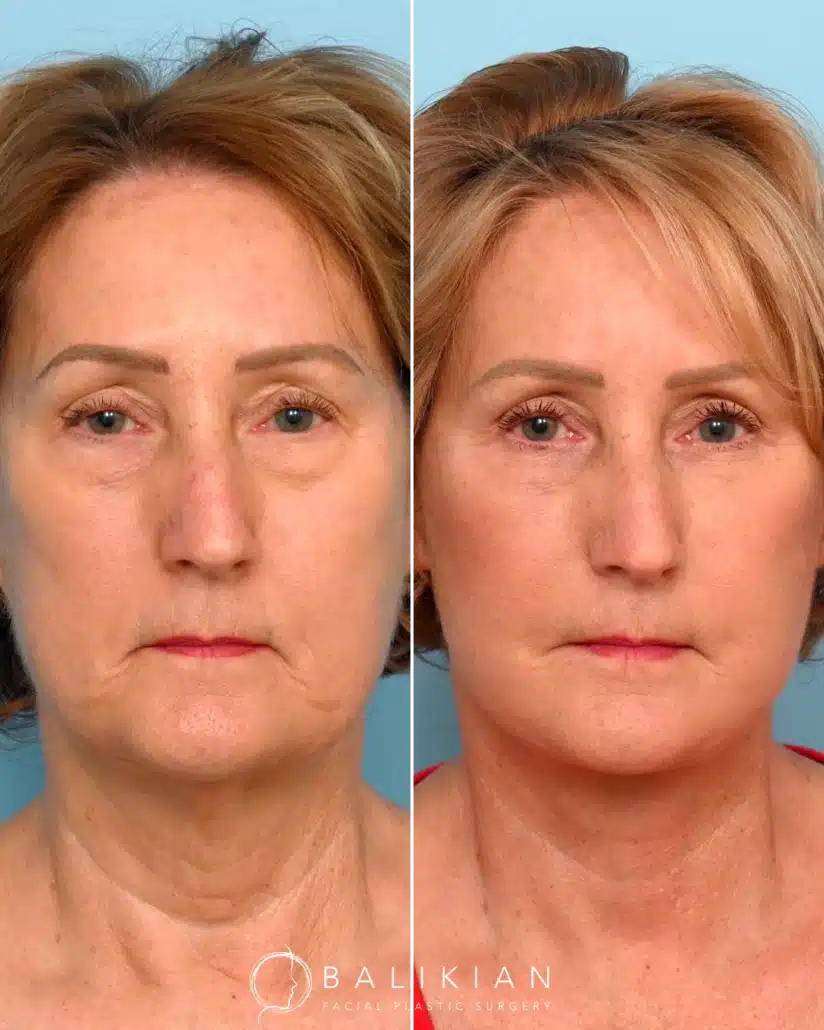
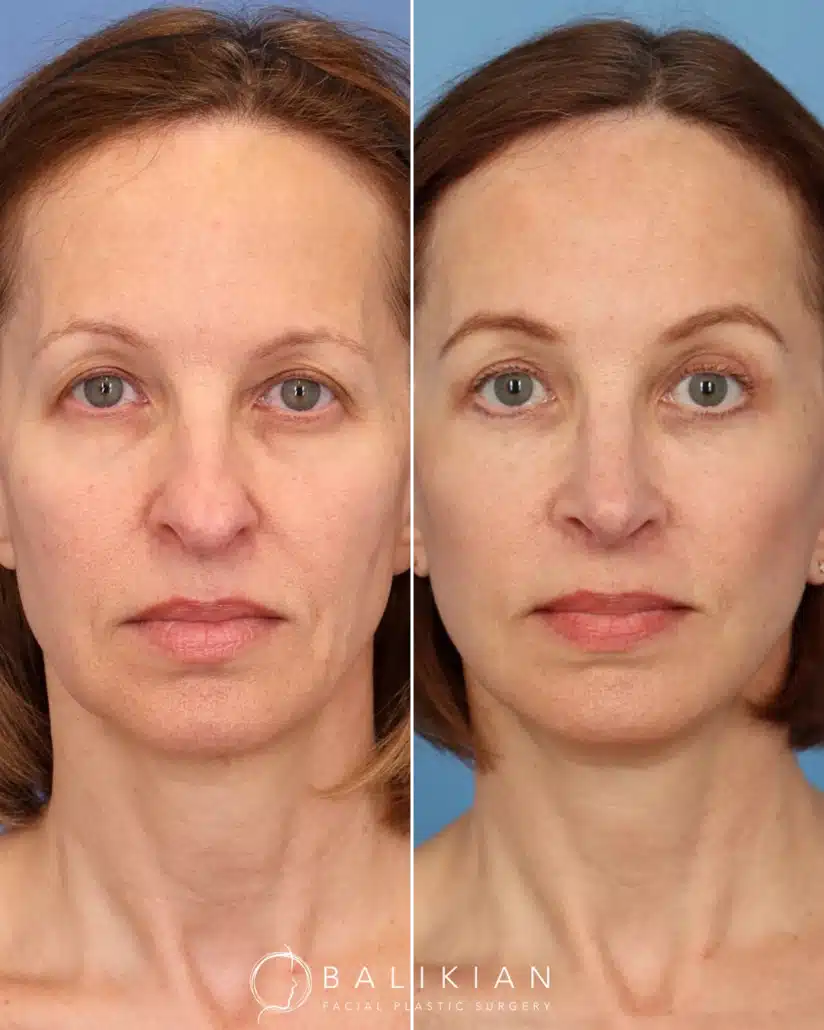
When tissue is pulled primarily sideways, the result may smooth the skin, but it does not restore natural structural support. This is why some facelifts appear windblown or overpulled, even when the skin looks tighter.
Correcting the vector restores balance rather than distortion. The goal is not to stretch the face, but to reposition it in harmony with its underlying anatomy.
Related Education: Understanding how SMAS techniques differ helps explain why direction alone is not enough.
To lift tissue along the correct vector, the deeper layers must be adequately released. In a deep plane facelift, the surgeon can directly visualize the zygomaticus major muscle and lift the facial tissues off of it.
This release allows the tissue to be repositioned upward along the proper vector without altering the natural pull or function of the muscle.
When deep release is achieved:
Related Education: Explore how deeper release supports vertical repositioning in deep plane facelift surgery.
A successful facelift is not defined by how much tissue is lifted, but by where and how that lift is applied.
Understanding vertical vector principles helps patients see why modern facelift approaches prioritize anatomy, release and restoration of structure rather than surface tightening alone.
What is a vertical vector facelift?
A vertical vector facelift is a way of planning lift direction so tissues are repositioned along the same general path they naturally descend with aging, rather than being pulled primarily sideways. The goal is structural balance, not lateral tightness. Research describing vertical vector deep plane concepts and outcomes supports this approach.
Why does lift direction matter in facelift surgery?
Direction matters because the face does not age purely sideways or purely straight down. If lift direction does not respect anatomy, results can look pulled or flattened. Studies analyzing facelift vectors and their relationship to facial anatomy support the importance of correct vector planning.
What does the zygomaticus major muscle have to do with the vertical vector?
The zygomaticus major is a practical landmark for lift direction because it reflects a common diagonal orientation that relates to midface movement and support. A PubMed study specifically measured the orientation of the zygomaticus major relative to standard reference planes to help define an optimal facelift vector.
Is vertical vector the same as lifting straight up?
No. Vertical vector does not mean straight up and down. It means lifting along a vertical diagonal plane that matches the patient’s facial structure and the orientation of key anatomy such as the zygomaticus major. The measured variability in anatomy is one reason there is not one universal angle for everyone.
How do surgeons confirm the vector in a deep plane facelift?
Deep plane techniques involve releasing deeper attachments so tissues can move as a unit. A 2024 PubMed paper proposed a method to quantify the vector of pull in deep plane facelift and reported the vector was more vertical than horizontal using their proxy measurements.
Does vertical vector deep plane facelift restore midface volume?
Evidence suggests vertical vector deep plane approaches can restore midface volume and contour. A study using 3D analysis reported long-term midface volume changes after vertical vector deep plane rhytidectomy.
Is vertical vector only relevant to deep plane facelift techniques?
Not necessarily. Some SMAS-based methods emphasize more superior or vertical suspension as well. The ability to lift cleanly along the intended vector depends heavily on how much true release and mobility is achieved, which deep plane approaches are designed to address. Research includes descriptions of vertical vector suspension methods and deep plane hybrid techniques.
What is the main risk if lift direction is too lateral?
Patients may see a tighter look that does not restore structural balance. In some cases, lateral pull can flatten midface contours or create an overpulled appearance. Vector focused analyses and anatomy based discussions emphasize avoiding distortion by respecting facial vector and muscle orientation.
Are outcomes better with deep plane versus SMAS for vertical vector goals?
The literature does not support a single best technique for every patient. A systematic review and meta-analysis comparing SMAS and deep plane approaches evaluated satisfaction and complications across studies, with ongoing debate and heterogeneity in measures. The practical takeaway is to choose technique based on anatomy, release needs, and goals rather than labels alone.
Dr. Richard Balikian is a highly respected facial plastic surgeon serving the San Diego area.
With over 20 years of experience and double board certification in Facial Plastic and Reconstructive Surgery as well as Head and Neck Surgery, Dr. Balikian offers a unique combination of technical expertise and artistic vision.
He is part of an elite group of surgeons with extensive training focused exclusively on the face and neck.