Why Male Facelifts Are Different
Understanding Male Facial Aging Through Dr. Richard Balikian’s Approach to Facial Rejuvenation
When a man comes into my office, the first thing I ask myself isn’t, “Does he need a facelift?” It’s, “What changed?”
Did the jawline lose definition?
Has the neck become heavier?
Have the cheeks begun to descend?
Or are the eyelids creating the appearance of fatigue?
Those questions matter because most men don’t come in asking for a facelift. They don’t point to a wrinkle or bring in photographs of celebrities. Instead, they describe something much simpler.
“I don’t look like I feel.”
“I look tired.”
“My neck bothers me.”
“I don’t recognize myself in pictures anymore.”
Sometimes they’ll tell me they look older than they feel. Other times they’ll say people ask if they’re tired or upset when they feel perfectly fine. Those comments are important because they’re describing the effects of facial aging, not necessarily the cause.
My job isn’t to match those concerns to an operation. It’s to understand why those changes occurred in the first place. Only after I understand what’s changed can I determine whether surgery is appropriate and, if it is, what combination of procedures will restore the face naturally.
Every surgical plan begins with a diagnosis. Not a procedure.
Every consultation begins with the same question: What changed?
Jeff came to my office with many of the same concerns I hear from men every week. He wanted to look healthier and more rested without looking like he’d had surgery. His story reflects exactly why every surgical plan begins with a diagnosis, not a procedure.

Jeff wanted to stay active and look as good as he felt. In this video, he shares why he chose Dr. Balikian and reflects on his facial rejuvenation journey.
One of the first things I explain during consultation is that I don’t evaluate the skin first. The skin is what patients see every morning in the mirror, but it’s rarely where facial aging begins. I’m looking much deeper.
Has the cheek lost support?
Where has the facial tissue descended?
Has the jawline softened because the neck has become heavier?
Has volume disappeared, or has it simply shifted downward?
Those answers determine the treatment plan. That’s why two men who appear very similar may require completely different operations. One may primarily benefit from restoring the neck and jawline. Another may need support restored through the cheeks. Someone else may discover that what they thought was a facelift problem is actually related to the brow or eyelids.
If I focus only on what the skin is doing, I’m treating the symptom instead of the cause. I want to understand why the face changed in the first place. Once I understand that, the surgical plan usually becomes much clearer.
One of the things patients are often surprised to hear is that I don’t always recommend a facelift. Many men come into my office convinced that’s what they need. Then we examine their face together and discover something different.
Sometimes the problem is heavy upper eyelids. Sometimes it’s the brow that’s making the eyes look tired. Sometimes changes in the neck are making the jawline appear weaker. Other times, a Preservation Deep Plane Facelift truly is the right solution.
That’s why I spend so much time examining the face before discussing procedures. No two men age exactly the same way, so no two surgical plans should be exactly the same.
During consultation, we study the face together. I point out where support has changed, where tissues have descended, and which anatomical changes are actually responsible for the concerns you’ve noticed. Once patients understand why they look different, the conversation changes. We’re no longer talking about “getting a facelift.” We’re talking about restoring the anatomy that’s changed over time.
The operation is built around the anatomy, not around a checklist of procedures. One patient may benefit from a Deep Vertical Neck Lift. Another may need eyelid surgery or facial fat transfer to restore balance. Someone else may need very little beyond addressing the neck.
There’s no such thing as a standard face. There shouldn’t be a standard facelift.
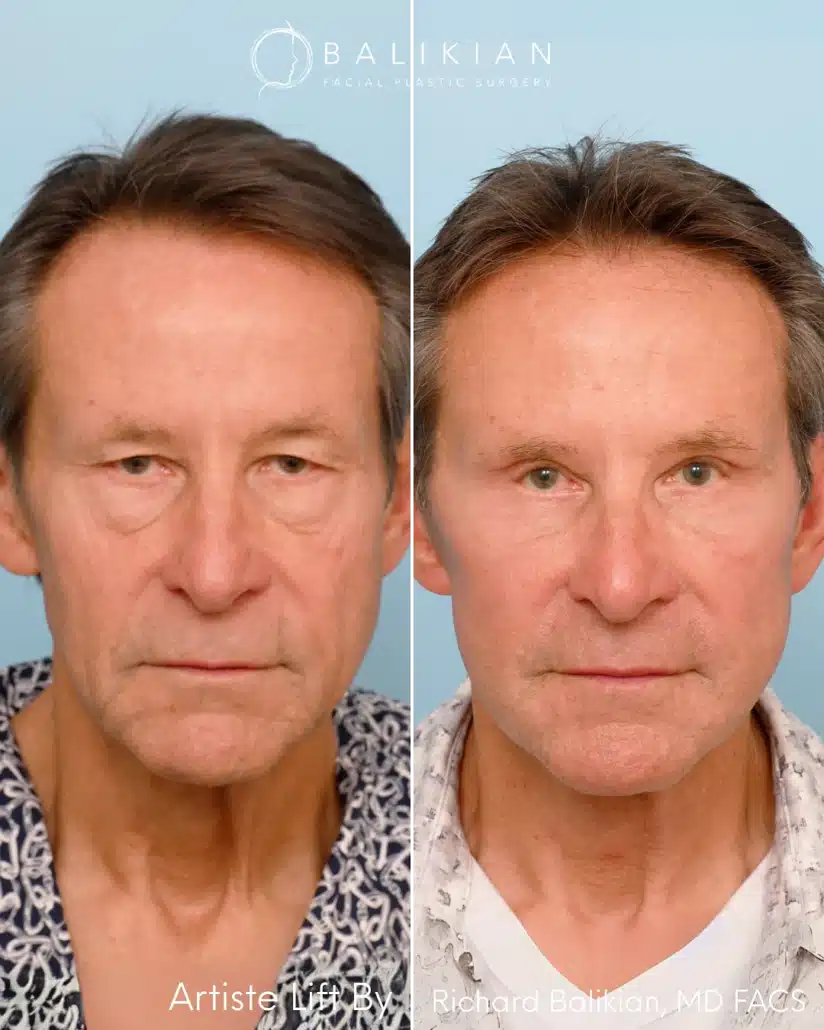
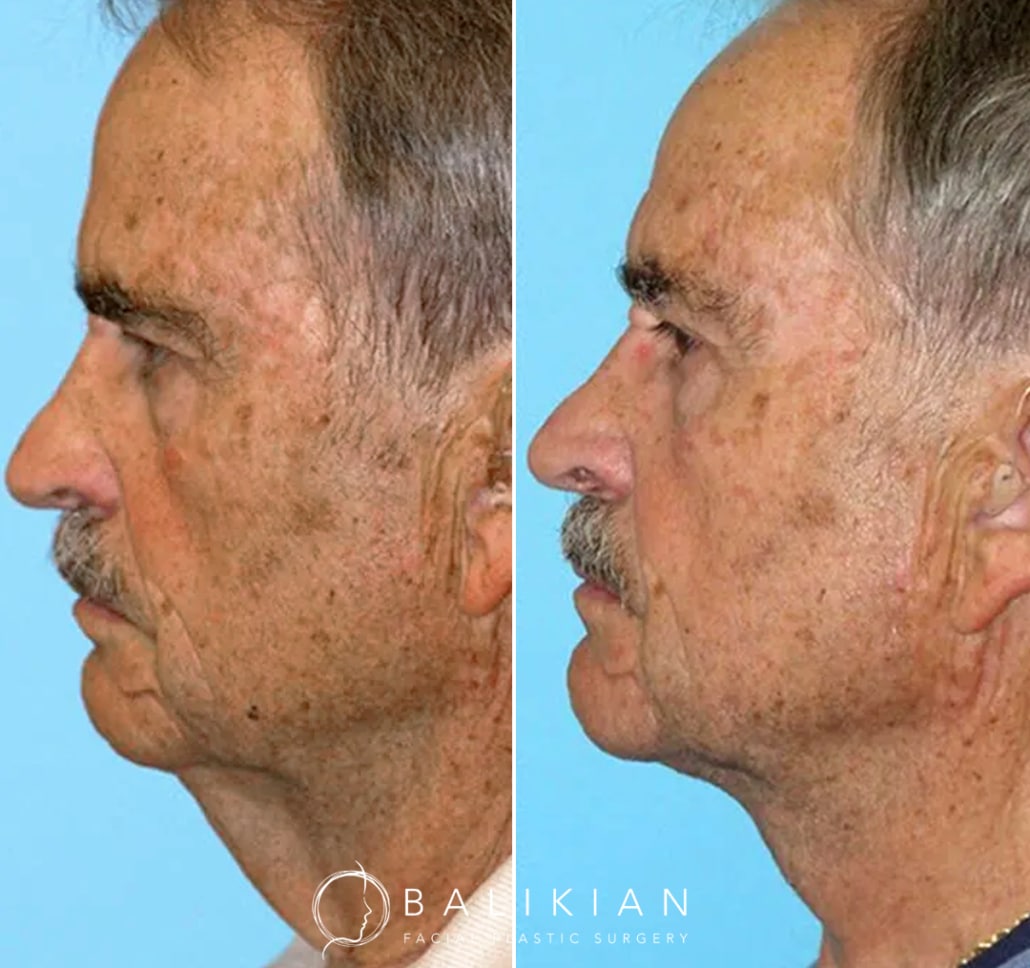
When facial support is restored beneath the surface, the skin simply follows. This Artiste Lift™ restored a stronger jawline, refreshed the eyes, and rejuvenated the face while preserving the patient’s natural masculine character.
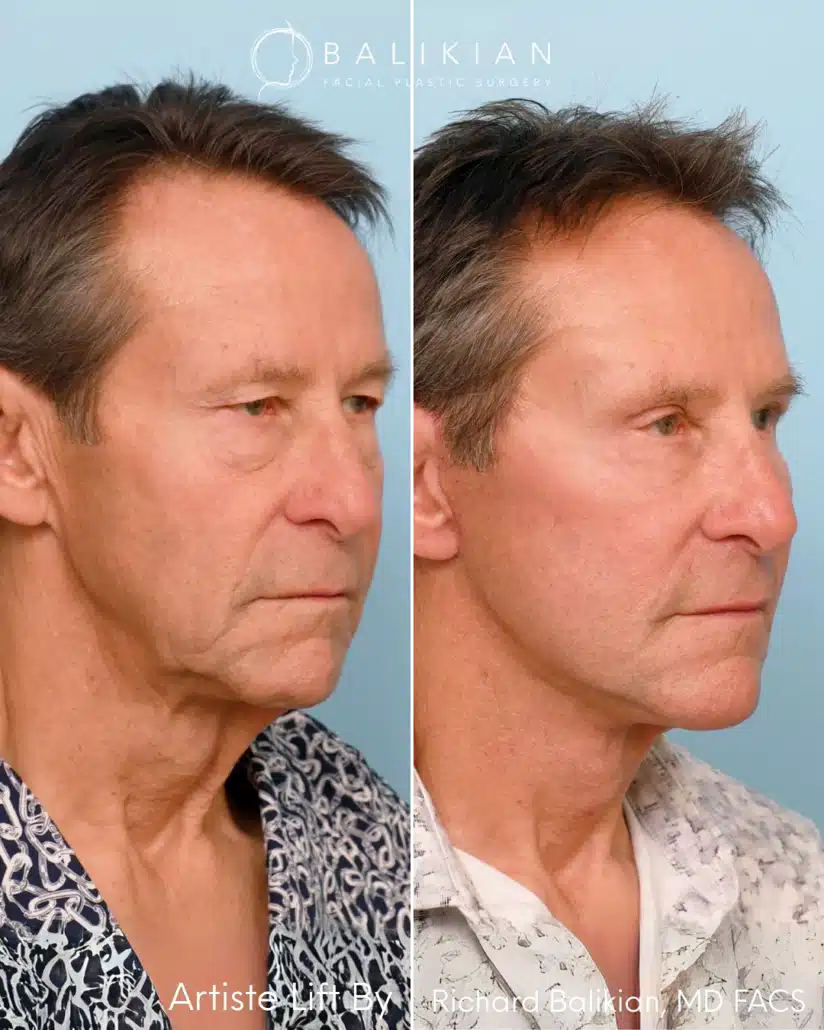
The side profile often tells the story of male facial aging. By restoring deeper facial support and redefining the transition between the jawline and neck, this Artiste Lift™ achieved natural rejuvenation without creating a pulled or over-operated appearance.
Over the years, I’ve noticed that men usually describe facial aging in a very similar way.
The jawline.
The neck.
The profile.
They’ll stand in front of the mirror, turn their head slightly and point to the area beneath the chin.
“My neck used to be sharper.”
“I’ve got these jowls.”
“My jawline just disappeared.”
They’re noticing something real. One of the defining characteristics of the male face is the clean transition between the jawline and the neck. It creates strength in the profile and contributes to a masculine appearance. As the deeper facial tissues gradually descend with age, that transition becomes less distinct. The jawline softens. The neck appears heavier. Jowls begin to form. The profile loses definition.
Most men don’t describe those changes in anatomical terms. They simply know they don’t look like they used to. Very few men walk into my office asking to look younger.
They want to look healthier.
More rested.
More confident.
More like themselves.
That’s an important distinction because it changes the entire conversation. If the goal is simply to tighten loose skin, almost any facelift can make the face look tighter. If the goal is to restore the strong jawline, balanced proportions and natural character that define the male face, the operation has to begin much deeper. It has to begin by understanding what changed, restoring the underlying support and preserving the anatomy that makes you look like you.
That’s the difference between performing a facelift…
…and restoring a face.
When people think about facial aging, they often focus on wrinkles. I don’t. I’m paying attention to proportions.
Is the jawline still strong?
Is there a clean transition between the jaw and the neck?
Have the cheeks descended enough to make the lower face appear heavier?
Is the brow in a natural position?
Does the face still have balance?
Masculinity isn’t defined by one feature. It’s created by the relationship between all of those features working together.
A strong jawline.
A clean neckline.
Balanced facial proportions.
A brow that naturally frames the eyes.
Cheeks that provide support without appearing overly full.
If surgery changes those relationships too aggressively, the result can look unnatural, even if the technical operation was performed well. That’s why I spend much more time thinking about what should be preserved than what should be removed.
Preservation isn’t about doing less surgery. It’s about respecting the anatomy and restoring facial support without changing the characteristics that make a man’s face look like his own.
Every decision I make during surgery comes back to the same question: How can I restore youthful support without changing the character of the face?
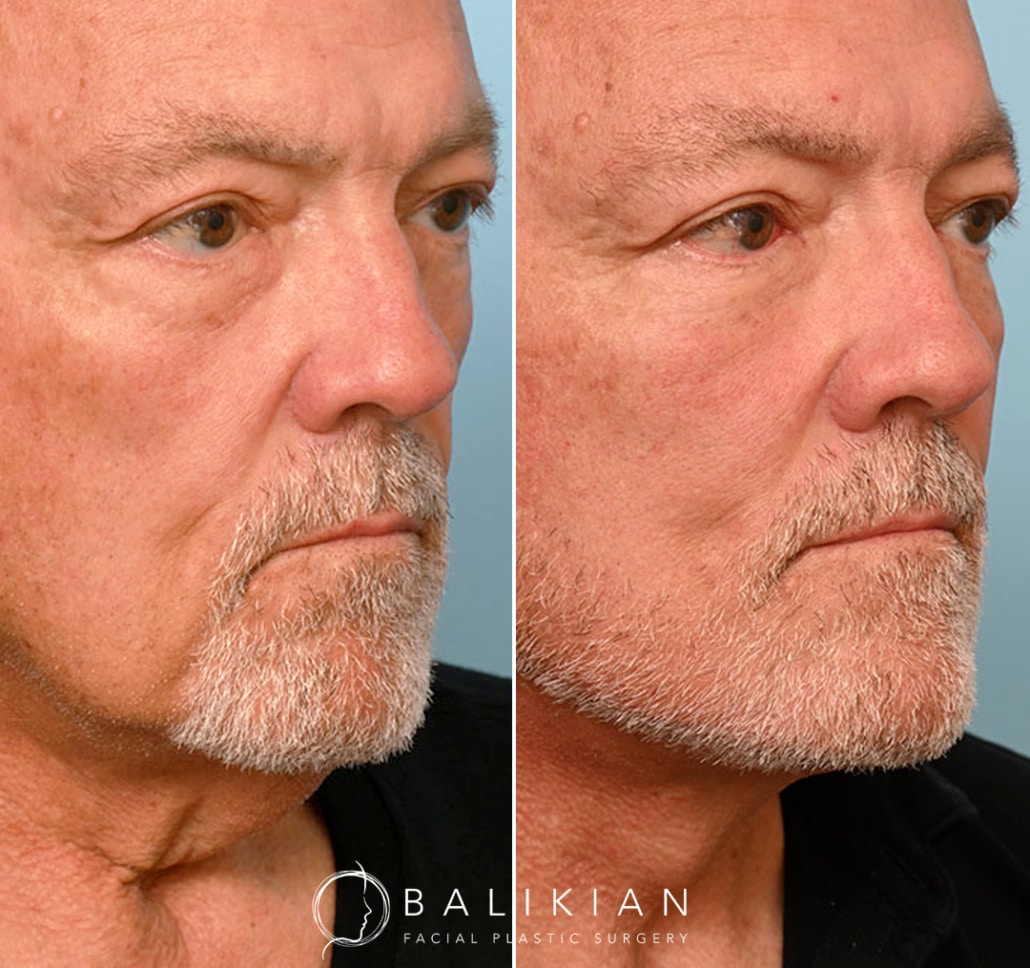

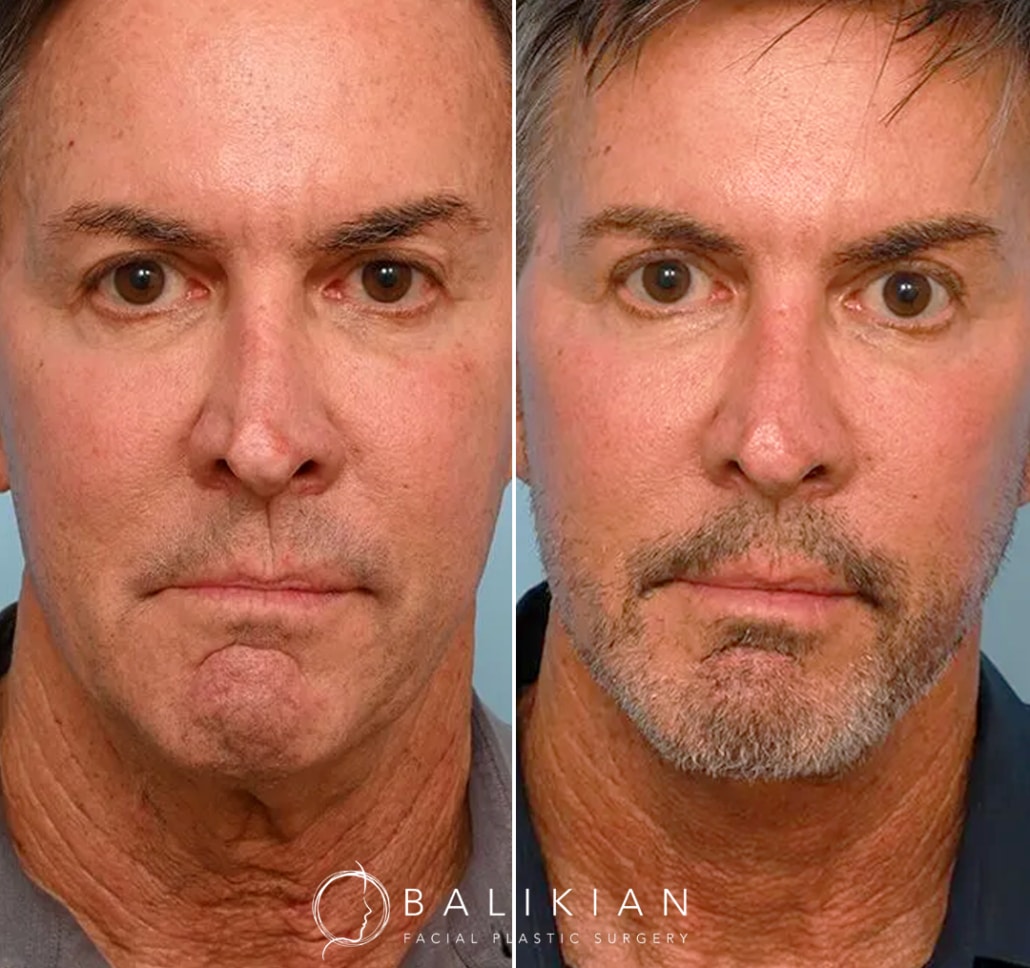
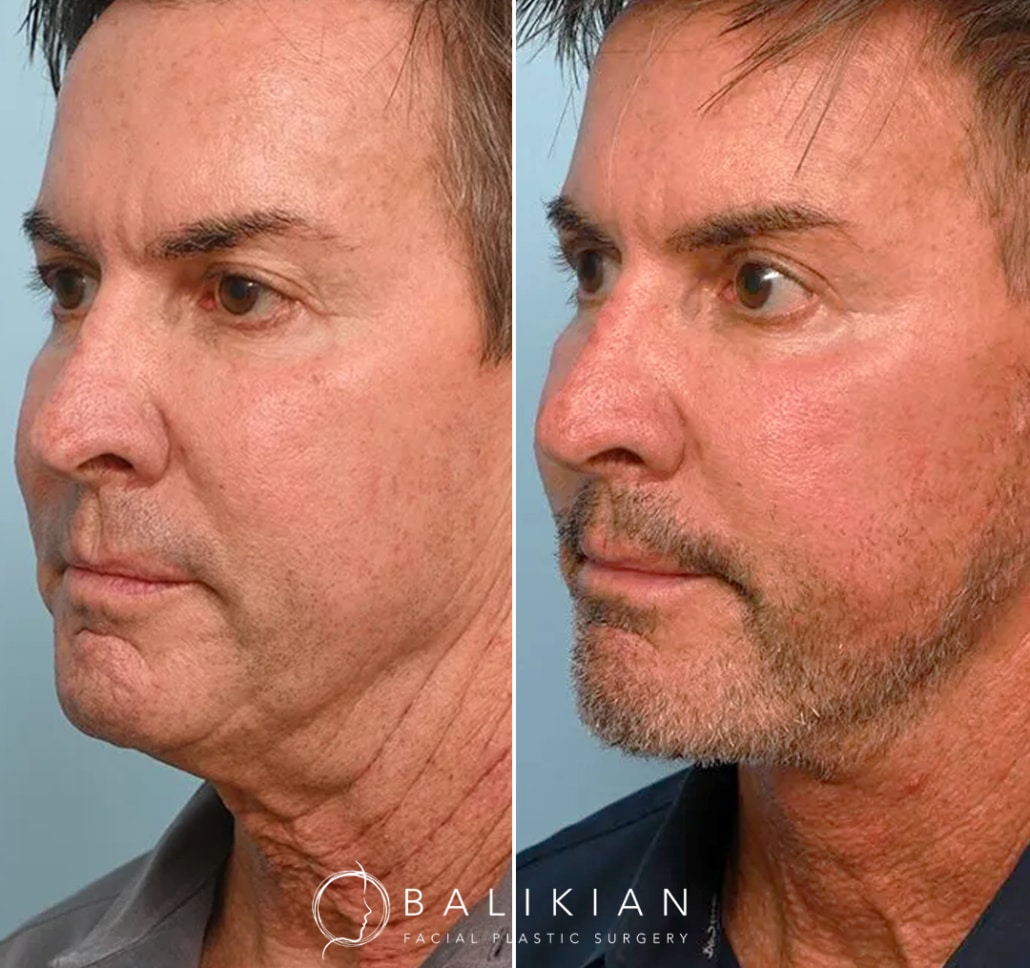
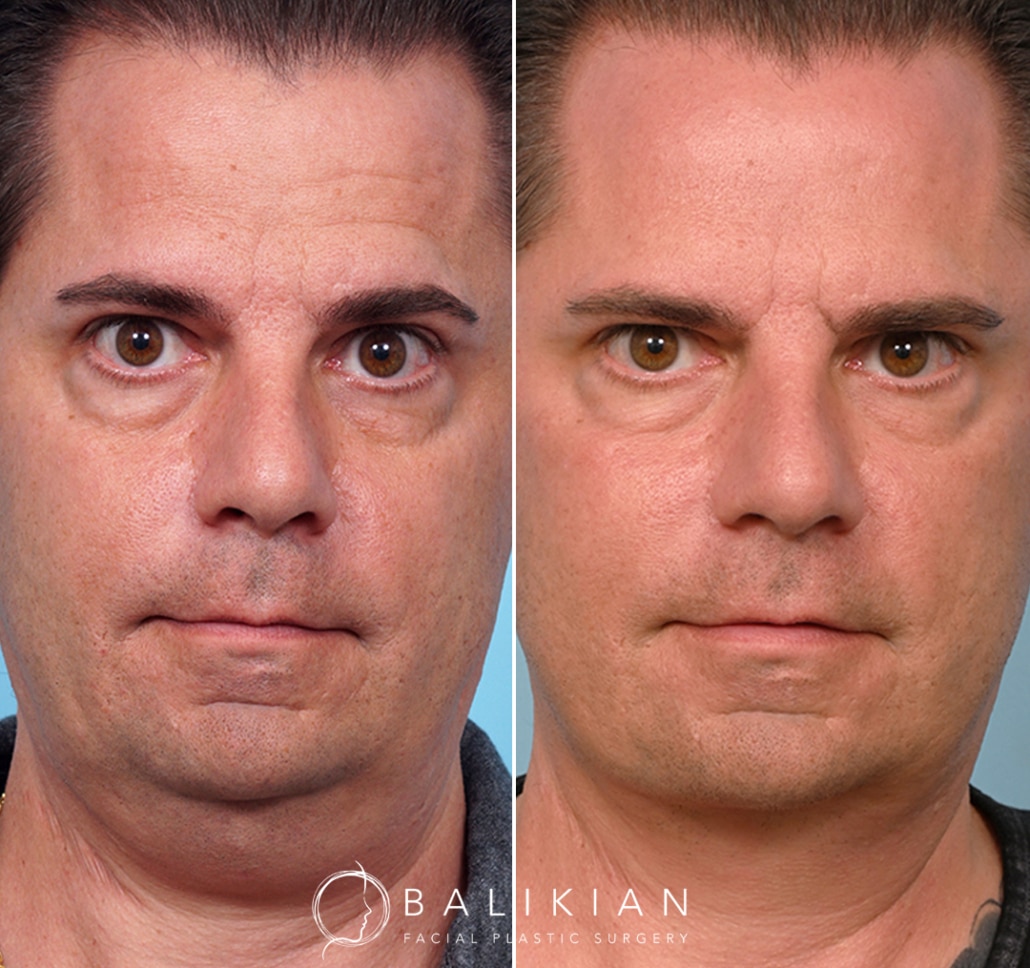
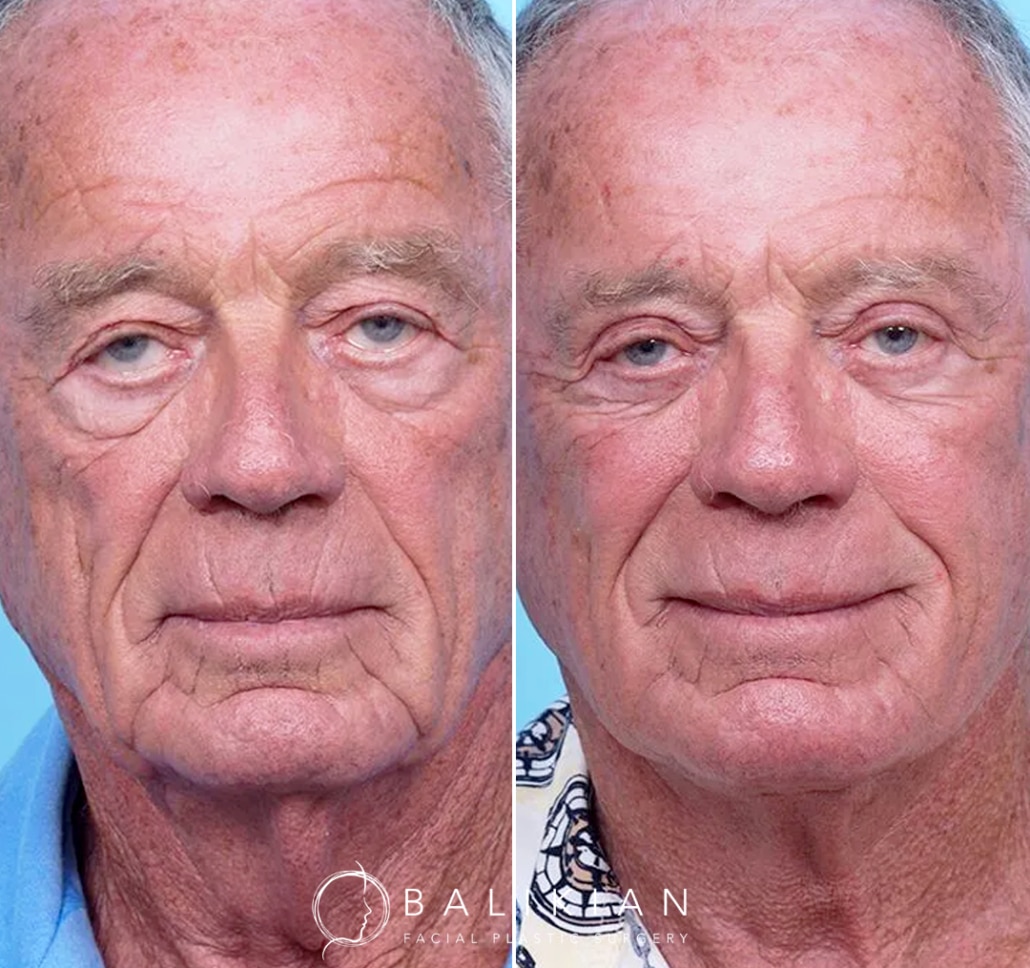
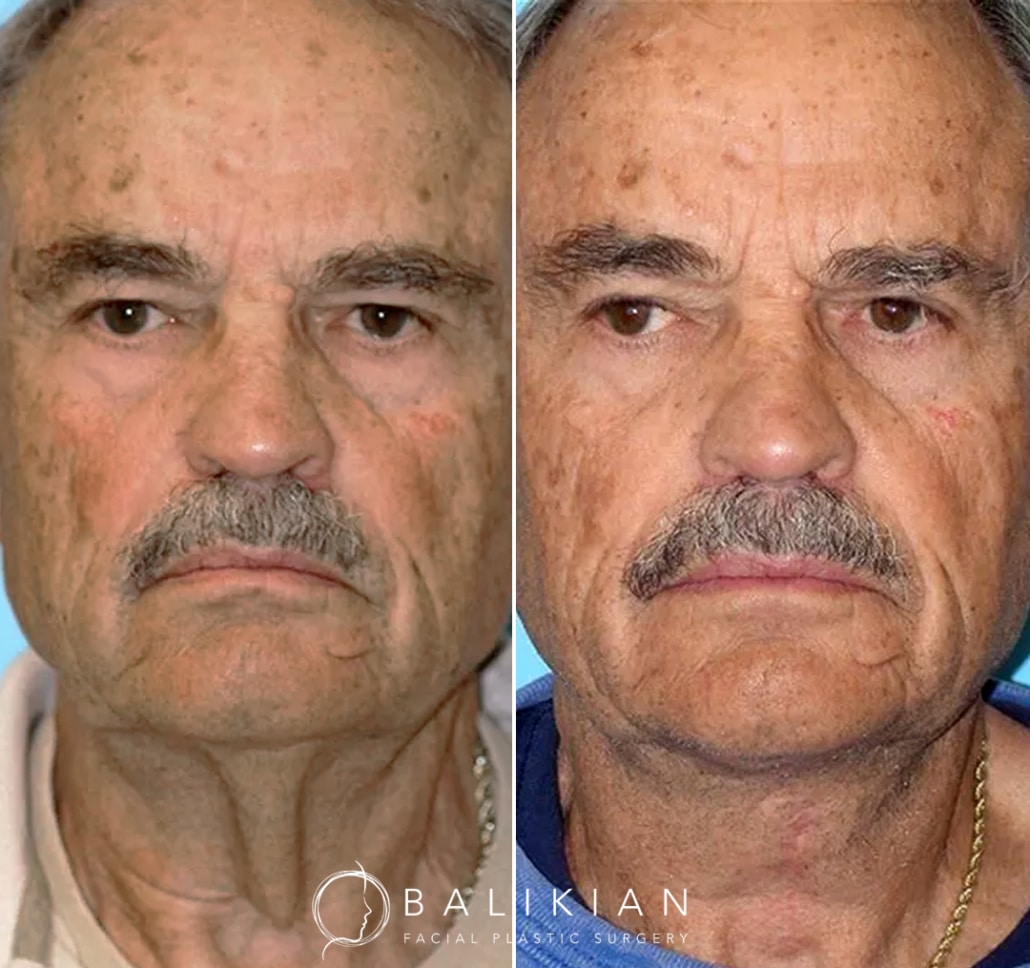
One of the questions I hear most often is, “So… what exactly is the Artiste Lift™?” The answer surprises a lot of people. It isn’t a single operation. It’s the result of everything we’ve just discussed.
If we’ve determined the jawline has lost support, a Preservation Deep Plane Facelift may be the foundation of the operation. If we’ve determined the neck has become heavier, a Deep Vertical Neck Lift may be necessary to restore a clean transition between the jawline and neck. If we’ve determined tired eyes are contributing to an aged appearance, upper or lower blepharoplasty may be recommended. If we’ve determined facial volume has been lost over time, fat transfer may restore balance. Some patients benefit from a brow lift, lip lift, or CO₂ laser resurfacing as part of a comprehensive plan.
The important point is this: The procedures don’t define the Artiste Lift™. The diagnosis does. Every recommendation is based on the anatomy sitting in front of me, not on a predetermined list of operations.
I’m not interested in performing more surgery. I’m interested in performing the right surgery.
When I ask patients what they hope to see after surgery, very few tell me they want to look dramatically younger.
Most simply want to recognize themselves again.
“I don’t look like I had a facelift. It looks natural.”
“I really wanted to look just like myself, just match myself to how I feel and how the rest of my body is.”
“I have so much more confidence because I feel that I have regained my youth. I feel like I can conquer the world.”
Those comments mean far more to me than hearing someone say a facelift looks “tight” or “dramatic.”
They tell me we’ve preserved the person’s identity while restoring the facial support that time gradually changed.
By the time a man schedules a consultation, he’s often spent years noticing small changes in the mirror.
The jawline isn’t as sharp.
The neck feels heavier.
The face looks more tired than it feels.
Those changes don’t happen overnight, and they rarely have a single cause. That’s why every consultation begins with the same question: What changed?
Only after understanding how your face has aged can I determine whether surgery is appropriate and, if it is, which procedures will restore balance while preserving the character that makes your face uniquely yours.
The best results don’t come from making someone look different. They come from helping them look like themselves again.
What procedures are commonly included in male facial rejuvenation?
Complete facial rejuvenation may include a Preservation Deep Plane Facelift, Deep Vertical Neck Lift, upper or lower blepharoplasty, facial fat transfer, brow lift, lip lift, or CO₂ laser resurfacing. The right combination depends on how your face has aged rather than a standard treatment plan.
Why do some men need more than a facelift?
Facial aging rarely affects only one area. While a facelift restores deeper facial support, additional procedures may be recommended to rejuvenate the neck, eyelids, skin quality, or facial volume and create balanced, natural-looking results.
Are deep plane facelifts a good option for men?
Yes. A deep plane facelift can restore jawline definition, improve the neck, and rejuvenate the midface while preserving masculine facial features. Surgical planning is modified to account for differences in male anatomy.
Will I still look like myself after surgery?
A well-executed deep plane facelift repositions deeper facial tissues rather than relying on skin tension. The goal is natural rejuvenation that preserves facial identity.
How is a male facelift different from a female facelift?
Men typically have thicker skin, heavier soft tissues, beard-bearing skin, and stronger jawlines. These anatomical differences influence incision placement, neck contouring, and overall surgical planning.
Why does my neck seem older than the rest of my face?
The neck often shows aging before other areas because of skin laxity, muscle changes, and deeper structural descent. Some patients benefit most from a Deep Vertical Neck Lift rather than a facelift alone.
Why do many men notice their jawline and neck first?
The jawline and neck are defining features of the male face. As facial tissues descend and neck structures change with age, the profile loses definition, making these areas among the first concerns men notice.
Is facial fat transfer commonly combined with facial rejuvenation?
Yes. Fat transfer can restore volume that has been lost with aging and is frequently combined with facelift surgery to improve facial harmony and avoid a hollow appearance.
Can eyelid surgery alone make me look younger?
Sometimes. Heavy upper eyelids or aging lower eyelids may contribute more to a tired appearance than the lower face. A consultation determines whether eyelid surgery alone or a combination of procedures will provide the best result.
Does everyone with an aging neck need a facelift?
No. Some patients benefit primarily from neck surgery, while others require a combined approach. The appropriate treatment depends on whether aging is coming from the neck, the face, or both.
What is the benefit of treating the face as a whole instead of one feature?
Treating only one area may leave other signs of aging unaddressed. Evaluating the face as a complete unit allows the surgeon to restore harmony between the eyes, cheeks, jawline, neck, and skin for more balanced results.
Dr. Richard Balikian is a highly respected facial plastic surgeon serving the San Diego area.
With over 20 years of experience and double board certification in Facial Plastic and Reconstructive Surgery as well as Head and Neck Surgery, Dr. Balikian offers a unique combination of technical expertise and artistic vision.
He is part of an elite group of surgeons with extensive training focused exclusively on the face and neck.