Natural-Looking Facelift Results Start With Facial Harmony
The face doesn’t age all at once. Gravity, volume loss, and changes in skin quality each contribute to an older, more tired appearance.
One of the first questions patients ask during consultation is,
“Do I need a facelift?”
My answer is usually,
“Let’s first figure out why your face has changed.”
Every patient notices something different. Some people point to their neck. Others notice their jowls. Some feel like they always look tired because of their eyes. Others simply tell me they don’t look the way they feel anymore.
Before we talk about procedures, the first thing I want to understand is why your face has changed. Once we understand what’s causing those changes, we can begin building a treatment plan that addresses them rather than simply choosing the biggest operation.
One of the first things I explain during consultation is that we don’t all age the same way.

Before choosing a procedure, it’s important to understand how the face has changed. Watch Dr. Richard Balikian explain the three categories of facial aging and how each guides personalized facial rejuvenation.
Gravity gradually changes facial support, volume loss creates shadows and hollows, and the skin develops texture changes over time. Every patient experiences these processes differently, so the first step is understanding how your face has changed before deciding how to treat it.
Gravity changes the position of the deeper facial tissues over time. As those structures descend, the cheeks lose support, jowls begin to form, the jawline softens and the neck starts to sag. The skin is simply following what has happened underneath it.
Restoring those deeper structures is what creates a natural-looking result.
Volume loss is the second category of facial aging. As we get older, the face gradually loses the soft support that once created youthful contours. The cheeks flatten, the temples hollow and shadows become more noticeable beneath the eyes, around the mouth and along the jawline.
Replacing that lost support isn’t about creating fullness or making the face look overfilled. As Dr. Richard Balikian often explains, the goal is to “sprinkle” small amounts of fat into areas of shadow, softening transitions and restoring natural facial contours without changing the character of the face.
The third category of facial aging is skin quality. Years of sun exposure, collagen loss and the natural aging process gradually change the texture of the skin. Fine lines become more noticeable, wrinkles deepen and the skin loses elasticity. Even after the deeper facial structures have been restored, improving skin quality is often the final step in achieving comprehensive facial rejuvenation.
Every patient experiences these three categories of aging differently. Some are affected primarily by gravity. Others notice volume loss first. For many, all three are present to varying degrees. Understanding how your face has changed is the foundation of developing a treatment plan that is tailored to your anatomy rather than applying the same operation to every patient.
The Artiste Lift™ was developed around a simple principle: no two faces age in exactly the same way. Rather than performing the same operation on every patient, Dr. Richard Balikian combines procedures that address the specific ways each face has changed.
The objective isn’t to perform more procedures. It’s to recommend the right combination of treatments to restore facial support, soften volume loss, improve skin quality and create results that look balanced, refreshed and completely natural.

Watch Dr. Richard Balikian explain how the Artiste Lift™ addresses gravity, volume loss and facial aging while preserving natural expression and facial identity.
Once we’ve identified how the face has changed, we can begin selecting the treatments that address those specific concerns. No two patients receive exactly the same combination of procedures because no two faces age in exactly the same way.
A preservation deep plane facelift restores support to the cheeks and jawline by repositioning the deeper facial tissues that have gradually descended over time.
For patients whose primary concern is loss of neck definition, a Deep Vertical Neck Lift can improve the contour of the neck by addressing platysmal bands and the deeper structures beneath them.
When heavy upper eyelids make someone appear tired, upper blepharoplasty can open the eyes and create a more rested appearance. Lower blepharoplasty addresses the fat pads beneath the eyes that contribute to persistent puffiness.
Volume loss is treated differently. Rather than creating fullness, facial fat transfer restores the soft support that has gradually disappeared with age. As Dr. Richard Balikian often explains, the goal is to “sprinkle” small amounts of fat into areas of shadow, softening transitions without making the face look overfilled.
Finally, CO₂ laser resurfacing addresses the third category of facial aging by improving skin texture, reducing fine lines and reversing years of sun damage.
Each procedure addresses a different aspect of facial aging. Together, they create comprehensive facial rejuvenation that looks balanced, refreshed and natural.
Every face tells a different story. Explore before and after photographs of patients whose treatment plans were customized to address their unique patterns of aging while preserving their natural appearance.
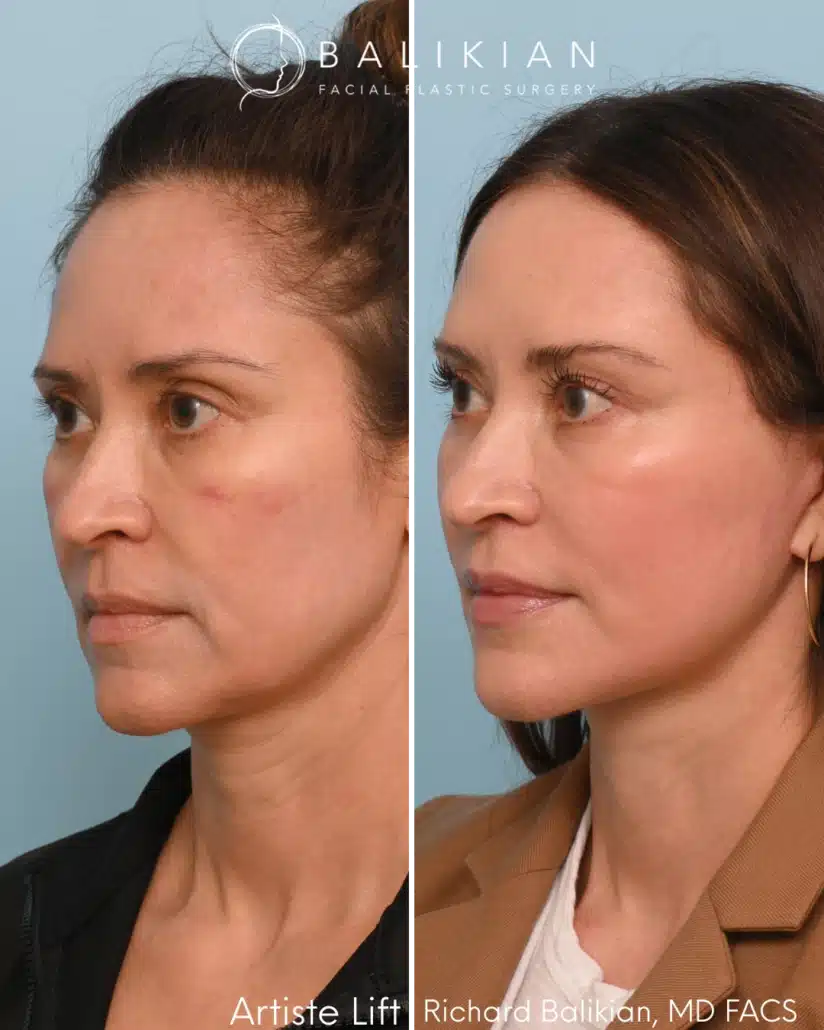
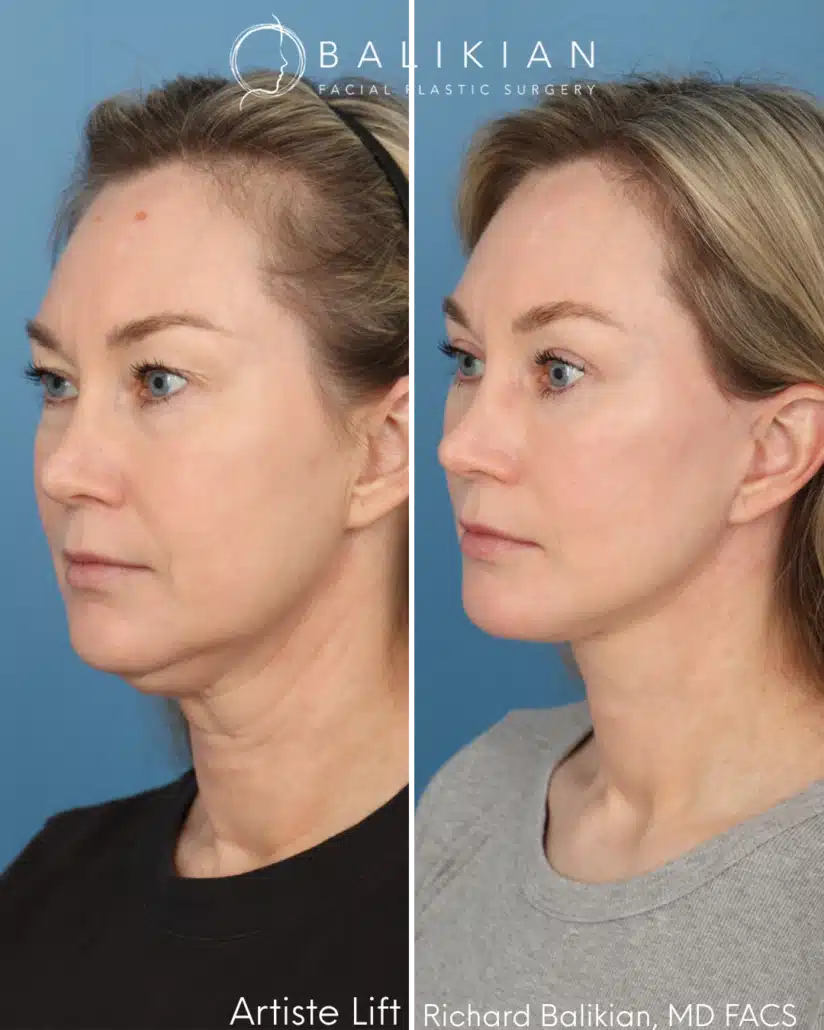
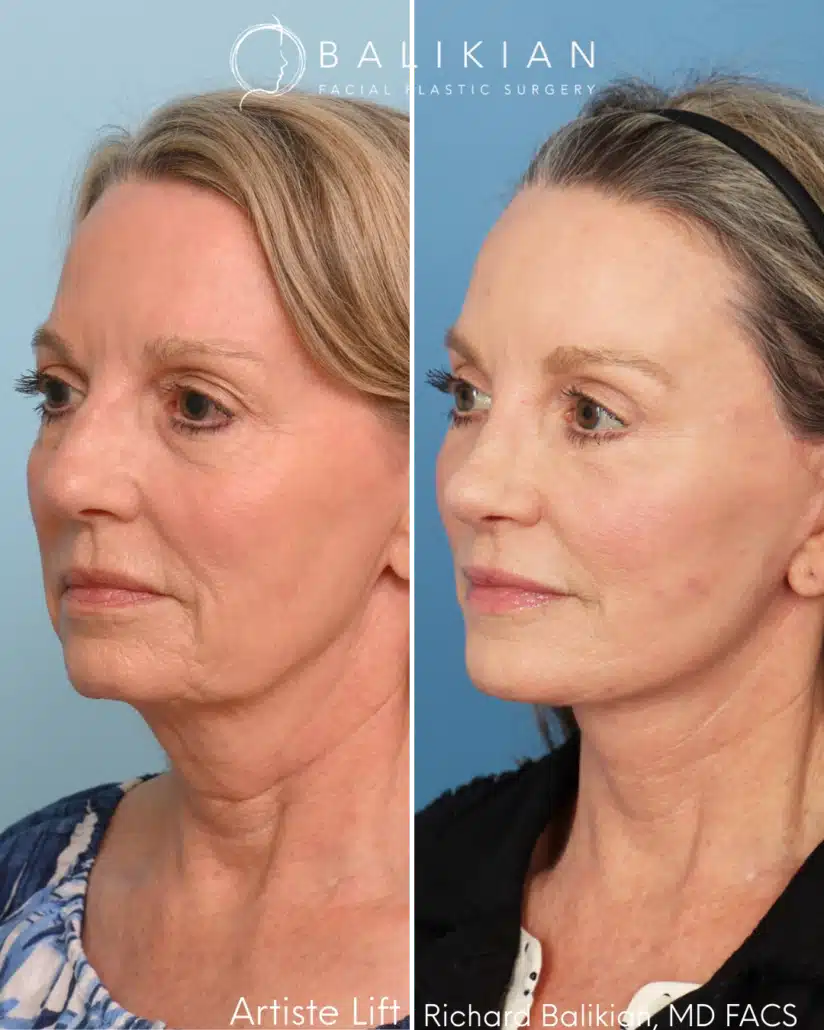
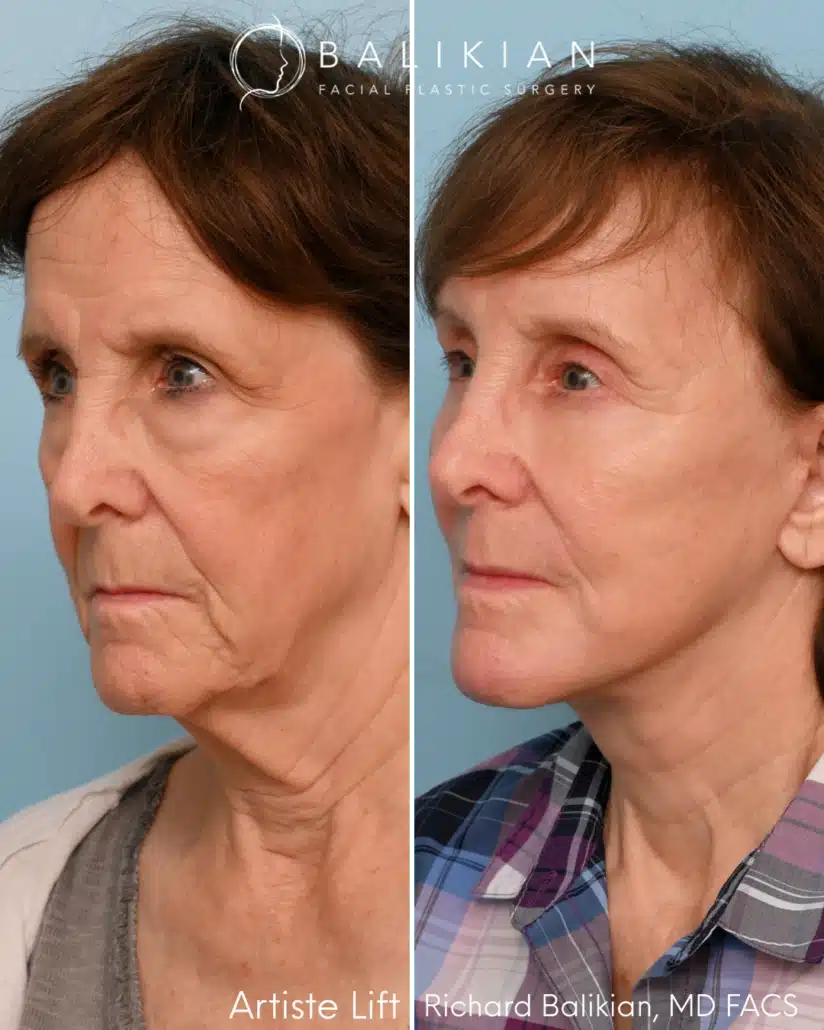
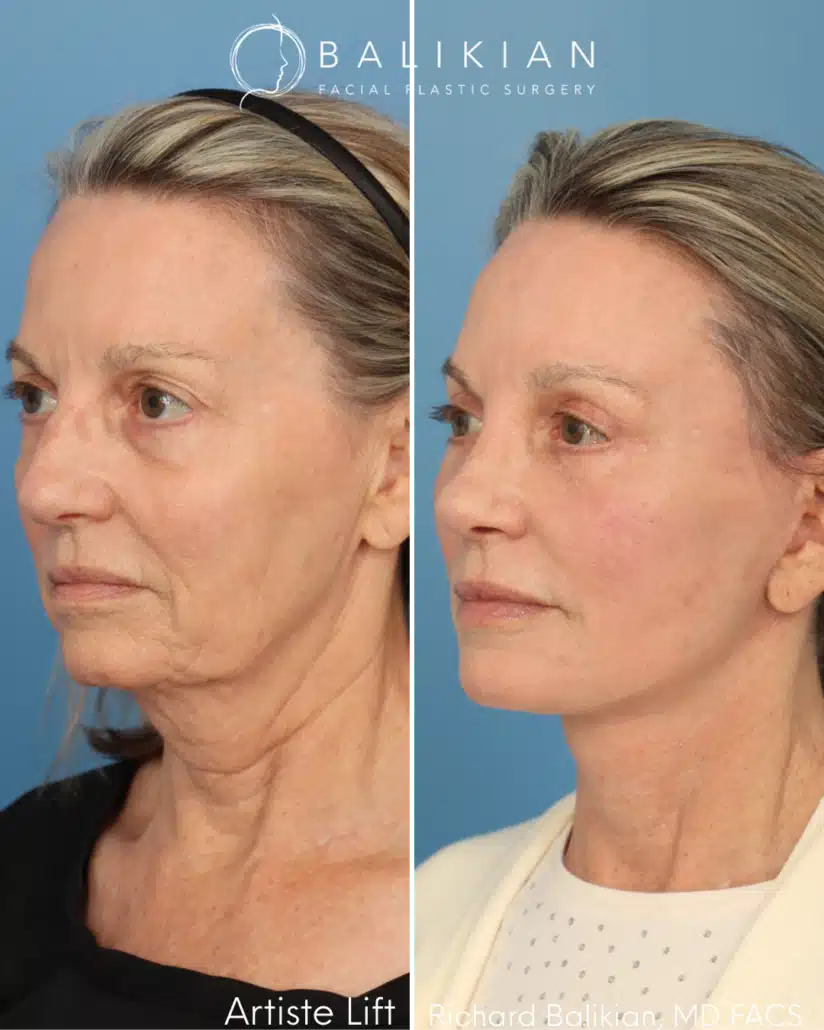
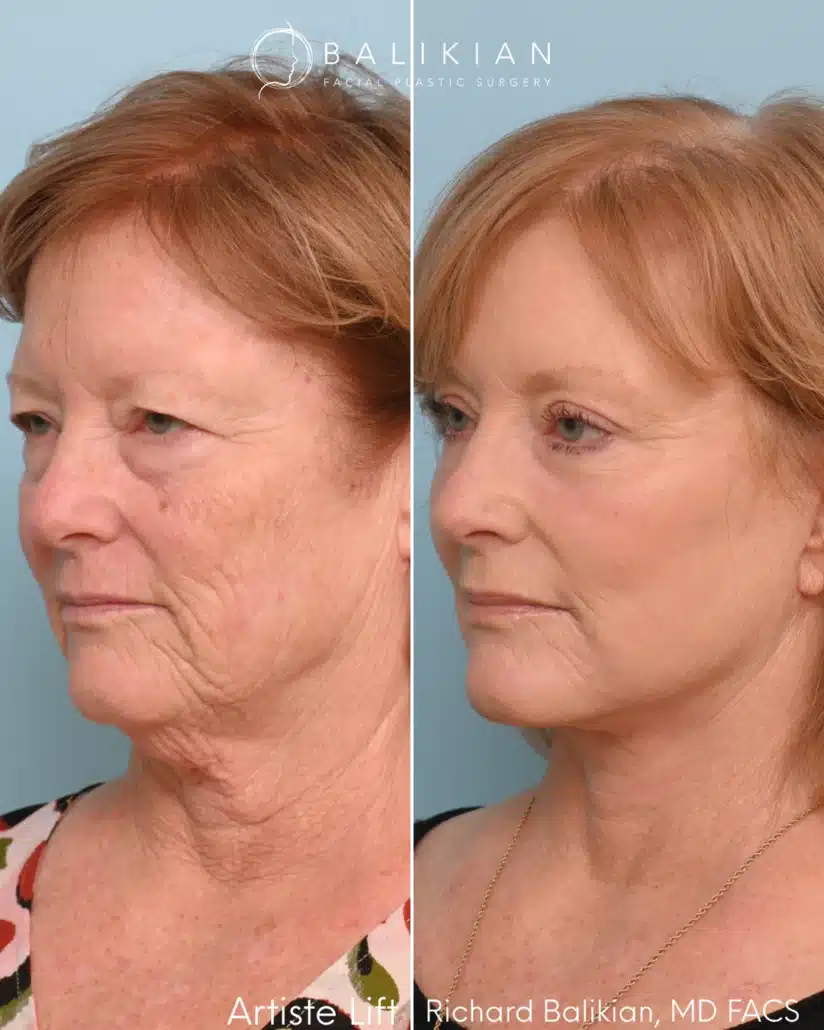
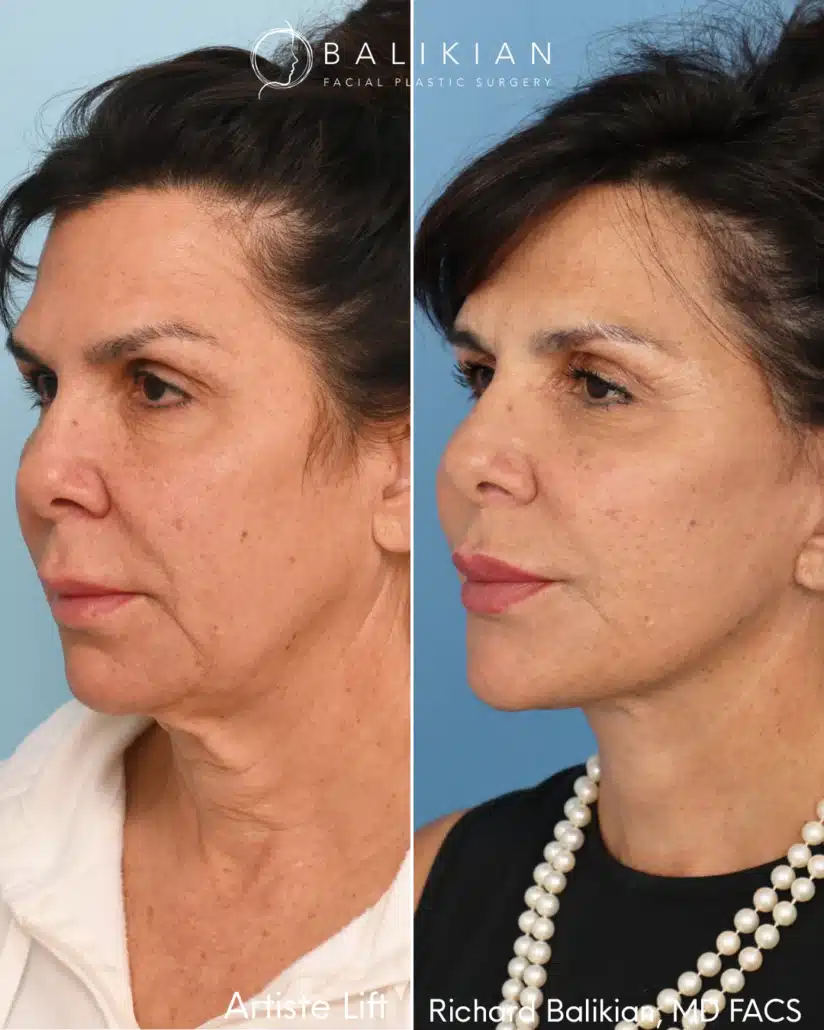

Every patient who walks through our doors has a different reason for seeking facial rejuvenation.
Some felt they always looked tired, even after a good night’s sleep. Others noticed that the face in the mirror no longer reflected how youthful and energetic they felt inside. Many simply wanted to look like themselves again, not different, just refreshed.
Those personal stories are often just as meaningful as the surgery itself.
In this playlist, patients share why they decided to have surgery, what their consultation and recovery were really like, and how they felt seeing their results for the first time. Their experiences are all different, but each offers an honest perspective on the journey through facial rejuvenation.



Deep Plane Facelift Patient Stories. Hear real patients share why they chose surgery, what recovery was really like and how natural-looking facial rejuvenation helped them feel more like themselves again.
Every face tells a different story.
Some patients are affected more by gravity. Others by volume loss or changes in skin quality. Most experience all three in different proportions. That’s why every consultation begins with understanding how your face has changed before deciding how to treat it.
When each recommendation is based on your anatomy rather than a formula, the results are naturally balanced, refreshed and uniquely your own.
What are the three categories of facial aging?
Facial aging generally occurs through three primary processes: gravity, volume loss, and changes in skin quality. Gravity causes the deeper facial tissues to descend, volume loss creates hollowing and shadows, and skin quality changes lead to wrinkles, fine lines, and reduced elasticity. Understanding which of these processes is affecting your appearance helps determine the most appropriate treatment plan.
Why isn’t a facelift enough to treat every sign of facial aging?
A facelift primarily restores facial support by repositioning tissues that have descended over time. It does not replace lost facial volume or improve skin texture. Many patients benefit from combining facelift surgery with procedures such as facial fat transfer or laser resurfacing to address multiple aspects of facial aging.
Why do some patients need facial fat transfer with a facelift?
As we age, the face naturally loses fat volume in areas such as the cheeks, temples, and around the eyes. Restoring carefully selected areas with fat transfer can soften shadows and improve facial support without creating an overfilled appearance. Volume restoration addresses a different aspect of aging than tissue repositioning alone.
Why is skin quality treated separately from facial support?
Wrinkles, sun damage, pigmentation, and changes in skin texture occur within the skin itself. Although a facelift repositions deeper tissues, it cannot reverse these surface changes. Treatments such as CO₂ laser resurfacing are often used to improve skin quality after structural support has been restored.
Why does Dr. Balikian evaluate the entire face instead of just one concern?
Facial aging rarely affects a single feature in isolation. Changes in the cheeks, jawline, neck, eyelids, and skin all influence one another. Evaluating the entire face allows treatment recommendations to be based on anatomy and patterns of aging rather than a single area of concern.
How does a deep plane facelift address gravity?
A deep plane facelift works beneath the SMAS layer to release key retaining ligaments and reposition descended facial tissues as a composite unit. By restoring support at a deeper level, the technique addresses jowls, midface descent, and jawline changes caused by gravity while allowing the skin to be redraped with minimal tension.
Why do treatment plans differ from one patient to another?
No two people age in exactly the same way. The degree of tissue descent, facial volume loss, skin quality changes, bone structure, and overall facial anatomy vary considerably between individuals. Modern facial rejuvenation is most effective when treatment is tailored to the specific aging changes present in each patient rather than applying the same operation to everyone.
Dr. Richard Balikian is a highly respected facial plastic surgeon serving the San Diego area.
With over 20 years of experience and double board certification in Facial Plastic and Reconstructive Surgery as well as Head and Neck Surgery, Dr. Balikian offers a unique combination of technical expertise and artistic vision.
He is part of an elite group of surgeons with extensive training focused exclusively on the face and neck.