Why Brow Position Matters in Eyelid Surgery
How the Brow and Eyelid Work Together
Many people come in thinking the problem is just excess upper eyelid skin, but oftentimes the brow is playing a major role in the heaviness they’re seeing. The brow and upper eyelid really function together as one unit, so when the brow starts to descend with aging, it pushes down on the upper eyelid and creates that tired or hooded appearance.

That’s why eyelid surgery is not simply about removing skin. If you only focus on the eyelid without evaluating brow position, you can sometimes improve things a little while still leaving the upper face looking heavy or fatigued. In some cases, removing too much skin without addressing the brow can even make the eyes feel less natural or overdone.
One of the most important concepts in upper eyelid rejuvenation is understanding that the brow and upper eyelid function together as a connected unit. Many patients focus only on the eyelid because that is where they see the heaviness, but oftentimes the brow is contributing significantly to the problem.
When the brow gradually settles into a lower position over time, it creates downward pressure along the upper eyelid.
This can make the eyes appear:
In many cases, patients assume they simply have “extra eyelid skin,” when the true source of the heaviness may actually involve brow descent and loss of support across the upper face.
A lot of patients will tell me:
That last point is particularly important because many people subconsciously use their forehead muscles to help compensate for brow heaviness and keep the eyes feeling more open throughout the day.
Over time, that constant forehead muscle activity can contribute to:
This is one of the reasons proper evaluation matters so much. If we only focus on the eyelid without evaluating brow position, we may miss an important part of what is actually creating the tired appearance.
The goal is not simply to remove skin. The goal is to understand how the brow, eyelid, muscles and surrounding structures are functioning together so we can restore balance while preserving natural expression.
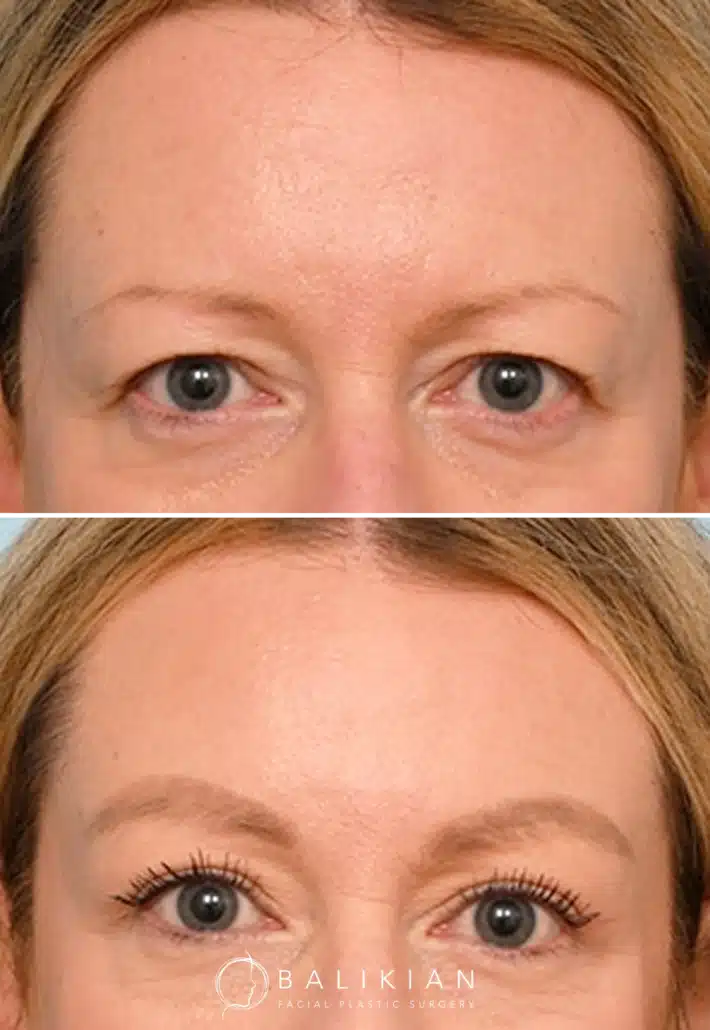
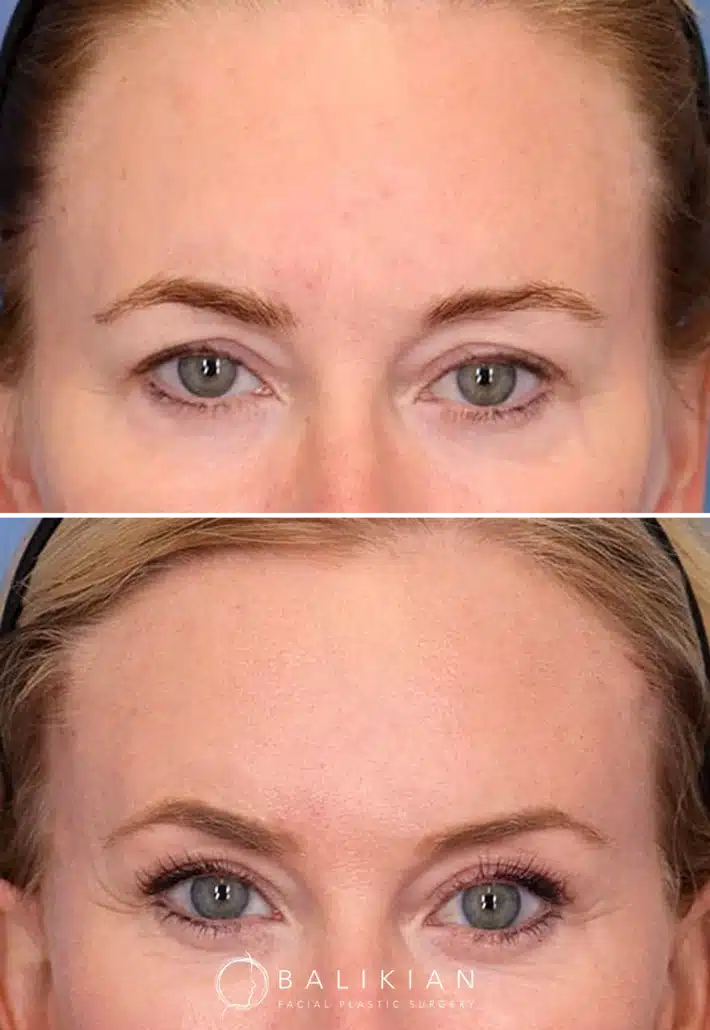
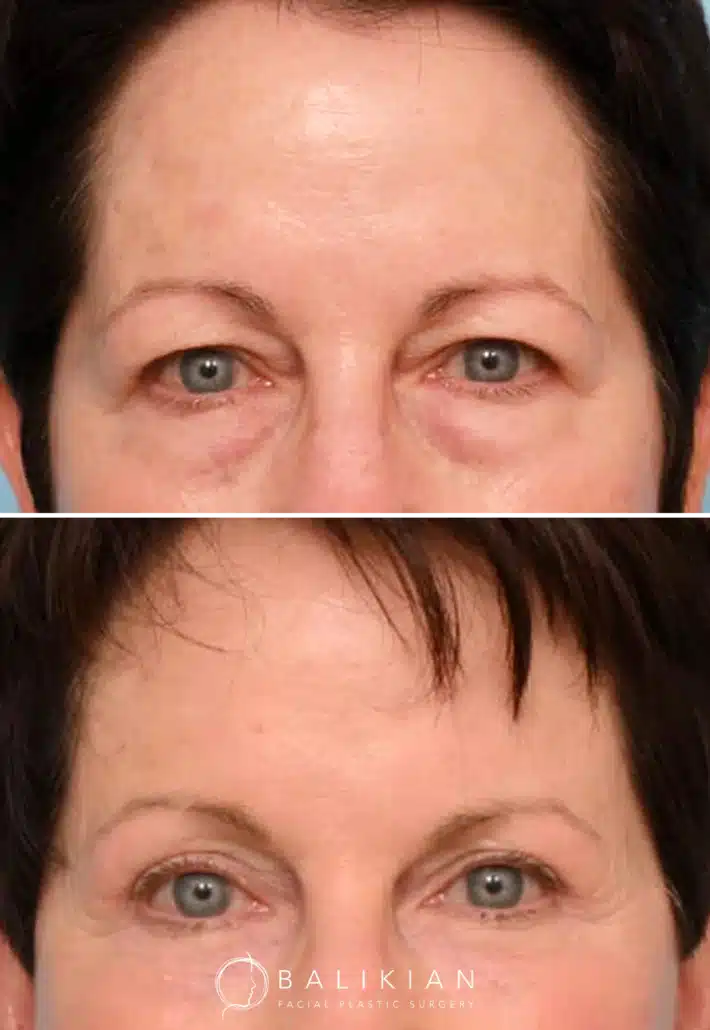

As we age, the support structures of the forehead and brow gradually weaken. The brow slowly settles downward over time, particularly along the outer portion of the brow.
Patients may not notice the brow itself moving lower, but they notice the effects:
That’s why evaluating the upper face as a whole is so important. Sometimes the eyelid skin is the issue. Sometimes it’s the brow. Oftentimes, it’s a combination of both.
The frontalis muscle is the main muscle responsible for lifting the eyebrows. Every time it contracts, the brows elevate slightly. But there are also muscles around the eyes and brows that create downward pull. Over time, this balance changes.

The frontalis muscle helps elevate the brows and counteract upper eyelid heaviness. Changes in muscle balance over time can influence brow position, forehead tension, and the appearance of tired-looking eyes.
This also explains why Botox can influence brow position. When Botox relaxes certain muscles that pull the brow downward, the brows may elevate slightly. But if the forehead muscle is weakened too aggressively, some patients can actually feel heavier afterward because the muscle they were relying on to lift the brows is now relaxed.
That’s why proper evaluation and injection technique matter so much.
Upper blepharoplasty can be a beautiful procedure for the right patient. But if the brow is contributing significantly to the heaviness, treating only the eyelid may not completely restore balance to the upper face.
This is one of the biggest reasons some patients feel like their eyelid surgery “helped, but didn’t fully fix things.” Modern facial rejuvenation is really about understanding anatomy first.
We have to evaluate:
Only then can we determine the right approach for that individual patient.
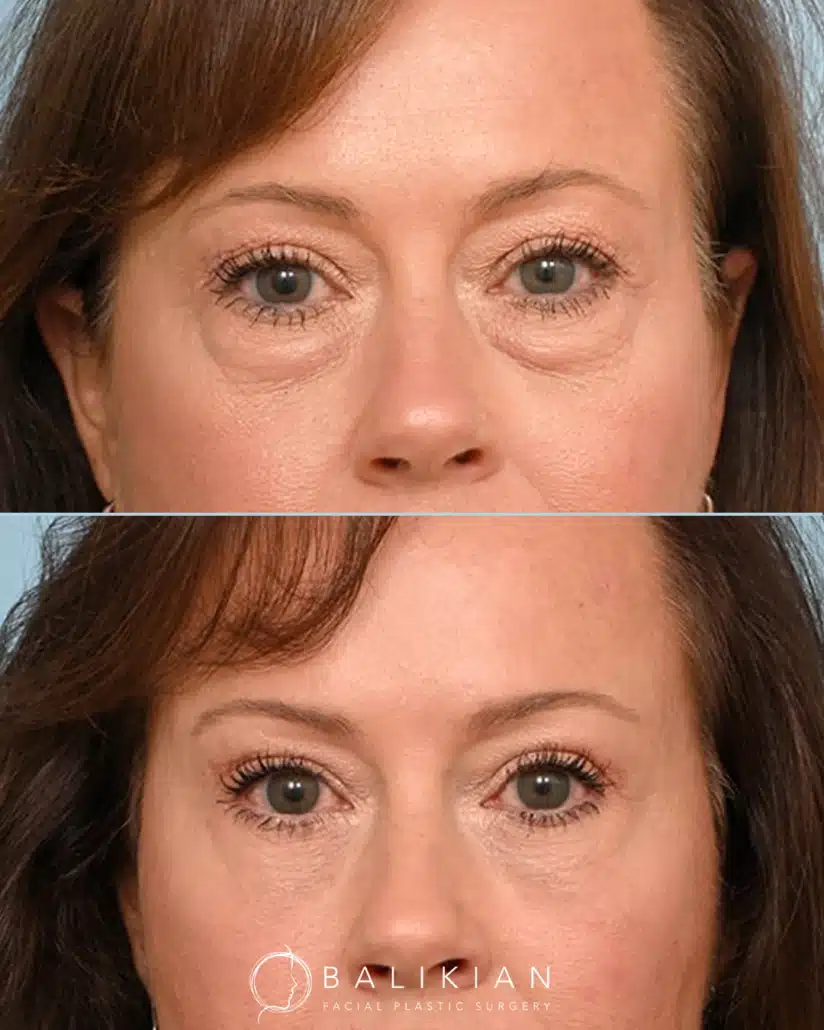
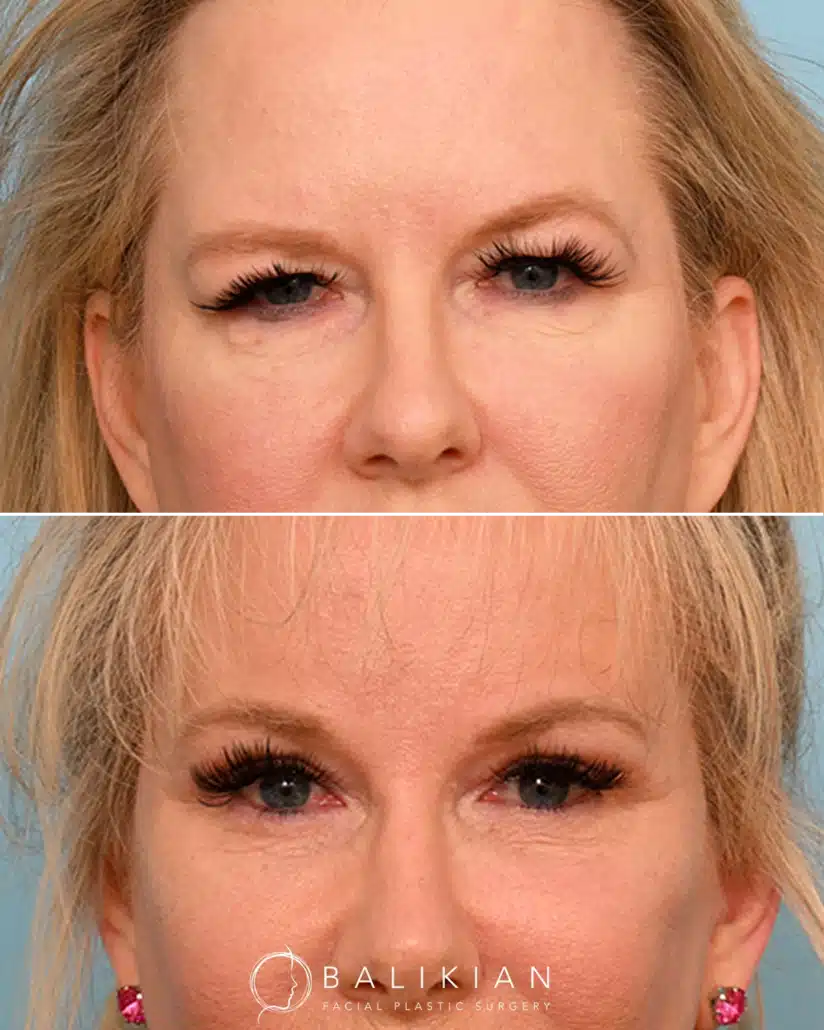
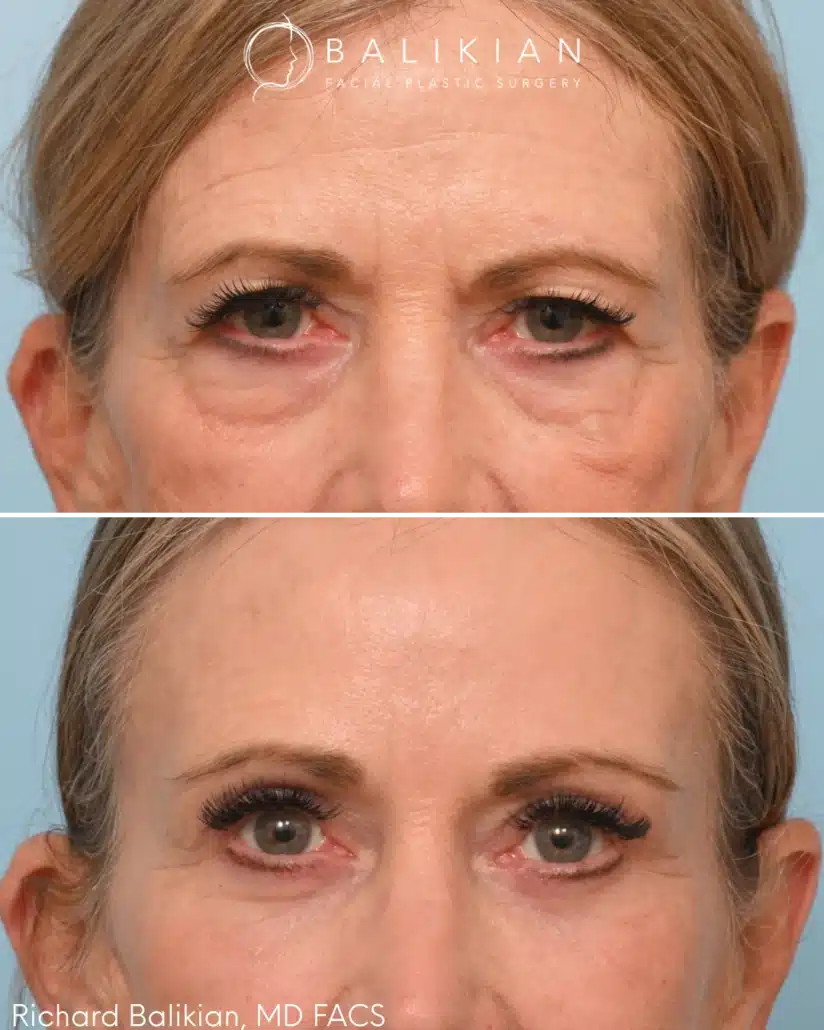

A properly done brow rejuvenation should not look obvious or over-pulled. Unfortunately, people often think of old-fashioned brow lifts that created a surprised or unnatural appearance. That’s not the goal.
Brow rejuvenation is much more nuanced and anatomy-driven. The goal is to restore the brow to a more natural position where the eyes look brighter, more open and more rested without changing facial expression.
A temporal brow lift focuses primarily on the outer portion of the brow, often referred to as the brow tail. This area plays a major role in how the outer upper eyelid appears over time.
As the outer brow gradually descends with aging, patients often begin to notice:
Subtle elevation of the outer brow can help:
In many patients, even small adjustments in brow position can make a significant difference in how refreshed the eyes appear.
The goal is not to create an overly elevated or highly arched brow. Temporal brow lift techniques focus on restoring support and balance while preserving natural expression and facial movement. When performed thoughtfully, the result should simply look refreshed rather than obviously “lifted.”

A four-point brow lift addresses broader brow descent by releasing the structures that gradually pull the brow downward over time and allowing the brow to settle into a more balanced anatomical position.
This approach is designed to improve:
Rather than aggressively pulling the brows upward, brow rejuvenation focuses on:
One of the most important concepts in brow surgery is that the brow should not appear artificially elevated. Overly aggressive lifting can distort facial expression and create a surprised or unnatural appearance that patients often want to avoid.
The key is that we are not aggressively pulling the brows vertically. We are restoring support and allowing the brow to sit where it naturally belongs. When the brow, forehead and upper eyelid function in better harmony, the eyes often appear brighter, more open and more refreshed without looking overdone.
The goal of eye and brow rejuvenation is not to dramatically change the face. It’s to restore harmony between the brow, eyelid, muscles and surrounding structures so patients look refreshed and rested while still looking like themselves.
That’s really the philosophy behind anatomy-based facial rejuvenation. The best results usually do not look surgical at all. They simply look balanced, natural and harmonious.
Why do my eyes look tired even when I feel rested?
Tired-looking eyes are often caused by changes in more than one area. Brow position, eyelid skin, lower eyelid fat, tear trough hollowing, and cheek support can all influence how rested the eyes appear. Recent reviews describe periorbital aging as a layered process involving skin, soft tissue, fat, muscle, and support structures.
How do I know if my heavy eyelids are caused by my brows or eyelid skin?
It can be either, and often it is both. A lower brow can push down on the upper eyelid and make it look like there is extra eyelid skin. Studies show that brow position can change after upper blepharoplasty, which supports evaluating the brow and eyelid together before surgery.
Can upper blepharoplasty fix hooded eyes?
Upper blepharoplasty can improve hooding caused by excess upper eyelid skin. If brow descent is also contributing, eyelid surgery alone may not fully address the heaviness. Brow ptosis references specifically describe the relationship between brow position and upper eyelid surgery planning.
Why does brow position matter in eyelid surgery?
The brow helps frame and support the upper eyelid. When the brow descends, the upper eyelid can look heavier, more closed, or more tired. A 2025 study on combined lateral temporal brow lift and upper blepharoplasty supports the idea that brow and eyelid aesthetics are closely connected.
What causes under-eye bags?
Under-eye bags are often related to lower eyelid fat position, weakening support structures, and changes in the lid-cheek transition. They are not always just “extra fat.” Recent lower eyelid anatomy research emphasizes age-related structural changes and the importance of understanding lower eyelid support.
Why do tear troughs make the eyes look tired?
The tear trough creates a shadow between the lower eyelid and cheek. When lower eyelid fullness sits above hollowing or volume loss, that contrast can make the eyes look tired. A 2024 review discusses tear trough correction and the role of fat repositioning and fillers depending on anatomy and goals.
Does blepharoplasty change the shape of the eyes?
The goal of anatomy-based blepharoplasty is to refresh the eyes while preserving natural eye shape, support, and expression. Technique matters because lower eyelid support, fat handling, and skin management can all affect contour and function.
Why is fat preservation important in lower eyelid surgery?
Removing too much fat can create hollowing or an operated look. Many current lower blepharoplasty techniques focus on fat repositioning or careful fat management to smooth the transition between the lower eyelid and cheek.
What is the goal of eye rejuvenation?
The goal is not to make the eyes look different. It is to restore balance between the brow, eyelids, fat, muscle, and surrounding facial structure so the eyes look more rested while preserving natural expression. Research on brow lift and lower eyelid anatomy supports the importance of individualized evaluation and precise anatomical planning.
Dr. Richard Balikian is a highly respected facial plastic surgeon serving the San Diego area.
With over 20 years of experience and double board certification in Facial Plastic and Reconstructive Surgery as well as Head and Neck Surgery, Dr. Balikian offers a unique combination of technical expertise and artistic vision.
He is part of an elite group of surgeons with extensive training focused exclusively on the face and neck.