Brow Lift Surgery for Hooded Eyes | Natural Eye Rejuvenation
Understanding the Benefits of a Temporal Brow Lift
Hooded eyes can make you look tired, serious, or older than you feel. For many people, the issue is not just the eyelid. The position of the eyebrow, the quality of the skin and the underlying eyelid muscles all work together to shape the upper eye area.

A brow lift can be a powerful way to open the eyes and soften heaviness.
In some patients, the best result comes from combining a brow lift with upper eyelid surgery. The goal is always the same. Eyes that look brighter and more relaxed, while still looking like you.
Patients use the phrase “hooded eyes” to describe several different problems. During a consultation, Dr. Balikian breaks this area into a few key parts so he can understand exactly what is creating the heaviness.
Common causes of hooded eyes include:
Most patients have a combination of these factors, not just one. That is why a careful examination of both the brow and the eyelid is so important before choosing surgery.
As we age, the brow slowly drifts downward. This is especially common in the outer third of the brow.
When the brow sits too low it can:
A brow lift addresses the frame of the eye. By gently lifting and reshaping the brow to a more youthful position, the brow lift can:
When the brow is restored to its natural height and contour, the entire upper face looks brighter, softer and more refreshed.
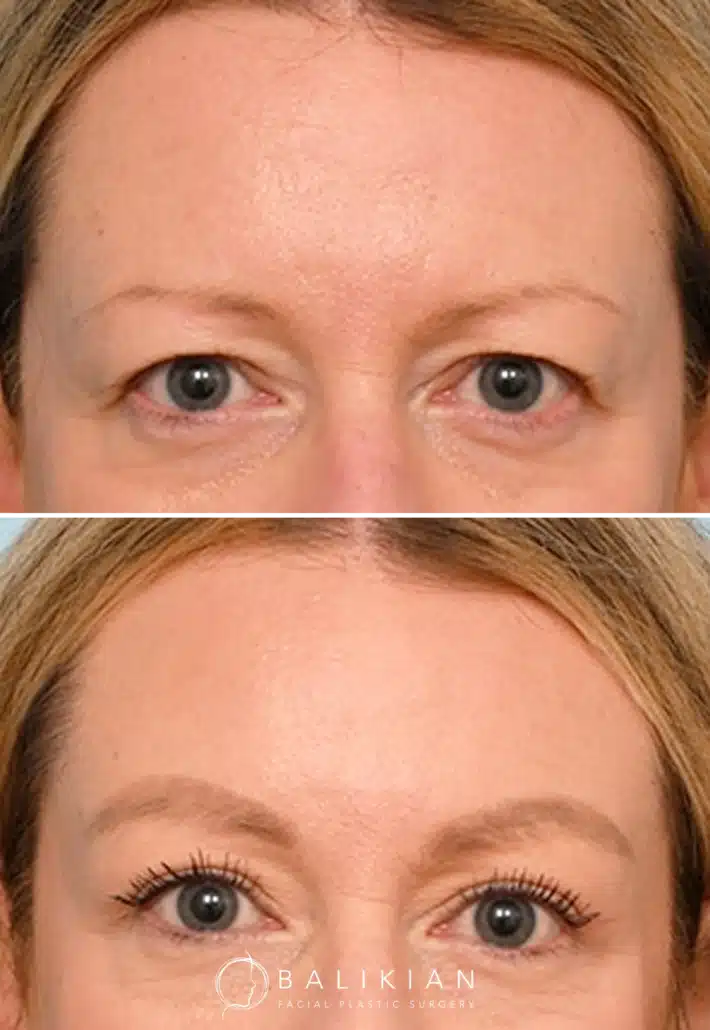
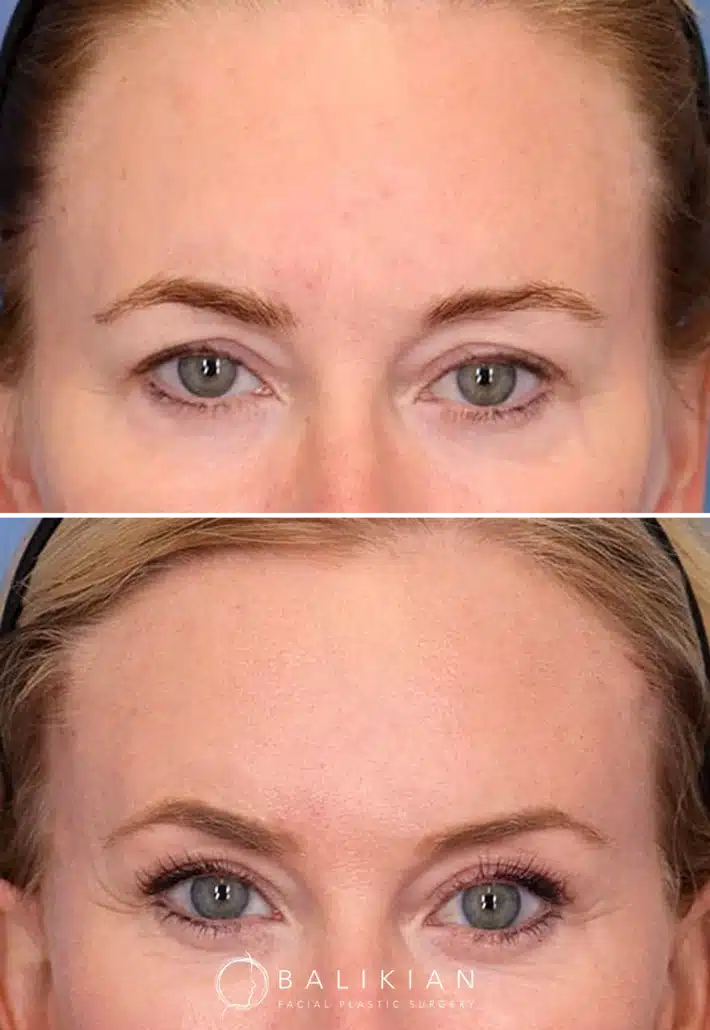
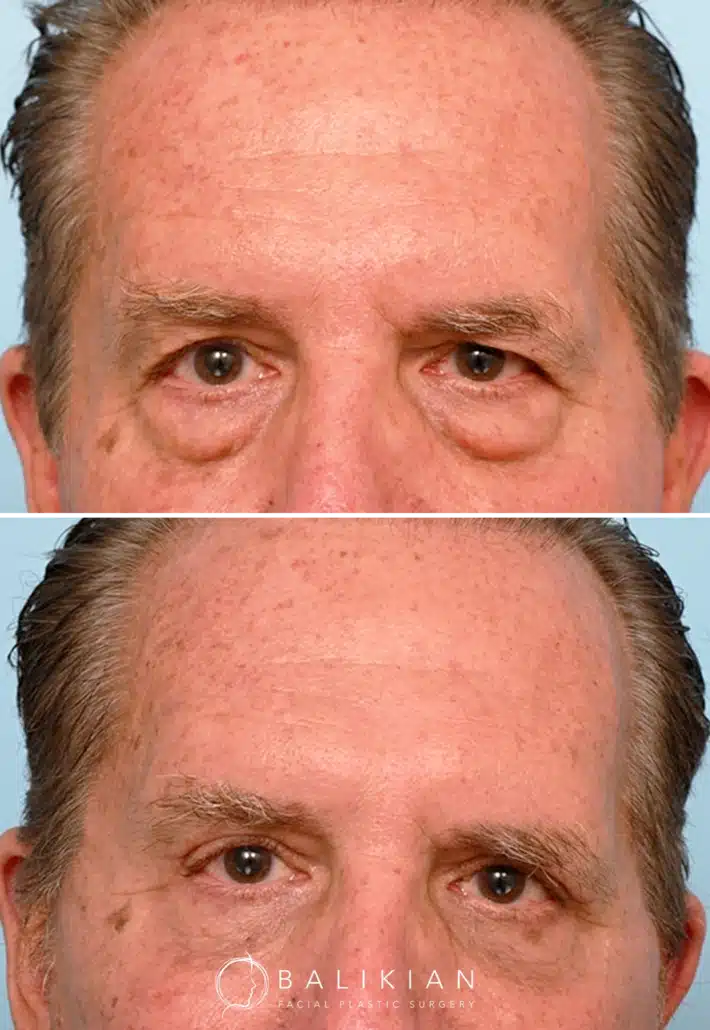
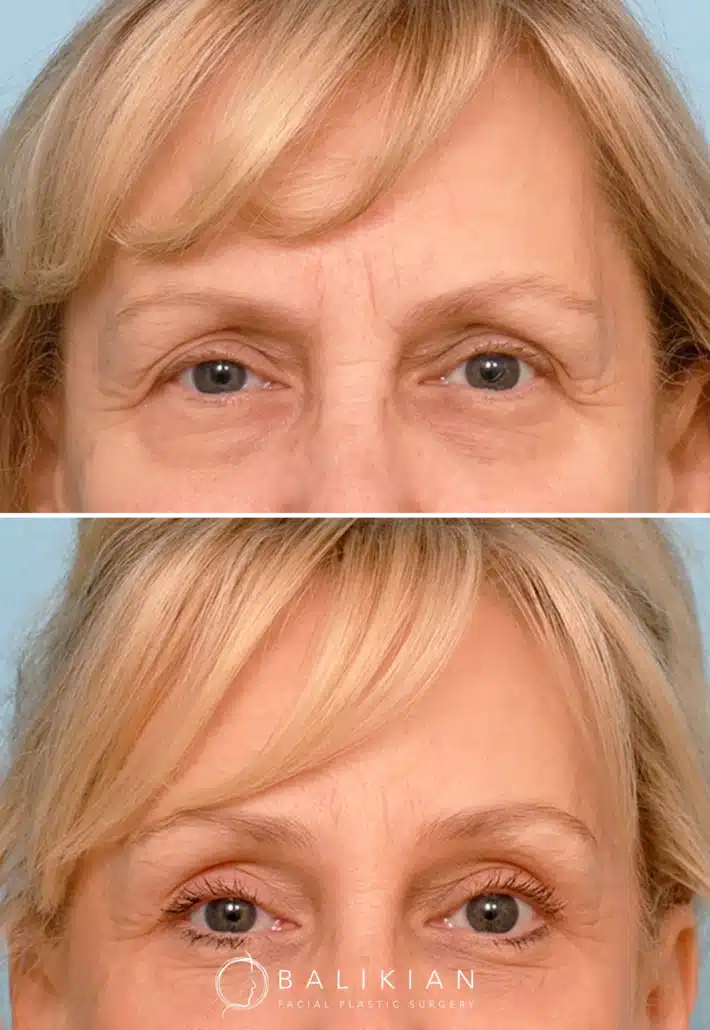
The brow is one of the most expressive parts of the face. Small changes here can have a big impact. Dr. Balikian focuses on a natural, preservation based approach.
Key elements of his technique include:
For some patients, this type of brow lift alone is enough to unmask the upper lid and improve hooding. For others, the eyelid itself also needs attention.
There are many situations where lifting the brow alone will not fully correct hooded eyes. The most common patterns include:
If there is real extra skin on the lid itself, a brow lift cannot remove it.
In these cases:
In this setting, an upper blepharoplasty is usually needed to carefully remove the extra skin and shape the crease. A brow lift can improve the frame of the eye. Blepharoplasty refines the lid itself.
Sometimes the problem is not only skin. The eyelid lifting muscle can stretch or weaken with age. The lid margin then sits lower on the eye and covers more of the pupil.
Signs of eyelid ptosis may include:
In these cases, raising the brow alone is not enough. The lid itself needs to be addressed, often with a ptosis repair combined with upper blepharoplasty. A brow lift can be added to complete the frame if the brow is also low.
Some patients have fullness in the upper lid caused by pseudoherniated fat or a mild descent of the lacrimal gland. This can create roundness and shadow that look like “extra skin” in photos.
In this situation:
Together, these adjustments create a smooth, natural upper eyelid contour that looks refreshed rather than operated on.
Sometimes a low brow is the main problem, but it hides underneath the appearance of extra skin. If eyelid surgery is done without addressing brow ptosis, the brows can actually look lower after surgery. Once the skin is removed and the forehead muscles relax, the brow may settle into an even lower position.
This is why Dr. Balikian always evaluates brow position first. If the brow is clearly low, it needs to be corrected during the same operation or separately to protect the overall balance of the upper face.
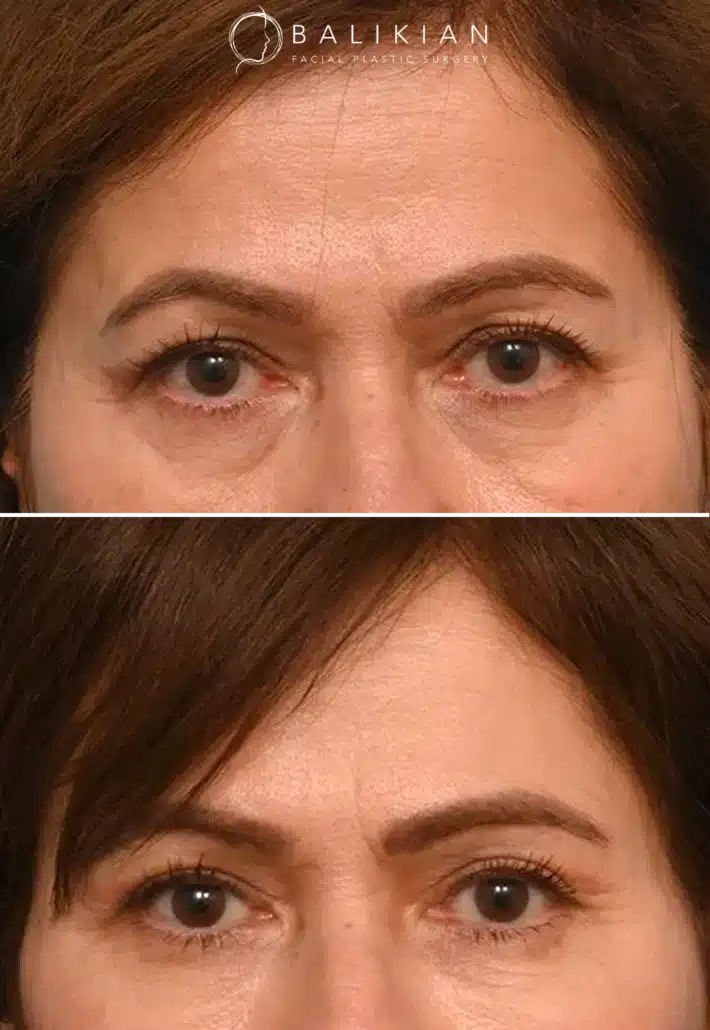
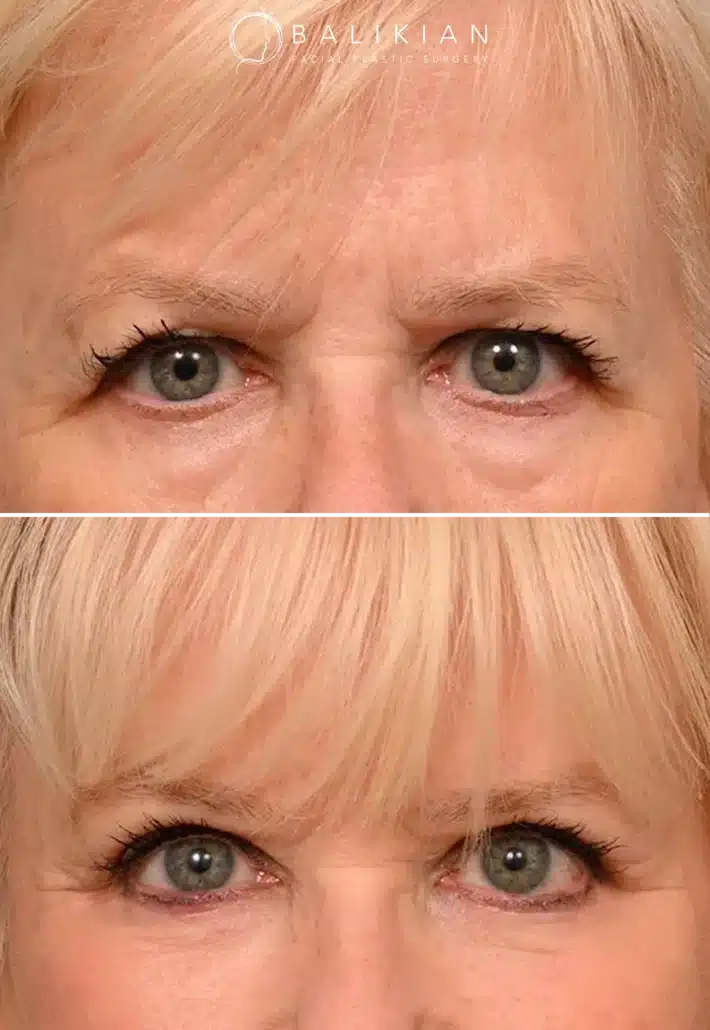
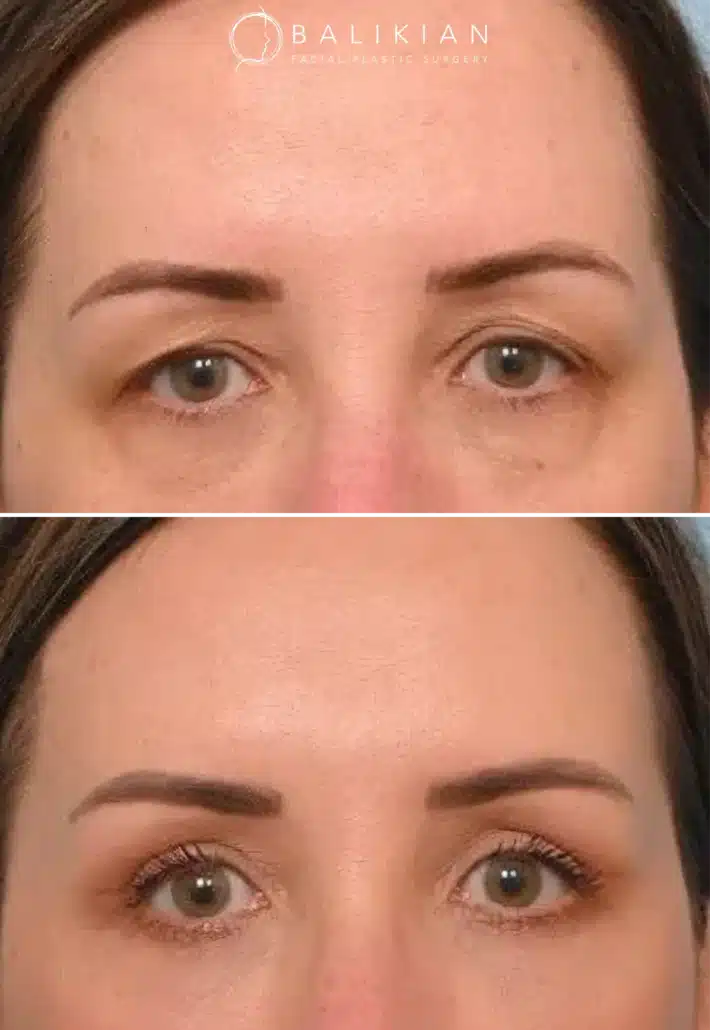

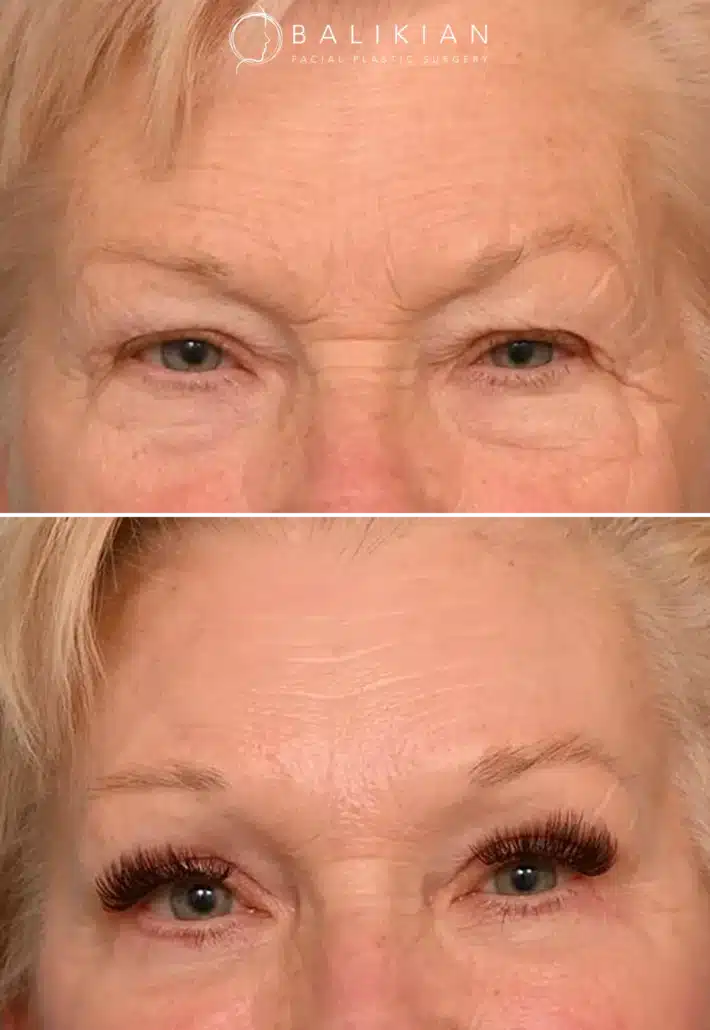
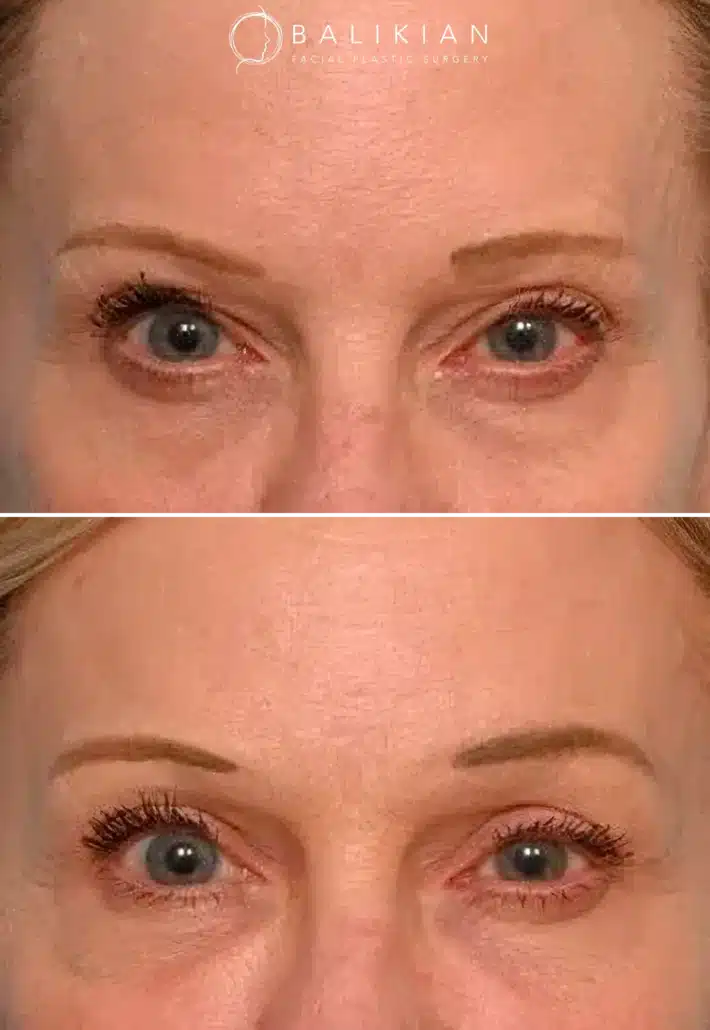
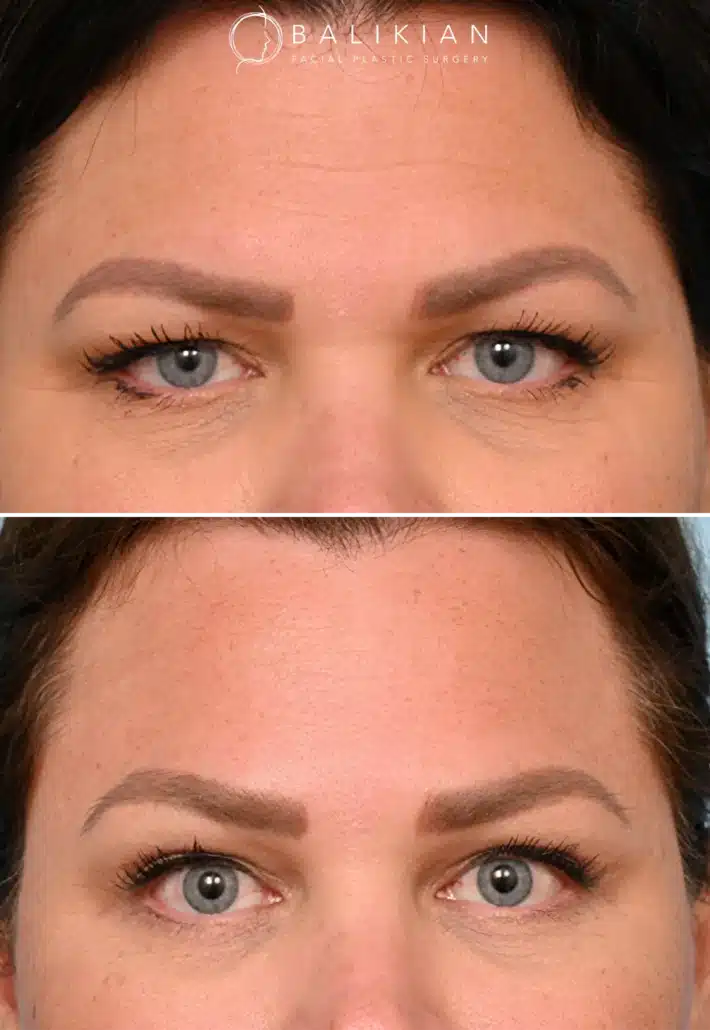

A combined approach is often the best choice when:
In a combined procedure, Dr. Balikian can:
The result is a more complete rejuvenation of the upper face. The forehead looks relaxed. The eyes look more open. The lids look cleaner and more defined, without a drastic change in who you are.
Every patient is unique, but in general patients can expect:
He will review realistic expectations with you in detail, including how brow lift and eyelid surgery can age over time and what maintenance treatments, such as neuromodulators or skin resurfacing, can support your result.
If you feel that heavy brows or lids are making you look tired, unhappy, or older than you feel, it may be time to explore your options. A thoughtful, anatomy based approach that looks at both the brow and the eyelid can make a real difference.
To learn what is right for you, schedule a consultation with Dr. Balikian. Together you can review your photos, discuss your goals, and design a plan that opens your eyes while keeping you recognizably yourself.
What is “hooded-eye” surgery?
“Hooded eyes” can come from a variety of anatomical issues, a low brow (brow ptosis), excess upper-lid skin (dermatochalasis), weak eyelid muscles (ptosis), or fullness from fat pads or gland tissue. Which procedure is right depends on precise evaluation.
Some patients benefit from a brow lift, others from upper blepharoplasty, and some from a combination. This tailored, anatomy-guided approach is the foundation of Dr. Balikian’s surgical philosophy.
How do I know whether I need a brow lift, an upper blepharoplasty, or both?
If the brow is low and pushing skin downward, a brow lift is usually sufficient.
If true extra eyelid skin remains even when the brow is held in its ideal position, upper blepharoplasty is indicated.
If both low brow and excess lid skin (or lid fullness) exist, a combined brow lift + blepharoplasty often gives the most natural, balanced result.
During consultation, Dr. Balikian may manually support your brow to help you visualize what a brow lift alone can do, and whether lid surgery is needed as well.
Can a brow lift alone fix hooded eyes?
Sometimes, yes. When brow descent is the primary cause of hooding, lifting the brow into a more youthful position can unmask the upper lid, reducing skin heaviness and opening the eye frame. Long-term data show that endoscopic brow lifts yield sustained brow elevation: in a 2025 meta-analysis, average long-term elevation was ~ 3.25–4.35 mm depending on brow region.
What are the benefits of upper blepharoplasty beyond appearance?
Upper blepharoplasty can significantly improve visual function in patients with dermatochalasis (excess upper-lid skin). Studies have documented:
Because of these functional benefits, upper blepharoplasty is considered reconstructive (not just cosmetic) when excess tissue or lid position interferes with vision or comfort.
How long do results last for brow lift and blepharoplasty?
For brow lift: Multiple long-term studies show stable elevation over years.
For upper blepharoplasty: Results in eyelid contour, skin redundancy, and lid fold definition tend to be durable. Functionally, patients often continue to enjoy improved visual field and comfort years after surgery.
That said, natural aging continues. Dr. Balikian uses conservative, preservation-based techniques so results age gracefully without a “pulled” look or abrupt changes.
Will I still look like myself after the surgery?
Yes. The goal is not drastic transformation, but subtle rejuvenation. By preserving your natural brow shape and eyelid anatomy, and avoiding excessive skin or fat removal, the result looks like a more rested, refreshed you, not a “different” you. This conservative, anatomy-aware philosophy aligns with modern surgical standards.
What are the risks?
As with any surgery around the eyes and forehead:
Importantly, when done by an experienced surgeon and with appropriate preoperative evaluation, serious complications are uncommon.
What is recovery like if I combine brow lift and blepharoplasty?
Combining the procedures generally means one recovery period instead of two. In published series, combined forehead/brow and upper-lid surgery has shown high patient satisfaction and acceptably low complication rates.
What if I have asymmetry or prior eyelid/brow surgery?
Asymmetry is common and can often be improved with tailored brow lift or blepharoplasty (or both). In revision cases, extra care is required due to scarring or altered anatomy. Experienced surgeons plan conservatively and tailor the approach to avoid overcorrection or hollowing.
Are non-surgical treatments (like fillers or Botox) a good alternative to surgery?
Non-surgical treatments can help in select cases, e.g., Botox may gently lift the outer brow, fillers or fat grafting may soften hollowness. But they cannot permanently correct issues like excess skin, true brow descent, or weakened eyelid muscles. For structural problems, surgery remains the gold standard.
Dr. Richard Balikian is a highly respected facial plastic surgeon serving the San Diego area.
With over 20 years of experience and double board certification in Facial Plastic and Reconstructive Surgery as well as Head and Neck Surgery, Dr. Balikian offers a unique combination of technical expertise and artistic vision.
He is part of an elite group of surgeons with extensive training focused exclusively on the face and neck.
Richard V. Balikian, MD, FACS
Double Board-Certified Facial Plastic Surgeon
Balikian Facial Plastic Surgery: Richard V. Balikian, MD, FACS

