Rhinoplasty Recovery Guide | Timeline, Healing Tips and What to Expect
A Complete Resource on Rhinoplasty Recovery Time, Week-by-Week Healing and What to Expect After Nose Surgery
Rhinoplasty, whether for cosmetic refinement, better breathing, or both, can be a life changing procedure.
What many patients do not realize is that the recovery process is just as important as the surgery itself. Proper after care, realistic expectations and patience play a major role in achieving a refined and natural result.
Dr. Richard Balikian combines surgical precision, a strong understanding of nasal anatomy and a supportive recovery plan to help patients heal comfortably. This guide explains the post rhinoplasty recovery timeline, what healing feels like at each stage and evidence based tips that support a smooth and predictable outcome.
Rhinoplasty adjusts bone, cartilage, skin and the soft tissues inside the nose. That is why swelling, congestion and gradual changes in contour occur throughout the recovery period. Healing happens in stages and continues for many months.
A well known 3D volumetric study shows that about two thirds of nasal swelling resolves by one month, about 95 percent by six months and nearly all remaining edema by one year.
Knowing this timeline helps set realistic expectations. The early result is only the beginning and final refinement appears slowly as tissues settle and soften.
Before surgery, Dr. Balikian reviews your medical history, nasal anatomy, breathing function and goals. He also explains how to prepare your home, how to rest, which activities to avoid and what to expect in the first days after surgery.
Planning ahead, arranging time off and understanding the recovery steps helps create a safer and more comfortable experience.
Evidence and clinical best practices show that good postoperative care can improve early comfort and support a better long term outcome. One recent review recommends structured follow up and activity modification to protect healing tissues.
Dr. Balikian recommends:
By following these guidelines consistently, you give your nose the best chance to heal comfortably and achieve a refined result that continues to improve over the course of the year.
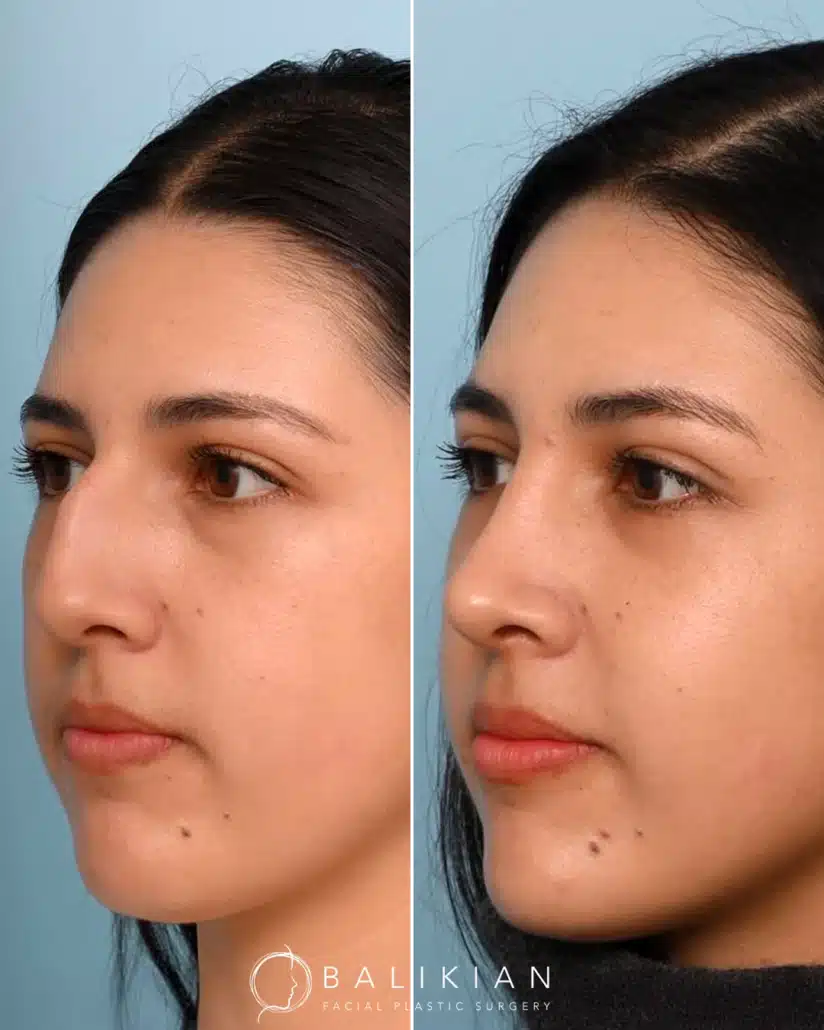
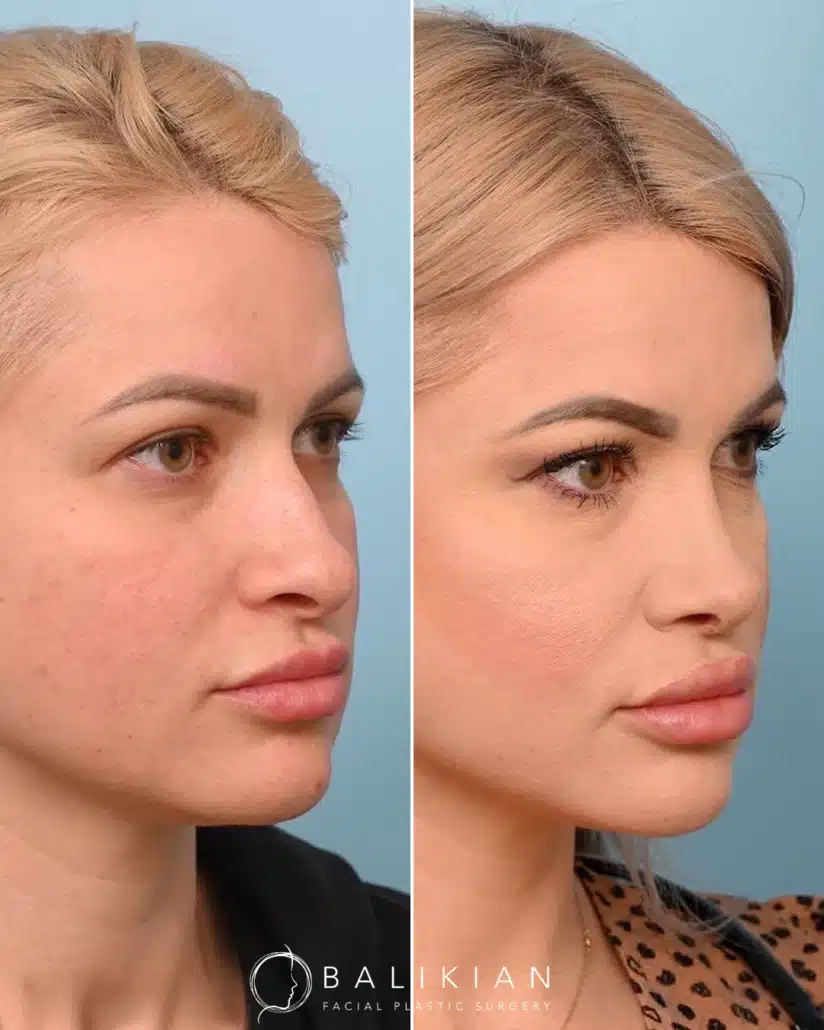
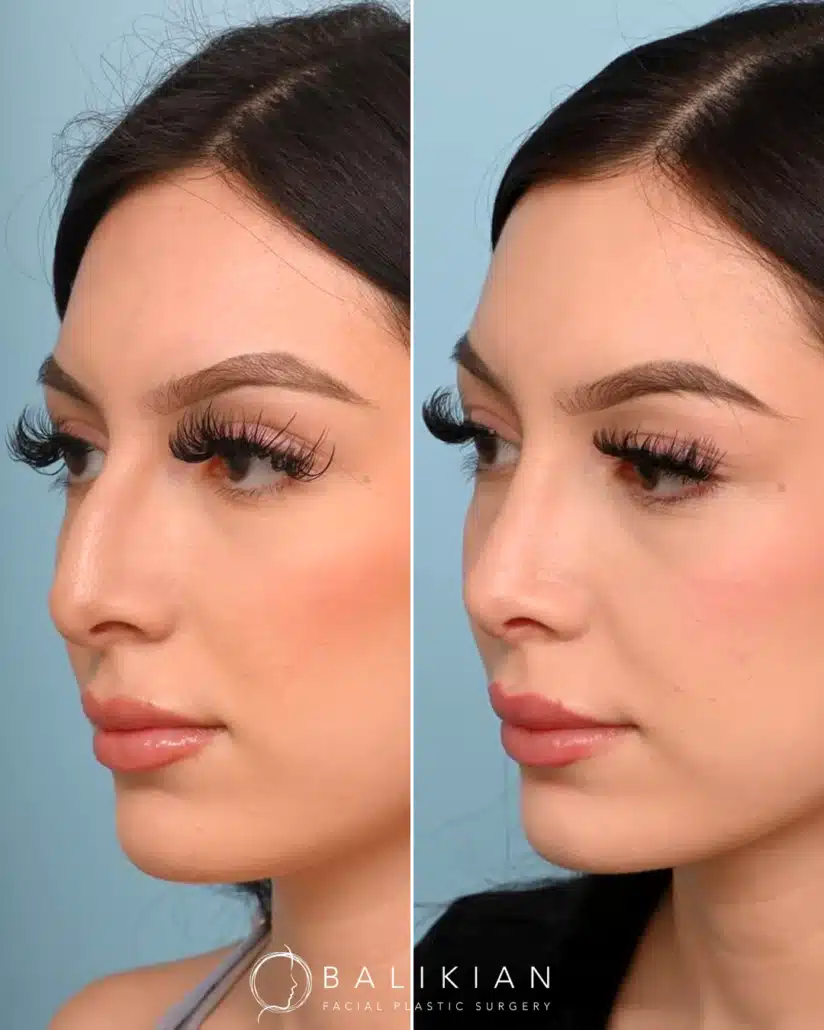
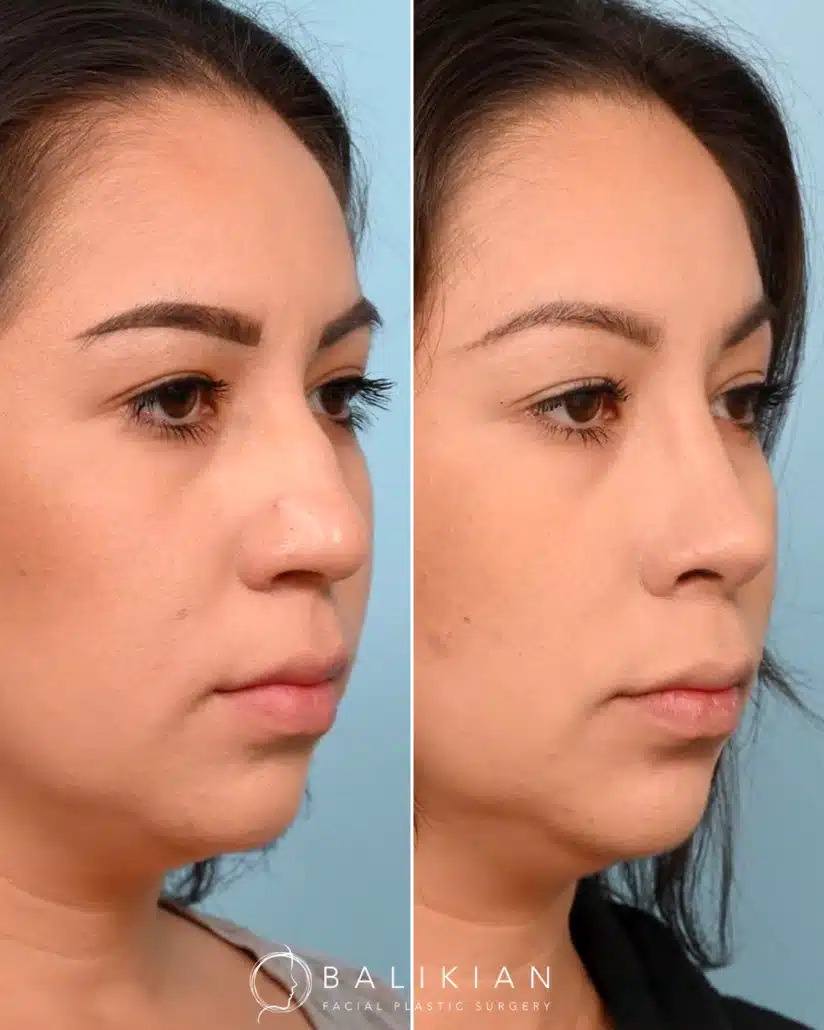
Although every patient heals at their own pace, most recoveries follow this general pattern.
The first few days after rhinoplasty focus on rest, reducing swelling, and keeping the nose well supported.
With proper head elevation and quiet rest, most patients begin to feel more stable as this early phase passes.
During this stage, the nose begins its initial transition from surgery to early healing as swelling and bruising start to ease.
By the end of the first week, most patients feel more comfortable and ready for the splint removal appointment.
Over the next few weeks, swelling continues to soften and the nose becomes easier to manage in day to day life.
This stage often marks the return to normal routines, as long as patients avoid any activity that could raise blood pressure or strain the nose.
As healing progresses, the nose settles further and the earliest signs of definition begin to appear.
Although the shape is still developing, most patients notice meaningful improvement in breathing comfort and overall symmetry.
During this longer phase, much of the remaining swelling fades and the structure of the nose becomes more refined.
The bridge and tip gradually sharpen, creating a more balanced and natural looking contour.
The final stage of rhinoplasty recovery is where subtle definition becomes clear as the deeper tissues fully settle.
By one year, most patients have reached their final shape, which aligns with findings from the Cleveland Clinic showing that rhinoplasty swelling often takes several months to fully resolve.
Understanding how your nose feels at each stage of recovery helps you stay confident and prepared throughout the healing process. While every patient heals differently, the patterns below are what most people experience after rhinoplasty.
The first few days are the most noticeable in terms of swelling, congestion and facial pressure. It may feel similar to having a heavy nasal cold and breathing through the nose is usually limited.
Resting with your head elevated helps significantly and most patients spend this period focused on comfort, short walks and gentle self-care. These sensations begin improving once the splint and internal supports are removed.
As swelling decreases, the nose feels easier to manage and daily life becomes more comfortable. Many patients return to work during this time.
Breathing gradually improves as the internal tissues settle, although airflow may still fluctuate from day to day. The nose may look wider or more swollen than expected, which is normal for this stage.
By this point the nose starts to soften and the earliest signs of shape and definition appear. Congestion continues to clear and most patients feel more confident going out socially.
Even though the nose looks significantly better, it is still healing internally, so avoiding physical strain and contact activities remains important.
This is when many patients see the most satisfying phase of healing. Swelling steadily fades, especially along the bridge and tip, and the overall definition becomes clearer.
Breathing tends to be much more consistent. The nose feels more natural and stable, even though subtle internal healing is still taking place.
The final contour emerges slowly as the remaining swelling resolves. The nasal tip becomes more refined, small irregularities smooth out and the entire nose settles into its long-term shape.
Most patients reach their true final result by the one-year mark, which aligns with published data on rhinoplasty healing timelines.
As a double board certified facial plastic surgeon and ENT specialist, Dr. Balikian prioritizes nasal function and structural support while creating natural, refined results. His careful technique and detailed recovery guidance help patients breathe more easily and enjoy stable, long lasting improvement.
If you are considering rhinoplasty, this recovery guide will help you understand what healing looks like over time and how to prepare for the best possible outcome.
How long does recovery after rhinoplasty typically take?
Most patients see major improvements within the first 4–6 weeks, but full healing and final refinement can take 6 to 12 months or longer as residual swelling gradually resolves and tissues settle.
When can I return to normal activities or work?
Research shows many patients can return to routine daily activity, including desk work, within about 4 days after surgery. More strenuous exercise should wait until 4 to 6 weeks or until cleared.
How long does swelling last after rhinoplasty?
Swelling decreases steadily during the first few months, but subtle edema can persist for a full year. The bridge and tip take the longest to refine.
Is stiffness or swelling normal at six months?
Yes. Rhinoplasty affects skin, cartilage, bone and soft tissue. Because each layer heals at a different pace, mild swelling or stiffness can still be present for many months.
What complications should I be aware of during recovery?
Possible issues include contour irregularities, asymmetry or breathing difficulty. Published data show that 5 to 15 percent of rhinoplasty patients may eventually seek revision.
Does the surgical technique affect recovery?
Both open and closed rhinoplasty can be safe and effective. A recent study found no significant difference in complication rates between the two techniques.
Can new technology help reduce swelling during recovery?
Yes. One randomized study found that custom 3D printed splints significantly reduced swelling at six months and one year compared with traditional taping.
What habits support a smooth recovery?
Helpful practices include keeping the head elevated, using cold compresses on the cheeks, avoiding lifting or bending, protecting the nasal bridge from pressure, and attending all follow ups. Structured recovery and education have been shown to improve comfort and outcomes.
When should I contact my surgeon during recovery?
You should contact your surgeon if you notice sudden swelling, worsening pain, fever, unusual drainage, difficulty breathing that does not improve or any concern with the cast or splint.
Is it normal for the nose to change shape during the first year?
Yes. Small changes are expected as swelling fades and tissues settle. The nasal tip is often the last area to reach its final shape.
Dr. Richard Balikian is a highly respected facial plastic surgeon serving the San Diego area.
With over 20 years of experience and double board certification in Facial Plastic and Reconstructive Surgery as well as Head and Neck Surgery, Dr. Balikian offers a unique combination of technical expertise and artistic vision.
He is part of an elite group of surgeons with extensive training focused exclusively on the face and neck.
Richard V. Balikian, MD, FACS
Double Board-Certified Facial Plastic Surgeon
Balikian Facial Plastic Surgery: Richard V. Balikian, MD, FACS

