Why Some Brow Lifts Make the Eyes Look Surprised and Unnatural
Understanding Why Some Brow Lifts Make the Eyes Look Surprised and Unnatural
One of the biggest concerns patients have about brow rejuvenation is looking unnatural afterward.
Most people have seen a brow lift that immediately looks “done.” The brows sit too high. The forehead looks overly tight. Expression changes. Instead of looking refreshed, the face starts looking surprised or disconnected from the rest of the facial features.
That usually happens because the brow is being lifted in the wrong direction.

At Balikian Facial Plastic Surgery, brow rejuvenation is approached very differently. Rather than aggressively pulling the forehead upward, Dr. Balikian focuses on restoring the brow along the same vector the face naturally ages.
The goal is not to create a dramatically elevated brow. The goal is to restore a brighter, more rested appearance while preserving natural expression.
One of the most important concepts in natural brow rejuvenation is understanding how the brow actually changes with aging. Many patients assume the brows simply fall vertically downward, particularly through the center of the forehead. In reality, most brow aging occurs differently.
The brow typically descends along the outer two thirds of the brow and temple region at roughly a 60 degree angle.
As the outer brow gradually lowers over time, patients often begin noticing:
This is one reason brow position plays such an important role in upper eyelid rejuvenation. Many patients who believe they need upper eyelid surgery alone are actually experiencing a combination of eyelid heaviness and brow descent simultaneously.
Many unnatural brow lifts occur because the brows are lifted vertically upward through the center of the forehead instead of along the natural direction of brow aging.
When the center of the brows is pulled straight upward, it can widen the brows and create the over-elevated or “surprised” appearance patients often recognize immediately.
The problem is not simply that the brows were lifted. It is that they were lifted against the natural anatomy and aging pattern of the face.
Human beings are remarkably sensitive to brow position and eye expression. Small changes in brow shape can significantly alter how emotion is perceived socially during conversation, which is why over-elevated brows can quickly make a face feel emotionally unfamiliar even when surgery technically healed well.
This philosophy is often better described as more of a brow reset than a traditional brow lift.
Rather than aggressively pulling the forehead upward, the goal is to restore the brow into a naturally refreshed position that still feels balanced and recognizable. The objective is not to over-pull the skin or elevate the brows as high as possible, but instead to reposition the brows into a softer, brighter position that restores a more rested appearance around the eyes.
By respecting the natural direction of brow aging and working within the deeper anatomical layers, the eyes can appear more refreshed while still preserving natural movement, expression and individuality.

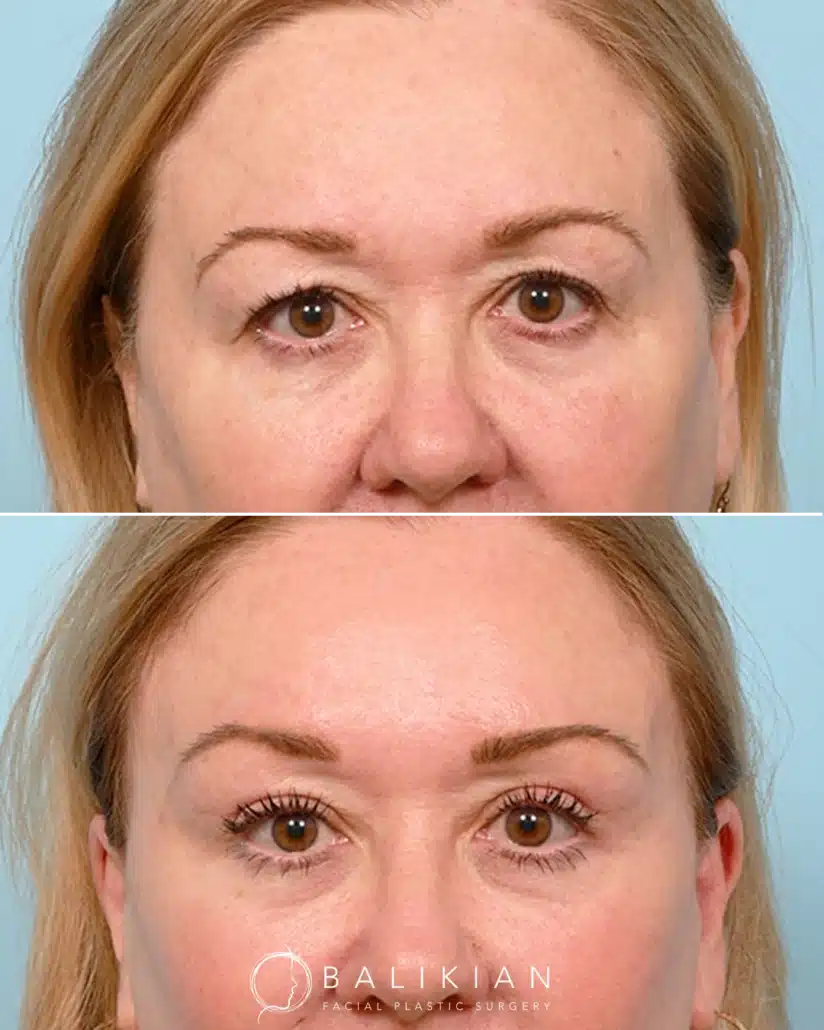
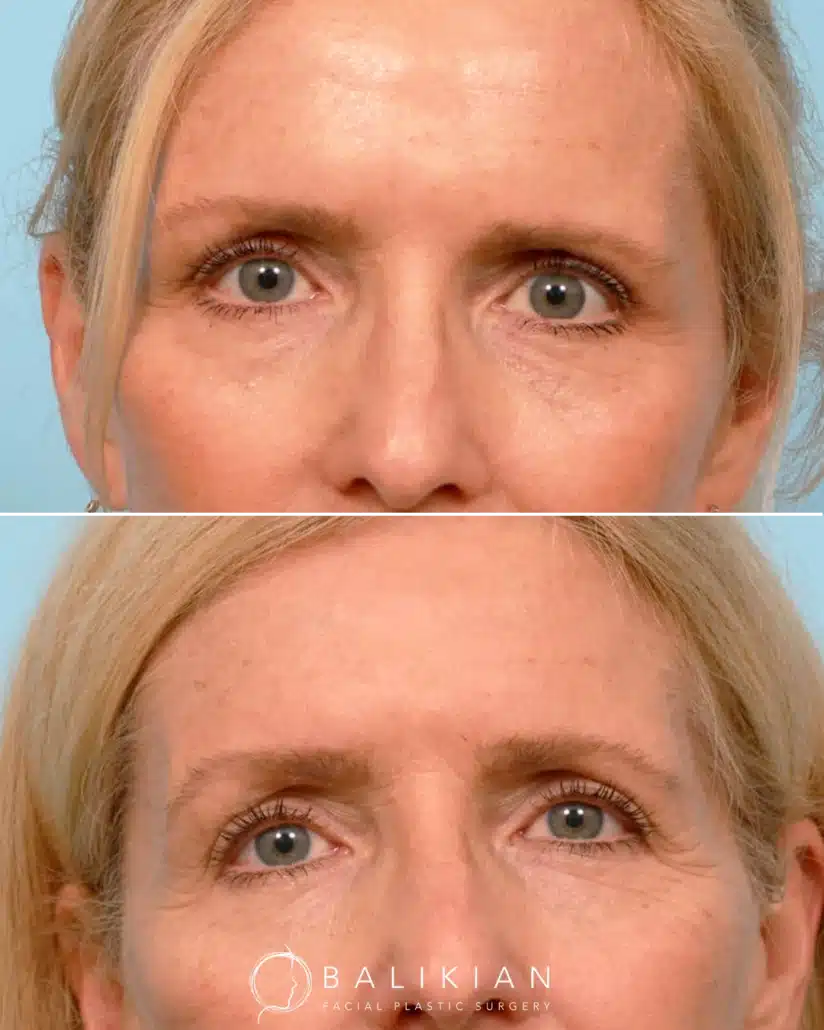
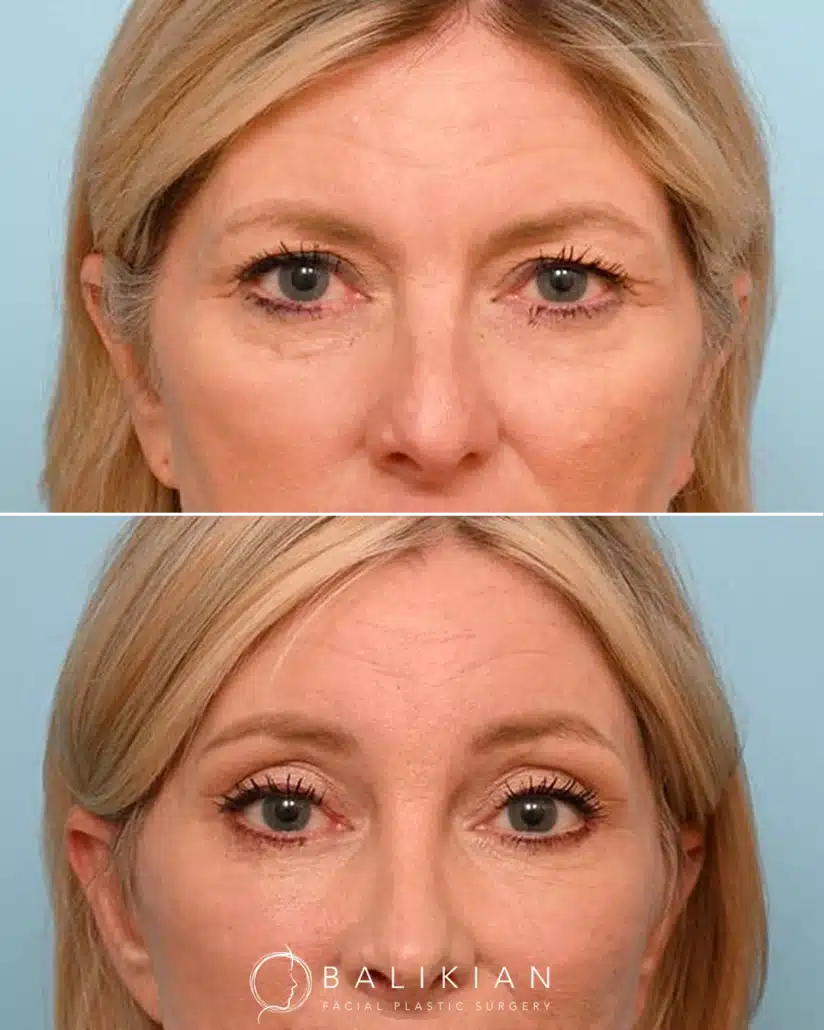
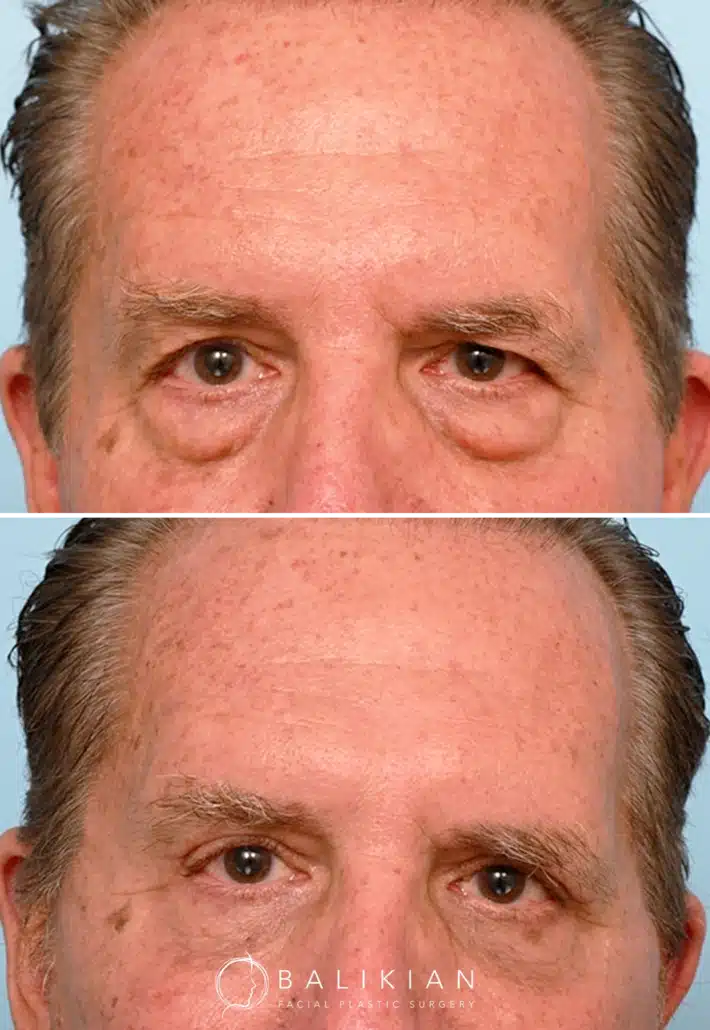
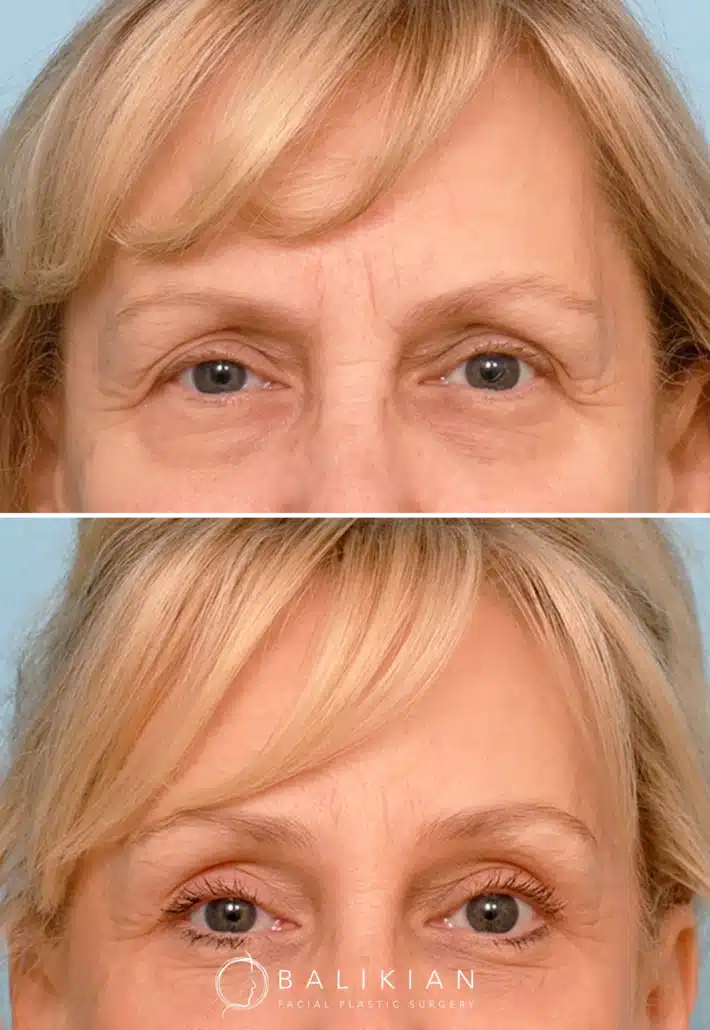
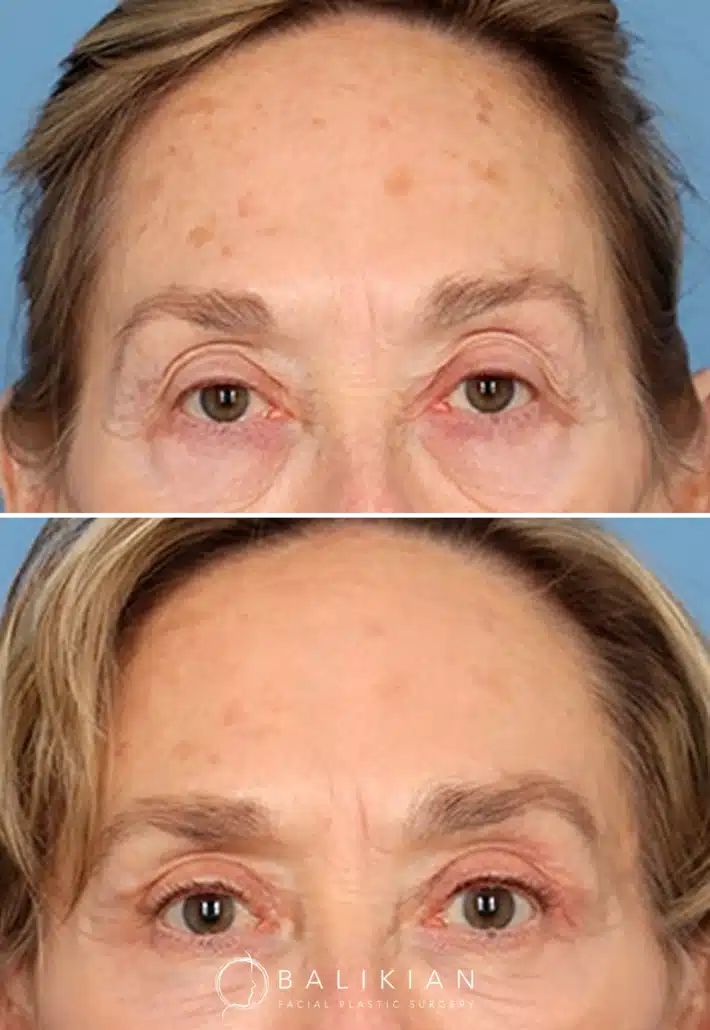
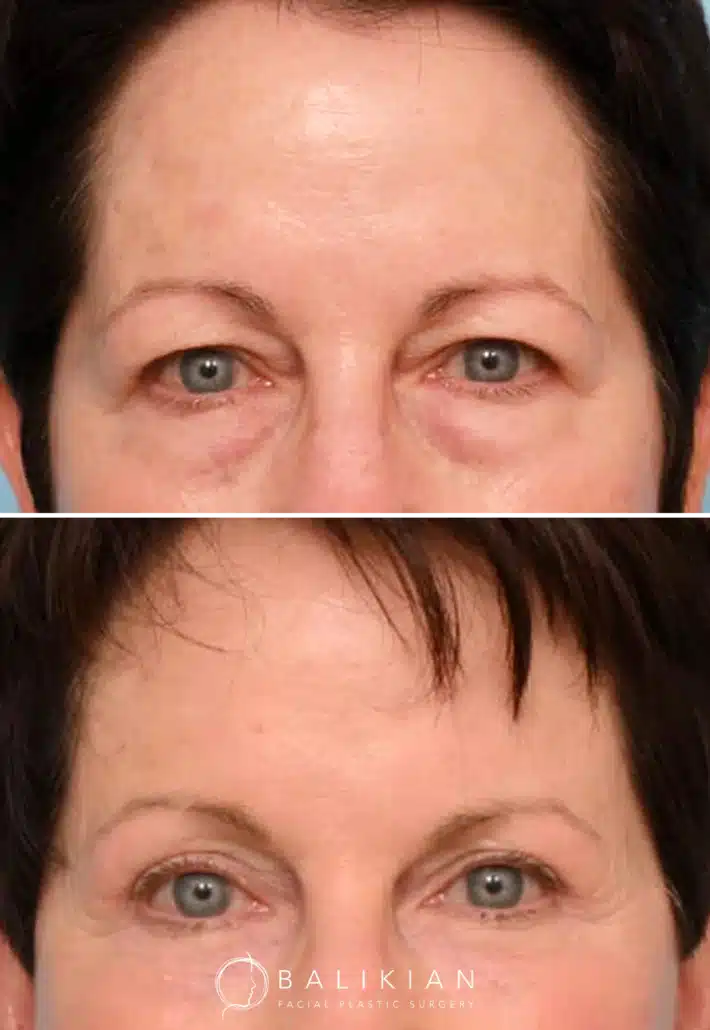
There are two primary types of brow rejuvenation performed at Balikian Facial Plastic Surgery: the Temporal Lift and the Endoscopic Style 4 Point Brow Reset.
While both procedures are designed to restore a brighter, more refreshed appearance around the eyes, they address different patterns of brow aging and heaviness.
A Temporal Lift primarily focuses on:
The Endoscopic Style 4 Point Brow Reset is often recommended for patients who also experience:
Neither procedure is designed to aggressively pull the brows upward or create an over-elevated appearance. The goal is to restore the brow into a naturally refreshed position while preserving normal expression, movement and emotional familiarity around the eyes.
The type of brow rejuvenation recommended depends largely on where brow descent and heaviness are occurring anatomically.
One technique commonly performed at Balikian Facial Plastic Surgery is the Temporal Lift, a procedure designed to elevate the outer tail of the eyebrow while smoothing the temple region. The effect is subtle and natural, creating a brighter, more refreshed appearance similar to Botox, but achieved through deeper structural repositioning rather than temporary muscle relaxation.
The procedure is performed through a small access incision hidden behind the hairline. No hair is shaved or removed. Rather than pulling skin tightly upward, the incision simply provides access to the deeper structural layers, allowing the outer brow and temple tissues to be repositioned more naturally.
Importantly, this is not a skin-removal procedure. Because the lift occurs within the deeper anatomical planes instead of through aggressive skin tension, the results tend to look softer and more balanced around the eyes.
The Temporal Lift is commonly performed alongside:
For patients experiencing heaviness primarily along the outer brow and upper eyelid area, the Temporal Lift can restore a brighter, more rested appearance without creating the over-elevated or “surprised” look many patients fear from traditional brow lift
Some patients experience brow heaviness more centrally rather than primarily along the outer brow and temple area. In these situations, an Endoscopic Style 4 Point Brow Reset may be recommended to restore a more balanced brow position while preserving natural expression.
This technique expands upon the Temporal Lift by adding two additional small access incisions hidden within the hairline. These are not skin-removal incisions. They simply provide access to the deeper structural layers, which means there is very little tension placed on the skin and the incisions typically heal extremely well.
Through these small access points, the deeper retaining structures contributing to brow descent can be carefully released. Over time, aging and genetics create attachments that gradually pull the brow downward, particularly around the central brow and forehead region.
The procedure is designed to:
Importantly, the goal is not to aggressively pull the brows upward.
Rather than forcing the brow into an artificially elevated shape, the tissues are repositioned into the position they naturally and passively lift into once those downward attachments are released. This distinction is one of the defining principles behind Dr. Richard Balikian’s brow rejuvenation philosophy.
Because the brow is restored along its natural anatomical vector rather than vertically over-elevated, the result tends to look more emotionally familiar, balanced and natural around the eyes.

Natural brow rejuvenation depends on respecting anatomy. The brow does not age straight downward. The tissues around the eyes descend along specific anatomical vectors, particularly through the outer brow and temple region.
When brow rejuvenation follows those natural patterns of aging instead of fighting against them, the results tend to look softer, more balanced and more emotionally familiar afterward.
The goal is not to over-pull the brows or create an artificially elevated appearance. The goal is simply to restore a brighter, more refreshed look while preserving natural expression and movement.
Every patient experiences brow aging differently. Some patients benefit primarily from a Temporal Lift, while others may require a more comprehensive 4 Point Brow Reset combined with upper eyelid rejuvenation or preserevation deep plane facelift surgery.
During consultation, Dr. Richard Balikian carefully evaluates brow position, forehead dynamics, eyelid heaviness, facial balance and overall anatomy to determine the most natural approach.
The goal is never to create a dramatically different appearance, but rather to restore a refreshed version of yourself while preserving natural movement, expression and individuality.
Why do some brow lifts make the eyes look surprised?
Some brow lifts look surprised when the brows are lifted too vertically or too aggressively, especially through the center of the forehead. Research on brow lift anatomy emphasizes that brow position, forehead dynamics, eyelid hooding, and facial expression should all be evaluated together before surgery. When the brow is elevated against its natural aging pattern, the eyes can appear overly open, tense, or emotionally unfamiliar afterward.
How does brow position affect the eyes?
Brow position plays a major role in how heavy or open the upper eyelids appear. As the brow descends with aging, particularly along the outer brow and temple region, it can create hooding near the upper eyelids and contribute to a tired appearance around the eyes. This is one reason brow position is carefully evaluated before upper eyelid surgery.
Can brow descent make someone think they need eyelid surgery?
Yes. Many patients who believe they need upper eyelid surgery are actually experiencing brow descent at the same time. Medical literature on upper blepharoplasty emphasizes that brow position should always be evaluated because brow ptosis can contribute significantly to upper eyelid heaviness.
What is the difference between a temporal lift and a brow lift?
A Temporal Lift focuses mainly on elevating the outer brow and temple region where many patients first develop heaviness and hooding near the eyes. More comprehensive brow lift techniques may also address the central brow and forehead area depending on the patient’s anatomy and aging pattern.
Why is the outer brow important in brow rejuvenation?
The outer brow strongly influences how rested or heavy the eyes appear. Studies evaluating eyebrow shaping and temporal brow elevation have shown that even small changes along the lateral brow can noticeably affect eye appearance and facial expression.
What is a brow reset?
A brow reset is a more conservative philosophy of brow rejuvenation focused on restoring the brow into a natural position rather than aggressively pulling it upward. The concept emphasizes releasing the structures contributing to brow descent while preserving normal facial movement and expression.
Is a brow lift always needed with upper blepharoplasty?
No. Some patients benefit from upper blepharoplasty alone, while others may also require brow repositioning. Proper diagnosis is important because eyelid heaviness may come from excess eyelid skin, brow descent, forehead compensation, or a combination of factors.
Can brow rejuvenation still look natural?
Yes. Modern brow rejuvenation techniques focus on restoring a softer and more balanced appearance while preserving natural expression. Research on brow anatomy and aging emphasizes that there is no single ideal brow shape and that brow position should be individualized to each patient’s anatomy.
What causes heaviness around the eyes with aging?
Heaviness around the eyes can result from brow descent, eyelid skin redundancy, forehead muscle compensation, and changes in the deeper supporting tissues of the upper face. Many patients unconsciously recruit their forehead muscles to compensate for heaviness around the eyes over time.
Why is consultation important before brow or eyelid surgery?
The brow, forehead, and upper eyelids function together anatomically. Careful consultation helps determine whether heaviness around the eyes is being caused primarily by brow descent, eyelid skin redundancy, eyelid ptosis, or multiple factors occurring simultaneously.
Dr. Richard Balikian is a highly respected facial plastic surgeon serving the San Diego area.
With over 20 years of experience and double board certification in Facial Plastic and Reconstructive Surgery as well as Head and Neck Surgery, Dr. Balikian offers a unique combination of technical expertise and artistic vision.
He is part of an elite group of surgeons with extensive training focused exclusively on the face and neck.
Richard V. Balikian, MD, FACS
Double Board-Certified Facial Plastic Surgeon
Balikian Facial Plastic Surgery: Richard V. Balikian, MD, FACS
