Chin Augmentation for a More Defined Jawline
Chin implants enhance the shape and projection of the chin to create a more balanced and harmonious facial profile.
Chin implants enhance the shape and projection of the chin to create a more balanced and harmonious facial profile.
Chin implants, also known as chin augmentation, enhance facial harmony by improving the shape, size, and projection of the chin. This procedure creates a more defined profile that complements the nose, jawline, and overall facial structure.
At Balikian Facial Plastic Surgery, Dr. Richard Balikian customizes each chin augmentation to suit your unique anatomy and goals. Whether you’re correcting a recessed chin or refining facial proportions, chin implants offer a long-lasting, natural-looking solution performed with precision and artistry.
Chin implant surgery enhances the structure of the lower face by adding permanent definition and projection to the chin. The implants are made from biocompatible materials and are carefully selected to match your anatomy and aesthetic goals.
When needed, this procedure can be combined with other facial enhancements such as rhinoplasty, neck liposuction, or a facelift to create more comprehensive and harmonious results.
Chin implants are made from biocompatible materials, most commonly solid silicone, which is safe, durable, and well-tolerated by the body.
Each implant is chosen to suit your unique bone structure and aesthetic goals, providing long-lasting enhancement that looks and feels natural.
The procedure typically takes about one hour and is performed under general anesthesia.
A small incision is made either under the chin or inside the mouth, leaving minimal to no visible scarring. The implant is then placed securely over the chin bone, creating immediate and noticeable improvement in contour and balance.
Healing after chin implant surgery is relatively quick for most patients. Mild swelling, bruising, and discomfort are expected in the first few days and can be managed with prescribed medication. A chin support strap may be recommended to minimize swelling and support the implant during early healing.
Most patients resume light activities within a few days and return to normal routines within one to two weeks. As swelling subsides over the following weeks, the final results will become more refined, revealing a stronger, more defined chin that enhances your overall facial profile.
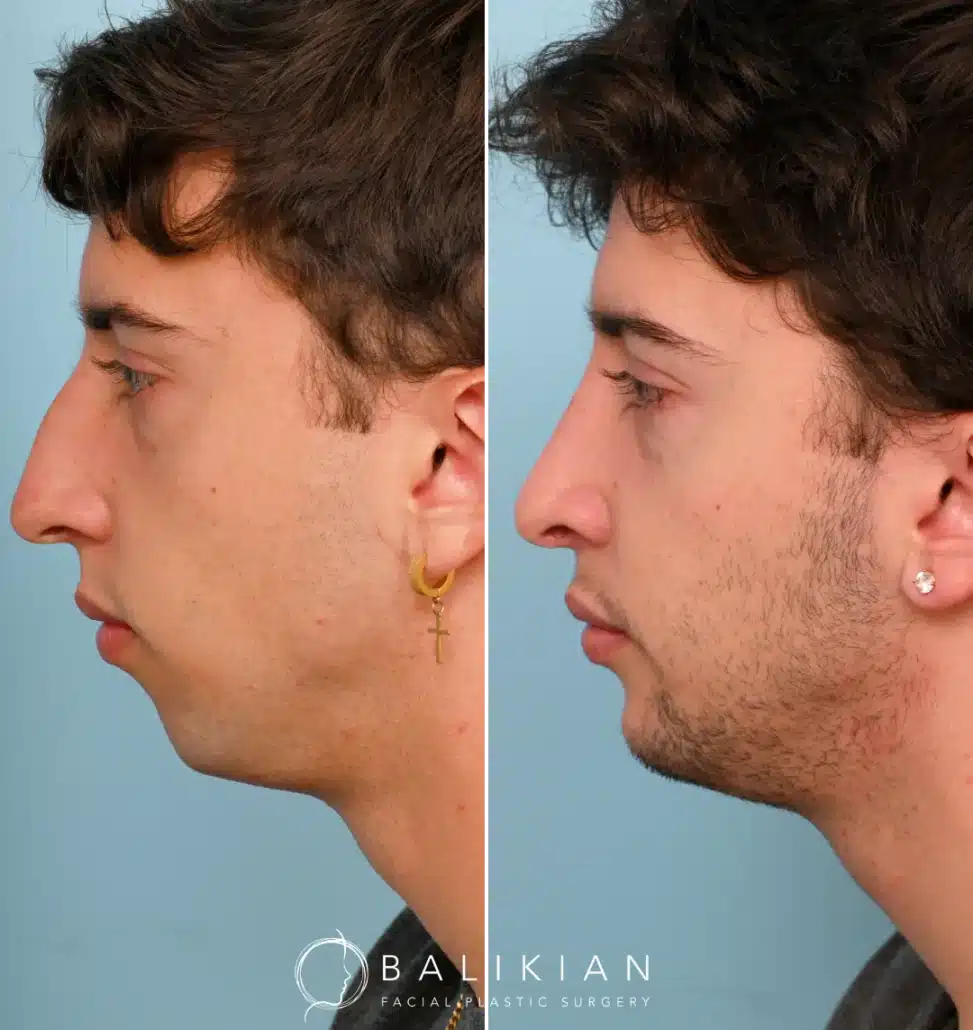


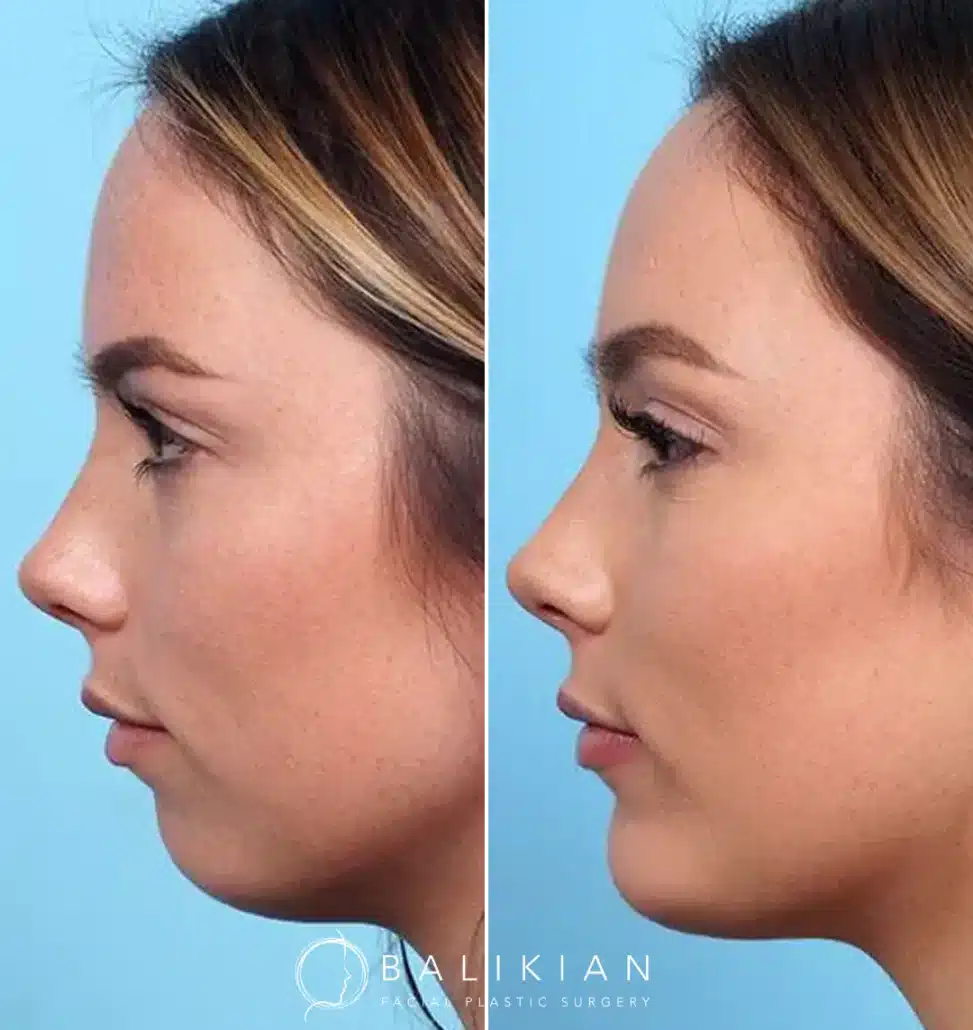
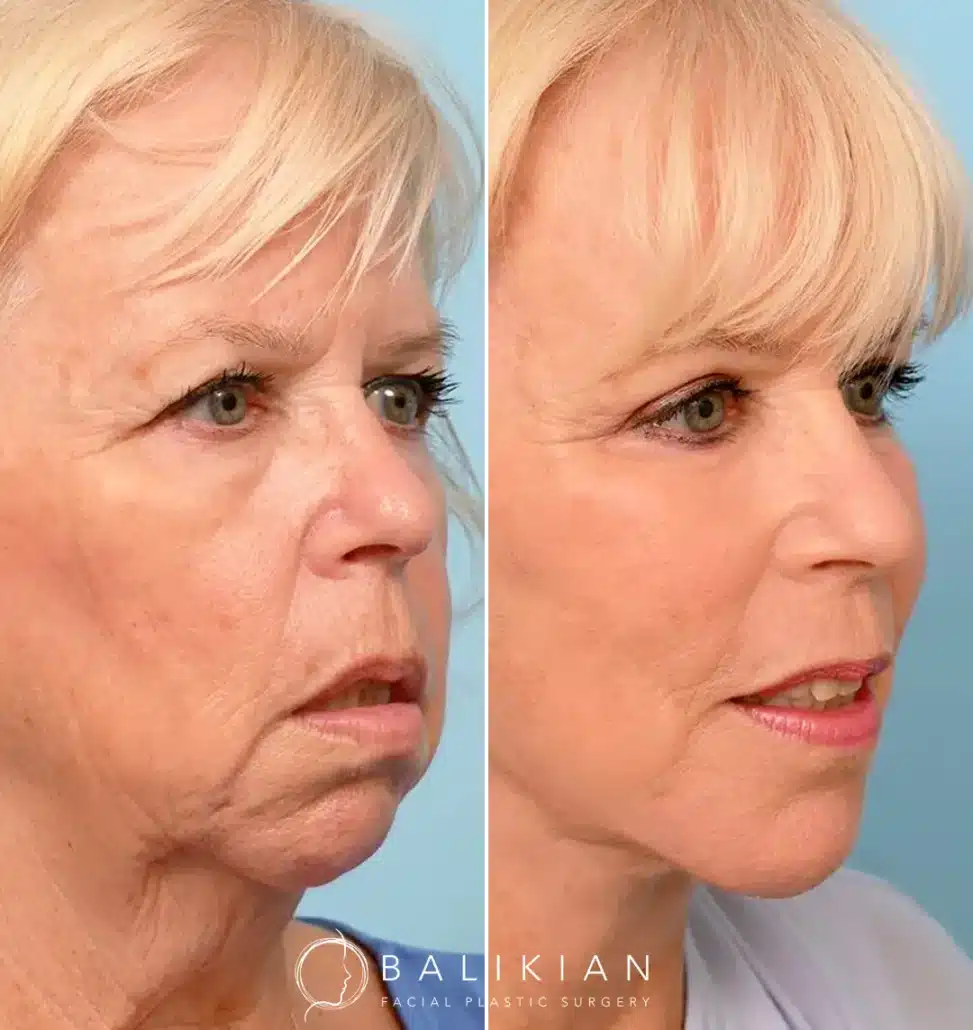
Good candidates for chin implant surgery are generally healthy individuals who desire improved facial harmony by enhancing the size, shape, or projection of their chin. This procedure is ideal for those who feel their chin is recessed, lacks definition, or is disproportionate to other facial features such as the nose and jawline. Candidates should have realistic expectations about the results and understand that chin implants provide a subtle but impactful improvement to their overall profile.
Additionally, candidates must have adequate bone structure to support the implant and be willing to follow pre- and post-operative instructions for a safe recovery. It’s important to have a thorough consultation with the surgeon to assess individual anatomy, discuss goals, and determine if chin implant surgery is the best option or if alternative treatments may be more suitable.
During your consultation, Dr. Balikian will provide a personalized quote based on your unique surgical plan and aesthetic goals.
Our team will also review available financing options to ensure your chin implant procedure is as accessible and stress-free as possible.
Am I a candidate for a chin implant?
Good candidates are healthy adults with a recessed or small chin, weak jawline definition, or imbalance in the profile. Patients commonly consider chin augmentation during or after rhinoplasty to balance the profile, or with neck contouring to sharpen the jawline.
How do you choose implant size and shape?
Sizing is based on facial analysis, profile angles, soft-tissue thickness, and smile dynamics. The aim is projection that supports the lower face without overextending beyond the lips or nose. Preoperative photos and morphing can help set expectations.
Will a chin implant look natural?
Yes, when placed by an experienced facial plastic surgeon like Dr. Balikian, chin implants are carefully selected and positioned to match your facial structure for subtle, natural-looking enhancement.
Is chin implant surgery painful?
Most patients report only mild discomfort after surgery, often described as pressure or tightness in the chin area. Any pain is usually well managed with prescribed medication and typically subsides within a few days.
How long is recovery after chin implant surgery?
Most patients can return to work or light activities within 3 to 5 days. Swelling and bruising are common but gradually improve over 1 to 2 weeks. Full results are visible once the swelling completely subsides, usually within a few months.
How long does a chin implant last?
Chin implants are designed to be permanent. Made from durable, biocompatible materials, they typically last a lifetime without the need for replacement unless complications arise or the patient desires a revision.
How long do the results last?
The Artiste Lift is designed to provide long-lasting results, typically 10-15 years. While you’ll continue to age naturally, you’ll always look younger than if you hadn’t had the procedure.
Can chin implant surgery be combined with other procedures?
Absolutely. Chin augmentation is often combined with procedures like rhinoplasty, neck liposuction, or facelift surgery to improve overall facial balance and achieve more comprehensive results.
What are chin implants made of? Do they need to be fixed to bone?
Medical-grade silicone is commonly used due to its long use history, biocompatibility, and ease of placement or revision. Fixation practices vary by surgeon. A recent review of facial silicone implants reported low rates of displacement and infection overall; fixation choice should match implant design, pocket stability, and individual risk factors.
Can a chin implant cause bone erosion?
Some long-term reports show shallow bone remodeling beneath silicone chin implants; most cases are small in depth and clinically insignificant, but significant resorption has been described. Proper implant sizing, pocket plane, and follow up reduce risk. If you have dental or jaw concerns, coordinate care with your dentist or oral surgeon.
What are the risks?
Potential risks include infection, implant movement, bone remodeling under the implant, numbness, or need for revision. Reviews and textbooks list infection, displacement, extrusion, and bone resorption as uncommon but possible late complications, typically reduced with proper pocket creation, fixation when indicated, and follow up.
What are complication rates for chin implants?
Recent systematic reviews of alloplastic chin augmentation report low overall complication rates in primary cases. Reported events include hematoma, infection, displacement, wound issues, and rare extrusion; rates vary with material, approach, and fixation. Close follow up and meticulous technique help keep risks low.
How does Dr. Balikian approach chin augmentation?
Dr. Balikian emphasizes harmony, proportion, and natural movement. The chin should support the lower face without looking artificial. He evaluates the chin alongside the nose, jawline, and neck so the result looks youthful and balanced, not just bigger.
Dr. Richard Balikian is a highly respected facial plastic surgeon serving the San Diego area.
With over 20 years of experience and double board certification in Facial Plastic and Reconstructive Surgery as well as Head and Neck Surgery, Dr. Balikian offers a unique combination of technical expertise and artistic vision.
He is part of an elite group of surgeons with extensive training focused exclusively on the face and neck.
Dr. Richard Balikian is recognized for elevating facial plastic surgery through precision, artistry and outcomes that reflect your true self.

Richard V. Balikian, MD, FACS
Double Board-Certified Facial Plastic Surgeon
Balikian Facial Plastic Surgery: Richard V. Balikian, MD, FACS