The Three Eyelid Layers that Matter Most in Blepharoplasty
Understanding the Anatomy Behind Modern Blepharoplasty
Many people think blepharoplasty is simply about removing excess skin around the eyes. In reality, modern eyelid rejuvenation depends on understanding the anatomy beneath the skin and how each structural layer contributes to contour, support, facial expression and long-term aging.
According to facial plastic surgeon Richard V. Balikian, MD, FACS, natural-looking blepharoplasty is less about aggressively removing tissue and more about understanding which anatomical structures should be preserved, repositioned, or conservatively adjusted during surgery.

Understanding these layers is one of the keys to understanding how modern blepharoplasty approaches eyelid aging and facial rejuvenation.
The eyelids are composed of three primary layers that play a major role in both appearance and function:
Each layer ages differently. Each contributes differently to heaviness, puffiness, hollowing, and contour changes around the eyes. Understanding how these layers work together is one of the reasons modern blepharoplasty has evolved far beyond simply tightening the eyelids.
The eyelids are among the thinnest and most delicate structures in the body. Small changes in support, contour, or tissue volume can significantly affect how natural or balanced the eyes appear. This is one of the reasons blepharoplasty requires such careful planning.
The eyes sit at the center of facial expression, meaning even subtle anatomical changes can influence:
Modern blepharoplasty depends on understanding how the skin, muscle and fat layers interact with one another over time.
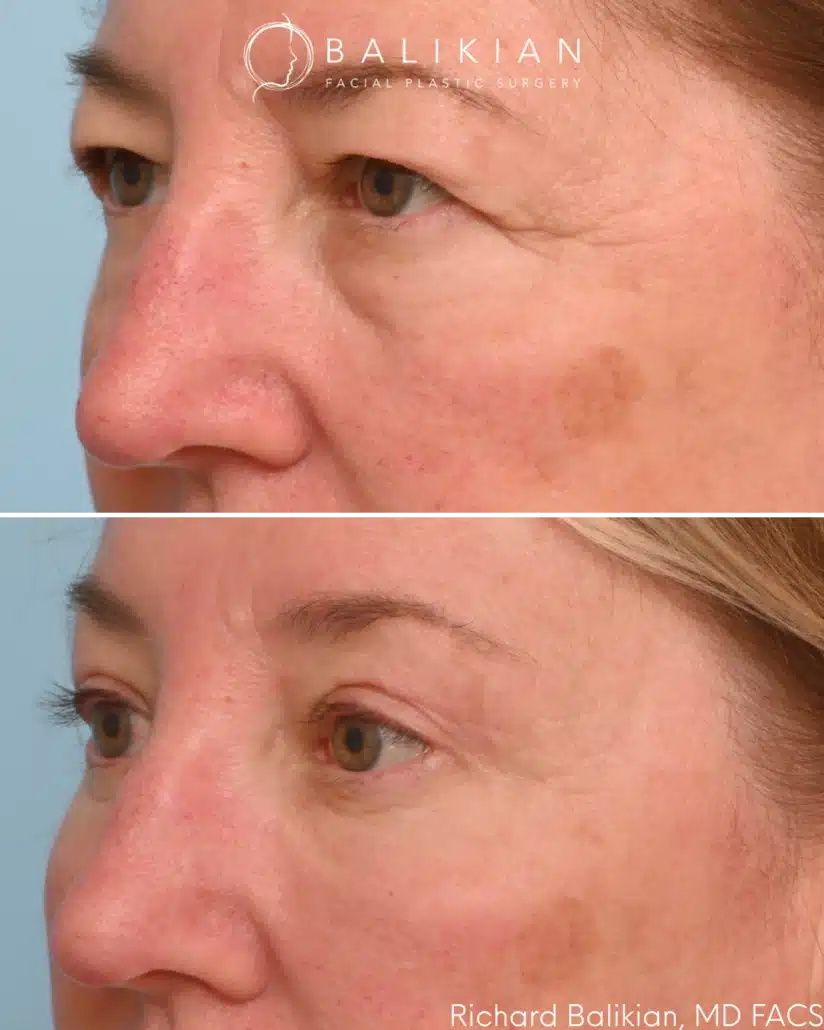
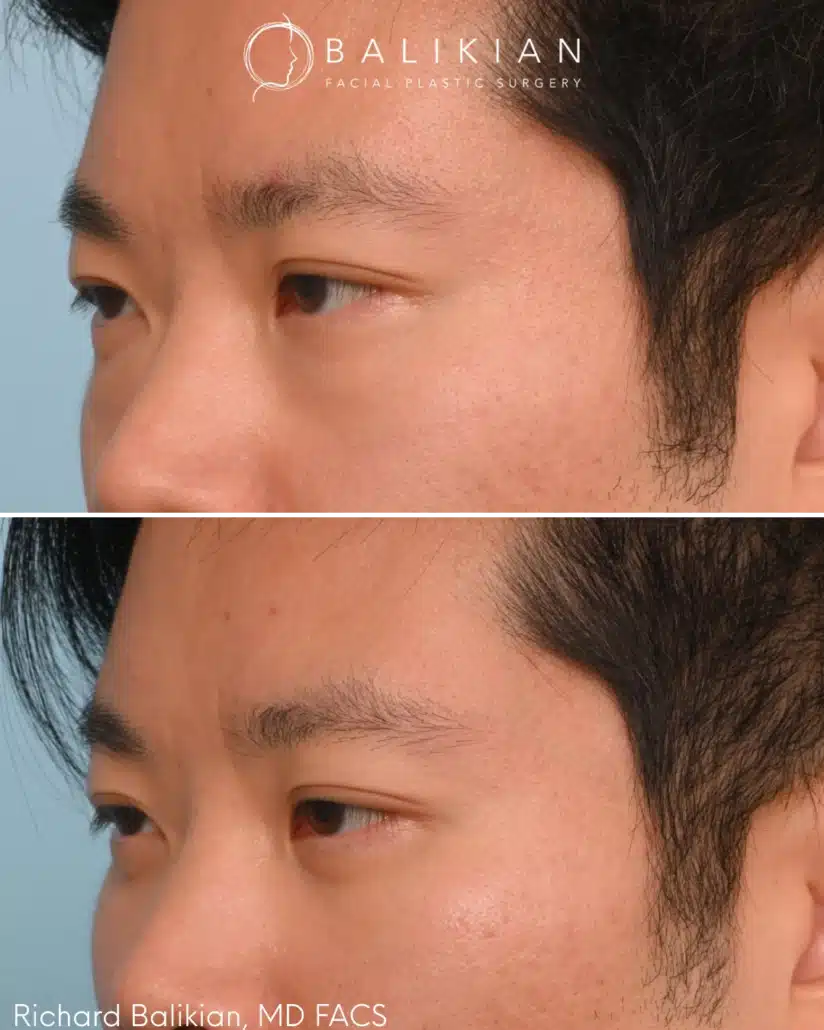
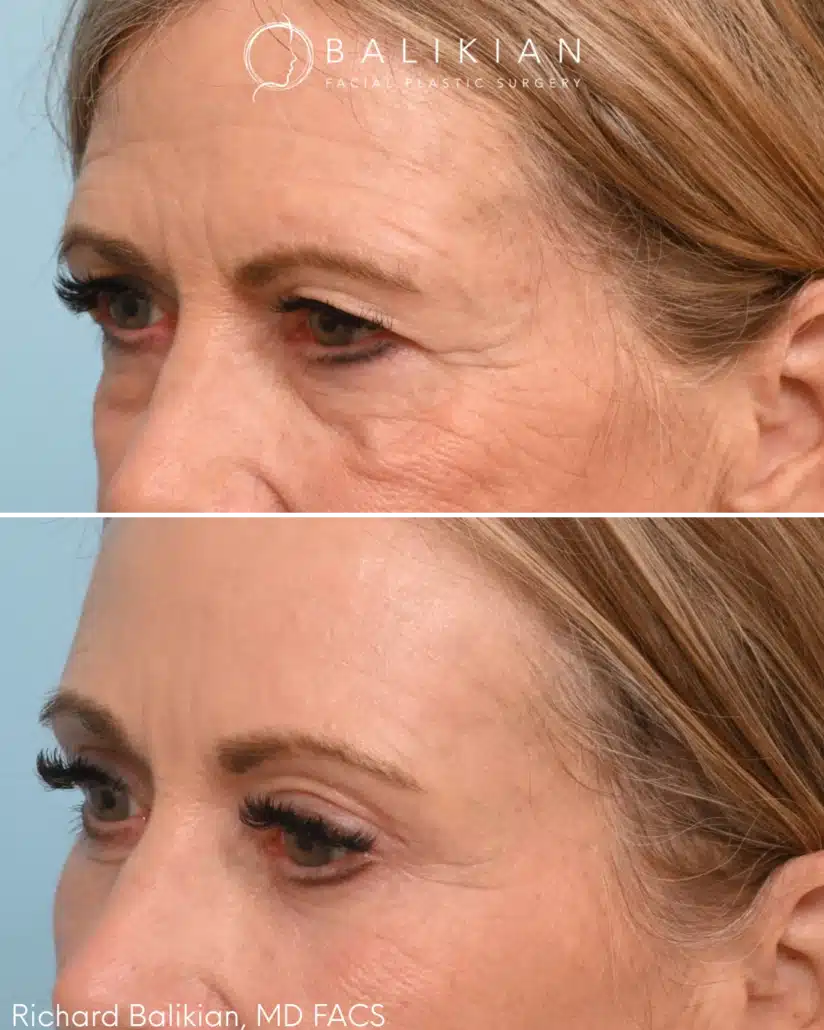
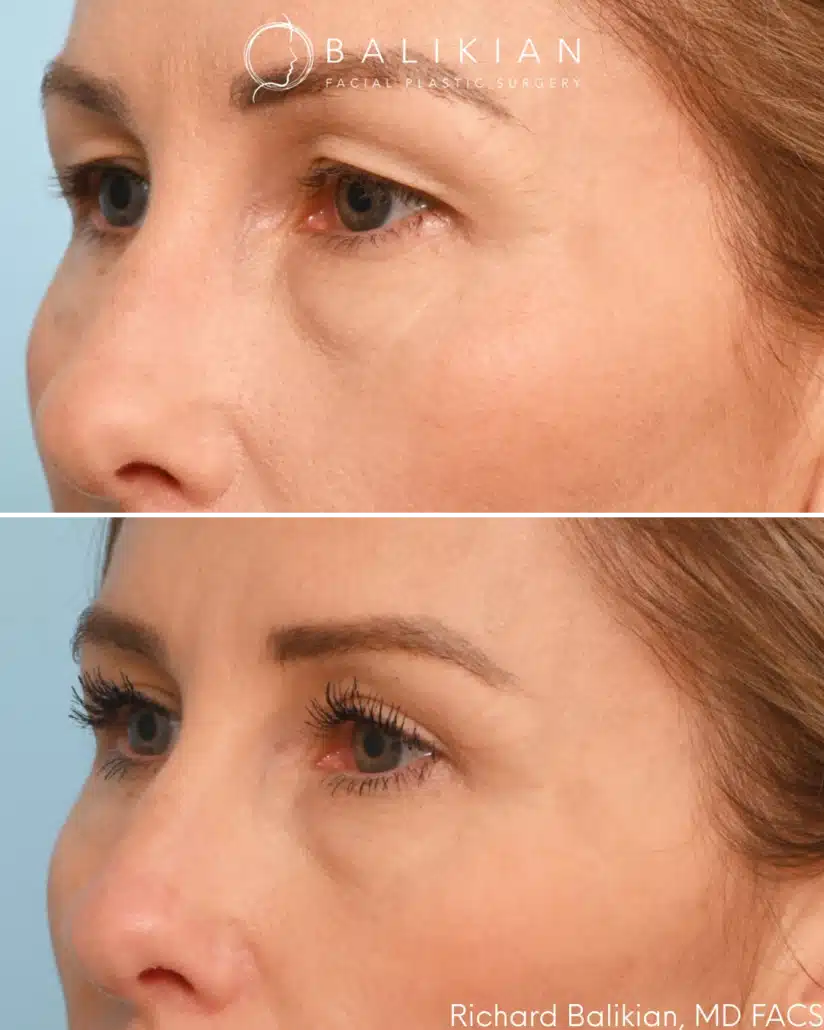
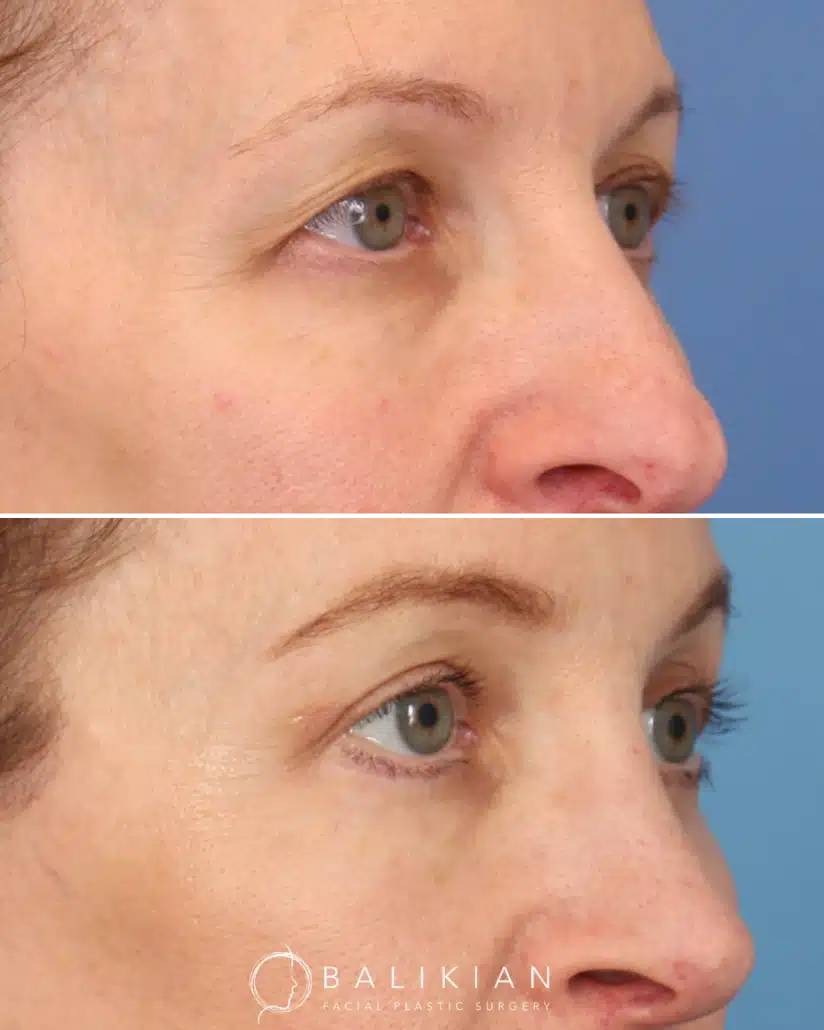
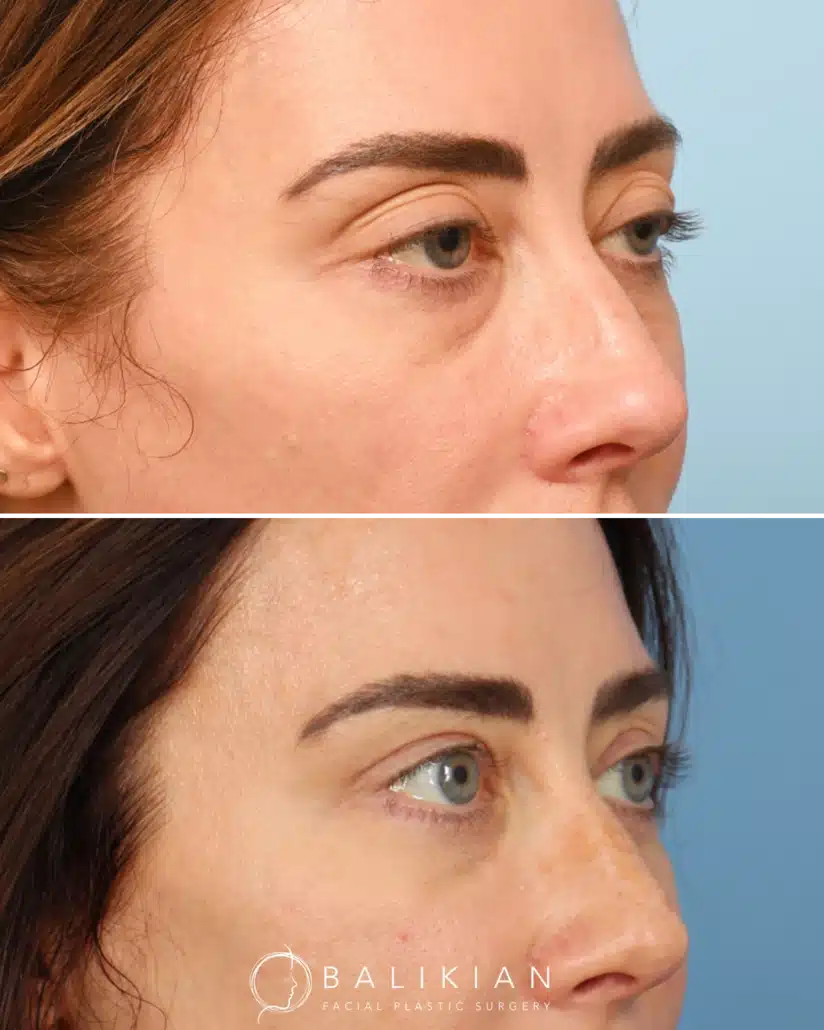
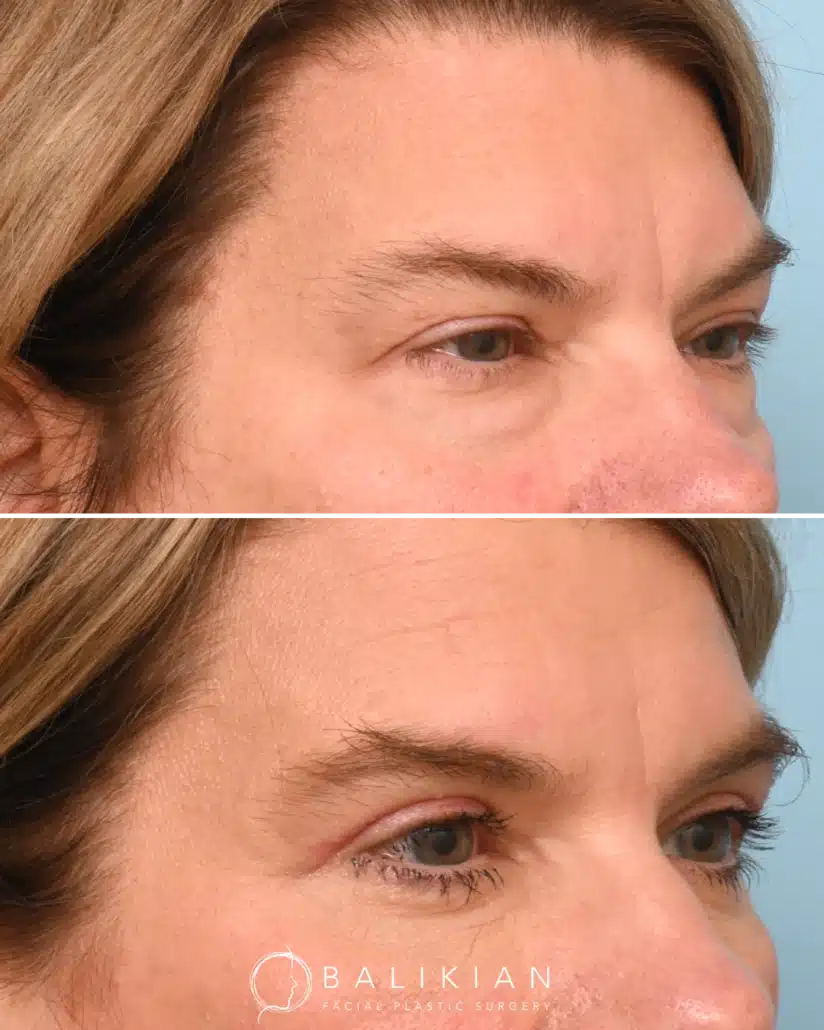
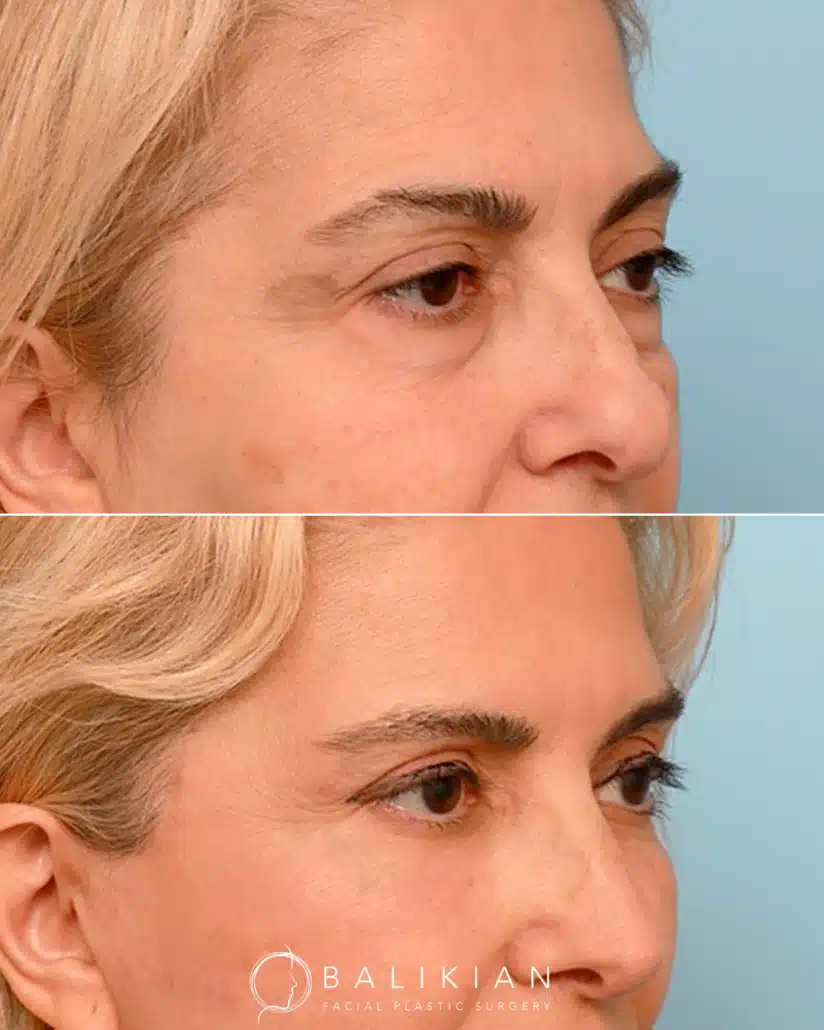
The outermost layer of the eyelid is the skin. Eyelid skin is extremely thin and naturally becomes less elastic with aging. Over time, the skin gradually stretches and can begin folding over itself, particularly along the upper eyelids.
Patients often describe this as:
In some patients, upper eyelid heaviness can even begin affecting peripheral vision or create constant fatigue throughout the day.
Although excess skin contributes to heaviness around the eyes, modern blepharoplasty is not simply about removing as much skin as possible.
Dr. Balikian explains that the upper eyelids must still close naturally and maintain smooth contour after surgery. Conservative skin removal helps preserve natural function and avoids creating an overly tight or hollow appearance.

The eyelid skin is one of the thinnest structures in the body and plays a major role in heaviness, hooding, and visible eyelid aging. The illustration also demonstrates the natural upper eyelid crease where upper blepharoplasty incisions are typically placed for discreet healing.
Careful incision placement is also important. Upper blepharoplasty incisions are typically hidden within the natural eyelid crease so they heal discreetly while maintaining the normal anatomy of the eyelid.
In the lower eyelids, excess skin is often only one part of the aging process. Some patients benefit from conservative skin pinch techniques beneath the eyelashes, while others are better treated with resurfacing procedures such as CO2 laser resurfacing to improve skin texture and crepiness without aggressive tissue removal.
The orbicularis oculi muscle is one of the most important support structures surrounding the eyes. It helps control blinking, eyelid closure, facial expression and lower eyelid position while also contributing to the natural contour and movement of the eyelids.
Normal function and support of this muscle plays an important role in:
This muscle is one of the most important support structures surrounding the eyes.

The orbicularis oculi muscle supports blinking, eyelid position, facial expression, and natural eye shape during blepharoplasty.
Historically, some surgeons removed portions of the orbicularis muscle during blepharoplasty procedures in an attempt to create sharper or tighter contours. While this could initially create a more dramatic appearance, aggressive manipulation of the muscle sometimes contributed to hollowing, unnatural eye shape, or weakening of lower eyelid support over time.
Dr. Balikian’s approach to blepharoplasty emphasizes preservation of the orbicularis muscle whenever possible because of its importance in maintaining both function and natural appearance.
The lower eyelid in particular requires careful structural support. Even subtle changes in lower eyelid position can alter the shape of the eyes and affect overall facial balance.
Modern blepharoplasty techniques increasingly focus on preserving natural support structures rather than aggressively hollowing or tightening the eyes. This preservation-focused philosophy helps maintain smoother contour and more natural long-term aging around the eyes.
Beneath the muscle layer are the fat compartments surrounding the eyes. These fat pockets help create youthful fullness and smooth contour around the eyelids.
As aging occurs, these fat compartments can gradually shift forward and become more prominent beneath the eyes. This protrusion is one of the primary causes of under eye bags.
At the same time, neighboring areas beneath the eyes often lose volume and develop hollowing. The contrast between bulging fat above and hollowing below creates shadowing and a fatigued appearance.
According to Dr. Balikian, under eye bags are often less about the fat itself and more about the contour relationships surrounding the lower eyelid.

The fat compartments surrounding the eyes help shape eyelid contour and play a major role in under eye bags, hollowing, and facial aging.
The larger the difference between the protruding fat and the hollow beneath it, the larger the shadow appears beneath the eyes. That is one of the reasons modern lower blepharoplasty often focuses more on contour preservation and support rather than simply removing all of the fat beneath the eyes.
Historically, aggressive fat removal was common during lower blepharoplasty procedures. While flattening the eyelids initially appeared rejuvenating, many patients eventually developed hollow or “skeletonized” eyes as the face continued aging.
Modern techniques have evolved significantly.
Depending on the patient’s anatomy, contemporary lower blepharoplasty may involve:
Dr. Balikian frequently performs lower blepharoplasty using transconjunctival techniques performed through the inside of the eyelid, avoiding external disruption of the skin or muscle whenever appropriate.
This approach helps preserve natural lower eyelid support while improving contour beneath the eyes.
The skin, muscle, and fat layers are all interconnected. Changes within one layer often affect the others, which is one of the reasons eyelid rejuvenation requires careful anatomical evaluation rather than simply removing tissue.
As the eyelids age, these structural changes commonly occur together:
These changes rarely occur in isolation. Many patients experience a combination of skin laxity, volume changes, muscle weakening, brow descent, and contour imbalance occurring together as the face ages.
This is why modern blepharoplasty requires individualized evaluation rather than a one-size-fits-all approach. The eyes function as part of a larger anatomical system that includes the brows, forehead, cheeks, lower eyelid support structures and surrounding facial contours.

Some patients primarily need conservative upper eyelid skin removal. Others require lower eyelid contour restoration, brow repositioning, laser resurfacing, fat transfer, or support-focused techniques depending on how the anatomy has changed over time.
Understanding how these three eyelid layers work together is one of the keys to creating natural-looking blepharoplasty results that still preserve normal facial expression, contour,and long-term balance around the eyes.
Modern eyelid rejuvenation is no longer simply about removing tissue. It is about understanding how the eyelids age and how each anatomical layer contributes to contour, support, facial expression, and long-term facial balance.
According to Dr. Balikian, successful blepharoplasty begins with diagnosis rather than simply planning tissue removal. Heavy upper eyelids may involve excess skin, brow descent, or forehead compensation, while under eye bags may involve protruding fat, hollowing, skin quality changes, or weakening lower eyelid support structures.
Modern techniques may involve:
Because the eyes are highly expressive structures, natural-looking blepharoplasty depends less on how much tissue is removed and more on preserving balanced contour, support, and natural facial expression.
This page is part of a larger educational series focused on eyelid anatomy, hooded eyes, under eye bags, brow position, lower eyelid support and modern approaches to blepharoplasty.
By understanding the structural anatomy behind eyelid aging, patients can better understand why natural-looking rejuvenation depends on preservation, balance and individualized surgical planning.
Why do modern blepharoplasty techniques focus more on preservation instead of aggressive tissue removal?
Modern blepharoplasty has evolved significantly because aggressive removal of skin, fat, and muscle can create hollowing, eyelid malposition, and unnatural contour changes over time. Recent research increasingly emphasizes preservation of volume, orbicularis muscle support, and natural eyelid anatomy to maintain more balanced long-term results.
Why is lower blepharoplasty often more complex than upper blepharoplasty?
The lower eyelid is closely connected to the cheek, tear trough, orbital fat compartments, canthal tendons, and multiple support structures that help maintain natural eyelid position. Because of this anatomy, lower blepharoplasty requires careful attention to contour, support, and lower eyelid stability.
Can removing too much fat during blepharoplasty make the eyes look hollow?
Yes. Overresection of eyelid fat has been associated with hollowing, “skeletonized” eyes, high upper eyelid creases, and unnatural aging changes following surgery. Modern approaches increasingly focus on fat preservation or repositioning instead of aggressive fat removal.
Why is the orbicularis muscle important in blepharoplasty?
The orbicularis oculi muscle plays a major role in blinking, eyelid closure, facial expression, and lower eyelid support. Preservation of this muscle helps maintain natural eye shape and reduces the risk of lower eyelid malposition or functional problems after surgery.
Why do some patients still look tired even after getting enough sleep?
A tired appearance around the eyes is often caused by anatomical aging changes rather than fatigue alone. Under eye bags, tear trough hollowing, skin laxity, brow descent, and lower eyelid support changes can all contribute to shadowing and heaviness around the eyes.
Why does brow position matter before upper blepharoplasty?
Upper eyelid heaviness is not always caused by excess eyelid skin alone. Brow descent and forehead compensation can also contribute to hooding and heaviness around the eyes. Proper evaluation of the brow-upper eyelid relationship helps create more accurate surgical planning and more natural results.
What is transconjunctival blepharoplasty?
Transconjunctival blepharoplasty is a lower eyelid technique performed through the inside of the eyelid without an external skin incision. It is commonly used to address lower eyelid fat while preserving the external skin and muscle when appropriate.
Why is lower eyelid support important during surgery?
The lower eyelid relies on multiple support structures including the canthal tendons, orbicularis muscle, and surrounding connective tissues to maintain proper eyelid position. Weakening or disrupting these structures can contribute to scleral show, eyelid retraction, or changes in eye shape after surgery.
Why does modern blepharoplasty require individualized planning?
The skin, muscle, fat, brow position, eyelid support structures, and cheek anatomy all age differently from patient to patient. Modern blepharoplasty depends on identifying which structures are contributing most to heaviness, puffiness, hollowing, or contour imbalance rather than applying the same procedure to every patient.
Why do natural-looking blepharoplasty results often look subtle?
The most successful blepharoplasty results typically preserve the natural character and expression of the eyes while reducing heaviness, shadowing, and fatigue. Modern eyelid rejuvenation focuses more on restoring contour balance and maintaining normal anatomy rather than creating dramatic or overcorrected changes.
Dr. Richard Balikian is a highly respected facial plastic surgeon serving the San Diego area.
With over 20 years of experience and double board certification in Facial Plastic and Reconstructive Surgery as well as Head and Neck Surgery, Dr. Balikian offers a unique combination of technical expertise and artistic vision.
He is part of an elite group of surgeons with extensive training focused exclusively on the face and neck.