Scarless Lower Eyelid Surgery With Optional Skin Pinch
A Clear Guide to the Transconjunctival Approach and Skin-Pinch Technique
Scarless lower eyelid surgery treats under-eye bags through an incision on the inside of the eyelid. This technique avoids a visible scar and focuses on repositioning the natural fat pads, not removing them.
By shifting the fat into a more supportive and youthful position, the surgeon can smooth puffiness, soften hollows and maintain natural fullness under the eyes.

For patients with extra skin, the internal approach may be paired with a skin-pinch technique. This removes only a very thin strip of excess skin under the eyelashes without disturbing the deeper eyelid layers.
When combined, these methods refine both the contour and the surface of the eyelid.
The scarless internal approach is designed to treat fat that has shifted forward and creates a visible under-eye bag. Instead of removing fat, the goal is to reposition your natural fat pads to restore a smooth, youthful contour.
Through a small, hidden incision on the inside of the eyelid, the surgeon can:
Because everything is done from the inside, no external incision is created, and the eyelid muscle and skin remain undisturbed. This helps maintain a natural shape and reduces the risk of eyelid distortion.
Not all patients need skin removal. But if there is true extra skin, skin that folds, wrinkles, or bunches even after fat is repositioned, a small skin-pinch can refine the surface.
This is especially helpful when loose skin creates:
The skin-pinch technique corrects this by:
Because the deeper layers are left intact, the risk of the eyelid being pulled downward is significantly lower than with older external blepharoplasty approaches.

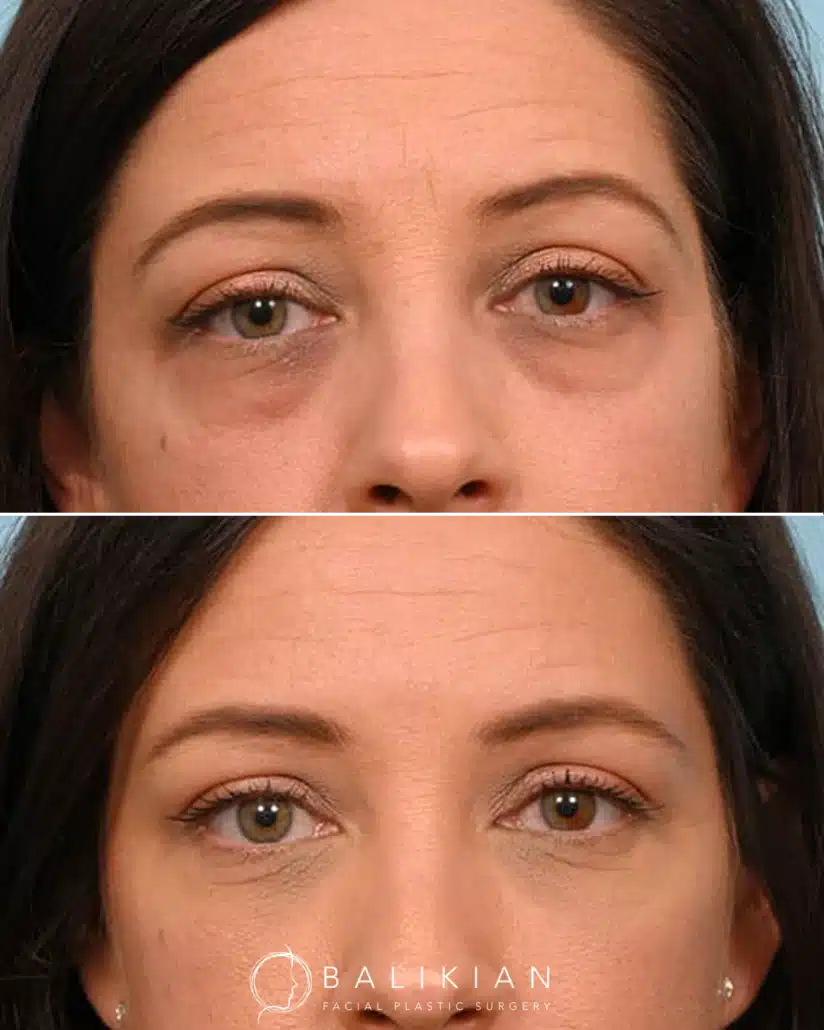
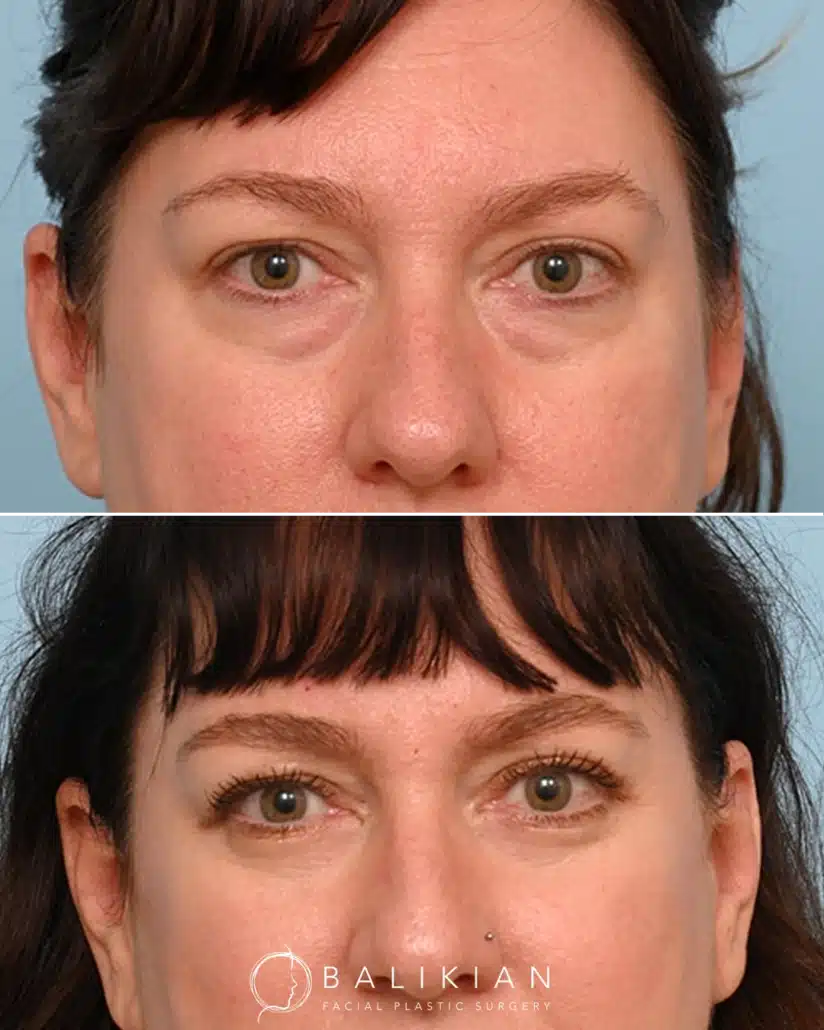
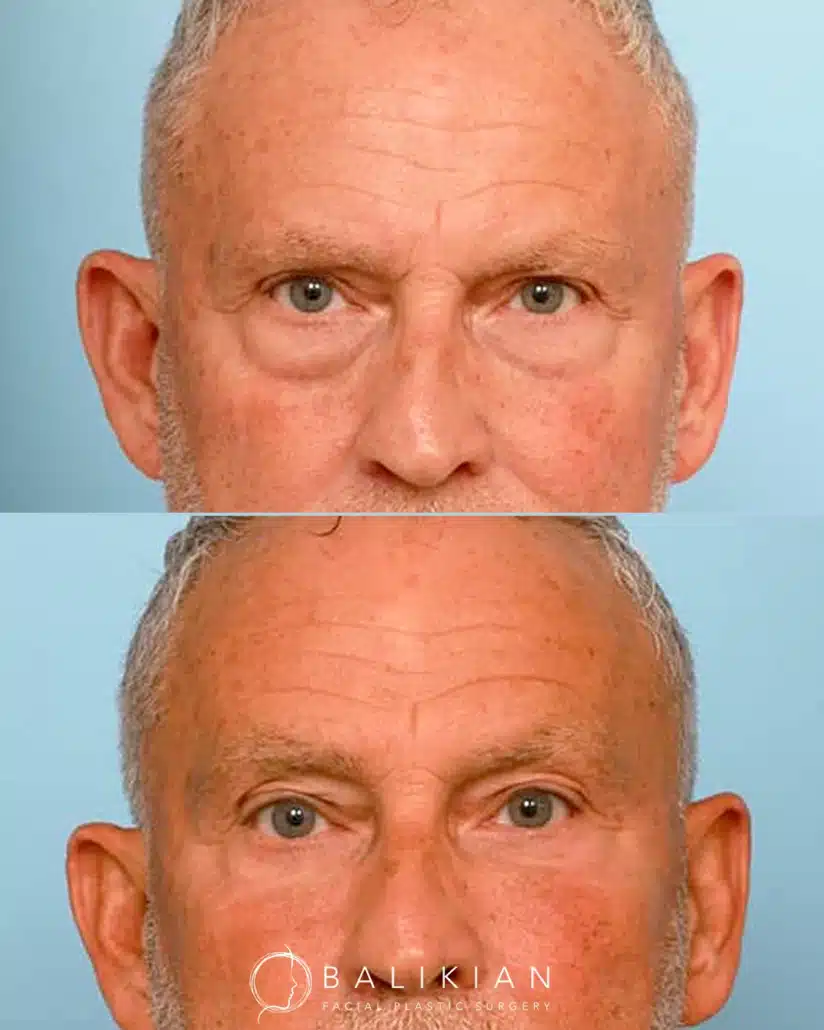
Surgeons evaluate the lower eyelid by looking at two different components.
Because these changes do not progress at the same rate, most patients fall into one of three groups. Knowing which one best describes your lower eyelids helps explain whether you may benefit from a scarless internal approach alone or the scarless approach combined with a skin pinch.
Some patients have noticeable puffiness from forward-shifting fat pads, but the skin itself is still smooth and firm. This pattern is common in younger patients and in those with naturally strong skin elasticity.
What this looks like:
Why the scarless approach works best: When the skin is already in good condition, fat repositioning alone can restore a smooth, natural contour. The internal transconjunctival approach allows the surgeon to reposition the fat pads without making an external incision. Because the skin still has good tone, it naturally redrapes once the contour underneath is corrected.
Here, the main issue is still the puffiness from fat descent, but there is also a small amount of true skin excess. The skin may not be severely wrinkled, but it may look crepey or bunch slightly with expression.
What this looks like:
Why add a skin pinch: Repositioning the fat improves the contour, but the surface may still appear uneven if there is a small amount of loose skin. A very conservative skin pinch removes only the skin that truly needs to be removed, often just one to two millimeters, while keeping all deeper structures intact.
This combination treats both layers. The fat is smoothed from the inside and the skin is refined from the outside, without increasing the risk of eyelid distortion.
Some patients develop both prominent bags and clear skin laxity. This can include crepey texture, deeper folds, or excess skin that drapes over the natural lid crease. These changes are often related to aging, sun exposure, and natural thinning of the skin.
What this looks like:
Why the combined technique is needed: Fat repositioning alone cannot tighten stretched or thinning skin. In these cases, a slightly more substantial skin pinch or laser resurfacing is needed to improve the surface.
Addressing both layers, the fat contour and the skin surface, creates the most balanced, natural improvement.
This technique brings together several precise steps designed to smooth puffiness, preserve volume, and refine excess skin when needed.
The procedure begins with a small incision on the inside of the lower eyelid. Because it is placed internally, no external scar is created and the skin and eyelid muscle remain undisturbed.
Instead of removing fat, the natural lower-lid fat pads are carefully mobilized and repositioned.
This allows the surgeon to:
This approach preserves natural fullness and avoids a hollow or “surgical” look.
Once the contour underneath is corrected, the surgeon evaluates the surface skin:
The goal is to treat only what is needed, keeping the eyelid stable while creating a smoother, more refreshed surface.
Once the contour and skin have been addressed, the final step is closing the incisions.
Both areas typically heal quickly, leaving little to no visible sign of where the incisions were made.
With the contour and skin refined, most patients can expect a noticeable yet natural improvement in the appearance of their lower eyelids.
Improvements You May Notice
Limitations to Understand
While most patients notice meaningful enhancement, it is still important to understand how individual anatomy and healing can influence the final result.


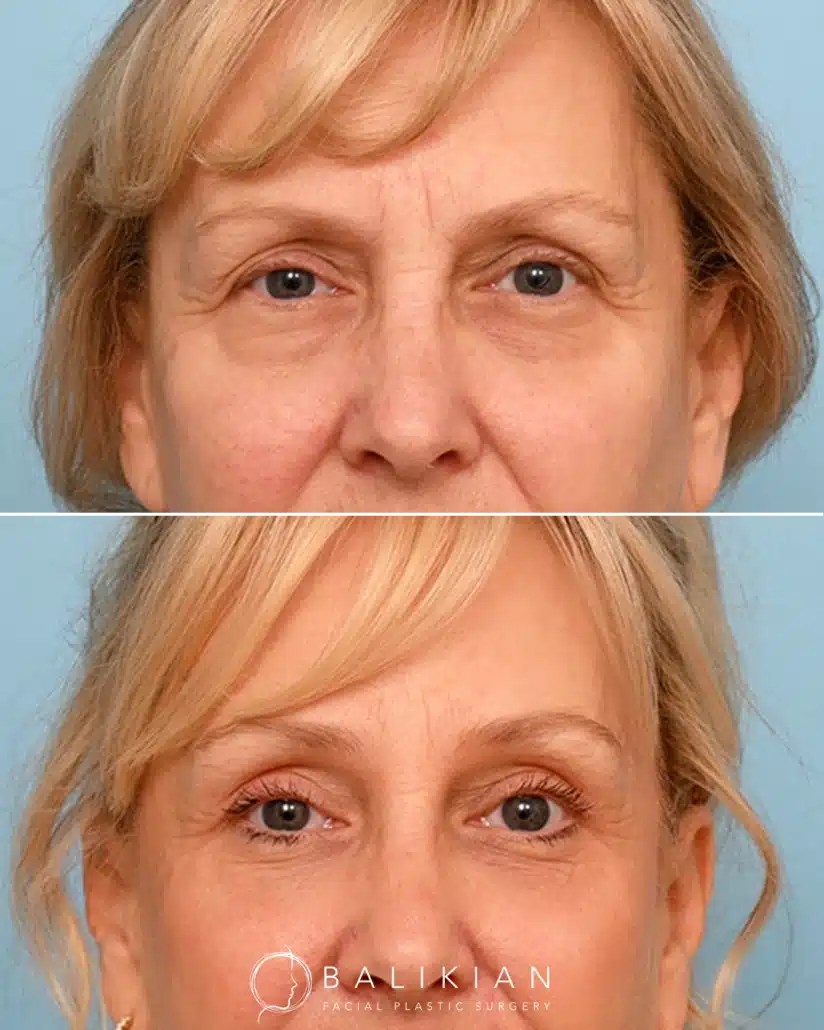
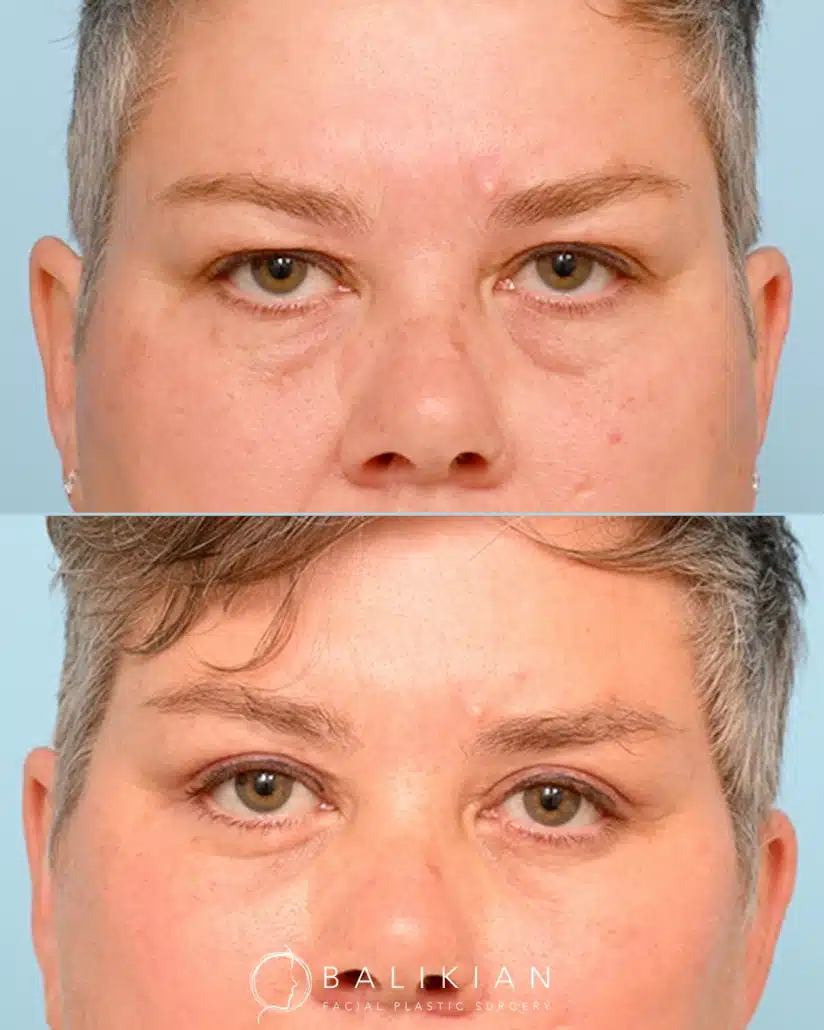
Every patient heals differently, but most people can expect a straightforward recovery after lower blepharoplasty. Swelling and bruising are common during the first week and continue to improve over the next one to two weeks. Any tightness, mild tearing, or temporary irritation typically settles as the eyelid tissues relax.
If a skin-pinch was performed, the tiny sutures under the lashes are usually removed within a few days. Most patients feel comfortable returning to normal daily activities within one to two weeks, although the repositioned fat and refined skin continue to settle and smooth out over the next several months.
Many patients benefit from photobiomodulation therapy during the early phase of healing.

Controlled blue and yellow light wavelengths can help calm inflammation, reduce swelling, and support more efficient tissue repair, allowing the lower eyelid area to recover with less visible downtime.
General aftercare often includes:
As the swelling fades, the under-eye area gradually smooths, softens, and blends more naturally with the cheek.
This technique works best when the main concerns involve under-eye puffiness, hollowness, or mild changes in skin quality and when maintaining the natural fullness of the lower eyelid is important.
A good candidate often:
A careful examination helps determine the safest and most effective plan.
During your evaluation, the surgeon will assess:
From there, the treatment can be tailored, whether that means scarless fat repositioning alone or fat repositioning combined with a conservative skin-pinch or resurfacing to refine the surface.
What is scarless lower eyelid surgery with an optional skin pinch?
Scarless lower eyelid surgery refers to a transconjunctival lower blepharoplasty, where the incision is made on the inside of the eyelid to address bags and hollows without a visible external scar. In Dr. Balikian’s approach, the natural fat pads are preserved and repositioned, not removed, to smooth puffiness and fill tear trough hollows. A skin-pinch can be added when there is true extra skin on the surface that needs conservative tightening. Modern reviews describe this as a safe and versatile way to soften the lid–cheek junction while keeping the eyelid stable.
How is fat repositioning different from fat removal in lower eyelid surgery?
Fat removal cuts out part of the orbital fat pads, which can flatten puffiness but may lead to a hollow or skeletonized look over time. Fat repositioning keeps the fat and moves it, usually downward and outward, to fill grooves and create a smoother transition from the eyelid to the cheek. Studies on transconjunctival fat repositioning show good correction of eye bags and tear trough deformities with high patient and surgeon satisfaction when fat is preserved rather than aggressively removed.
How does the skin-pinch technique fit into scarless lower eyelid surgery?
The internal, scarless part of the procedure treats the fat and contour, while the skin-pinch is used only when there is real excess skin that will not tighten on its own. In a skin-pinch, a thin strip of skin is removed just under the lashes without lifting the skin away from the muscle, which helps keep the eyelid support intact. Classic and modern series show that combining a transconjunctival approach with a minimal “pinch” excision safely improves fine wrinkling and laxity in patients who need both fat and skin addressed.
Does adding a skin-pinch increase the risk of the eyelid being pulled down?
When performed conservatively and combined with a transconjunctival approach, a skin-pinch does not appear to significantly change lower eyelid position in most patients. A study that compared transconjunctival surgery with and without a skin-pinch found no meaningful increase in lid retraction or scleral show when the pinch was limited to true excess skin.
Is the transconjunctival “scarless” approach safer than older external cuts under the lashes?
Large series and comparative studies suggest that the subciliary (external) approach is associated with a higher rate of complications such as ectropion and rounding of the eyelid compared with the transconjunctival approach. In contrast, internal incisions that preserve the front layers of the lid tend to have lower rates of lower-lid malposition when used in appropriate candidates.
Can scarless lower eyelid surgery also help with wrinkles and crepey skin?
The internal approach corrects bags and contour, but wrinkles and crepey skin often require an additional surface treatment. Randomized and prospective studies show that combining transconjunctival lower blepharoplasty with CO₂ laser resurfacing significantly improves fine wrinkles compared with surgery alone, with low complication rates when done by experienced surgeons.
How long do results of fat-preservation lower eyelid surgery last?
Fat repositioning aims to restore a more youthful volume pattern rather than simply flattening the lower eyelid. Studies following patients after lower blepharoplasty with fat transposition show durable improvement in the lower lid–midface contour at six months and beyond, with smoother tear troughs and a softer transition into the cheek.
Who is a good candidate for scarless lower eyelid surgery with an optional skin-pinch?
Ideal candidates usually have under-eye bags, hollowness, or both, with mild to moderate skin laxity and a desire to maintain natural fullness rather than look “over-done.” Reviews and clinical series emphasize that the best results come when surgeons tailor the plan to the individual, based on fat position, skin quality, lid support, and overall facial anatomy, and then choose either fat repositioning alone or fat repositioning plus conservative skin treatment.
What does recovery look like after scarless lower eyelid surgery with skin-pinch?
Most patients have swelling and bruising for one to two weeks, with gradual improvement over several more weeks as the fat and skin settle. Systematic reviews note that when the transconjunctival approach and conservative skin techniques are used, complication rates remain low and recovery is generally smoother compared with more extensive lower eyelid dissections.
Does photobiomodulation (light therapy) actually help after eyelid surgery?
Photobiomodulation therapy uses low-energy light to support healing. A 2025 prospective study found that 830 nm LED photobiomodulation after blepharoplasty significantly reduced swelling, pain, and anxiety and improved wound healing scores compared with standard care alone.
Broader research in oral and orthopedic surgery also shows that photobiomodulation can reduce postoperative pain and edema, supporting its use as a noninvasive adjunct to surgical recovery.
What are the main risks of scarless lower eyelid surgery with or without a skin-pinch?
Possible risks include bruising, swelling, temporary dry eye or irritation, asymmetry, contour irregularities, and rare changes in lid position. Reviews of lower eyelid blepharoplasty stress that transconjunctival approaches with conservative skin management tend to have lower rates of serious complications such as ectropion compared with more aggressive external techniques, but careful patient selection and surgical experience remain critical.
Dr. Richard Balikian is a highly respected facial plastic surgeon serving the San Diego area.
With over 20 years of experience and double board certification in Facial Plastic and Reconstructive Surgery as well as Head and Neck Surgery, Dr. Balikian offers a unique combination of technical expertise and artistic vision.
He is part of an elite group of surgeons with extensive training focused exclusively on the face and neck.

Richard V. Balikian, MD, FACS
Double Board-Certified Facial Plastic Surgeon
Balikian Facial Plastic Surgery: Richard V. Balikian, MD, FACS

